Loading...
Zayed bin Sultan Al Nahyan vs Zhao Kuangyin
Zhao Kuangyin leads by 7.7 pts · 2 figures compared
…
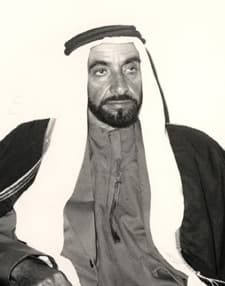
Zayed bin Sultan Al Nahyan
Emperor · Modern
63.8Total
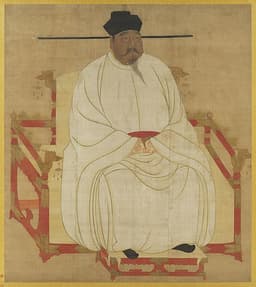
Zhao Kuangyin
Emperor · Medieval
71.5Total
Basic Information
Born
1918
927
Died
2004
976
Era
Modern
Medieval
Nationality
UAE
China
Occupation
Emperor
Emperor
Civilization
Middle Eastern
Eastern
Score Comparison
Military (10%)
11.3
78.0
Political (20%)
82.0
84.0
Influence (20%)
68.0
68.0
Legacy (20%)
72.0
65.0
Leadership (15%)
85.0
74.0
Strategy (15%)
25.7
68.0
TOTAL
63.8
71.5
Zayed bin Sultan Al Nahyan — Complete Timeline
1970 AD
Oil Revenue Investment in InfrastructureReform◆ Major
After the discovery of oil in Abu Dhabi in the 1950s, Zayed directed oil revenues toward building modern infrastructure: roads, hospitals, schools, and housing. This transformed Abu Dhabi from a poor region into a wealthy state.
OilDevelopmentInfrastructure
Impact: nationalconstructive
1971 AD
Formation of the United Arab EmiratesPolitical Action
Zayed bin Sultan Al Nahyan, as ruler of Abu Dhabi, played a key role in uniting seven emirates to form the United Arab Emirates on December 2, 1971. He became the first President, a position he held until his death.
UnificationUAEIndependence
Impact: regionalconstructive
1990 AD
Environmental Conservation InitiativesReform
Zayed established the Zayed International Prize for the Environment and implemented policies to protect wildlife and habitats, including the creation of nature reserves. He was a pioneer in environmentalism in the Gulf region.
EnvironmentConservationAwards
Impact: regionalconstructive
Women's Rights ReformsReform◆ Major
Zayed supported women's education and employment, appointing women to government positions and promoting their participation in the workforce. These reforms were progressive for the region at the time.
Women's RightsEducationReform
Impact: nationalprogressive
2004 AD
Death and LegacyOther◆ Major
Zayed died on November 2, 2004, after a long illness. His funeral drew massive crowds, and he was mourned as the founding father of the UAE. His legacy includes a stable, prosperous federation.
DeathLegacyFounding Father
Impact: nationaltragic
Zhao Kuangyin — Complete Timeline
960 AD
Founded Song dynastyPolitical Action
Zhao Kuangyin, a general of Later Zhou, was proclaimed emperor by his troops at Chenqiao. He established the Song dynasty, ending the Five Dynasties period and beginning a new era of Chinese history.
Song dynastyFoundingChenqiao
Impact: globalconstructive
961 AD
Removed military power from generalsPolitical Action◆ Major
Zhao Kuangyin invited senior generals to a banquet and persuaded them to retire peacefully. This 'removal of military power over wine' prevented military coups and centralized control.
Song dynastyMilitary reformCentralization
Impact: nationalconstructive
963 AD
Unified southern ChinaWar◆ Major
Zhao Kuangyin launched campaigns to conquer the southern kingdoms, including Jingnan, Later Shu, and Southern Tang. By his death, most of China was reunified under Song rule.
Song unificationConquestSouthern kingdoms
Impact: national
Expert Analysis
Zhao Kuangyin vs Zayed bin Sultan Al Nahyan
# The Emperor Who Gave Up Power and the President Who Built a Nation
On a winter night in 961, Zhao Kuangyin, the newly crowned emperor of China’s Song dynasty, invited his most powerful generals to a banquet. The wine flowed freely, the music was lively, and the mood was festive. Then, in a moment that would echo through history, the emperor sighed and told his old comrades that he could not sleep at night, fearing that one day their own troops might proclaim them emperor as his had done. By dawn, the generals had surrendered their commands, retired to comfortable estates, and the Song dynasty had secured its future without a single drop of blood. A thousand years later and half a world away, another leader faced a different kind of challenge. Zayed bin Sultan Al Nahyan stood in the desert of Abu Dhabi in 1971, looking not at conquered kingdoms but at seven squabbling emirates, each suspicious of the others, each clinging to its own petty sovereignty. Where Zhao had used wine and persuasion to disarm his rivals, Zayed would use oil and vision to unite his people. Both men built nations. But they built them in profoundly different ways, shaped by utterly different eras, resources, and destinies.
Origins
Zhao Kuangyin was born in 927, in the twilight of the Tang dynasty’s collapse, when China had fragmented into a chaos of warring kingdoms known as the Five Dynasties and Ten Kingdoms. He grew up in a world where power was measured by the sword, where generals overthrew emperors as casually as they changed their robes. His father was a middle-ranking military officer, and young Zhao learned early that loyalty was a luxury few could afford. By contrast, Zayed bin Sultan Al Nahyan was born in 1918 in the Abu Dhabi desert, into a world that had changed little for centuries. His family ruled a poor coastal settlement where pearl diving and camel herding sustained a fragile existence. There were no armies to command, no thrones to seize—only the hard labor of survival under a burning sun. Where Zhao inherited a world of violent ambition, Zayed inherited a world of patient endurance.
Rise to Power
Zhao’s path to power was swift and almost accidental. In 960, as a general of the Later Zhou dynasty, he was sent north to repel an invasion. Before he could reach the enemy, his own troops stopped at Chenqiao, draped a yellow robe over his shoulders, and declared him emperor. It was a classic coup of the era, the same script that had played out dozens of times before. Zhao accepted, but he had seen enough bloodshed to know that this cycle had to end. Zayed’s rise was slower and more deliberate. He became ruler of Abu Dhabi in 1966, after his brother was deposed for incompetence. At that time, the emirate was desperately poor, its people illiterate and diseased. But oil had been discovered in the 1950s, and the money was beginning to flow. Zayed understood immediately that oil was not a curse to be hoarded but a tool to be wielded. He began investing in schools, hospitals, and roads before he even had a country to govern.
Leadership & Governance
Zhao Kuangyin’s greatest achievement was the peaceful removal of military power from his generals—a feat almost unheard of in Chinese history. At the famous banquet of 961, he did not kill or imprison his rivals; he persuaded them to retire with wealth and honor. This “removal of military power over wine” became a symbol of his leadership style: subtle, strategic, and deeply humane. He then centralized the Song bureaucracy, created a professional civil service based on merit, and launched campaigns to reunify southern China. By 963, he had conquered Jingnan, Later Shu, and Southern Tang, not through overwhelming force but through careful diplomacy and limited warfare. His military score of 74.6 reflects competence rather than genius, but his political score of 75.9 and leadership score of 82.3 reveal a ruler who understood that true power lies not in the sword but in the system.
Zayed’s governance was the opposite in method but similar in spirit. He had no armies to disband because he had no armies at all—only tribal loyalties and personal charisma. His political score of 82.9 and leadership score of 78.9 show a man who governed through persuasion and generosity. He used oil revenues not to build palaces but to build a nation. In 1971, he convinced the rulers of Dubai, Sharjah, Ajman, Umm Al Quwain, Fujairah, and later Ras Al Khaimah to form the United Arab Emirates, a federation that gave each emirate autonomy while pooling resources for the common good. He appointed women to government positions in the 1990s, long before most of his neighbors, and established environmental conservation initiatives that protected the fragile desert ecosystem. Where Zhao centralized power, Zayed shared it.
Triumph & Tragedy
Zhao’s triumph was the unification of China and the establishment of a dynasty that would last three centuries. But his tragedy was that he never completed his work. He died suddenly in 976 at the age of forty-nine, possibly assassinated by his own brother, leaving the Song dynasty to face the northern threat of the Liao and later the Jin. His strategy score of 69.8 suggests that his cautious approach, while brilliant for internal consolidation, left China vulnerable to external enemies. Zayed’s triumph was the creation of a nation from nothing. The UAE, once a collection of impoverished sheikhdoms, became a global hub of trade, tourism, and innovation. But his tragedy was that he could not see the full fruits of his labor. He died in 2004, mourned by millions, but the UAE he left behind was still a young nation, fragile in its identity and dependent on oil that would not last forever.
Character & Destiny
Zhao Kuangyin was a man of restraint in an age of excess. He could have killed his generals; he chose to persuade them. He could have conquered by terror; he chose to conquer by negotiation. His character—pragmatic, patient, and deeply aware of the lessons of history—shaped a dynasty that valued culture and commerce over military glory. Zayed bin Sultan Al Nahyan was a man of vision in an age of scarcity. He could have hoarded his oil wealth; he chose to share it. He could have ruled as a dictator; he chose to build a federation. His character—generous, far-sighted, and rooted in Bedouin traditions of hospitality and consultation—shaped a nation that values unity over uniformity. Both men understood that power is not an end but a means. But they lived in different worlds: Zhao in a world where power meant control, Zayed in a world where power meant creation.
Legacy
Today, Zhao Kuangyin is remembered as the founder of the Song dynasty, a golden age of Chinese civilization that produced printing, gunpowder, and the world’s first paper money. His legacy score of 75.1 reflects a ruler who shaped not just a dynasty but a culture. Zayed bin Sultan Al Nahyan is remembered as the father of the UAE, a nation that transformed from desert to skyscraper in a single generation. His legacy score of 73.9 captures the awe of a people who saw their world rebuilt by one man’s will. But the deeper legacy of both leaders lies in what they did not do. Zhao did not cling to power; he gave it away to a system. Zayed did not cling to wealth; he gave it away to a people.
Conclusion
Standing at the edge of history, we see two men who solved the same problem—how to build a lasting nation—with opposite tools. Zhao used the soft power of persuasion to disarm his rivals; Zayed used the soft power of prosperity to unite his people. One lived in a world of swords and dynasties; the other in a world of oil and federations. Yet both understood the deepest truth of leadership: that the greatest power is the power to let go. Zhao let go of military force. Zayed let go of personal wealth. And in letting go, they built something that outlasted them. The Song dynasty fell, but its spirit endured. The UAE thrives, but its founder is gone. What remains is the lesson that true leadership is not about how much you take, but how much you give away.
Rankings
🥇
Zhao KuangyinLeader
Mil: 78.0Pol: 84.0Inf: 68.0
71.5
🥈
Zayed bin Sultan Al Nahyan
Mil: 11.3Pol: 82.0Inf: 68.0
63.8
+7.7 behind
How This Comparison Works
Algorithm
Each figure is scored on 6 dimensions (0—100 scale) based on structured historical data: Military (10%), Political (20%), Influence (20%), Legacy (20%), Leadership (15%), Strategy (15%). The weighted total produces the final ranking.
Data Sources
Scores are computed from structured sub-indicators in the database. Scale factors adjust for era (Ancient ×0.85, Modern ×1.0) and civilization size (Eastern ×1.05, Other ×0.80) to account for differences in population and military scale.
Maximum 3 Figures
Comparisons are limited to 2—3 figures to ensure readability and statistical meaningfulness.
Error Margins
±5 points per dimension — Sub-scores are derived from historical records with inherent uncertainty. Two figures within 5 points on a dimension should be considered roughly equivalent in that area.
Total Score Accuracy
±3 points overall — The weighted combination of 6 dimensions produces a total score with approximately ±3 points of uncertainty. Differences of less than 3 points are not statistically significant— the figures are effectively tied.
Known Limitations
- Historical records are incomplete and uneven across civilizations
- Figures from oral-tradition societies may be underrepresented
- Occupation labels can misclassify multi-role figures
- Scores measure capability and impact, not moral character
- Quantitative scoring is a comparison tool, not absolute truth
Capability Radar
Military (10%) — Battles & Warfare
Battles
4
75
Win Rate
9
85
Expansion
12
75
Political (20%) — Governance & Reform
Reform
90
90
Diplomacy
95
85
Economy
90
80
Influence (20%) — Cultural & Global Reach
Cultural
70
70
Global
70
60
Legacy (20%) — Historical Impact
Historical
75
80
Longevity
65
75
Leadership (15%) — Power & Stability
Tenure
85
65
Stability
85
85
Strategy (15%) — Tactics & Innovation
Strategy
16
80
Tactics
16
70
Reform
18
90
Similar Comparisons
Comments & Discussion
EMPEROR'S COOK6/16/2026
Give me a break comparing a Chinese emperor to an oil sheikh. Zhao Kuangyin didn't just "give up power"—he literally invented the "杯酒释兵权" (Removing Military Power with a Cup of Wine) because he knew military coups were the cancer of the Five Dynasties. Zayed just happened to sit on 10% of the world's oil reserves. One was a political genius navigating a land without resources; the other was a lucky landlord who struck black gold. Different leagues entirely.
沙漠雷达6/16/2026
拿赵匡胤和扎耶德比,简直是把故宫和迪拜塔相提并论。赵匡胤在960年面对的是五代十国那个烂摊子,到处都是军阀,一个将军就能推翻皇帝。他靠的是政治手腕和制度设计,杯酒释兵权不是软弱,是千年一遇的权谋。扎耶德呢?1971年成立阿联酋时,靠的是石油美元和英国撤退留下的真空。人比人,气死人,但这是两种完全不同的游戏。
DIVINE RIGHT?6/16/2026
The comparison misses the core difference: Zhao Kuangyin had to actively seize power from his own emperor in 960 via the Chenqiao Mutiny, then immediately worry about his own generals doing the same. Zayed inherited a sheikhdom and then unified other emirates through financial incentives. One was a usurper paranoid about usurpers; the other was a mediator with a bank account. Zhao's solution was genius because it solved a structural problem Zayed never faced.
老官僚6/16/2026
历史爱好者最烦这种跨时空强行类比。赵匡胤的"强干弱枝"政策直接把宋代武将地位打回原形,文官治国两百年,代价是北方打不过辽国。扎耶德呢?他把七个酋长国拧成一股绳,搞联邦制,还让阿布扎比出钱养迪拜。一个靠削弱军事力量保皇权,一个靠分钱统一国家。路子完全相反,但都管用。结论?别瞎比,多看史料。