Loading...
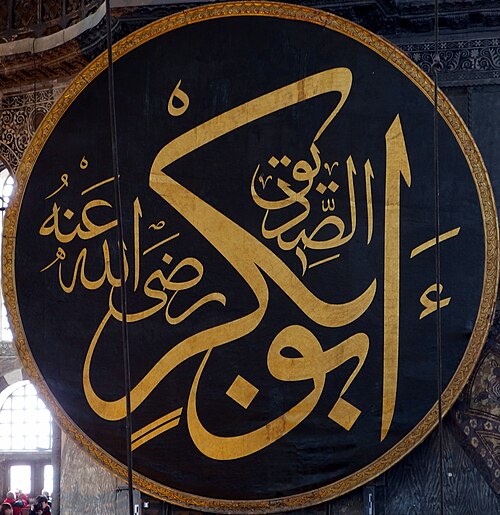
Abu Bakr
MedievalEmperorRashidun Caliphate573 — 634
First Rashidun caliph, unified Arabia after Muhammad's death.
Compare Abu Bakr with another historical figure:
Quick Facts
Born
573
Died
634
Country
Rashidun Caliphate
Era
Medieval
Occupation
Emperor
Score Overview
Military (10%)75
Political (20%)63
Influence (20%)88
Legacy (20%)80
Leadership (15%)77
Strategy (15%)66
Total Score77.1
Abu Bakr — Complete Timeline
632 AD
Ridda Wars (Apostasy Wars)War◆ Major
Abu Bakr launched military campaigns against Arabian tribes that renounced Islam or refused to pay zakat after Muhammad's death. The wars, led by generals like Khalid ibn al-Walid, reestablished Muslim control over Arabia and consolidated the caliphate.
Ridda WarsConsolidationRashidun
Impact: regional
Election as First CaliphPolitical Action
After the death of Muhammad, Abu Bakr was elected as the first caliph (successor) at Saqifah. His election unified the Muslim community, though it caused controversy among some supporters of Ali. He became the leader of the nascent Islamic state.
CaliphateSuccessionRashidun
Impact: global
633 AD
Compilation of the QuranCultural◆ Major
Abu Bakr ordered the compilation of the Quran into a single written manuscript after many memorizers died in the Ridda Wars. Zayd ibn Thabit collected verses from various sources, creating the first official codex, which later served as the basis for Uthman's standard text.
QuranCompilationRashidun
Impact: globalconstructive
634 AD
Death of Abu BakrPolitical Action◆ Major
Abu Bakr died after a brief illness, having designated Umar as his successor. His caliphate lasted only two years but established the foundations of the Islamic state, including the expansion beyond Arabia and the preservation of the Quran.
DeathSuccessionRashidun
Impact: global
Detailed Scores
▶View all detailed scores
Military
Strategy
7
Tactics
7
Battles
7
Army Scale
6
War Impact
7
Political
Governance
7
Reform
7
Stability
7
Policy
7
Power
7
Influence
History
9
Global
8
Culture
9
Ideology
9
Legacy
8
People often compare with
See how Abu Bakr stacks up against other historical figures
Popular Comparisons
Abu Bakr vs Rajendra Chola I
vs Rajendra Chola I82
Abu Bakr vs Genghis Khan
vs Genghis Khan81
Abu Bakr vs Emperor Wen of Sui
vs Emperor Wen of Sui80
Abu Bakr vs Emperor Taizong of Tang
vs Emperor Taizong of Tang79
Abu Bakr vs Suleiman I
vs Suleiman I79
Abu Bakr vs Alexios I Komnenos
vs Alexios I Komnenos78