Loading...
Analysis will be generated on first visit.
Scores and timeline are available below. The page will refresh automatically when ready.
Emperor Hanzei vs Qin Shi Huang
Qin Shi Huang leads by 35.6 pts · 2 figures compared
…
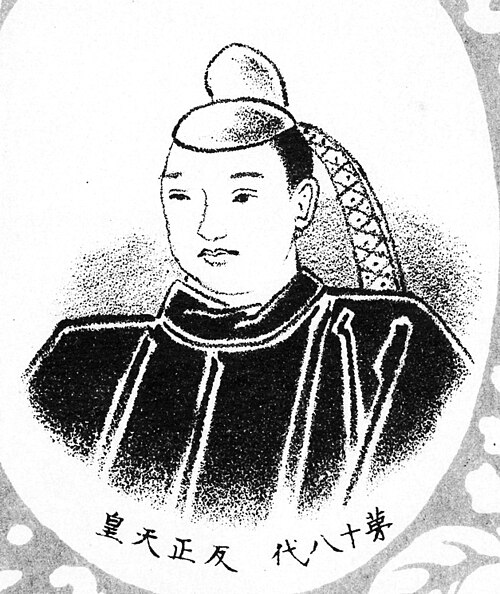
Emperor Hanzei
Emperor · Ancient
47.9Total
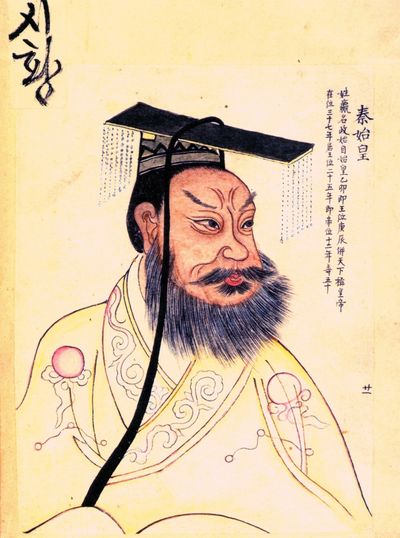
Qin Shi Huang
Emperor · Ancient
83.5Total
Basic Information
Born
352
-259
Died
410
-210
Era
Ancient
Ancient
Nationality
Japan
China
Occupation
Emperor
Emperor
Civilization
Eastern
Eastern
Score Comparison
Military (10%)
41.5
80.0
Political (20%)
47.7
88.0
Influence (20%)
58.5
82.0
Legacy (20%)
44.9
85.0
Leadership (15%)
42.2
88.0
Strategy (15%)
47.8
75.0
TOTAL
47.9
83.5
Rankings
🥇
Qin Shi HuangLeader
Mil: 80.0Pol: 88.0Inf: 82.0
83.5
🥈
Emperor Hanzei
Mil: 41.5Pol: 47.7Inf: 58.5
47.9
+35.6 behind
How This Comparison Works
Algorithm
Each figure is scored on 6 dimensions (0—100 scale) based on structured historical data: Military (10%), Political (20%), Influence (20%), Legacy (20%), Leadership (15%), Strategy (15%). The weighted total produces the final ranking.
Data Sources
Scores are computed from structured sub-indicators in the database. Scale factors adjust for era (Ancient ×0.85, Modern ×1.0) and civilization size (Eastern ×1.05, Other ×0.80) to account for differences in population and military scale.
Maximum 3 Figures
Comparisons are limited to 2—3 figures to ensure readability and statistical meaningfulness.
Error Margins
±5 points per dimension — Sub-scores are derived from historical records with inherent uncertainty. Two figures within 5 points on a dimension should be considered roughly equivalent in that area.
Total Score Accuracy
±3 points overall — The weighted combination of 6 dimensions produces a total score with approximately ±3 points of uncertainty. Differences of less than 3 points are not statistically significant— the figures are effectively tied.
Known Limitations
- Historical records are incomplete and uneven across civilizations
- Figures from oral-tradition societies may be underrepresented
- Occupation labels can misclassify multi-role figures
- Scores measure capability and impact, not moral character
- Quantitative scoring is a comparison tool, not absolute truth
Capability Radar
Military (10%) — Battles & Warfare
Battles
35
85
Win Rate
34
90
Expansion
36
90
Political (20%) — Governance & Reform
Reform
10
95
Diplomacy
10
75
Economy
10
90
Influence (20%) — Cultural & Global Reach
Cultural
5
95
Global
5
85
Legacy (20%) — Historical Impact
Historical
5
95
Longevity
5
95
Leadership (15%) — Power & Stability
Tenure
10
70
Stability
15
65
Strategy (15%) — Tactics & Innovation
Strategy
44
85
Tactics
44
80
Reform
47
95
Analysis will be generated on first visit.
Scores and timeline are available below. The page will refresh automatically when ready.
Emperor Hanzei — Complete Timeline
406 AD
Reign of Emperor HanzeiPolitical Action
Emperor Hanzei, brother of Richu, reigned for a brief period in the early 5th century. His reign is recorded in the Nihon Shoki but is considered historically obscure, with few specific events attributed to him.
SuccessionYamato Period
Impact: national
Qin Shi Huang — Complete Timeline
246 BC
Construction of the Mausoleum and Terracotta ArmyOther◆ Major
Qin Shi Huang commissioned a vast mausoleum complex near Xi'an, guarded by thousands of life-sized terracotta soldiers, horses, and chariots. The project employed hundreds of thousands of workers and reflected his obsession with immortality and imperial power.
Impact: global
230 BC
Conquest of the Six Warring StatesWar
From 230 to 221 BCE, Ying Zheng led the Qin state in a series of campaigns that conquered the Han, Zhao, Wei, Chu, Yan, and Qi states. This unified China under a single ruler for the first time, ending the Warring States period.
Impact: global
221 BC
Standardization of Writing, Currency, and MeasurementsReform◆ Major
Qin Shi Huang ordered the standardization of Chinese script, currency, and weights and measures across the unified empire. This facilitated administration, trade, and cultural integration, laying a foundation for future dynasties.
Impact: globalconstructive
Proclamation of the Qin DynastyPolitical Action
After conquering the last independent state, Ying Zheng declared himself Shi Huangdi (First Emperor), founding the Qin Dynasty. He adopted a new title to signify his supreme authority and initiated centralized imperial rule.
Impact: global
214 BC
Initiation of the Great Wall ConstructionOther◆ Major
Qin Shi Huang ordered the connection and extension of existing northern fortifications to create a unified defensive wall against nomadic Xiongnu raids. This project involved massive conscripted labor and became the precursor to the later Great Wall.
Impact: regional
213 BC
Burning of Books and Burying of ScholarsPolitical Action◆ Major
On the advice of Li Si, Qin Shi Huang ordered the burning of historical records and philosophical texts not aligned with Legalist doctrine. He also had 460 Confucian scholars buried alive to suppress dissent and consolidate ideological control.
Impact: nationaldestructive
Similar Comparisons
Comments & Discussion
黄沙百战6/17/2026
Qin Shi Huang wasn't just a conqueror; he was a systematic revolutionary. Standardizing writing, currency, and axle lengths across China wasn't mere pragmatism—it was forced unification that lasted two millennia. Hanzei? He's so forgettable that Japanese chroniclers literally invented reigns to fill gaps. One man built an empire's skeleton; the other barely left a footnote.
墨守成规6/17/2026
拿秦始皇跟反正统时代日本地区小酋长比,本身就是降维打击。始皇帝车同轨书同文,修长城灵渠驰道,每天批阅一百二十斤竹简奏章。倭王反正在位时间都成谜,搞不好就是个祭祀头目。这对比好比拿银河跟萤火虫比亮度。
Caesar's Ghost6/17/2026
Let's be honest—comparing Hanzei to Qin Shi Huang is like comparing a village mayor to Genghis Khan. The First Emperor commanded armies that numbered in the hundreds of thousands, built a road network longer than the Roman Empire's, and created a bureaucratic state that would define China for 2,000 years. Hanzei might not have even ruled more than a valley. Scale matters in history.
数据猎人6/17/2026
历史对比最怕印象流。始皇帝陵墓光陪葬坑就占地56平方公里,秦直道宽达20米。再看看倭王反正——连《日本书纪》里他的在位年份都前后矛盾,有说30年有说60年。秦代户籍统计精确到户,汉倭国连文字都要等两百年后才系统引入。这不是一个量级的比较,这是拿算盘跟超级计算机比。
Revisionist Lens6/17/2026
Everyone romanticizes the "First Emperor" because he left monuments. But look closer: his Legalist terror killed thousands, burned books, buried scholars alive. His empire collapsed within four years of his death. Meanwhile, Hanzei's reign, however obscure, might represent peaceful continuity in early Yamato state formation. Sometimes the quiet sovereigns enable stability; the "great" ones just build faster-burning pyres.