Loading...
Analysis will be generated on first visit.
Scores and timeline are available below. The page will refresh automatically when ready.
Anastasio Somoza Garcia vs Qin Shi Huang
Qin Shi Huang leads by 15.4 pts · 2 figures compared
…

Anastasio Somoza Garcia
General · Modern
68.1Total
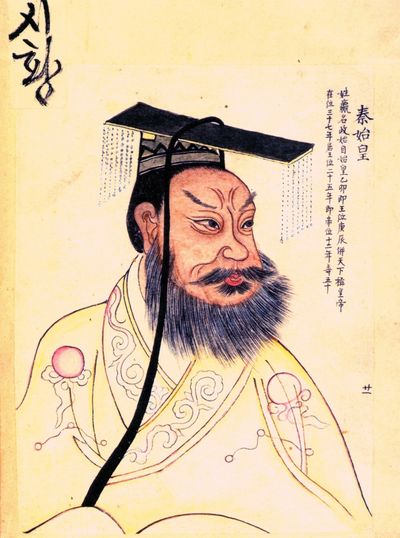
Qin Shi Huang
Emperor · Ancient
83.5Total
Basic Information
Born
1896
-259
Died
1956
-210
Era
Modern
Ancient
Nationality
Nicaragua
China
Occupation
General
Emperor
Civilization
Western
Eastern
Score Comparison
Military (10%)
41.3
80.0
Political (20%)
72.0
88.0
Influence (20%)
73.7
82.0
Legacy (20%)
66.5
85.0
Leadership (15%)
82.9
88.0
Strategy (15%)
60.9
75.0
TOTAL
68.1
83.5
Rankings
🥇
Qin Shi HuangLeader
Mil: 80.0Pol: 88.0Inf: 82.0
83.5
🥈
Anastasio Somoza Garcia
Mil: 41.3Pol: 72.0Inf: 73.7
68.1
+15.4 behind
How This Comparison Works
Algorithm
Each figure is scored on 6 dimensions (0—100 scale) based on structured historical data: Military (10%), Political (20%), Influence (20%), Legacy (20%), Leadership (15%), Strategy (15%). The weighted total produces the final ranking.
Data Sources
Scores are computed from structured sub-indicators in the database. Scale factors adjust for era (Ancient ×0.85, Modern ×1.0) and civilization size (Eastern ×1.05, Other ×0.80) to account for differences in population and military scale.
Maximum 3 Figures
Comparisons are limited to 2—3 figures to ensure readability and statistical meaningfulness.
Error Margins
±5 points per dimension — Sub-scores are derived from historical records with inherent uncertainty. Two figures within 5 points on a dimension should be considered roughly equivalent in that area.
Total Score Accuracy
±3 points overall — The weighted combination of 6 dimensions produces a total score with approximately ±3 points of uncertainty. Differences of less than 3 points are not statistically significant— the figures are effectively tied.
Known Limitations
- Historical records are incomplete and uneven across civilizations
- Figures from oral-tradition societies may be underrepresented
- Occupation labels can misclassify multi-role figures
- Scores measure capability and impact, not moral character
- Quantitative scoring is a comparison tool, not absolute truth
Capability Radar
Military (10%) — Battles & Warfare
Battles
15
85
Win Rate
20
90
Expansion
10
90
Political (20%) — Governance & Reform
Reform
20
95
Diplomacy
50
75
Economy
30
90
Influence (20%) — Cultural & Global Reach
Cultural
20
95
Global
30
85
Legacy (20%) — Historical Impact
Historical
40
95
Longevity
40
95
Leadership (15%) — Power & Stability
Tenure
70
70
Stability
25
65
Strategy (15%) — Tactics & Innovation
Strategy
15
85
Tactics
10
80
Reform
10
95
Analysis will be generated on first visit.
Scores and timeline are available below. The page will refresh automatically when ready.
Anastasio Somoza Garcia — Complete Timeline
1934 AD
Assassination of Sandino (1934)Political Action◆ Major
Anastasio Somoza Garc
AssassinationSandinoNational Guard
Impact: nationaldestructive
1937 AD
Presidency and Consolidation of Power (1937-1956)Political Action◆ Major
Somoza Garc
DictatorshipSomoza DynastyCorruption
Impact: nationaldestructive
1956 AD
Assassination (1956)Other◆ Major
Somoza Garc
AssassinationRigoberto López PérezDynasty
Impact: nationaltragic
Qin Shi Huang — Complete Timeline
246 BC
Construction of the Mausoleum and Terracotta ArmyOther◆ Major
Qin Shi Huang commissioned a vast mausoleum complex near Xi'an, guarded by thousands of life-sized terracotta soldiers, horses, and chariots. The project employed hundreds of thousands of workers and reflected his obsession with immortality and imperial power.
Impact: global
230 BC
Conquest of the Six Warring StatesWar
From 230 to 221 BCE, Ying Zheng led the Qin state in a series of campaigns that conquered the Han, Zhao, Wei, Chu, Yan, and Qi states. This unified China under a single ruler for the first time, ending the Warring States period.
Impact: global
221 BC
Standardization of Writing, Currency, and MeasurementsReform◆ Major
Qin Shi Huang ordered the standardization of Chinese script, currency, and weights and measures across the unified empire. This facilitated administration, trade, and cultural integration, laying a foundation for future dynasties.
Impact: globalconstructive
Proclamation of the Qin DynastyPolitical Action
After conquering the last independent state, Ying Zheng declared himself Shi Huangdi (First Emperor), founding the Qin Dynasty. He adopted a new title to signify his supreme authority and initiated centralized imperial rule.
Impact: global
214 BC
Initiation of the Great Wall ConstructionOther◆ Major
Qin Shi Huang ordered the connection and extension of existing northern fortifications to create a unified defensive wall against nomadic Xiongnu raids. This project involved massive conscripted labor and became the precursor to the later Great Wall.
Impact: regional
213 BC
Burning of Books and Burying of ScholarsPolitical Action◆ Major
On the advice of Li Si, Qin Shi Huang ordered the burning of historical records and philosophical texts not aligned with Legalist doctrine. He also had 460 Confucian scholars buried alive to suppress dissent and consolidate ideological control.
Impact: nationaldestructive
Similar Comparisons
Comments & Discussion
军事史学家怒6/17/2026
Calling both "tyrants" misses the point entirely. Qin Shi Huang built the Terracotta Army—7,000 life-sized warriors with unique faces, each armed with real bronze weapons. That's logistical genius, not just brutality. Somoza's National Guard, by contrast, was a 5,000-man paramilitary force funded by the U.S. Marines. One created an army from scratch in a pre-industrial society; the other inherited a mercenary force. Different leagues of power-building entirely.
数据怀疑派6/17/2026
The "house of cards" metaphor is lazy. Somoza's regime lasted 42 years across three family members—that's longer than Qin's dynasty (15 years). Let's talk GDP: under Somoza, Nicaragua's economy grew at 4.2% annually in the 1950s, while Qin's standardization of weights and measures increased trade efficiency but caused mass starvation. Longevity and economic output don't equal "collapse within a generation." Your narrative needs more numbers.
古典学者6/17/2026
Qin Shi Huang is arguably China's greatest ruler, but his connection to Legalism is overblown. The core philosophy was brutally practical: standardized writing, axle widths, law codes. Somoza's "dynasty" was a family business, not a civilization shift. One shaped East Asia for 2,000 years; the other shaped Nicaragua for 40 years. The scale of ambition is incomparable. Qin built the Great Wall; Somoza built himself a palace called El Retiro.
历史迷6/17/2026
You can't compare a man who unified warring kingdoms with a man who unified shoe-shining contracts. Qin Shi Huang destroyed the Hundred Schools of Thought; Somoza destroyed the barrios of Managua after the 1931 earthquake. Both brutal, but context matters. Qin was responding to centuries of feudal fragmentation; Somoza was responding to a banana republic's power vacuum. One's legacy is the Great Wall; the other's is "Somoza's Last Sigh" in Nicaraguan jokes. That says everything.
古代史铁粉6/17/2026
拿秦始皇和索摩查比?笑话。始皇统一文字、车同轨、设郡县,两千年前就想到了民族国家的基础。索摩查呢?靠美国使馆的酒会和美国佬的枪杆子吃饭。一个创造了文明基因,一个创造了腐败模板。别用“独裁者”这种懒标签抹杀历史深度。