Loading...
Analysis will be generated on first visit.
Scores and timeline are available below. The page will refresh automatically when ready.
Qin Shi Huang vs Sucheta Kripalani
Qin Shi Huang leads by 12.6 pts · 2 figures compared
…
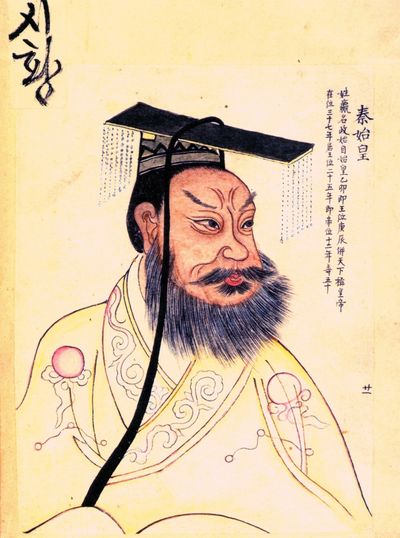
Qin Shi Huang
Emperor · Ancient
83.5Total

Sucheta Kripalani
Politician · Modern
70.9Total
Basic Information
Born
-259
1908
Died
-210
1974
Era
Ancient
Modern
Nationality
China
India
Occupation
Emperor
Politician
Civilization
Eastern
Indian
Score Comparison
Military (10%)
80.0
52.2
Political (20%)
88.0
84.7
Influence (20%)
82.0
72.0
Legacy (20%)
85.0
61.5
Leadership (15%)
88.0
88.0
Strategy (15%)
75.0
58.7
TOTAL
83.5
70.9
Rankings
🥇
Qin Shi HuangLeader
Mil: 80.0Pol: 88.0Inf: 82.0
83.5
🥈
Sucheta Kripalani
Mil: 52.2Pol: 84.7Inf: 72.0
70.9
+12.6 behind
How This Comparison Works
Algorithm
Each figure is scored on 6 dimensions (0—100 scale) based on structured historical data: Military (10%), Political (20%), Influence (20%), Legacy (20%), Leadership (15%), Strategy (15%). The weighted total produces the final ranking.
Data Sources
Scores are computed from structured sub-indicators in the database. Scale factors adjust for era (Ancient ×0.85, Modern ×1.0) and civilization size (Eastern ×1.05, Other ×0.80) to account for differences in population and military scale.
Maximum 3 Figures
Comparisons are limited to 2—3 figures to ensure readability and statistical meaningfulness.
Error Margins
±5 points per dimension — Sub-scores are derived from historical records with inherent uncertainty. Two figures within 5 points on a dimension should be considered roughly equivalent in that area.
Total Score Accuracy
±3 points overall — The weighted combination of 6 dimensions produces a total score with approximately ±3 points of uncertainty. Differences of less than 3 points are not statistically significant— the figures are effectively tied.
Known Limitations
- Historical records are incomplete and uneven across civilizations
- Figures from oral-tradition societies may be underrepresented
- Occupation labels can misclassify multi-role figures
- Scores measure capability and impact, not moral character
- Quantitative scoring is a comparison tool, not absolute truth
Capability Radar
Military (10%) — Battles & Warfare
Battles
85
44
Win Rate
90
46
Expansion
90
48
Political (20%) — Governance & Reform
Reform
95
40
Diplomacy
75
45
Economy
90
30
Influence (20%) — Cultural & Global Reach
Cultural
95
30
Global
85
20
Legacy (20%) — Historical Impact
Historical
95
40
Longevity
95
25
Leadership (15%) — Power & Stability
Tenure
70
35
Stability
65
35
Strategy (15%) — Tactics & Innovation
Strategy
85
52
Tactics
80
58
Reform
95
59
Analysis will be generated on first visit.
Scores and timeline are available below. The page will refresh automatically when ready.
Qin Shi Huang — Complete Timeline
246 BC
Construction of the Mausoleum and Terracotta ArmyOther◆ Major
Qin Shi Huang commissioned a vast mausoleum complex near Xi'an, guarded by thousands of life-sized terracotta soldiers, horses, and chariots. The project employed hundreds of thousands of workers and reflected his obsession with immortality and imperial power.
Impact: global
230 BC
Conquest of the Six Warring StatesWar
From 230 to 221 BCE, Ying Zheng led the Qin state in a series of campaigns that conquered the Han, Zhao, Wei, Chu, Yan, and Qi states. This unified China under a single ruler for the first time, ending the Warring States period.
Impact: global
221 BC
Standardization of Writing, Currency, and MeasurementsReform◆ Major
Qin Shi Huang ordered the standardization of Chinese script, currency, and weights and measures across the unified empire. This facilitated administration, trade, and cultural integration, laying a foundation for future dynasties.
Impact: globalconstructive
Proclamation of the Qin DynastyPolitical Action
After conquering the last independent state, Ying Zheng declared himself Shi Huangdi (First Emperor), founding the Qin Dynasty. He adopted a new title to signify his supreme authority and initiated centralized imperial rule.
Impact: global
214 BC
Initiation of the Great Wall ConstructionOther◆ Major
Qin Shi Huang ordered the connection and extension of existing northern fortifications to create a unified defensive wall against nomadic Xiongnu raids. This project involved massive conscripted labor and became the precursor to the later Great Wall.
Impact: regional
213 BC
Burning of Books and Burying of ScholarsPolitical Action◆ Major
On the advice of Li Si, Qin Shi Huang ordered the burning of historical records and philosophical texts not aligned with Legalist doctrine. He also had 460 Confucian scholars buried alive to suppress dissent and consolidate ideological control.
Impact: nationaldestructive
Sucheta Kripalani — Complete Timeline
1940 AD
Founded the All India Democratic Women's AssociationPolitical Action
Kripalani co-founded the All India Democratic Women's Association, an organization advocating for women's rights and social reform. The group campaigned for legal equality and economic opportunities for women.
Women's RightsSocial Reform
Impact: nationalprogressive
1942 AD
Participated in Quit India MovementPolitical Action◆ Major
Kripalani was arrested for her participation in the Quit India Movement. She was imprisoned for several months, continuing her activism for Indian independence.
Quit IndiaImprisonment
Impact: nationalconstructive
1946 AD
Elected to Constituent AssemblyPolitical Action◆ Major
Kripalani was elected to the Constituent Assembly of India, where she participated in drafting the Indian Constitution. She contributed to debates on fundamental rights and women's issues.
Constituent AssemblyConstitution
Impact: nationalconstructive
1963 AD
Became first woman Chief Minister of Uttar PradeshPolitical Action
Sucheta Kripalani was sworn in as the Chief Minister of Uttar Pradesh, becoming the first woman to hold the position of chief minister in any Indian state. She served until 1967.
Women in PoliticsChief Minister
Impact: nationalprogressive
Similar Comparisons
Comments & Discussion
LEGION-COMMANDER6/17/2026
Qin Shi Huang built an empire with blood and iron—2,300 kilometers of Great Wall, standardized script, 7,000+ terra-cotta warriors. Sucheta Kripalani won elections with speeches and saris. Show me one statue she erected that lasts as long as any clay soldier. Autocrats get results; democrats just get committee meetings.
墨斗先生6/17/2026
拿秦始皇对比苏切塔·克里帕拉尼,好比拿雷霆对比烛火。她不过管了一个邦,他统一了六国、车同轨、书同文。1963年的女部长能焚书坑儒吗?能铸十二金人吗?别拿政治正确当历史重量。
BRONZE-SKEPTIC6/17/2026
Data point: Qin's population in 221 BC was ~20 million; he conscripted 700,000 for his mausoleum alone. Sucheta governed 75 million in Uttar Pradesh without a single forced labor decree. Efficiency vs. ethics—your pick. But don't pretend the First Emperor's "unity" wasn't built on mass graves.
史海钓客6/17/2026
有趣的是,苏切塔的丈夫贾瓦哈拉尔·克里帕拉尼是国大党元老,她自己却是独立运动老兵。而秦始皇十三岁登基、靠吕不韦和太后掌权。一个继承丈夫衣钵,一个弑父囚母夺权——两种团结,两种血统。谁更“统一”?我看两千年也没进化多少。
REVISIONIST_FIRE6/17/2026
Romantic bullshit. Qin branded scholars alive "to unify thought"? Democracy's just prettier control. Sucheta's 1969 election loss proved the system she served eats its own. Both wanted order—one with laws, one with votes. At least the Emperor admitted he was a tyrant.