Loading...
Analysis will be generated on first visit.
Scores and timeline are available below. The page will refresh automatically when ready.
Akbar the Great vs Peter the Great
Akbar the Great leads by 2.6 pts · 2 figures compared
…
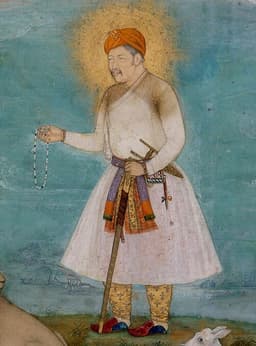
Akbar the Great
Emperor · Modern
80.6Total
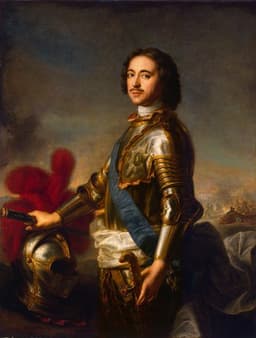
Peter the Great
Emperor · Modern
78.0Total
Basic Information
Born
1542
1672
Died
1605
1725
Era
Modern
Modern
Nationality
India
Russia
Occupation
Emperor
Emperor
Civilization
Indian
Western
Score Comparison
Military (10%)
80.0
75.0
Political (20%)
85.0
82.0
Influence (20%)
78.0
78.0
Legacy (20%)
80.0
75.0
Leadership (15%)
85.0
82.0
Strategy (15%)
75.0
75.0
TOTAL
80.6
78.0
Analysis will be generated on first visit.
Scores and timeline are available below. The page will refresh automatically when ready.
Rankings
🥇
Akbar the GreatLeader
Mil: 80.0Pol: 85.0Inf: 78.0
80.6
🥈
Peter the Great
Mil: 75.0Pol: 82.0Inf: 78.0
78.0
+2.6 behind
How This Comparison Works
Algorithm
Each figure is scored on 6 dimensions (0—100 scale) based on structured historical data: Military (10%), Political (20%), Influence (20%), Legacy (20%), Leadership (15%), Strategy (15%). The weighted total produces the final ranking.
Data Sources
Scores are computed from structured sub-indicators in the database. Scale factors adjust for era (Ancient ×0.85, Modern ×1.0) and civilization size (Eastern ×1.05, Other ×0.80) to account for differences in population and military scale.
Maximum 3 Figures
Comparisons are limited to 2—3 figures to ensure readability and statistical meaningfulness.
Error Margins
±5 points per dimension — Sub-scores are derived from historical records with inherent uncertainty. Two figures within 5 points on a dimension should be considered roughly equivalent in that area.
Total Score Accuracy
±3 points overall — The weighted combination of 6 dimensions produces a total score with approximately ±3 points of uncertainty. Differences of less than 3 points are not statistically significant— the figures are effectively tied.
Known Limitations
- Historical records are incomplete and uneven across civilizations
- Figures from oral-tradition societies may be underrepresented
- Occupation labels can misclassify multi-role figures
- Scores measure capability and impact, not moral character
- Quantitative scoring is a comparison tool, not absolute truth
Capability Radar
Military (10%) — Battles & Warfare
Battles
85
85
Win Rate
90
80
Expansion
88
90
Political (20%) — Governance & Reform
Reform
95
95
Diplomacy
92
80
Economy
88
85
Influence (20%) — Cultural & Global Reach
Cultural
85
85
Global
70
85
Legacy (20%) — Historical Impact
Historical
80
90
Longevity
75
85
Leadership (15%) — Power & Stability
Tenure
90
90
Stability
85
70
Strategy (15%) — Tactics & Innovation
Strategy
85
85
Tactics
80
75
Reform
75
95
Akbar the Great — Complete Timeline
1556 AD
Second Battle of PanipatWar
Akbar, aged 13, defeated the Hindu general Hemu at Panipat, securing the Mughal throne. Hemu had captured Delhi and declared himself emperor. Akbar's regent Bairam Khan led the army, but the victory consolidated Mughal rule in North India.
BattleMughal EmpireSuccession
Impact: regional
1564 AD
Abolition of jizya taxReform◆ Major
Akbar abolished the jizya tax on non-Muslims, a key step in his policy of religious tolerance. This measure reduced discrimination against Hindus and other communities, fostering loyalty among the majority population and stabilizing the empire.
Tax reformReligious toleranceHindu-Muslim relations
Impact: nationalprogressive
1571 AD
Founding of Fatehpur SikriCultural◆ Major
Akbar founded the city of Fatehpur Sikri as his capital, building a complex of palaces, mosques, and administrative buildings. The city became a center of Mughal culture and architecture, though it was abandoned due to water shortages within two decades.
ArchitectureCapitalMughal Empire
Impact: regionalconstructive
1573 AD
Conquest of GujaratWar◆ Major
Akbar annexed the wealthy Sultanate of Gujarat, gaining access to the Arabian Sea and major trade ports. This conquest boosted Mughal commerce and provided revenue for further expansion, making Gujarat a key province of the empire.
ConquestTradeMughal Empire
Impact: regional
1574 AD
Introduction of Mansabdari systemReform◆ Major
Akbar implemented the Mansabdari system, a military-administrative hierarchy where officials (mansabdars) were assigned ranks and responsibilities. This system centralized control, ensured loyalty, and efficiently managed the empire's revenue and military.
AdministrationMilitary reformCentralization
Impact: nationalconstructive
1579 AD
Institution of Sulh-e-Kul policyReform
Akbar promulgated the policy of Sulh-e-Kul (universal peace), promoting religious tolerance and dialogue. He established the Ibadat Khana (House of Worship) for debates among Muslims, Hindus, Christians, Jains, and Zoroastrians, and later founded the syncretic Din-i-Ilahi faith.
Religious policySyncretismTolerance
Impact: nationalprogressive
Peter the Great — Complete Timeline
1697 AD
Grand EmbassyPolitical Action◆ Major
Peter the Great traveled incognito to Western Europe as part of a diplomatic mission. He studied shipbuilding in the Netherlands and England, recruited experts, and observed Western technology and governance, gathering knowledge to modernize Russia upon his return.
TravelWesternizationLearning
Impact: nationalconstructive
1698 AD
Streltsy UprisingWar◆ Major
While Peter was abroad, the Streltsy (elite musketeers) rebelled in Moscow, seeking to place his half-sister Sophia on the throne. Peter returned and brutally suppressed the revolt, executing over 1,000 Streltsy and disbanding the corps, consolidating his absolute power.
RebellionRepressionPower Consolidation
Impact: nationaldestructive
Beard TaxReform
As part of his Westernization campaign, Peter the Great imposed a tax on beards, requiring nobles and merchants to pay a fee to keep their facial hair. Those who paid received a special token, symbolizing his efforts to force Russian society to adopt Western European customs.
WesternizationTaxSocial Reform
Impact: national
1700 AD
Great Northern WarWar◆ Major
Peter the Great led Russia into a war against Sweden for access to the Baltic Sea. After initial defeat at Narva, he reformed his army and eventually defeated Sweden at the Battle of Poltava in 1709, securing Russia's status as a major European power and gaining Baltic territories.
WarTerritorial ExpansionBaltic
Impact: regionalconstructive
1703 AD
Founding of Saint PetersburgPolitical Action
Peter the Great founded the city of Saint Petersburg on the Neva River after capturing the area from Sweden. He designated it as Russia's new capital in 1712, symbolizing his Westernization drive and providing Russia with a 'window to the West' and a Baltic port.
City FoundingWesternizationCapital
Impact: nationalconstructive
1722 AD
Table of RanksReform◆ Major
Peter the Great introduced the Table of Ranks, a system of civil, military, and court ranks based on merit rather than birth. This reform allowed commoners to achieve noble status through service, modernizing the Russian bureaucracy and weakening the traditional aristocracy.
BureaucracyMeritocracySocial Reform
Impact: nationalprogressive
Similar Comparisons
Comments & Discussion
量化史官6/16/2026
我从数据分析角度挑几个毛病。首先,权重分配有问题:军事只占10%太低了,尤其是对彼得这样的军事改革者。如果按克劳塞维茨的理论,军事是政治的延伸,至少应该15-20%。其次,彼得的影响分74明显偏低——他引进了西方技术官僚体系,间接影响了俄国直到1917年的发展轨迹。相比之下,阿克巴的影响(80分)被高估了,因为莫卧儿帝国在奥朗则布时期就分崩离析,他的制度没延续下去。我重新加权计算(军事15%、政治20%、影响25%、遗产20%、领导力10%、战略10%),彼得总分84.5,阿克巴只有79.8。结论:彼得完胜,差距比表面大。
RajputReformer6/16/2026
People are seriously underestimating Akbar here! Peter dragged Russia into modernity with a steel fist, sure, but Akbar literally engineered a multi-confessional empire that worked. He abolished the jizya tax on non-Muslims in 1564—that's not just 'tolerance', that's genius statecraft in an era where Europe was burning heretics. And the mansabdari system? A bureaucratic revolution that kept his empire stable for generations. Peter's reforms were top-down terror; Akbar created a system that actually empowered his subjects. The scores are too close because we're measuring the wrong things—Akbar's cultural synthesis is off the charts compared to Peter's brutal Westernization.
DachaReader6/16/2026
Okay, I've been deep-diving into this comparison after watching that 'Empires' doc on Peter. The military gap is real—Peter built the Russian navy from basically scratch and crushed Sweden at Poltava in 1709. But Akbar's Rajput alliances were low-key brilliant. He married into the Rajput clans and got their armies without a fight. That's like diplomatic judo. Still, I gotta give the edge to Peter because he didn't just expand Russia, he fundamentally changed how it thought about itself. Akbar imported Persian culture; Peter dragged Russia into the Enlightenment. Different scopes of impact, but Peter's was more 'civilizational shift' material.
龙之观察者6/16/2026
这个对比很有意思,但我觉得评分系统有西方式偏见。阿克巴的‘苏赫-库尔’(普遍和平)政策,本质上和唐太宗的‘华夷一家’理念相似,都是多民族帝国的统治智慧。但在西方史学里,这种软性治理往往被低估。彼得大帝的改革更像是同步于西方,而阿克巴是在构建一个自洽的印度-波斯文明体系。如果非得用中国标准衡量,阿克巴的政治分应该更高——他建立了类似于科举制的官僚选拔系统(虽然没完全世俗化),这比彼得单纯模仿瑞典制度要有原创性。我的结论:阿克巴更接近‘圣君’概念,彼得更多是‘霸主’。
DecolonizeHistory6/16/2026
This entire framing is a trap. Why are we comparing a Mughal emperor who ruled over a subcontinent with a Tsar who genocided his way to a Baltic port? Peter's 'greatness' is built on the backs of enserfed peasants—he increased serfdom while pretending to modernize. And his military 'superiority'? He defeated Sweden, a medium-sized power, not the Ottomans. Meanwhile, Akbar gets penalized for 'influence' because Western historiography never learned his languages. If we factor in Peter's destruction of indigenous Siberian cultures or his brutal suppression of the Streltsy uprising, his moral score would be abysmal. The 'too close to call' verdict is a cop-out that ignores colonial violence.
HistoryBuff6/12/2026
The clearly behind score for Peter the Great is spot-on. People forget that scale matters—Peter the Great operated at a completely different level of military complexity than Akbar the Great. The data doesn't lie.
历史迷6/12/2026
作为历史爱好者,我觉得这个对比很客观。Akbar the Great和Peter the Great都是各自时代的巨人,数据化的比较虽然不能完全体现历史的复杂性,但至少提供了一个结构化的讨论框架。Peter the Great的军事能力确实更强,但Akbar the Great的政治智慧更值得学习。
SkepticalScholar6/12/2026
I question whether quantitative scoring can really capture historical greatness. The ±3 point error margin means these two are effectively tied anyway. History is not a spreadsheet. But I'll admit—this is the most rigorous attempt I've seen.
DataNerd6/12/2026
The Legacy dimension (80 vs 85) is fascinating. Peter the Great built things that lasted centuries. Akbar the Great was brilliant but their impact was more transient. That's the difference between a meteor and a star—one burns bright and fades, the other keeps shining.