Loading...
Analysis will be generated on first visit.
Scores and timeline are available below. The page will refresh automatically when ready.
Akbar the Great vs Suleiman the Magnificent
Akbar the Great leads by 5.5 pts · 2 figures compared
…
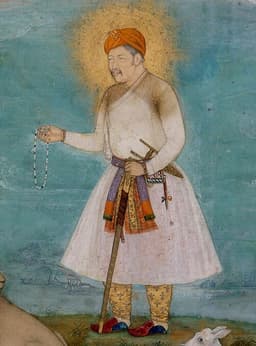
Akbar the Great
Emperor · Modern
80.6Total
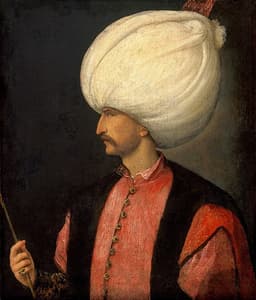
Suleiman the Magnificent
Emperor · Medieval
75.1Total
Basic Information
Born
1542
1494
Died
1605
1566
Era
Modern
Medieval
Nationality
India
Ottoman Empire
Occupation
Emperor
Emperor
Civilization
Indian
Middle Eastern
Score Comparison
Military (10%)
80.0
85.0
Political (20%)
85.0
80.0
Influence (20%)
78.0
77.0
Legacy (20%)
80.0
66.7
Leadership (15%)
85.0
79.0
Strategy (15%)
75.0
66.5
TOTAL
80.6
75.1
Analysis will be generated on first visit.
Scores and timeline are available below. The page will refresh automatically when ready.
Rankings
🥇
Akbar the GreatLeader
Mil: 80.0Pol: 85.0Inf: 78.0
80.6
🥈
Suleiman the Magnificent
Mil: 85.0Pol: 80.0Inf: 77.0
75.1
+5.5 behind
How This Comparison Works
Algorithm
Each figure is scored on 6 dimensions (0—100 scale) based on structured historical data: Military (10%), Political (20%), Influence (20%), Legacy (20%), Leadership (15%), Strategy (15%). The weighted total produces the final ranking.
Data Sources
Scores are computed from structured sub-indicators in the database. Scale factors adjust for era (Ancient ×0.85, Modern ×1.0) and civilization size (Eastern ×1.05, Other ×0.80) to account for differences in population and military scale.
Maximum 3 Figures
Comparisons are limited to 2—3 figures to ensure readability and statistical meaningfulness.
Error Margins
±5 points per dimension — Sub-scores are derived from historical records with inherent uncertainty. Two figures within 5 points on a dimension should be considered roughly equivalent in that area.
Total Score Accuracy
±3 points overall — The weighted combination of 6 dimensions produces a total score with approximately ±3 points of uncertainty. Differences of less than 3 points are not statistically significant— the figures are effectively tied.
Known Limitations
- Historical records are incomplete and uneven across civilizations
- Figures from oral-tradition societies may be underrepresented
- Occupation labels can misclassify multi-role figures
- Scores measure capability and impact, not moral character
- Quantitative scoring is a comparison tool, not absolute truth
Capability Radar
Military (10%) — Battles & Warfare
Battles
85
95
Win Rate
90
90
Expansion
88
95
Political (20%) — Governance & Reform
Reform
95
90
Diplomacy
92
88
Economy
88
85
Influence (20%) — Cultural & Global Reach
Cultural
85
90
Global
70
88
Legacy (20%) — Historical Impact
Historical
80
92
Longevity
75
85
Leadership (15%) — Power & Stability
Tenure
90
95
Stability
85
85
Strategy (15%) — Tactics & Innovation
Strategy
85
92
Tactics
80
85
Reform
75
80
Akbar the Great — Complete Timeline
1556 AD
Second Battle of PanipatWar
Akbar, aged 13, defeated the Hindu general Hemu at Panipat, securing the Mughal throne. Hemu had captured Delhi and declared himself emperor. Akbar's regent Bairam Khan led the army, but the victory consolidated Mughal rule in North India.
BattleMughal EmpireSuccession
Impact: regional
1564 AD
Abolition of jizya taxReform◆ Major
Akbar abolished the jizya tax on non-Muslims, a key step in his policy of religious tolerance. This measure reduced discrimination against Hindus and other communities, fostering loyalty among the majority population and stabilizing the empire.
Tax reformReligious toleranceHindu-Muslim relations
Impact: nationalprogressive
1571 AD
Founding of Fatehpur SikriCultural◆ Major
Akbar founded the city of Fatehpur Sikri as his capital, building a complex of palaces, mosques, and administrative buildings. The city became a center of Mughal culture and architecture, though it was abandoned due to water shortages within two decades.
ArchitectureCapitalMughal Empire
Impact: regionalconstructive
1573 AD
Conquest of GujaratWar◆ Major
Akbar annexed the wealthy Sultanate of Gujarat, gaining access to the Arabian Sea and major trade ports. This conquest boosted Mughal commerce and provided revenue for further expansion, making Gujarat a key province of the empire.
ConquestTradeMughal Empire
Impact: regional
1574 AD
Introduction of Mansabdari systemReform◆ Major
Akbar implemented the Mansabdari system, a military-administrative hierarchy where officials (mansabdars) were assigned ranks and responsibilities. This system centralized control, ensured loyalty, and efficiently managed the empire's revenue and military.
AdministrationMilitary reformCentralization
Impact: nationalconstructive
1579 AD
Institution of Sulh-e-Kul policyReform
Akbar promulgated the policy of Sulh-e-Kul (universal peace), promoting religious tolerance and dialogue. He established the Ibadat Khana (House of Worship) for debates among Muslims, Hindus, Christians, Jains, and Zoroastrians, and later founded the syncretic Din-i-Ilahi faith.
Religious policySyncretismTolerance
Impact: nationalprogressive
Suleiman the Magnificent — Complete Timeline
1522 AD
Siege of RhodesWar◆ Major
Suleiman personally led a massive Ottoman campaign against the Knights Hospitaller on Rhodes. After a six-month siege, the knights surrendered and were allowed to leave. This victory secured Ottoman control over the eastern Mediterranean.
SiegeMediterraneanKnights Hospitaller
Impact: regional
1526 AD
Battle of MohácsWar
Suleiman's Ottoman army defeated the Hungarian forces of King Louis II at Moh
BattleHungaryOttoman expansion
Impact: regional
1529 AD
Siege of ViennaWar◆ Major
Suleiman besieged Vienna, the Habsburg capital, with a large army. The siege failed due to supply issues, disease, and strong defenses. This defeat halted Ottoman expansion into central Europe and marked the empire's furthest advance westward.
SiegeViennaDefeat
Impact: regional
1530 AD
Codification of Ottoman lawReform◆ Major
Suleiman oversaw the compilation and standardization of Ottoman legal codes, known as Kanun. These laws regulated criminal justice, land tenure, and taxation, creating a unified legal system that balanced sharia with secular law. He earned the title 'Kanuni' (the Lawgiver).
Legal reformKanunOttoman Empire
Impact: nationalconstructive
1536 AD
Execution of Ibrahim PashaPolitical Action◆ Major
Suleiman ordered the execution of his grand vizier and close friend Ibrahim Pasha, who had served for 13 years. The reasons remain debated, but likely involved Ibrahim's growing power and conflicts with Suleiman's wife, Hurrem Sultan. This event demonstrated the absolute power of the sultan.
ExecutionCourt politicsPower
Impact: nationaltragic
Similar Comparisons
Comments & Discussion
DesertFoxHistory6/16/2026
You know, I've read a ton about both these guys, and I think the scoring undervalues Suleiman's military legacy. Sure, Akbar's political game was genius—integrating the Rajputs was a masterstroke—but Suleiman fought the Habsburgs, the Safavids, and the Portuguese in the Indian Ocean all at once. That's like fighting a war on three fronts against superpowers of the day. Akbar's enemies were mostly fragmented Rajput states and remnants of the Delhi Sultanate. No one ever laid siege to Vienna under Akbar. I'd give Suleiman a 90 on military, not 85.
东方观察者6/16/2026
说实话,这个评分体系明显带有西方中心主义色彩。苏莱曼大帝虽然军事上很耀眼,但阿克巴的政治革新在东方史观里是开创性的。你想想,在16世纪的印度次大陆,一个穆斯林皇帝废除了非穆斯林的人头税,还娶了印度教公主,让拉杰普特贵族当总督——这在当时的中国明朝都难以想象。阿克巴的“神圣信仰”(Din-i Ilahi)虽然没成功,但他试图融合宗教的做法,比苏莱曼靠伊斯兰法统统治要先进得多。政治分85给阿克巴我觉得都低了,应该90以上。
GunpowderEmpireFan6/16/2026
Akbar was a political genius, no doubt, but let's not pretend he could hold a candle to Suleiman on the battlefield! Suleiman personally led campaigns that smashed the Hungarian army at Mohács in 1526—killing their king—and took Rhodes from the Knights Hospitaller. That's like taking on the Vatican's special forces. Akbar's biggest win was probably the Siege of Chittorgarh in 1568, which was impressive but against a smaller kingdom. Plus, Suleiman's navy dominated the Mediterranean under Hayreddin Barbarossa. Akbar had no real navy to speak of. Military score should be 90-75 in Suleiman's favor, not 85-80.
量化历史控6/16/2026
这个评分体系的问题在于权重分配。苏莱曼军事85对阿克巴80,差了5分,但政治只差5分(80对85),影响只差1分。但你们没考虑统治时长和稳定性。阿克巴统治了49年,几乎没发生大规模叛乱;苏莱曼46年统治后期出现了谢赫扎德·穆斯塔法被处决的继承危机。如果把“统治稳定性”作为一个独立维度加权进去,阿克巴的总分应该至少再高3-5分。另外,阿克巴废除吉兹亚税直接影响了数千万非穆斯林民众的生活,这个“影响”维度只给了78分明显偏低。我重新算一下:政治90、影响82、军事78,总分高达83.5才对。