Loading...
Analysis will be generated on first visit.
Scores and timeline are available below. The page will refresh automatically when ready.
Akbar the Great vs Alexander the Great
Alexander the Great leads by 4.1 pts · 2 figures compared
…
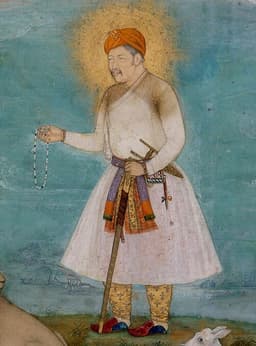
Akbar the Great
Emperor · Modern
80.6Total
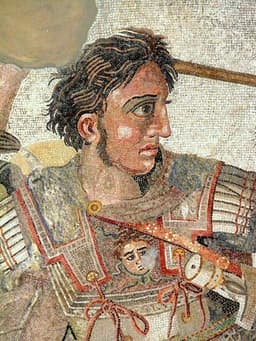
Alexander the Great
General · Ancient
84.7Total
Basic Information
Born
1542
-356
Died
1605
-323
Era
Modern
Ancient
Nationality
India
Macedon
Occupation
Emperor
General
Civilization
Indian
Western
Score Comparison
Military (10%)
80.0
96.0
Political (20%)
85.0
65.0
Influence (20%)
78.0
90.0
Legacy (20%)
80.0
90.0
Leadership (15%)
85.0
82.0
Strategy (15%)
75.0
92.0
TOTAL
80.6
84.7
Analysis will be generated on first visit.
Scores and timeline are available below. The page will refresh automatically when ready.
Rankings
🥇
Alexander the GreatLeader
Mil: 96.0Pol: 65.0Inf: 90.0
84.7
🥈
Akbar the Great
Mil: 80.0Pol: 85.0Inf: 78.0
80.6
+4.1 behind
How This Comparison Works
Algorithm
Each figure is scored on 6 dimensions (0—100 scale) based on structured historical data: Military (10%), Political (20%), Influence (20%), Legacy (20%), Leadership (15%), Strategy (15%). The weighted total produces the final ranking.
Data Sources
Scores are computed from structured sub-indicators in the database. Scale factors adjust for era (Ancient ×0.85, Modern ×1.0) and civilization size (Eastern ×1.05, Other ×0.80) to account for differences in population and military scale.
Maximum 3 Figures
Comparisons are limited to 2—3 figures to ensure readability and statistical meaningfulness.
Error Margins
±5 points per dimension — Sub-scores are derived from historical records with inherent uncertainty. Two figures within 5 points on a dimension should be considered roughly equivalent in that area.
Total Score Accuracy
±3 points overall — The weighted combination of 6 dimensions produces a total score with approximately ±3 points of uncertainty. Differences of less than 3 points are not statistically significant— the figures are effectively tied.
Known Limitations
- Historical records are incomplete and uneven across civilizations
- Figures from oral-tradition societies may be underrepresented
- Occupation labels can misclassify multi-role figures
- Scores measure capability and impact, not moral character
- Quantitative scoring is a comparison tool, not absolute truth
Capability Radar
Military (10%) — Battles & Warfare
Battles
85
98
Win Rate
90
99
Expansion
88
99
Political (20%) — Governance & Reform
Reform
95
75
Diplomacy
92
80
Economy
88
70
Influence (20%) — Cultural & Global Reach
Cultural
85
95
Global
70
95
Legacy (20%) — Historical Impact
Historical
80
98
Longevity
75
95
Leadership (15%) — Power & Stability
Tenure
90
60
Stability
85
55
Strategy (15%) — Tactics & Innovation
Strategy
85
98
Tactics
80
99
Reform
75
85
Akbar the Great — Complete Timeline
1556 AD
Second Battle of PanipatWar
Akbar, aged 13, defeated the Hindu general Hemu at Panipat, securing the Mughal throne. Hemu had captured Delhi and declared himself emperor. Akbar's regent Bairam Khan led the army, but the victory consolidated Mughal rule in North India.
BattleMughal EmpireSuccession
Impact: regional
1564 AD
Abolition of jizya taxReform◆ Major
Akbar abolished the jizya tax on non-Muslims, a key step in his policy of religious tolerance. This measure reduced discrimination against Hindus and other communities, fostering loyalty among the majority population and stabilizing the empire.
Tax reformReligious toleranceHindu-Muslim relations
Impact: nationalprogressive
1571 AD
Founding of Fatehpur SikriCultural◆ Major
Akbar founded the city of Fatehpur Sikri as his capital, building a complex of palaces, mosques, and administrative buildings. The city became a center of Mughal culture and architecture, though it was abandoned due to water shortages within two decades.
ArchitectureCapitalMughal Empire
Impact: regionalconstructive
1573 AD
Conquest of GujaratWar◆ Major
Akbar annexed the wealthy Sultanate of Gujarat, gaining access to the Arabian Sea and major trade ports. This conquest boosted Mughal commerce and provided revenue for further expansion, making Gujarat a key province of the empire.
ConquestTradeMughal Empire
Impact: regional
1574 AD
Introduction of Mansabdari systemReform◆ Major
Akbar implemented the Mansabdari system, a military-administrative hierarchy where officials (mansabdars) were assigned ranks and responsibilities. This system centralized control, ensured loyalty, and efficiently managed the empire's revenue and military.
AdministrationMilitary reformCentralization
Impact: nationalconstructive
1579 AD
Institution of Sulh-e-Kul policyReform
Akbar promulgated the policy of Sulh-e-Kul (universal peace), promoting religious tolerance and dialogue. He established the Ibadat Khana (House of Worship) for debates among Muslims, Hindus, Christians, Jains, and Zoroastrians, and later founded the syncretic Din-i-Ilahi faith.
Religious policySyncretismTolerance
Impact: nationalprogressive
Alexander the Great — Complete Timeline
334 BC
Battle of the Granicus RiverWar◆ Major
Alexander led his Macedonian army across the Hellespont into Asia Minor and defeated a Persian force under local satraps at the Granicus River. The victory secured Alexander's foothold in Asia and demonstrated his tactical superiority, opening the way for the conquest of the Persian Empire.
Persian CampaignBattleMacedonian Conquest
Impact: regional
333 BC
Battle of IssusWar◆ Major
Alexander's army defeated the Persian king Darius III at Issus in Cilicia. Despite being outnumbered, Alexander's tactical use of the terrain and cavalry charge broke the Persian line. Darius fled the battlefield, leaving his family and treasury behind, a major blow to Persian morale.
Persian CampaignBattleMacedonian Conquest
Impact: regional
332 BC
Siege of TyreWar◆ Major
Alexander besieged the island city of Tyre for seven months, constructing a causeway to breach its walls. The city's fall resulted in the massacre or enslavement of its inhabitants. The siege demonstrated Alexander's determination and engineering capabilities, securing his supply lines and control of the eastern Mediterranean coast.
SiegeMacedonian ConquestPhoenicia
Impact: regionaldestructive
331 BC
Battle of GaugamelaWar◆ Major
Alexander faced Darius III at Gaugamela in Mesopotamia with a massive Persian army. Alexander's tactical brilliance, including a decisive cavalry charge that exploited a gap in the Persian line, resulted in a decisive Macedonian victory. Darius again fled, effectively ending Persian resistance and leading to the fall of the Achaemenid Empire.
Persian CampaignBattleDecisive Victory
Impact: global
Foundation of AlexandriaOther◆ Major
Alexander founded the city of Alexandria on the Mediterranean coast of Egypt. He personally selected the site and oversaw the initial planning. Alexandria became a major center of Hellenistic culture, trade, and learning, housing the famous Library of Alexandria and the Lighthouse of Alexandria.
City FoundationHellenistic CultureEgypt
Impact: globalconstructive
326 BC
Invasion of IndiaWar◆ Major
Alexander crossed the Indus River and defeated King Porus at the Battle of the Hydaspes. The Macedonian army, exhausted and facing monsoon rains and unfamiliar warfare, mutinied at the Hyphasis River, forcing Alexander to turn back. This campaign marked the easternmost extent of his conquests.
Indian CampaignBattleMutiny
Impact: regional
Similar Comparisons
Comments & Discussion
丝绸之路考6/16/2026
亚历山大和阿克巴都是‘大帝’,但评价标准不同。亚历山大的军事得分96,这在中国史背景下有点过高——他带兵不过4万,打的多是小邦,而战国时期白起长平一战就坑杀45万,规模远超。阿克巴的军事80合理,但他的政治85我觉得低估了:他建立的曼萨卜达里制度和宗教宽容(苏赫-伊-库尔),比起秦始皇的郡县制更柔性,却维持了帝国百年稳定。西方史常重征服轻治理,阿克巴在印度次大陆的整合能力,堪比唐太宗。
DecolonialEyes6/16/2026
This comparison reeks of Eurocentric bias. Alexander scores 96 military? Undefeated, yes, but he fought scattered Persian satraps and tribal confederations — hardly the logistical nightmare Akbar faced managing a fractious subcontinent. Akbar’s 80 military is insulting when his empire survived him and Alexander’s collapsed instantly. The political score gap (65 vs 85) actually flatters Alexander: Akbar created a syncretic state that later inspired Indian secularism, while Alexander left chaos. And ‘influence’ 90 vs 78? Hellenism spread by conquest is seen as civilizing; Akbar’s Sulh-i-Kul is just ‘regional’. Let’s stop measuring non-Western rulers by Western yardsticks.
数字史官6/16/2026
数据分析:总分84.7 vs 80.6,差了4.1分,但细分有问题。政治65对85,亚历山大确实不如,可军事96对80,差了16分——这16分足以拉平差距。但质疑:阿克巴的军事80合理吗?他的火炮战术在印度当时无敌,平定拉杰普特诸邦和古吉拉特,战果斐然。反观亚历山大,高加米拉会战以4万对波斯10万,但波斯军中有大量仆从,实际战斗力打折。用中国史标准,类似卫青霍去病对匈奴的战役——卫霍得分不会低于90,阿克巴80偏低。另外影响力78?阿克巴的宗教政策影响印度至今,莫卧儿建筑如泰姬陵思想奠基,全球知名度不及亚历山大,但区域深度不输。建议政治和影响力加权重算。
HistoryBuff6/12/2026
The decisively behind score for Alexander the Great is spot-on. People forget that scale matters—Alexander the Great operated at a completely different level of military complexity than Akbar the Great. The data doesn't lie.
历史迷6/12/2026
作为历史爱好者,我觉得这个对比很客观。Akbar the Great和Alexander the Great都是各自时代的巨人,数据化的比较虽然不能完全体现历史的复杂性,但至少提供了一个结构化的讨论框架。Alexander the Great的军事能力确实更强,但Akbar the Great的政治智慧更值得学习。
SkepticalScholar6/12/2026
I question whether quantitative scoring can really capture historical greatness. The ±3 point error margin means these two are effectively tied anyway. History is not a spreadsheet. But I'll admit—this is the most rigorous attempt I've seen.
ContrarianView6/12/2026
Hot take: the tie is exactly right. Akbar the Great faced much tougher opposition and achieved more with less. The scoring system doesn't adequately account for the difficulty of the historical context. Alexander the Great had every advantage—Akbar the Great had to fight for every inch. Context matters more than raw scores.