Loading...
Analysis will be generated on first visit.
Scores and timeline are available below. The page will refresh automatically when ready.
Fu Jian vs Gojong of Korea
Fu Jian leads by 3.8 pts · 2 figures compared
…
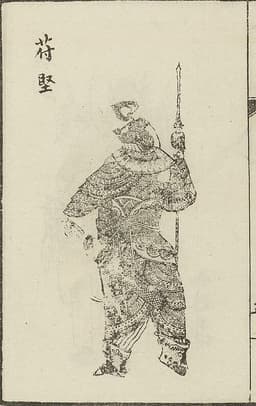
Fu Jian
Emperor · Ancient
72.1Total
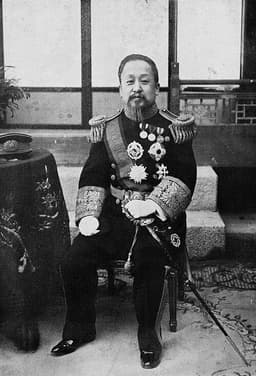
Gojong of Korea
Emperor · Modern
68.3Total
Basic Information
Born
338
1852
Died
385
1919
Era
Ancient
Modern
Nationality
China
Korea
Occupation
Emperor
Emperor
Civilization
Eastern
Eastern
Score Comparison
Military (10%)
66.2
59.7
Political (20%)
72.0
85.0
Influence (20%)
77.0
75.7
Legacy (20%)
67.9
69.5
Leadership (15%)
75.1
78.3
Strategy (15%)
72.0
30.0
TOTAL
72.1
68.3
Rankings
🥇
Fu JianLeader
Mil: 66.2Pol: 72.0Inf: 77.0
72.1
🥈
Gojong of Korea
Mil: 59.7Pol: 85.0Inf: 75.7
68.3
+3.8 behind
How This Comparison Works
Algorithm
Each figure is scored on 6 dimensions (0—100 scale) based on structured historical data: Military (10%), Political (20%), Influence (20%), Legacy (20%), Leadership (15%), Strategy (15%). The weighted total produces the final ranking.
Data Sources
Scores are computed from structured sub-indicators in the database. Scale factors adjust for era (Ancient ×0.85, Modern ×1.0) and civilization size (Eastern ×1.05, Other ×0.80) to account for differences in population and military scale.
Maximum 3 Figures
Comparisons are limited to 2—3 figures to ensure readability and statistical meaningfulness.
Error Margins
±5 points per dimension — Sub-scores are derived from historical records with inherent uncertainty. Two figures within 5 points on a dimension should be considered roughly equivalent in that area.
Total Score Accuracy
±3 points overall — The weighted combination of 6 dimensions produces a total score with approximately ±3 points of uncertainty. Differences of less than 3 points are not statistically significant— the figures are effectively tied.
Known Limitations
- Historical records are incomplete and uneven across civilizations
- Figures from oral-tradition societies may be underrepresented
- Occupation labels can misclassify multi-role figures
- Scores measure capability and impact, not moral character
- Quantitative scoring is a comparison tool, not absolute truth
Capability Radar
Military (10%) — Battles & Warfare
Battles
75
5
Win Rate
70
5
Expansion
80
5
Political (20%) — Governance & Reform
Reform
70
40
Diplomacy
60
30
Economy
65
30
Influence (20%) — Cultural & Global Reach
Cultural
50
50
Global
45
40
Legacy (20%) — Historical Impact
Historical
60
60
Longevity
40
40
Leadership (15%) — Power & Stability
Tenure
65
60
Stability
55
20
Strategy (15%) — Tactics & Innovation
Strategy
70
5
Tactics
65
5
Reform
60
10
Analysis will be generated on first visit.
Scores and timeline are available below. The page will refresh automatically when ready.
Fu Jian — Complete Timeline
370 AD
Conquest of Former YanWar◆ Major
Fu Jian's Former Qin forces conquered the Former Yan state, annexing its territory in northern China. This victory significantly expanded Former Qin's power and territory, bringing Fu Jian closer to unifying the north.
ConquestExpansion
Impact: regionalconstructive
376 AD
Conquest of Former LiangWar◆ Major
Fu Jian's forces conquered the Former Liang state in the northwest, incorporating its territory into Former Qin. This further consolidated his control over northern China.
ConquestExpansion
Impact: regionalconstructive
Conquest of DaiWar
Fu Jian's army conquered the Dai state, a Xianbei confederation in the north. This eliminated a rival and extended Former Qin's influence into the steppe region.
ConquestExpansion
Impact: regionalconstructive
379 AD
Capture of XiangyangWar
Fu Jian's forces captured the strategic city of Xiangyang from the Eastern Jin dynasty. This victory gave Former Qin a foothold south of the Huai River, setting the stage for the invasion that led to the Battle of Fei River.
ConquestCampaign
Impact: regionalconstructive
383 AD
Battle of Fei RiverWar
Fu Jian led a massive Former Qin army against the Eastern Jin dynasty at the Fei River. The Jin forces defeated the Qin army, causing a catastrophic rout. This defeat shattered Fu Jian's unification efforts and led to the collapse of Former Qin.
BattleUnificationDefeat
Impact: regionaltragic
Gojong of Korea — Complete Timeline
1897 AD
Proclamation of the Korean EmpirePolitical Action
Gojong declared Korea an empire, assuming the title of Emperor. This was an attempt to assert Korea's sovereignty and equal status with China and Japan, and to modernize the state. The move was partly a response to the assassination of his wife, Empress Myeongseong.
Korean EmpireSovereigntyModernization
Impact: nationalconstructive
1905 AD
Signing of the Japan-Korea Treaty of 1905Political Action
Under Japanese pressure, Gojong's government signed the Eulsa Treaty, making Korea a Japanese protectorate. Gojong did not sign the treaty himself and later attempted to appeal to international powers, but the treaty stripped Korea of its diplomatic sovereignty.
TreatyJapanese ProtectorateLoss of Sovereignty
Impact: nationaltragic
1907 AD
Forced Abdication by JapanPolitical Action◆ Major
Japanese authorities forced Gojong to abdicate in favor of his son, Sunjong, after Gojong sent a secret envoy to the Hague Peace Conference to protest Japanese control. The abdication was part of Japan's consolidation of power over Korea.
AbdicationJapanese ImperialismHague Secret Envoy Affair
Impact: nationaltragic
1919 AD
Death and Funeral of GojongOther
Gojong died suddenly, with rumors of poisoning by Japanese agents. His funeral on March 1, 1919, became a catalyst for the March First Movement, a massive nationwide protest against Japanese rule. The movement was brutally suppressed but galvanized Korean independence efforts.
DeathMarch First MovementKorean Independence
Impact: nationaltragic
Similar Comparisons
Comments & Discussion
Fate's Ironist6/16/2026
The comparison works better as tragedy than history. Fu Jian had a real army that actually marched; Gojong's "empire" was a desperate diplomatic fiction from 1897 onward. You're equating a Chinese warlord at his peak with a monarch whose country was already occupied. By that logic, every deposed king qualifies as a military disaster. Be honest: Gojong's real failure was diplomatic, not strategic. He trusted Russia, then Japan, then the Hague—all disastrously.
战国铁粉6/16/2026
拿苻坚跟高宗比简直是关公战秦琼。苻坚是氐人枭雄,淝水之战前统一了北方,八十七万大军是真能打仗的;高宗那大韩帝国才撑了十几年,连军队都被日本人解散了。你要比失败,苻坚好歹输在战场上,高宗连战败的机会都没有,直接被殖民了。一个是内战英雄,一个是亡国之君,这能放一块儿吗?
SkepticalStatistician6/16/2026
The 800,000 figure is absurd and you know it. Modern scholarship puts Fu Jian's actual combat force at around 200,000, with the rest being camp followers and logistics. And Gojong's Korea had maybe 20,000 effective troops by 1905. You're comparing a mythical army with an irrelevant one. This whole "largest army in the ancient world" meme needs to die. The Jin force of 80,000 was still outnumbered, but not by 10-to-1. Let's talk actual deployments, not propaganda numbers.
古典学人6/16/2026
这种跨时空比较最危险的地方是忽略制度差异。苻坚面对的是典型的中国王朝循环问题:统一战争因内部离心力而崩溃。前秦是个多民族帝国,淝水之战后各族酋长立刻反叛,这是草原帝国的死穴。而高宗面对的是完全不同的现代国际体系,主权国家在条约框架下被吞并。两个故事的结构完全不同,硬凑一起只会模糊历史教训。