Loading...
Analysis will be generated on first visit.
Scores and timeline are available below. The page will refresh automatically when ready.
Fu Jian vs Zhao Kuangyin
Zhao Kuangyin leads by 3.4 pts · 2 figures compared
…
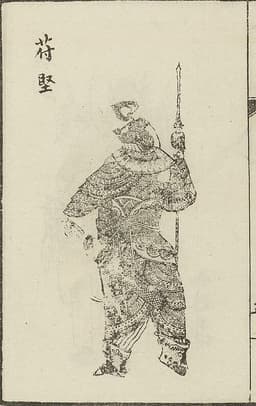
Fu Jian
Emperor · Ancient
72.1Total
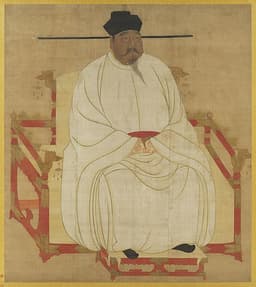
Zhao Kuangyin
Emperor · Medieval
75.5Total
Basic Information
Born
338
927
Died
385
976
Era
Ancient
Medieval
Nationality
China
China
Occupation
Emperor
Emperor
Civilization
Eastern
Eastern
Score Comparison
Military (10%)
66.2
74.6
Political (20%)
72.0
75.9
Influence (20%)
77.0
74.9
Legacy (20%)
67.9
75.1
Leadership (15%)
75.1
82.3
Strategy (15%)
72.0
69.8
TOTAL
72.1
75.5
Rankings
🥇
Zhao KuangyinLeader
Mil: 74.6Pol: 75.9Inf: 74.9
75.5
🥈
Fu Jian
Mil: 66.2Pol: 72.0Inf: 77.0
72.1
+3.4 behind
How This Comparison Works
Algorithm
Each figure is scored on 6 dimensions (0—100 scale) based on structured historical data: Military (10%), Political (20%), Influence (20%), Legacy (20%), Leadership (15%), Strategy (15%). The weighted total produces the final ranking.
Data Sources
Scores are computed from structured sub-indicators in the database. Scale factors adjust for era (Ancient ×0.85, Modern ×1.0) and civilization size (Eastern ×1.05, Other ×0.80) to account for differences in population and military scale.
Maximum 3 Figures
Comparisons are limited to 2—3 figures to ensure readability and statistical meaningfulness.
Error Margins
±5 points per dimension — Sub-scores are derived from historical records with inherent uncertainty. Two figures within 5 points on a dimension should be considered roughly equivalent in that area.
Total Score Accuracy
±3 points overall — The weighted combination of 6 dimensions produces a total score with approximately ±3 points of uncertainty. Differences of less than 3 points are not statistically significant— the figures are effectively tied.
Known Limitations
- Historical records are incomplete and uneven across civilizations
- Figures from oral-tradition societies may be underrepresented
- Occupation labels can misclassify multi-role figures
- Scores measure capability and impact, not moral character
- Quantitative scoring is a comparison tool, not absolute truth
Capability Radar
Military (10%) — Battles & Warfare
Battles
75
75
Win Rate
70
85
Expansion
80
75
Political (20%) — Governance & Reform
Reform
70
90
Diplomacy
60
85
Economy
65
80
Influence (20%) — Cultural & Global Reach
Cultural
50
70
Global
45
60
Legacy (20%) — Historical Impact
Historical
60
80
Longevity
40
75
Leadership (15%) — Power & Stability
Tenure
65
65
Stability
55
85
Strategy (15%) — Tactics & Innovation
Strategy
70
80
Tactics
65
70
Reform
60
90
Analysis will be generated on first visit.
Scores and timeline are available below. The page will refresh automatically when ready.
Fu Jian — Complete Timeline
370 AD
Conquest of Former YanWar◆ Major
Fu Jian's Former Qin forces conquered the Former Yan state, annexing its territory in northern China. This victory significantly expanded Former Qin's power and territory, bringing Fu Jian closer to unifying the north.
ConquestExpansion
Impact: regionalconstructive
376 AD
Conquest of Former LiangWar◆ Major
Fu Jian's forces conquered the Former Liang state in the northwest, incorporating its territory into Former Qin. This further consolidated his control over northern China.
ConquestExpansion
Impact: regionalconstructive
Conquest of DaiWar
Fu Jian's army conquered the Dai state, a Xianbei confederation in the north. This eliminated a rival and extended Former Qin's influence into the steppe region.
ConquestExpansion
Impact: regionalconstructive
379 AD
Capture of XiangyangWar
Fu Jian's forces captured the strategic city of Xiangyang from the Eastern Jin dynasty. This victory gave Former Qin a foothold south of the Huai River, setting the stage for the invasion that led to the Battle of Fei River.
ConquestCampaign
Impact: regionalconstructive
383 AD
Battle of Fei RiverWar
Fu Jian led a massive Former Qin army against the Eastern Jin dynasty at the Fei River. The Jin forces defeated the Qin army, causing a catastrophic rout. This defeat shattered Fu Jian's unification efforts and led to the collapse of Former Qin.
BattleUnificationDefeat
Impact: regionaltragic
Zhao Kuangyin — Complete Timeline
960 AD
Founded Song dynastyPolitical Action
Zhao Kuangyin, a general of Later Zhou, was proclaimed emperor by his troops at Chenqiao. He established the Song dynasty, ending the Five Dynasties period and beginning a new era of Chinese history.
Song dynastyFoundingChenqiao
Impact: globalconstructive
961 AD
Removed military power from generalsPolitical Action◆ Major
Zhao Kuangyin invited senior generals to a banquet and persuaded them to retire peacefully. This 'removal of military power over wine' prevented military coups and centralized control.
Song dynastyMilitary reformCentralization
Impact: nationalconstructive
963 AD
Unified southern ChinaWar◆ Major
Zhao Kuangyin launched campaigns to conquer the southern kingdoms, including Jingnan, Later Shu, and Southern Tang. By his death, most of China was reunified under Song rule.
Song unificationConquestSouthern kingdoms
Impact: national
Similar Comparisons
Comments & Discussion
BloodlessConqueror6/16/2026
Zhao Kuangyin's "cup of poisoned wine" was actually brilliant theater—he didn't need to kill his generals because he understood control through ceremony. Fu Jian invaded Jin with 870,000 men but never held their loyalty. Zhao's genius? He made his commanders surrender power while sipping wine. That's not weakness—it's the strategic patience Fu Jian lacked when he marched three armies into a river crossing. One died with his empire, the other drank with his.
拆台史官6/16/2026
别美化赵匡胤了,他的杯酒释兵权本质上就是个政治秀。你看他后来怎么看范质、王溥这些宰相的——还不是一个个逼走?史书说他宽仁,但宋初那些节度使真的甘心交权吗?王审琦喝下那杯酒时就该知道,交权比交命好。符坚是败了,但他敢用王猛这样出身卑微的人,敢信汉人谋士,这种胸襟赵匡胤一辈子学不会。别用结果倒推人品,这就是场权力的赌局,一个输光了,一个作弊赢了。