Loading...
Analysis will be generated on first visit.
Scores and timeline are available below. The page will refresh automatically when ready.
Pachacuti vs Qin Shi Huang
Qin Shi Huang leads by 9.8 pts · 2 figures compared
…
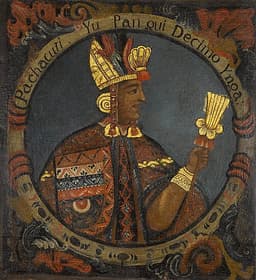
Pachacuti
Emperor · Medieval
73.7Total
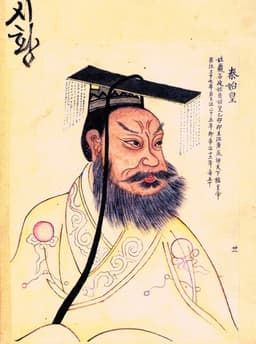
Qin Shi Huang
Emperor · Ancient
83.5Total
Basic Information
Born
1418
-259
Died
1472
-210
Era
Medieval
Ancient
Nationality
Inca Empire
China
Occupation
Emperor
Emperor
Civilization
Other
Eastern
Score Comparison
Military (10%)
66.8
80.0
Political (20%)
70.6
88.0
Influence (20%)
77.6
82.0
Legacy (20%)
66.1
85.0
Leadership (15%)
84.5
88.0
Strategy (15%)
76.7
75.0
TOTAL
73.7
83.5
Rankings
🥇
Qin Shi HuangLeader
Mil: 80.0Pol: 88.0Inf: 82.0
83.5
🥈
Pachacuti
Mil: 66.8Pol: 70.6Inf: 77.6
73.7
+9.8 behind
How This Comparison Works
Algorithm
Each figure is scored on 6 dimensions (0—100 scale) based on structured historical data: Military (10%), Political (20%), Influence (20%), Legacy (20%), Leadership (15%), Strategy (15%). The weighted total produces the final ranking.
Data Sources
Scores are computed from structured sub-indicators in the database. Scale factors adjust for era (Ancient ×0.85, Modern ×1.0) and civilization size (Eastern ×1.05, Other ×0.80) to account for differences in population and military scale.
Maximum 3 Figures
Comparisons are limited to 2—3 figures to ensure readability and statistical meaningfulness.
Error Margins
±5 points per dimension — Sub-scores are derived from historical records with inherent uncertainty. Two figures within 5 points on a dimension should be considered roughly equivalent in that area.
Total Score Accuracy
±3 points overall — The weighted combination of 6 dimensions produces a total score with approximately ±3 points of uncertainty. Differences of less than 3 points are not statistically significant— the figures are effectively tied.
Known Limitations
- Historical records are incomplete and uneven across civilizations
- Figures from oral-tradition societies may be underrepresented
- Occupation labels can misclassify multi-role figures
- Scores measure capability and impact, not moral character
- Quantitative scoring is a comparison tool, not absolute truth
Capability Radar
Military (10%) — Battles & Warfare
Battles
85
85
Win Rate
90
90
Expansion
90
90
Political (20%) — Governance & Reform
Reform
92
95
Diplomacy
75
75
Economy
80
90
Influence (20%) — Cultural & Global Reach
Cultural
85
95
Global
65
85
Legacy (20%) — Historical Impact
Historical
80
95
Longevity
70
95
Leadership (15%) — Power & Stability
Tenure
85
70
Stability
82
65
Strategy (15%) — Tactics & Innovation
Strategy
88
85
Tactics
80
80
Reform
85
95
Analysis will be generated on first visit.
Scores and timeline are available below. The page will refresh automatically when ready.
Pachacuti — Complete Timeline
1438 AD
Conquest of the Chanka KingdomWar
Pachacuti led the Inca army to defeat the Chanka, a powerful rival, in a decisive battle near Cusco. This victory secured his position as Sapa Inca and initiated a period of rapid expansion, transforming the Inca from a small kingdom into a vast empire.
ConquestInca ExpansionChanka
Impact: regional
1440 AD
Reconstruction of CuscoCultural◆ Major
Pachacuti rebuilt Cusco as the imperial capital, designing it in the shape of a puma and constructing massive stone structures like Sacsayhuam
Urban PlanningArchitectureInca Empire
Impact: regionalconstructive
1450 AD
Initiation of Machu Picchu's ConstructionCultural◆ Major
Pachacuti ordered the construction of Machu Picchu, a royal estate and ceremonial site high in the Andes. The complex featured sophisticated dry-stone masonry and terraced agriculture, serving as a symbol of Inca engineering and a retreat for the emperor.
ArchitectureRoyal EstateInca Engineering
Impact: regionalconstructive
Qin Shi Huang — Complete Timeline
246 BC
Construction of the Mausoleum and Terracotta ArmyOther◆ Major
Qin Shi Huang commissioned a vast mausoleum complex near Xi'an, guarded by thousands of life-sized terracotta soldiers, horses, and chariots. The project employed hundreds of thousands of workers and reflected his obsession with immortality and imperial power.
Impact: global
230 BC
Conquest of the Six Warring StatesWar
From 230 to 221 BCE, Ying Zheng led the Qin state in a series of campaigns that conquered the Han, Zhao, Wei, Chu, Yan, and Qi states. This unified China under a single ruler for the first time, ending the Warring States period.
Impact: global
221 BC
Standardization of Writing, Currency, and MeasurementsReform◆ Major
Qin Shi Huang ordered the standardization of Chinese script, currency, and weights and measures across the unified empire. This facilitated administration, trade, and cultural integration, laying a foundation for future dynasties.
Impact: globalconstructive
Proclamation of the Qin DynastyPolitical Action
After conquering the last independent state, Ying Zheng declared himself Shi Huangdi (First Emperor), founding the Qin Dynasty. He adopted a new title to signify his supreme authority and initiated centralized imperial rule.
Impact: global
214 BC
Initiation of the Great Wall ConstructionOther◆ Major
Qin Shi Huang ordered the connection and extension of existing northern fortifications to create a unified defensive wall against nomadic Xiongnu raids. This project involved massive conscripted labor and became the precursor to the later Great Wall.
Impact: regional
213 BC
Burning of Books and Burying of ScholarsPolitical Action◆ Major
On the advice of Li Si, Qin Shi Huang ordered the burning of historical records and philosophical texts not aligned with Legalist doctrine. He also had 460 Confucian scholars buried alive to suppress dissent and consolidate ideological control.
Impact: nationaldestructive
Similar Comparisons
Comments & Discussion
数据拆解者6/16/2026
看完全部维度打分,我觉得政治分88给嬴政可能偏高了。他搞郡县制、书同文确实牛,但秦朝二世而亡,统一后不到15年就崩了。相比之下,帕查库蒂的米塔制度和行省体系维持了印加帝国近百年的稳定。从制度延续性看,政治分差17分有点离谱。而且军事分80对67,这个差距我也有疑问——嬴政灭六国靠的是前代积累的商鞅变法红利,他自己指挥的战役其实不如白起、王翦;帕查库蒂可是亲自带兵征服了安第斯山区的几十个部落,从库斯科小邦崛起为帝国。如果按“在位期间的军事扩张效率”来算,我觉得帕查库蒂应该在70以上才对。
史海钩沉6/16/2026
这个比较有意思,但明显有西方中心论的影子。帕查库蒂总分73.7,影响力77.6,可他的帝国不到一百年就被西班牙灭了,影响范围基本局限在安第斯地区。而秦始皇的“皇帝”称号、郡县制、甚至“中国”这个国名,直接影响了此后两千多年的东亚文明。你拿马丘比丘和长城比,前者是皇家度假地,后者是国防工程,根本不是一个量级。还有,军事分只差13分?帕查库蒂的军队没有骑兵、没有铁器,面对西班牙人时一触即溃,这和秦始皇的百万铁甲军团怎么比?我觉得如果按中国史学界的标准,嬴政的综合分至少应该85以上,而不是83.5。