Loading...
Analysis will be generated on first visit.
Scores and timeline are available below. The page will refresh automatically when ready.
Peter the Great vs Suleiman the Magnificent
Peter the Great leads by 2.9 pts · 2 figures compared
…
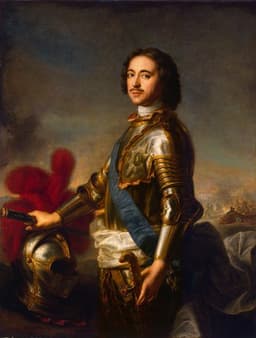
Peter the Great
Emperor · Modern
78.0Total
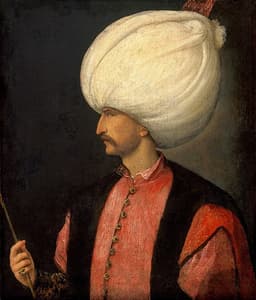
Suleiman the Magnificent
Emperor · Medieval
75.1Total
Basic Information
Born
1672
1494
Died
1725
1566
Era
Modern
Medieval
Nationality
Russia
Ottoman Empire
Occupation
Emperor
Emperor
Civilization
Western
Middle Eastern
Score Comparison
Military (10%)
75.0
85.0
Political (20%)
82.0
80.0
Influence (20%)
78.0
77.0
Legacy (20%)
75.0
66.7
Leadership (15%)
82.0
79.0
Strategy (15%)
75.0
66.5
TOTAL
78.0
75.1
Peter the Great — Complete Timeline
1697 AD
Grand EmbassyPolitical Action◆ Major
Peter the Great traveled incognito to Western Europe as part of a diplomatic mission. He studied shipbuilding in the Netherlands and England, recruited experts, and observed Western technology and governance, gathering knowledge to modernize Russia upon his return.
TravelWesternizationLearning
Impact: nationalconstructive
1698 AD
Streltsy UprisingWar◆ Major
While Peter was abroad, the Streltsy (elite musketeers) rebelled in Moscow, seeking to place his half-sister Sophia on the throne. Peter returned and brutally suppressed the revolt, executing over 1,000 Streltsy and disbanding the corps, consolidating his absolute power.
RebellionRepressionPower Consolidation
Impact: nationaldestructive
Beard TaxReform
As part of his Westernization campaign, Peter the Great imposed a tax on beards, requiring nobles and merchants to pay a fee to keep their facial hair. Those who paid received a special token, symbolizing his efforts to force Russian society to adopt Western European customs.
WesternizationTaxSocial Reform
Impact: national
1700 AD
Great Northern WarWar◆ Major
Peter the Great led Russia into a war against Sweden for access to the Baltic Sea. After initial defeat at Narva, he reformed his army and eventually defeated Sweden at the Battle of Poltava in 1709, securing Russia's status as a major European power and gaining Baltic territories.
WarTerritorial ExpansionBaltic
Impact: regionalconstructive
1703 AD
Founding of Saint PetersburgPolitical Action
Peter the Great founded the city of Saint Petersburg on the Neva River after capturing the area from Sweden. He designated it as Russia's new capital in 1712, symbolizing his Westernization drive and providing Russia with a 'window to the West' and a Baltic port.
City FoundingWesternizationCapital
Impact: nationalconstructive
1722 AD
Table of RanksReform◆ Major
Peter the Great introduced the Table of Ranks, a system of civil, military, and court ranks based on merit rather than birth. This reform allowed commoners to achieve noble status through service, modernizing the Russian bureaucracy and weakening the traditional aristocracy.
BureaucracyMeritocracySocial Reform
Impact: nationalprogressive
Suleiman the Magnificent — Complete Timeline
1522 AD
Siege of RhodesWar◆ Major
Suleiman personally led a massive Ottoman campaign against the Knights Hospitaller on Rhodes. After a six-month siege, the knights surrendered and were allowed to leave. This victory secured Ottoman control over the eastern Mediterranean.
SiegeMediterraneanKnights Hospitaller
Impact: regional
1526 AD
Battle of MohácsWar
Suleiman's Ottoman army defeated the Hungarian forces of King Louis II at Moh
BattleHungaryOttoman expansion
Impact: regional
1529 AD
Siege of ViennaWar◆ Major
Suleiman besieged Vienna, the Habsburg capital, with a large army. The siege failed due to supply issues, disease, and strong defenses. This defeat halted Ottoman expansion into central Europe and marked the empire's furthest advance westward.
SiegeViennaDefeat
Impact: regional
1530 AD
Codification of Ottoman lawReform◆ Major
Suleiman oversaw the compilation and standardization of Ottoman legal codes, known as Kanun. These laws regulated criminal justice, land tenure, and taxation, creating a unified legal system that balanced sharia with secular law. He earned the title 'Kanuni' (the Lawgiver).
Legal reformKanunOttoman Empire
Impact: nationalconstructive
1536 AD
Execution of Ibrahim PashaPolitical Action◆ Major
Suleiman ordered the execution of his grand vizier and close friend Ibrahim Pasha, who had served for 13 years. The reasons remain debated, but likely involved Ibrahim's growing power and conflicts with Suleiman's wife, Hurrem Sultan. This event demonstrated the absolute power of the sultan.
ExecutionCourt politicsPower
Impact: nationaltragic
Analysis will be generated on first visit.
Scores and timeline are available below. The page will refresh automatically when ready.
Rankings
🥇
Peter the GreatLeader
Mil: 75.0Pol: 82.0Inf: 78.0
78.0
🥈
Suleiman the Magnificent
Mil: 85.0Pol: 80.0Inf: 77.0
75.1
+2.9 behind
How This Comparison Works
Algorithm
Each figure is scored on 6 dimensions (0—100 scale) based on structured historical data: Military (10%), Political (20%), Influence (20%), Legacy (20%), Leadership (15%), Strategy (15%). The weighted total produces the final ranking.
Data Sources
Scores are computed from structured sub-indicators in the database. Scale factors adjust for era (Ancient ×0.85, Modern ×1.0) and civilization size (Eastern ×1.05, Other ×0.80) to account for differences in population and military scale.
Maximum 3 Figures
Comparisons are limited to 2—3 figures to ensure readability and statistical meaningfulness.
Error Margins
±5 points per dimension — Sub-scores are derived from historical records with inherent uncertainty. Two figures within 5 points on a dimension should be considered roughly equivalent in that area.
Total Score Accuracy
±3 points overall — The weighted combination of 6 dimensions produces a total score with approximately ±3 points of uncertainty. Differences of less than 3 points are not statistically significant— the figures are effectively tied.
Known Limitations
- Historical records are incomplete and uneven across civilizations
- Figures from oral-tradition societies may be underrepresented
- Occupation labels can misclassify multi-role figures
- Scores measure capability and impact, not moral character
- Quantitative scoring is a comparison tool, not absolute truth
Capability Radar
Military (10%) — Battles & Warfare
Battles
85
95
Win Rate
80
90
Expansion
90
95
Political (20%) — Governance & Reform
Reform
95
90
Diplomacy
80
88
Economy
85
85
Influence (20%) — Cultural & Global Reach
Cultural
85
90
Global
85
88
Legacy (20%) — Historical Impact
Historical
90
92
Longevity
85
85
Leadership (15%) — Power & Stability
Tenure
90
95
Stability
70
85
Strategy (15%) — Tactics & Innovation
Strategy
85
92
Tactics
75
85
Reform
95
80
Similar Comparisons
Comments & Discussion
东西通史6/16/2026
彼得大帝在西方叙事里是改革英雄,但从中国史观来看,他更像秦始皇——强力推行标准化、集权、打压传统势力。苏莱曼则像康熙,在位时间长,文治武功都有建树,而且都留下了宏大的建筑群(紫禁城 vs 苏莱曼尼耶清真寺)。但康熙在文化融合上更成功(满汉合一),苏莱曼的米利特制度虽然开明,但最终导致帝国碎片化。评分中彼得政治82高于苏莱曼80,我不同意——彼得废除牧首制是简单粗暴,苏莱曼协调伊斯兰法和世俗法更复杂。中国历史告诉我们:硬性改革不如柔性治理持久。
HistoryRusher6/16/2026
Peter the Great was a literal force of nature. The guy built a navy from scratch while touring Europe in disguise, then crushed Sweden at Poltava when everyone thought Russia was a backwater. Suleiman expanded the Ottoman Empire, sure, but he inherited a well-oiled machine. Peter had to drag a medieval kingdom into modernity by its beard. The scores undersell Peter's military impact—he didn't just conquer, he *created* a military-industrial complex. Suleiman gets the edge on conquest numbers, but Peter's victory over Sweden was the real game-changer for Europe.
数据显微镜6/16/2026
从数据看,彼得大帝总分78,苏莱曼75.1,但军事分彼得75对苏莱曼85,差了10分。这很奇怪:彼得建立了俄国第一支正规海军和现代化陆军,而苏莱曼的军事扩张基本靠继承的制度。如果拿中国历史比,彼得更像商鞅——制度创新才让秦国(俄国)崛起;苏莱曼则像唐玄宗前期,盛世但后劲不足。我个人重新计算加权:政治创新权重应该更高,彼得82分合理,苏莱曼80分偏高,因为他的Kanun法典没有解决继承制缺陷。结论:彼得实际总分应在80以上。
EmpireCritic6/16/2026
This comparison is a perfect example of how Eurocentric bias shapes 'greatness.' Peter gets credit for 'modernizing' Russia—which meant copying Dutch shipbuilding and French absolutism, while crushing a rebellion and enslaving serfs for his factories. Suleiman gets penalized for his empire 'declining' after him, but that decline narrative is largely Orientalist myth-making. The Ottoman Golden Age saw legal pluralism and cultural synthesis that Peter's rigid autocracy never achieved. And can we talk about the Influence score? Suleiman's architectural and legal legacy still shapes the Balkans and Middle East today. Peter's legacy? A brutal, militarized state that collapsed 200 years later. The scores are upside down.
StatWrangler6/16/2026
I'm calling foul on these scores. Military: Suleiman gets 85 vs Peter's 75. But Peter's Great Northern War lasted 21 years and fundamentally reshaped Northern Europe. Suleiman's campaigns were impressive but mostly against fractured states. And 'Influence'—Peter gets 78 vs Suleiman's 77? Peter's reforms influenced every Russian leader for two centuries and set the template for state-led modernization worldwide. Suleiman's legal code was brilliant but largely stagnant after him. Also, Legacy: Peter 75, Suleiman 67? Tell that to the millions who still live under legal systems derived from Ottoman Kanun. The weight distribution feels arbitrary. And where's the Economic score? Peter built canals and factories; Suleiman controlled trade routes. You can't reduce empire-building to five numbers and call it history.