Loading...
This comparison has not been analyzed yet.
One-time AI generation (~1 minute). Scores and timeline are already available below.
A.N.R. Robinson vs Guillermo Endara
A.N.R. Robinson leads by 5.7 pts · 2 figures compared
…
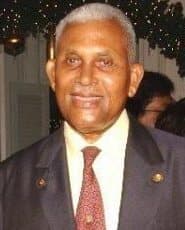
A.N.R. Robinson
Politician · Modern
57.3Total

Guillermo Endara
Politician · Modern
51.6Total
Basic Information
Born
1926
1936
Died
—
—
Era
Modern
Modern
Nationality
Trinidad
Panama
Occupation
Politician
Politician
Civilization
Western
Western
Score Comparison
Military (10%)
50.0
50.0
Political (20%)
60.0
54.7
Influence (20%)
59.0
50.2
Legacy (20%)
54.0
41.7
Leadership (15%)
72.0
74.0
Strategy (15%)
43.0
43.1
TOTAL
57.3
51.6
A.N.R. Robinson — Complete Timeline
1986 AD
Became Prime Minister of Trinidad and TobagoPolitical Action◆ Major
Robinson led the National Alliance for Reconstruction (NAR) to a landslide victory in the 1986 general election, ending 30 years of PNM rule. He became Prime Minister, promising economic reform and national unity.
Election VictoryChange of GovernmentNAR
Impact: nationalconstructive
1989 AD
Proposed the International Criminal CourtPolitical Action
As Prime Minister of Trinidad and Tobago, Robinson proposed the creation of a permanent International Criminal Court to the UN General Assembly. His initiative, driven by the need to prosecute drug traffickers, led to the Rome Statute and the ICC's establishment in 2002.
International LawICCJusticeUN
Impact: globalconstructive
1990 AD
Survived the 1990 Jamaat al Muslimeen Coup AttemptPolitical Action◆ Major
Robinson was taken hostage by the Jamaat al Muslimeen during a coup attempt. He was held for six days and was shot in the leg. The crisis ended with a negotiated surrender, but Robinson's government was severely weakened.
Coup AttemptHostage CrisisPolitical Violence
Impact: nationaltragic
1997 AD
Served as President of Trinidad and TobagoPolitical Action
After his term as Prime Minister, Robinson was elected President of Trinidad and Tobago, serving from 1997 to 2003. The presidency is a largely ceremonial role, but Robinson used it to advocate for regional integration and international justice.
PresidencyCeremonial RoleRegionalism
Impact: nationalconstructive
Guillermo Endara — Complete Timeline
1989 AD
Won 1989 Presidential ElectionPolitical Action◆ Major
Guillermo Endara, running as the candidate of the opposition coalition ADOC, won the Panamanian presidential election against Manuel Noriega's candidate. The election was marred by fraud and violence, and the results were subsequently annulled by Noriega's regime.
ElectionOppositionNoriega
Impact: national
Sworn in as President (1989)Political Action◆ Major
Following the U.S. invasion of Panama in December 1989, Endara was sworn in as President at a U.S. military base. His presidency was initially seen as legitimate by the international community, but he faced challenges of rebuilding the country after the invasion.
PresidencyU.S. InvasionLegitimacy
Impact: national
Presidency (1989-1994)Political Action◆ Major
Endara served as President from 1989 to 1994. His administration focused on economic recovery, dismantling Noriega's military apparatus, and strengthening democratic institutions. He faced criticism for corruption and slow progress, but oversaw the transition to a civilian government.
PresidencyDemocratizationReconstruction
Impact: national
This comparison has not been analyzed yet.
One-time AI generation (~1 minute). Scores and timeline are already available below.
Rankings
🥇
A.N.R. RobinsonLeader
Mil: 50.0Pol: 60.0Inf: 59.0
57.3
🥈
Guillermo Endara
Mil: 50.0Pol: 54.7Inf: 50.2
51.6
+5.7 behind
How This Comparison Works
Algorithm
Each figure is scored on 6 dimensions (0—100 scale) based on structured historical data: Military (10%), Political (20%), Influence (20%), Legacy (20%), Leadership (15%), Strategy (15%). The weighted total produces the final ranking.
Data Sources
Scores are computed from structured sub-indicators in the database. Scale factors adjust for era (Ancient ×0.85, Modern ×1.0) and civilization size (Eastern ×1.05, Other ×0.80) to account for differences in population and military scale.
Maximum 3 Figures
Comparisons are limited to 2—3 figures to ensure readability and statistical meaningfulness.
Error Margins
±5 points per dimension — Sub-scores are derived from historical records with inherent uncertainty. Two figures within 5 points on a dimension should be considered roughly equivalent in that area.
Total Score Accuracy
±3 points overall — The weighted combination of 6 dimensions produces a total score with approximately ±3 points of uncertainty. Differences of less than 3 points are not statistically significant— the figures are effectively tied.
Known Limitations
- Historical records are incomplete and uneven across civilizations
- Figures from oral-tradition societies may be underrepresented
- Occupation labels can misclassify multi-role figures
- Scores measure capability and impact, not moral character
- Quantitative scoring is a comparison tool, not absolute truth
Capability Radar
Military (10%) — Battles & Warfare
Battles
29
27
Win Rate
30
30
Expansion
35
33
Political (20%) — Governance & Reform
Reform
70
40
Diplomacy
75
50
Economy
50
35
Influence (20%) — Cultural & Global Reach
Cultural
30
20
Global
65
20
Legacy (20%) — Historical Impact
Historical
60
30
Longevity
55
20
Leadership (15%) — Power & Stability
Tenure
65
55
Stability
55
30
Strategy (15%) — Tactics & Innovation
Strategy
40
36
Tactics
39
42
Reform
45
46
Similar Comparisons
Comments & Discussion
No comments yet. Be the first to share your thoughts!