Loading...
Abbas the Great vs Louis XV
Abbas the Great leads by 26.3 pts · 2 figures compared
…
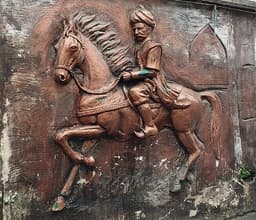
Abbas the Great
Emperor · Modern
74.5Total
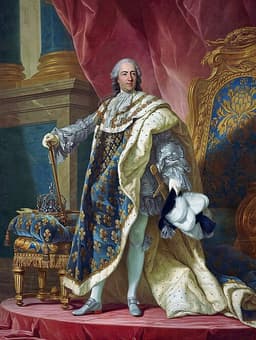
Louis XV
Emperor · Modern
48.2Total
Basic Information
Born
1571
1710
Died
1629
1774
Era
Modern
Modern
Nationality
Persia
France
Occupation
Emperor
Emperor
Civilization
Middle Eastern
Western
Score Comparison
Military (10%)
72.0
55.0
Political (20%)
84.0
39.4
Influence (20%)
69.8
54.9
Legacy (20%)
72.0
42.5
Leadership (15%)
73.8
53.2
Strategy (15%)
82.0
45.0
TOTAL
74.5
48.2
Abbas the Great — Complete Timeline
1598 AD
Construction of Isfahan as CapitalCultural
Abbas the Great moved the Safavid capital from Qazvin to Isfahan. He initiated a massive building program, constructing the Naqsh-e Jahan Square, the Shah Mosque, and the Ali Qapu palace. Isfahan was transformed into a grand city with parks, bridges, and bazaars, becoming a center of Persian culture and commerce.
Urban PlanningArchitectureIsfahan
Impact: globalconstructive
1600 AD
Reform of the Army (Ghulam System)Reform◆ Major
Abbas the Great established a new military corps of ghulams (slave soldiers) recruited from Christian subjects in the Caucasus. These troops were trained in modern firearms and artillery, reducing the Safavid reliance on the Qizilbash tribal forces. This reform created a loyal, professional army that strengthened the central government.
Military ReformGhulamsCentralization
Impact: nationalconstructive
1605 AD
Battle of SufiyanWar◆ Major
Abbas the Great led the Safavid army to victory against the Ottoman Empire at Sufiyan near Tabriz. This battle was part of the Ottoman-Safavid War of 1603-1618. The victory allowed Abbas to recapture Tabriz and other territories lost to the Ottomans in earlier wars.
BattleOttoman WarTabriz
Impact: regional
1622 AD
Expulsion of the Portuguese from HormuzWar◆ Major
Abbas the Great allied with the English East India Company to expel the Portuguese from the island of Hormuz in the Persian Gulf. A joint Persian-English force captured the Portuguese fort after a siege. This victory ended Portuguese dominance in the Persian Gulf and opened trade routes for Persian and English merchants.
SiegePortuguesePersian Gulf
Impact: regional
1623 AD
Recapture of BaghdadWar◆ Major
Abbas the Great led a campaign to recapture Baghdad from the Ottoman Empire. The Safavid army besieged the city and forced the Ottoman garrison to surrender. This victory restored Safavid control over Mesopotamia, a region lost since the Battle of Chaldiran in 1514.
SiegeMesopotamiaOttoman War
Impact: regional
Louis XV — Complete Timeline
1740 AD
War of the Austrian SuccessionWar◆ Major
Louis XV involved France in the War of the Austrian Succession, supporting Prussia against Austria. French forces achieved victories at Fontenoy (1745) but failed to secure lasting gains. The war drained French finances and ended with the inconclusive Treaty of Aix-la-Chapelle.
WarEuropean ConflictDynastic Struggle
Impact: global
1748 AD
Treaty of Aix-la-Chapelle (1748)Political Action◆ Major
Louis XV signed the Treaty of Aix-la-Chapelle, ending the War of the Austrian Succession. France gained little from the war despite military successes, returning conquered territories including the Austrian Netherlands. The treaty was seen as a diplomatic failure and contributed to the decline of royal prestige.
TreatyWar of the Austrian SuccessionDiplomacy
Impact: global
1756 AD
Seven Years' War (French and Indian War)War
Louis XV led France into the Seven Years' War against Great Britain and Prussia. The war resulted in France losing most of its North American colonies (New France) and its influence in India. The Treaty of Paris (1763) confirmed these losses, severely weakening French colonial power.
Colonial WarLoss of TerritorySeven Years' War
Impact: globaldestructive
1771 AD
Suppression of the ParlementsPolitical Action◆ Major
Louis XV, advised by Chancellor Maupeou, abolished the Parlements (high courts) that had opposed royal tax reforms. This authoritarian move centralized power but alienated the nobility and legal classes, creating long-term opposition to the monarchy.
Judicial ReformAbsolutismParlements
Impact: nationaldestructive
Expert Analysis
Origins
**Abbas the Great** (1571-1629) was born as the third son of Shah Mohammad Khodabanda, a ruler weakened by internal strife and external threats. His early years were marked by the chaos of a declining Safavid state, where tribal Qizilbash factions vied for power. Abbas was raised in Qazvin, the capital, and witnessed his father's inability to control the realm. This environment instilled in him a deep understanding of the need for centralized authority. He was educated in Persian culture and military tactics, but his formative experience was the coup that placed him on the throne at age 16.
**Louis XV** (1710-1774) was born at Versailles as the great-grandson of Louis XIV, the Sun King. His father, the Duke of Burgundy, and mother, Marie-Adélaïde of Savoy, died when he was young, leaving him orphaned at age two. He was raised under the regency of Philippe d'Orléans, who governed France until Louis reached majority. His education emphasized divine right and absolute monarchy, but he lacked the rigorous training in statecraft that his predecessor had received. He was shy and indecisive, traits that would define his reign.
Rise to Power
Abbas ascended the throne in 1588 after a coup that removed his father. The Safavid Empire was in disarray: the Ottomans had seized territories in the west, the Uzbeks threatened the northeast, and internal rebellions plagued the realm. Abbas's first years were spent consolidating power. He neutralized the Qizilbash by creating a new military corps of ghulams (slave soldiers) from the Caucasus, trained and loyal only to him. This reform, completed around 1600, gave him a standing army of 40,000 men. His turning point came in 1603 when he launched a campaign against the Ottomans, recapturing Tabriz and Erivan. The Battle of Sufiyan (1605) was a decisive victory that demonstrated the effectiveness of his new army.
Louis XV became king at age five in 1715, with Philippe d'Orléans as regent. The regency ended in 1723, but Louis continued to rely on ministers. His rise to effective power was gradual; he initially allowed Cardinal Fleury to govern until Fleury's death in 1743. After that, Louis attempted to rule personally, but his lack of decisiveness led to factionalism. His turning point was the War of the Austrian Succession (1740-1748), where France achieved victories like Fontenoy (1745) under Marshal Saxe, but Louis's failure to press advantages led to the Treaty of Aix-la-Chapelle (1748), which gained little. This war exposed his weak leadership.
Leadership & Governance
Abbas governed through a centralized bureaucracy, moving the capital from Qazvin to Isfahan in 1598. He transformed Isfahan into a world capital, constructing the Naqsh-e Jahan Square, the Shah Mosque, and the Ali Qapu Palace. He promoted trade by granting privileges to foreign merchants, including the English East India Company, and established diplomatic relations with European powers. His military strategy was aggressive: he expelled the Portuguese from Hormuz in 1622 with English help, securing Persian Gulf trade. He also reformed the economy by encouraging silk production and controlling trade routes. His political score of 84.0 reflects his ability to centralize power and foster prosperity.
Louis XV's governance was marked by indecision and reliance on favorites, such as Madame de Pompadour. He attempted to suppress the Parlements (high courts) in 1771, centralizing authority but alienating the nobility. His foreign policy was disastrous: the Seven Years' War (1756-1763) cost France its North American colonies and drained the treasury. He signed the Treaty of Paris (1763), ceding Canada to Britain. Domestically, he failed to implement fiscal reforms, leading to a growing deficit. His political score of 39.4 reflects his inability to lead effectively. He scored 55.0 in military, lower than Abbas's 72.0, due to lost wars and territorial losses.
Triumph & Tragedy
Abbas's greatest triumph was the revitalization of the Safavid Empire. He recaptured Baghdad in 1623 from the Ottomans, though he lost it again in 1638 after his death. He also defeated the Uzbeks, securing the northeastern borders. His cultural legacy is immense: Isfahan became a center of art and architecture, with the Shah Mosque and Chehel Sotoun Palace. However, his tragedy was the brutal treatment of his own family. He blinded his father and killed his eldest son, Safi, creating a succession crisis. His paranoia led to the execution of many loyal advisors, weakening the state after his death.
Louis XV's triumph was the territorial gains in the War of the Austrian Succession, but these were temporary. His greatest failure was the Seven Years' War, which lost France its empire and set the stage for the financial crisis that led to the French Revolution. He also faced the scandal of the Diamond Necklace Affair, which damaged the monarchy's reputation. His legacy is one of decline: France's prestige and power waned under his rule. He scored 42.5 in legacy, compared to Abbas's 72.0.
Character & Destiny
Abbas was shrewd, ruthless, and visionary. He understood the need for absolute control and was willing to use violence to achieve it. His character shaped his fate: his reforms created a powerful state, but his cruelty sowed the seeds of its decline. Historians note his strategic brilliance, scoring 82.0 in strategy, but also his paranoia.
Louis XV was intelligent but lazy and indecisive. He avoided conflict and delegated authority to unqualified favorites. His character led to a loss of royal authority and public trust. He scored 53.2 in leadership, reflecting his inability to command respect. His destiny was to preside over the erosion of the absolute monarchy he inherited.
Legacy
Abbas the Great is remembered as the greatest Safavid ruler, whose military and administrative reforms created a golden age. Isfahan remains a symbol of Persian architecture and culture. His ghulam system influenced later military reforms in the region. He scored 72.0 in legacy and 69.8 in influence.
Louis XV is remembered as a weak king who lost France's empire and failed to address fiscal problems. His reign set the stage for the French Revolution. He scored 42.5 in legacy and 54.9 in influence. His name is associated with decadence and decline.
Conclusion
Abbas the Great had a greater impact than Louis XV. His total score of 74.5 dwarfs Louis's 48.2, a gap of 26.3 points. Abbas transformed Persia into a major power, while Louis squandered France's potential. Abbas's reforms were lasting, while Louis's failures led to revolution. The data supports a clear verdict: Abbas was the superior leader.
Rankings
🥇
Abbas the GreatLeader
Mil: 72.0Pol: 84.0Inf: 69.8
74.5
🥈
Louis XV
Mil: 55.0Pol: 39.4Inf: 54.9
48.2
+26.3 behind
How This Comparison Works
Algorithm
Each figure is scored on 6 dimensions (0—100 scale) based on structured historical data: Military (10%), Political (20%), Influence (20%), Legacy (20%), Leadership (15%), Strategy (15%). The weighted total produces the final ranking.
Data Sources
Scores are computed from structured sub-indicators in the database. Scale factors adjust for era (Ancient ×0.85, Modern ×1.0) and civilization size (Eastern ×1.05, Other ×0.80) to account for differences in population and military scale.
Maximum 3 Figures
Comparisons are limited to 2—3 figures to ensure readability and statistical meaningfulness.
Error Margins
±5 points per dimension — Sub-scores are derived from historical records with inherent uncertainty. Two figures within 5 points on a dimension should be considered roughly equivalent in that area.
Total Score Accuracy
±3 points overall — The weighted combination of 6 dimensions produces a total score with approximately ±3 points of uncertainty. Differences of less than 3 points are not statistically significant— the figures are effectively tied.
Known Limitations
- Historical records are incomplete and uneven across civilizations
- Figures from oral-tradition societies may be underrepresented
- Occupation labels can misclassify multi-role figures
- Scores measure capability and impact, not moral character
- Quantitative scoring is a comparison tool, not absolute truth
Capability Radar
Military (10%) — Battles & Warfare
Battles
85
45
Win Rate
80
40
Expansion
85
20
Political (20%) — Governance & Reform
Reform
92
20
Diplomacy
88
30
Economy
90
25
Influence (20%) — Cultural & Global Reach
Cultural
88
40
Global
80
30
Legacy (20%) — Historical Impact
Historical
85
35
Longevity
75
30
Leadership (15%) — Power & Stability
Tenure
85
80
Stability
78
20
Strategy (15%) — Tactics & Innovation
Strategy
88
30
Tactics
82
35
Reform
90
25
Similar Comparisons
Comments & Discussion
No comments yet. Be the first to share your thoughts!