Loading...
This comparison has not been analyzed yet.
One-time AI generation (~1 minute). Scores and timeline are already available below.
Abd al-Aziz Khan vs Mohamed bin Zayed Al Nahyan
Abd al-Aziz Khan leads by 2.3 pts · 2 figures compared
…
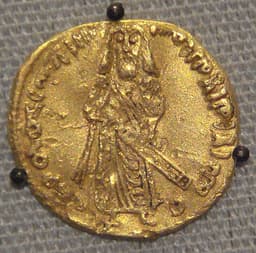
Abd al-Aziz Khan
Emperor · Modern
54.9Total

Mohamed bin Zayed Al Nahyan
Emperor · Modern
52.6Total
Basic Information
Born
1614
1961
Died
1681
—
Era
Modern
Modern
Nationality
Khanate of Bukhara
UAE
Occupation
Emperor
Emperor
Civilization
Eastern
Middle Eastern
Score Comparison
Military (10%)
40.0
21.2
Political (20%)
68.0
62.7
Influence (20%)
57.2
59.0
Legacy (20%)
46.7
41.7
Leadership (15%)
68.0
78.0
Strategy (15%)
45.0
41.7
TOTAL
54.9
52.6
Abd al-Aziz Khan — Complete Timeline
1651 AD
Accession to the throne of BukharaPolitical Action◆ Major
Abd al-Aziz Khan became the Jani-Begid ruler of the Khanate of Bukhara after deposing his father Nadir Muhammad. His reign was marked by efforts to restore the khanate's power and prestige.
Jani-BegidsAccessionBukhara
Impact: regionalconstructive
1660 AD
Patronage of Islamic arts and architectureCultural◆ Major
Abd al-Aziz Khan became a notable patron of Islamic arts and architecture. He commissioned the construction of madrasas and mosques in Bukhara, including the Abd al-Aziz Khan Madrasa, which became a center of learning.
Jani-BegidsPatronageArchitecture
Impact: regionalconstructive
1670 AD
Conflict with the SafavidsWar
Abd al-Aziz Khan engaged in military conflicts with the Safavid Empire over control of Khorasan. These campaigns were largely defensive and prevented Safavid expansion into Transoxiana.
Jani-BegidsWarSafavids
Impact: regional
1681 AD
Death and end of strong rulePolitical Action◆ Major
Abd al-Aziz Khan died in 1681, marking the end of the last strong Ashtarkhanid rule in Bukhara. His successors were weaker, leading to the gradual decline of the khanate.
Jani-BegidsDeathDecline
Impact: regionaltragic
Mohamed bin Zayed Al Nahyan — Complete Timeline
2003 AD
Appointed Crown Prince of Abu DhabiPolitical Action◆ Major
Mohamed bin Zayed was appointed Crown Prince of Abu Dhabi by his father, President Zayed bin Sultan Al Nahyan. This formalized his position as the heir apparent and began his direct involvement in the UAE's governance and defense policy.
SuccessionUAE Politics
Impact: nationalconstructive
2008 AD
Established the Mohamed bin Zayed Species Conservation FundCultural
Mohamed bin Zayed established a $25 million endowment fund dedicated to global species conservation. The fund provides grants to field conservation projects worldwide, focusing on endangered species and their habitats.
ConservationPhilanthropyEnvironment
Impact: globalconstructive
2015 AD
Launched UAE military intervention in YemenWar◆ Major
Mohamed bin Zayed ordered the UAE's military participation in the Saudi-led coalition intervention in Yemen against the Houthi movement. The campaign aimed to restore the internationally recognized government but led to a protracted conflict and humanitarian crisis.
Yemen WarMilitary InterventionSaudi-UAE Alliance
Impact: regionaldestructive
2020 AD
Signed the Abraham AccordsPolitical Action◆ Major
As de facto leader of the UAE, Mohamed bin Zayed oversaw the signing of the Abraham Accords, normalizing diplomatic relations with Israel. This agreement broke with decades of Arab League policy and reshaped Middle Eastern diplomacy.
DiplomacyIsrael-UAE RelationsMiddle East Peace
Impact: regionalconstructive
2022 AD
Became President of the United Arab EmiratesPolitical Action
Following the death of President Khalifa bin Zayed Al Nahyan, Mohamed bin Zayed was elected by the Federal Supreme Council as the third President of the UAE. He assumed leadership of the federation and its foreign policy.
SuccessionUAE Leadership
Impact: regionalconstructive
This comparison has not been analyzed yet.
One-time AI generation (~1 minute). Scores and timeline are already available below.
Rankings
🥇
Abd al-Aziz KhanLeader
Mil: 40.0Pol: 68.0Inf: 57.2
54.9
🥈
Mohamed bin Zayed Al Nahyan
Mil: 21.2Pol: 62.7Inf: 59.0
52.6
+2.3 behind
How This Comparison Works
Algorithm
Each figure is scored on 6 dimensions (0—100 scale) based on structured historical data: Military (10%), Political (20%), Influence (20%), Legacy (20%), Leadership (15%), Strategy (15%). The weighted total produces the final ranking.
Data Sources
Scores are computed from structured sub-indicators in the database. Scale factors adjust for era (Ancient ×0.85, Modern ×1.0) and civilization size (Eastern ×1.05, Other ×0.80) to account for differences in population and military scale.
Maximum 3 Figures
Comparisons are limited to 2—3 figures to ensure readability and statistical meaningfulness.
Error Margins
±5 points per dimension — Sub-scores are derived from historical records with inherent uncertainty. Two figures within 5 points on a dimension should be considered roughly equivalent in that area.
Total Score Accuracy
±3 points overall — The weighted combination of 6 dimensions produces a total score with approximately ±3 points of uncertainty. Differences of less than 3 points are not statistically significant— the figures are effectively tied.
Known Limitations
- Historical records are incomplete and uneven across civilizations
- Figures from oral-tradition societies may be underrepresented
- Occupation labels can misclassify multi-role figures
- Scores measure capability and impact, not moral character
- Quantitative scoring is a comparison tool, not absolute truth
Capability Radar
Military (10%) — Battles & Warfare
Battles
45
10
Win Rate
40
10
Expansion
35
10
Political (20%) — Governance & Reform
Reform
40
65
Diplomacy
45
75
Economy
50
80
Influence (20%) — Cultural & Global Reach
Cultural
55
40
Global
30
55
Legacy (20%) — Historical Impact
Historical
50
30
Longevity
40
30
Leadership (15%) — Power & Stability
Tenure
60
70
Stability
45
75
Strategy (15%) — Tactics & Innovation
Strategy
40
20
Tactics
35
15
Reform
30
55
Similar Comparisons
Comments & Discussion
No comments yet. Be the first to share your thoughts!