Loading...
This comparison has not been analyzed yet.
One-time AI generation (~1 minute). Scores and timeline are already available below.
Abd al-Aziz Khan vs Jaber al-Ahmad al-Sabah
Abd al-Aziz Khan leads by 9.5 pts · 2 figures compared
…
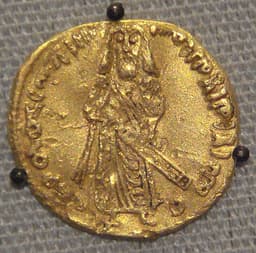
Abd al-Aziz Khan
Emperor · Modern
54.9Total

Jaber al-Ahmad al-Sabah
Emperor · Modern
45.4Total
Basic Information
Born
1614
1926
Died
1681
—
Era
Modern
Modern
Nationality
Khanate of Bukhara
Kuwait
Occupation
Emperor
Emperor
Civilization
Eastern
Middle Eastern
Score Comparison
Military (10%)
40.0
12.2
Political (20%)
68.0
68.0
Influence (20%)
57.2
56.4
Legacy (20%)
46.7
44.2
Leadership (15%)
68.0
40.0
Strategy (15%)
45.0
28.2
TOTAL
54.9
45.4
Abd al-Aziz Khan — Complete Timeline
1651 AD
Accession to the throne of BukharaPolitical Action◆ Major
Abd al-Aziz Khan became the Jani-Begid ruler of the Khanate of Bukhara after deposing his father Nadir Muhammad. His reign was marked by efforts to restore the khanate's power and prestige.
Jani-BegidsAccessionBukhara
Impact: regionalconstructive
1660 AD
Patronage of Islamic arts and architectureCultural◆ Major
Abd al-Aziz Khan became a notable patron of Islamic arts and architecture. He commissioned the construction of madrasas and mosques in Bukhara, including the Abd al-Aziz Khan Madrasa, which became a center of learning.
Jani-BegidsPatronageArchitecture
Impact: regionalconstructive
1670 AD
Conflict with the SafavidsWar
Abd al-Aziz Khan engaged in military conflicts with the Safavid Empire over control of Khorasan. These campaigns were largely defensive and prevented Safavid expansion into Transoxiana.
Jani-BegidsWarSafavids
Impact: regional
1681 AD
Death and end of strong rulePolitical Action◆ Major
Abd al-Aziz Khan died in 1681, marking the end of the last strong Ashtarkhanid rule in Bukhara. His successors were weaker, leading to the gradual decline of the khanate.
Jani-BegidsDeathDecline
Impact: regionaltragic
Jaber al-Ahmad al-Sabah — Complete Timeline
1990 AD
Iraqi Invasion of KuwaitWar◆ Major
Iraqi forces invaded and occupied Kuwait under Saddam Hussein. Jaber al-Ahmad al-Sabah fled to Saudi Arabia and established a government-in-exile. The invasion led to the Gulf War and a seven-month occupation of Kuwait.
Gulf WarIraqi InvasionKuwaiti Occupation
Impact: globaltragic
1991 AD
Liberation of KuwaitWar◆ Major
A US-led coalition launched Operation Desert Storm, liberating Kuwait from Iraqi occupation. Jaber al-Ahmad al-Sabah returned to Kuwait as emir. The liberation restored Kuwaiti sovereignty but left the country with extensive damage and environmental destruction.
Gulf WarKuwaiti LiberationCoalition
Impact: globalconstructive
Reconstruction of Kuwait After Gulf WarReform◆ Major
Jaber al-Ahmad al-Sabah oversaw the massive reconstruction of Kuwait's infrastructure, oil fields, and economy after the Gulf War. The rebuilding cost billions of dollars and restored Kuwait's status as a major oil exporter. He also restored the National Assembly.
ReconstructionPost-War RecoveryKuwaiti Economy
Impact: nationalconstructive
This comparison has not been analyzed yet.
One-time AI generation (~1 minute). Scores and timeline are already available below.
Rankings
🥇
Abd al-Aziz KhanLeader
Mil: 40.0Pol: 68.0Inf: 57.2
54.9
🥈
Jaber al-Ahmad al-Sabah
Mil: 12.2Pol: 68.0Inf: 56.4
45.4
+9.5 behind
How This Comparison Works
Algorithm
Each figure is scored on 6 dimensions (0—100 scale) based on structured historical data: Military (10%), Political (20%), Influence (20%), Legacy (20%), Leadership (15%), Strategy (15%). The weighted total produces the final ranking.
Data Sources
Scores are computed from structured sub-indicators in the database. Scale factors adjust for era (Ancient ×0.85, Modern ×1.0) and civilization size (Eastern ×1.05, Other ×0.80) to account for differences in population and military scale.
Maximum 3 Figures
Comparisons are limited to 2—3 figures to ensure readability and statistical meaningfulness.
Error Margins
±5 points per dimension — Sub-scores are derived from historical records with inherent uncertainty. Two figures within 5 points on a dimension should be considered roughly equivalent in that area.
Total Score Accuracy
±3 points overall — The weighted combination of 6 dimensions produces a total score with approximately ±3 points of uncertainty. Differences of less than 3 points are not statistically significant— the figures are effectively tied.
Known Limitations
- Historical records are incomplete and uneven across civilizations
- Figures from oral-tradition societies may be underrepresented
- Occupation labels can misclassify multi-role figures
- Scores measure capability and impact, not moral character
- Quantitative scoring is a comparison tool, not absolute truth
Capability Radar
Military (10%) — Battles & Warfare
Battles
45
3
Win Rate
40
10
Expansion
35
13
Political (20%) — Governance & Reform
Reform
40
40
Diplomacy
45
55
Economy
50
50
Influence (20%) — Cultural & Global Reach
Cultural
55
30
Global
30
50
Legacy (20%) — Historical Impact
Historical
50
45
Longevity
40
30
Leadership (15%) — Power & Stability
Tenure
60
60
Stability
45
35
Strategy (15%) — Tactics & Innovation
Strategy
40
12
Tactics
35
18
Reform
30
23
Similar Comparisons
Comments & Discussion
No comments yet. Be the first to share your thoughts!