Loading...
This comparison has not been analyzed yet.
One-time AI generation (~1 minute). Scores and timeline are already available below.
Abd al-Mumin vs Anawrahta
Anawrahta leads by 0.5 pts · 2 figures compared
…
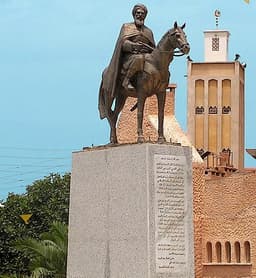
Abd al-Mumin
Emperor · Medieval
64.7Total
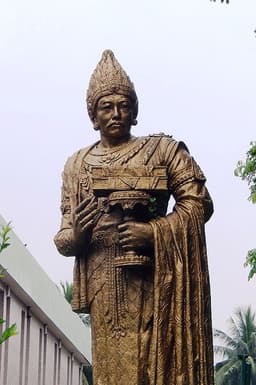
Anawrahta
Emperor · Medieval
65.2Total
Basic Information
Born
1094
1014
Died
1163
1077
Era
Medieval
Medieval
Nationality
Almohad Caliphate
Myanmar
Occupation
Emperor
Emperor
Civilization
Middle Eastern
Eastern
Score Comparison
Military (10%)
78.5
70.0
Political (20%)
70.0
68.0
Influence (20%)
58.3
72.0
Legacy (20%)
52.0
55.0
Leadership (15%)
79.8
72.0
Strategy (15%)
68.0
55.0
TOTAL
64.7
65.2
Abd al-Mumin — Complete Timeline
1130 AD
Proclamation as CaliphPolitical Action
After the death of Ibn Tumart, Abd al-Mumin was proclaimed caliph of the Almohad movement. He consolidated the Berber tribes of the High Atlas under Almohad doctrine, establishing the foundation for a new dynasty that would challenge Almoravid rule.
Almohad CaliphateSuccessionDynasty Foundation
Impact: regionalconstructive
1147 AD
Conquest of MarrakeshWar◆ Major
Abd al-Mumin captured Marrakesh, the capital of the Almoravid Empire, after a prolonged siege. The Almoravid ruler Ishaq ibn Ali was killed, and the city became the Almohad capital, marking the end of Almoravid rule in North Africa.
Almohad ConquestMarrakeshAlmoravid Fall
Impact: regionaldestructive
1152 AD
Conquest of the MaghrebWar◆ Major
Abd al-Mumin extended Almohad control across the Maghreb, conquering cities such as Fez, Tlemcen, and Algiers. He defeated local Berber dynasties and unified the region from the Atlantic to Tripolitania under a single centralized administration.
Maghreb UnificationAlmohad ExpansionBerber Conquest
Impact: regionalconstructive
1154 AD
Invasion of Al-AndalusWar◆ Major
Abd al-Mumin launched a campaign into Al-Andalus, capturing cities including C
Al-AndalusAlmohad ExpansionIberian Campaign
Impact: regionalconstructive
1156 AD
Establishment of Almohad AdministrationReform◆ Major
Abd al-Mumin implemented a centralized administrative system across his empire, appointing governors and judges loyal to the Almohad doctrine. He standardized taxation and military organization, creating a stable state structure that lasted for decades.
Administrative ReformAlmohad StateCentralization
Impact: regionalconstructive
Anawrahta — Complete Timeline
1044 AD
Founding of the Pagan EmpirePolitical Action
Anawrahta ascended the throne and unified the Irrawaddy River valley, founding the Pagan Empire. He conquered the Mon kingdom of Thaton and other neighboring states, creating the first unified Burmese kingdom and establishing Bagan as its capital.
UnificationEmpireBagan
Impact: regionalconstructive
1056 AD
Introduction of Theravada Buddhism to PaganCultural
Anawrahta adopted Theravada Buddhism after being converted by the Mon monk Shin Arahan. He made Theravada the state religion, replacing the existing Mahayana and animist practices. This religious shift had a lasting impact on Burmese culture and politics.
BuddhismReligionConversion
Impact: regionalconstructive
1057 AD
Conquest of the Thaton KingdomWar◆ Major
Anawrahta led a military campaign against the Mon kingdom of Thaton, capturing the city and bringing back Buddhist scriptures, monks, and artisans to Bagan. This conquest enriched Pagan's culture and solidified its dominance in the region.
ConquestMonCultural Exchange
Impact: regional
This comparison has not been analyzed yet.
One-time AI generation (~1 minute). Scores and timeline are already available below.
Rankings
🥇
AnawrahtaLeader
Mil: 70.0Pol: 68.0Inf: 72.0
65.2
🥈
Abd al-Mumin
Mil: 78.5Pol: 70.0Inf: 58.3
64.7
+0.5 behind
How This Comparison Works
Algorithm
Each figure is scored on 6 dimensions (0—100 scale) based on structured historical data: Military (10%), Political (20%), Influence (20%), Legacy (20%), Leadership (15%), Strategy (15%). The weighted total produces the final ranking.
Data Sources
Scores are computed from structured sub-indicators in the database. Scale factors adjust for era (Ancient ×0.85, Modern ×1.0) and civilization size (Eastern ×1.05, Other ×0.80) to account for differences in population and military scale.
Maximum 3 Figures
Comparisons are limited to 2—3 figures to ensure readability and statistical meaningfulness.
Error Margins
±5 points per dimension — Sub-scores are derived from historical records with inherent uncertainty. Two figures within 5 points on a dimension should be considered roughly equivalent in that area.
Total Score Accuracy
±3 points overall — The weighted combination of 6 dimensions produces a total score with approximately ±3 points of uncertainty. Differences of less than 3 points are not statistically significant— the figures are effectively tied.
Known Limitations
- Historical records are incomplete and uneven across civilizations
- Figures from oral-tradition societies may be underrepresented
- Occupation labels can misclassify multi-role figures
- Scores measure capability and impact, not moral character
- Quantitative scoring is a comparison tool, not absolute truth
Capability Radar
Military (10%) — Battles & Warfare
Battles
85
55
Win Rate
90
60
Expansion
90
60
Political (20%) — Governance & Reform
Reform
85
65
Diplomacy
70
60
Economy
75
55
Influence (20%) — Cultural & Global Reach
Cultural
65
70
Global
55
55
Legacy (20%) — Historical Impact
Historical
70
75
Longevity
60
70
Leadership (15%) — Power & Stability
Tenure
80
70
Stability
70
60
Strategy (15%) — Tactics & Innovation
Strategy
85
55
Tactics
80
50
Reform
75
45
Similar Comparisons
Comments & Discussion
No comments yet. Be the first to share your thoughts!