Loading...
Abd al-Rahman III vs Charles V
Charles V leads by 1.9 pts · 2 figures compared
…
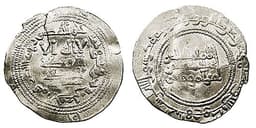
Abd al-Rahman III
Emperor · Medieval
72.3Total

Charles V
Emperor · Medieval
74.2Total
Basic Information
Born
891
1500
Died
961
1558
Era
Medieval
Medieval
Nationality
Al-Andalus
Holy Roman Empire
Occupation
Emperor
Emperor
Civilization
Middle Eastern
Western
Score Comparison
Military (10%)
82.0
74.0
Political (20%)
70.3
70.3
Influence (20%)
68.0
71.0
Legacy (20%)
72.0
80.0
Leadership (15%)
80.0
78.0
Strategy (15%)
65.4
68.0
TOTAL
72.3
74.2
Abd al-Rahman III — Complete Timeline
929 AD
Proclamation as Caliph of CordobaPolitical Action
Abd al-Rahman III declared himself caliph of Cordoba, breaking all ties with the Abbasid and Fatimid caliphates. This established the Caliphate of Cordoba, elevating Al-Andalus to a major political and religious power in the Islamic world.
Caliphate of CordobaAl-AndalusPolitical Power
Impact: globalconstructive
930 AD
Consolidation of Al-AndalusPolitical Action◆ Major
Abd al-Rahman III launched campaigns to suppress rebellions and bring the entire Iberian Peninsula under his control. He subdued the Banu Qasi and other rebel factions, establishing a centralized and stable Caliphate of Cordoba.
Al-AndalusConsolidationCaliphate
Impact: regionalconstructive
939 AD
Battle of SimancasWar◆ Major
Abd al-Rahman III's forces were defeated by the Christian coalition led by King Ramiro II of Le
Al-AndalusBattleChristian Kingdoms
Impact: regional
949 AD
Diplomatic Relations with ByzantiumPolitical Action
Abd al-Rahman III exchanged embassies with the Byzantine Emperor Constantine VII. This diplomatic engagement enhanced the prestige of the Caliphate of Cordoba and facilitated cultural and technological exchanges.
DiplomacyByzantine EmpireAl-Andalus
Impact: regionalconstructive
950 AD
Golden Age of CordobaCultural◆ Major
Under Abd al-Rahman III, Cordoba became a center of learning, culture, and trade. The city's library, university, and architecture flourished, making it one of the most advanced cities in Europe and the Islamic world.
CordobaGolden AgeCulture
Impact: globalconstructive
Charles V — Complete Timeline
1519 AD
Elected Holy Roman EmperorPolitical Action
Charles V was elected Holy Roman Emperor, defeating Francis I of France through extensive bribery of the prince-electors. This election united the Habsburg lands in Spain, Austria, the Netherlands, and the Holy Roman Empire under his rule.
ElectionHabsburg EmpireImperial Title
Impact: global
1521 AD
Diet of WormsPolitical Action
Charles V presided over the Diet of Worms, where Martin Luther was summoned to recant his teachings. Luther refused, and Charles issued the Edict of Worms, declaring Luther an outlaw and banning his writings, escalating the Protestant Reformation.
ReformationLutherImperial Diet
Impact: global
1525 AD
Battle of PaviaWar◆ Major
Imperial forces under Charles V defeated and captured Francis I of France at Pavia in Italy. This victory secured Spanish dominance in Italy and forced Francis to sign the Treaty of Madrid, though he later repudiated it.
Italian WarsBattleCapture of Francis I
Impact: regional
1527 AD
Sack of RomeWar◆ Major
Mutinous imperial troops under Charles V sacked Rome, looting the city and besieging Pope Clement VII in Castel Sant'Angelo. This event shocked Europe and forced the Pope to align more closely with Charles, leading to the coronation of Charles as Holy Roman Emperor by the Pope in 1530.
Italian WarsSackPapacy
Impact: regionaldestructive
1556 AD
Abdication and Division of the EmpirePolitical Action
Charles V abdicated his thrones, dividing his empire between his son Philip II (Spain, Netherlands, Italy) and his brother Ferdinand I (Holy Roman Empire). This division reflected the administrative challenges of ruling a vast, multi-ethnic empire.
AbdicationEmpire DivisionHabsburg
Impact: global
Expert Analysis
Origins
Abd al-Rahman III was born in 891 in Cordoba, into the Umayyad dynasty that had ruled Al-Andalus since 756. His grandfather, Abd al-Rahman II, had established a stable emirate, but internal strife and external threats plagued the realm. Orphaned at a young age, he was raised in the royal court, receiving training in governance, military tactics, and Islamic scholarship. His early life was marked by the need to suppress rebellious factions, including the powerful Banu Qasi family and the Muladi uprisings.
Charles V was born in 1500 in Ghent, Flanders, to Philip the Handsome of Habsburg and Joanna of Castile, heiress to the Spanish kingdoms. His inheritance was vast: from his father he gained the Burgundian Netherlands and claims to Austria, and from his mother the crowns of Castile and Aragon with their American colonies. Educated by Adrian of Utrecht (later Pope Adrian VI), he learned Latin, French, and German, and was trained in statecraft. His youth was spent navigating the complex politics of the Low Countries and preparing to rule an empire.
Rise to Power
Abd al-Rahman III ascended to the emirate in 912 at age 21. His first decade was spent crushing rebellions: he defeated the Banu Qasi at the Battle of Albelda (915) and subdued the rebel Ibn Hafsun, who had controlled much of southern Iberia for 40 years. By 928, he had consolidated control over Al-Andalus. In 929, he proclaimed himself Caliph of Cordoba, breaking ties with the Abbasid and Fatimid caliphates, asserting the Umayyad claim to leadership of the Islamic world. This bold move elevated his status and unified his realm under a new caliphate.
Charles V's rise was more complex. He inherited the Spanish thrones in 1516 after the death of his grandfather Ferdinand II of Aragon, but faced resistance from Castilian nobles who saw him as a foreign ruler. In 1519, he bribed the prince-electors of the Holy Roman Empire to secure the imperial crown, defeating Francis I of France. His election united the Habsburg possessions in Germany, Austria, the Low Countries, and Spain, creating a vast European empire. He was crowned Emperor in 1530 by Pope Clement VII, though his authority was constantly challenged by German princes, the French, and the Ottomans.
Leadership & Governance
Abd al-Rahman III ruled with an iron fist but also fostered cultural and economic prosperity. He centralized power, broke the autonomy of rebellious nobles, and established a professional bureaucracy and army. His governance was pragmatic: he tolerated Christians and Jews, allowing them to practice their religions and serve in administration. He invested heavily in Cordoba, building the Great Mosque's expansion, a massive library, and a university that attracted scholars from across the Islamic world and Europe. His foreign policy included diplomatic missions to the Byzantine Empire and the German emperor Otto I.
Charles V governed a fragmented empire through delegation and personal presence. He travelled constantly, overseeing territories from Spain to Germany. His political score of 70.3 matches Abd al-Rahman III's 70.3, but his leadership style differed: he relied on advisors like the Duke of Alba and Cardinal Granvelle, and often compromised with the German princes (e.g., the 1555 Peace of Augsburg, which allowed Lutheranism). His governance was strained by religious conflict, as he sought to preserve Catholic unity. He also faced the challenge of administering an empire that included the Americas, where his viceroys implemented the encomienda system.
Triumph & Tragedy
Abd al-Rahman III's greatest triumph was the Golden Age of Cordoba. Under his rule, the city became a beacon of learning and culture, with a library of 400,000 volumes. He also stabilized Al-Andalus, ending internal rebellions and establishing a caliphate that lasted for a century. His diplomatic recognition by Byzantium and the German emperor signaled his power. However, his greatest failure was the Battle of Simancas in 939, where he was defeated by King Ramiro II of León. This defeat halted the expansion of Al-Andalus and exposed its military limits. Additionally, his later years were marred by a succession crisis: his son and heir, Al-Hakam II, was more interested in scholarship than military affairs, and the caliphate declined after his death.
Charles V's triumphs include the Battle of Pavia (1525), where his forces captured Francis I of France, securing Spanish dominance in Italy. He also defended Europe from Ottoman expansion, notably at the Siege of Vienna (1529), and expanded Spanish control in the Americas through conquistadors like Hernán Cortés and Francisco Pizarro, bringing immense wealth. His tragic failures include the Sack of Rome (1527), where mutinous troops looted the city and imprisoned the Pope, causing international outrage. Also, the Protestant Reformation, which he failed to suppress; the Diet of Worms (1521) condemned Luther, but the movement grew, leading to decades of religious war. His abdication in 1556, dividing the empire between his son Philip II and brother Ferdinand I, reflected his inability to maintain unity.
Character & Destiny
Abd al-Rahman III was calculating, patient, and ruthless when needed. He personally led campaigns and executed rebels. His character shaped a stable, prosperous state, but his reliance on a strong central authority meant that after his death, weaker successors could not maintain control. His destiny was to create a golden age that would be remembered as a high point of Islamic civilization in Iberia.
Charles V was more introspective, often struggling with the burdens of empire. He suffered from gout and depression, which may have influenced his eventual abdication. He was a devout Catholic but pragmatic, willing to compromise on religious issues for political stability. His character led him to prioritize unity over conquest, but the diversity of his empire made it ungovernable as a single entity. His destiny was to preside over an empire where the sun never set, but also to initiate its division.
Legacy
Abd al-Rahman III's legacy is the Caliphate of Cordoba as a symbol of Islamic culture and tolerance. His military score of 82.0 reflects his success in consolidating power, though his strategic score of 65.4 indicates limitations in expansion. His influence score of 68.0 is lower than Charles V's 71.0 because his impact was largely regional. However, his cultural legacy—the architecture, translations, and philosophical works—influenced both the Islamic world and Europe. The Great Mosque of Cordoba remains a UNESCO World Heritage site.
Charles V's legacy is immense: he was the last emperor to receive a papal coronation, and his reign marked the transition from medieval to early modern Europe. His military score of 74.0 and leadership of 78.0 reflect his ability to mobilize vast resources. His influence score of 71.0 and legacy of 80.0 indicate his global impact: the Spanish Empire's expansion, the spread of Christianity, and the rise of the Habsburg dynasty. His abdication set the stage for the Spanish Golden Age under Philip II and the Holy Roman Empire's continued role in German politics.
Conclusion
While Abd al-Rahman III created a brilliant Islamic civilization in Al-Andalus, Charles V's empire was larger, more diverse, and had a greater long-term impact on world history. Charles V's total score of 74.2 versus Abd al-Rahman III's 72.3 reflects this. Abd al-Rahman III's legacy is primarily cultural and regional, while Charles V's shaped the political and religious map of Europe and the Americas. Therefore, Charles V had greater historical impact.
Rankings
🥇
Charles VLeader
Mil: 74.0Pol: 70.3Inf: 71.0
74.2
🥈
Abd al-Rahman III
Mil: 82.0Pol: 70.3Inf: 68.0
72.3
+1.9 behind
How This Comparison Works
Algorithm
Each figure is scored on 6 dimensions (0—100 scale) based on structured historical data: Military (10%), Political (20%), Influence (20%), Legacy (20%), Leadership (15%), Strategy (15%). The weighted total produces the final ranking.
Data Sources
Scores are computed from structured sub-indicators in the database. Scale factors adjust for era (Ancient ×0.85, Modern ×1.0) and civilization size (Eastern ×1.05, Other ×0.80) to account for differences in population and military scale.
Maximum 3 Figures
Comparisons are limited to 2—3 figures to ensure readability and statistical meaningfulness.
Error Margins
±5 points per dimension — Sub-scores are derived from historical records with inherent uncertainty. Two figures within 5 points on a dimension should be considered roughly equivalent in that area.
Total Score Accuracy
±3 points overall — The weighted combination of 6 dimensions produces a total score with approximately ±3 points of uncertainty. Differences of less than 3 points are not statistically significant— the figures are effectively tied.
Known Limitations
- Historical records are incomplete and uneven across civilizations
- Figures from oral-tradition societies may be underrepresented
- Occupation labels can misclassify multi-role figures
- Scores measure capability and impact, not moral character
- Quantitative scoring is a comparison tool, not absolute truth
Capability Radar
Military (10%) — Battles & Warfare
Battles
75
85
Win Rate
80
70
Expansion
70
90
Political (20%) — Governance & Reform
Reform
85
75
Diplomacy
80
80
Economy
90
70
Influence (20%) — Cultural & Global Reach
Cultural
85
85
Global
75
90
Legacy (20%) — Historical Impact
Historical
80
90
Longevity
70
85
Leadership (15%) — Power & Stability
Tenure
90
85
Stability
85
60
Strategy (15%) — Tactics & Innovation
Strategy
75
85
Tactics
70
75
Reform
65
80
Similar Comparisons
Comments & Discussion
No comments yet. Be the first to share your thoughts!