Loading...
Abd el-Kader vs Fukangan
Abd el-Kader leads by 12.0 pts · 2 figures compared
…
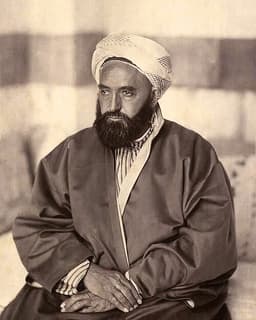
Abd el-Kader
General · Modern
67.1Total

Fukangan
General · Modern
55.1Total
Basic Information
Born
1808
1753
Died
1883
1796
Era
Modern
Modern
Nationality
Algeria
China
Occupation
General
General
Civilization
Middle Eastern
Eastern
Score Comparison
Military (10%)
60.0
63.3
Political (20%)
78.0
48.0
Influence (20%)
88.0
54.1
Legacy (20%)
40.0
46.7
Leadership (15%)
70.4
74.0
Strategy (15%)
68.7
52.5
TOTAL
67.1
55.1
Abd el-Kader — Complete Timeline
1837 AD
Treaty of TafnaPolitical Action◆ Major
Abd el-Kader signed the Treaty of Tafna with French General Thomas Bugeaud. The treaty recognized Abd el-Kader's control over the interior of western Algeria, temporarily halting French expansion and establishing a defined territory for his emirate.
TreatyAlgerian ResistanceFrench Colonization
Impact: regional
1843 AD
Capture of the SmalaWar◆ Major
French forces under the Duke of Aumale captured Abd el-Kader's mobile camp (smala) at Taguin, taking thousands of prisoners including his family. This defeat destroyed his administrative base and severely weakened his resistance movement.
BattleAlgerian ResistanceFrench Colonization
Impact: regionaltragic
1847 AD
Surrender to FrancePolitical Action◆ Major
Abd el-Kader surrendered to French General Louis de Lamorici
SurrenderAlgerian ResistanceFrench Colonization
Impact: regionaltragic
1860 AD
Protection of Christians in DamascusPolitical Action◆ Major
During sectarian violence in Damascus, Abd el-Kader personally intervened to protect Christian communities, sheltering thousands in his home. His actions saved many lives and earned him international recognition, including the French Legion of Honour.
HumanitarianInterfaithDamascus
Impact: regionalconstructive
Fukangan — Complete Timeline
1792 AD
Command of the Nepalese CampaignWar◆ Major
Fukangan led a Qing army into Nepal to repel a Gurkha invasion of Tibet. The campaign successfully drove the Gurkhas back and forced them to accept Qing suzerainty, securing the Tibetan border.
Military CampaignNepalTibet
Impact: regional
Siege of NuwakotWar
Fukangan's forces besieged and captured the Gurkha fortress at Nuwakot, a key strategic position in Nepal. The victory opened the way to the Nepalese capital and forced the Gurkhas to negotiate.
SiegeNepalGurkha
Impact: regional
Treaty of BetrawatiPolitical Action◆ Major
Fukangan negotiated the Treaty of Betrawati with the Gurkha kingdom, ending the war. The treaty established Nepal as a tributary state of the Qing Empire and required the Gurkhas to pay tribute every five years.
TreatyNepalQing Tribute
Impact: regionalconstructive
Expert Analysis
Origins
Abd el-Kader (born 1808) was born into a religious family in the Emirate of Mascara, part of Ottoman Algeria. His father, Muhyi al-Din al-Hasani, was a prominent Sufi scholar of the Qadiriyya order. Abd el-Kader received a rigorous education in Islamic theology, law, and letters, and also trained in horsemanship and martial skills. His early life was marked by the declining Ottoman presence and the rising threat of French colonization, which began with the invasion of Algiers in 1830.
Fukangan (born 1733) was a member of the Manchu Bordered Yellow Banner, a key component of the Qing military aristocracy. He was the son of a high-ranking official and entered the imperial bureaucracy early. His career was shaped by the Qing Empire's expansionist policies, particularly in Central Asia and Tibet. He gained experience in campaigns against the Dzungars and in the pacification of Xinjiang, demonstrating administrative and military competence.
Rise to Power
Abd el-Kader rose to prominence in 1832 when local tribes in western Algeria elected him as their leader to resist French encroachment. At 24, he was proclaimed Emir, uniting disparate tribal confederations under a religious and nationalist banner. His early successes included a series of guerrilla attacks that forced the French to negotiate. The Treaty of Tafna (1837) recognized his authority over the interior, cementing his status as a major political and military figure.
Fukangan's rise was due to his lineage and performance in the Qianlong Emperor's campaigns. He was appointed to key posts in the Grand Council and led forces in the Jinchuan campaigns. His major breakthrough came in 1791 when the Gurkha kingdom of Nepal invaded Tibet. The Qianlong Emperor appointed Fukangan as the commander of a punitive expedition, a role that would define his legacy.
Leadership & Governance
Abd el-Kader governed his emirate through a blend of religious authority and tribal consultation. He established a centralized administration with a council of advisors, a treasury, and a standing army. He implemented Islamic law and promoted education, building schools and libraries. His governance was marked by tolerance; he protected Christian and Jewish minorities. In contrast, the French ruled through military force and administrative centralization, which alienated the local population.
Fukangan operated within the Qing imperial system, which emphasized hierarchy and collective decision-making. He commanded a multi-ethnic army of Manchus, Mongols, and Chinese, and coordinated with local Tibetan authorities. His leadership style was methodical; he prioritized logistics and intelligence. The Qing campaign relied on overwhelming force and diplomatic pressure, culminating in the Treaty of Betrawati (1792), which made Nepal a tributary state.
Triumph & Tragedy
Abd el-Kader's greatest triumph was the Treaty of Tafna, which granted him sovereignty over much of Algeria. He also successfully repelled French offensives through mobile warfare. However, his tragedy was the eventual French violation of the treaty and the overwhelming military buildup by General Bugeaud. The capture of his Smala (mobile camp) in 1843 was a devastating blow, leading to his surrender in 1847. He was exiled to Damascus, where he later redeemed himself by protecting Christians during the 1860 massacres.
Fukangan's triumph was the successful Nepalese campaign, which secured Qing influence over the Himalayas. He captured the fortress of Nuwakot and forced the Gurkhas to accept tributary status. His tragedy, however, is that his legacy is overshadowed by the later decline of the Qing dynasty. His campaign did not prevent the eventual British dominance in the region. Moreover, his political influence waned after the Qianlong Emperor's death, and he was not remembered as a great reformer.
Character & Destiny
Abd el-Kader was a principled leader whose religious devotion drove his resistance and later his humanitarian acts. He was pragmatic in negotiation but steadfast in his goals. His character earned him respect from both allies and enemies; the French eventually granted him a pension and he became a global symbol of resistance and chivalry. His destiny was shaped by the asymmetry of power: he fought a modernizing colonial army with tribal forces, ultimately leading to his defeat but not his dishonor.
Fukangan was a competent, conservative commander who executed imperial orders efficiently. He was not an innovator but a reliable servant of the emperor. His character reflected the Manchu military ethos: disciplined, loyal, and hierarchical. His destiny was tied to the Qing's expansionist peak; after his campaign, the empire entered a period of stagnation. He is remembered as a capable general but not a transformative figure.
Legacy
Abd el-Kader's legacy is profound: he is a national hero in Algeria and a symbol of anti-colonial resistance worldwide. His humanitarian act in Damascus is cited as an example of Islamic chivalry. He scored 88.0 in Influence, reflecting his enduring symbolic power. His political and military ideas influenced later liberation movements. However, his Legacy score of 40.0 suggests that his direct political achievements were reversed by French colonization.
Fukangan's legacy is more limited. He is remembered in Chinese historiography as a general who defended Tibet and subdued Nepal, but his impact is regional. His Military score of 63.3 and Leadership of 74.0 indicate competence, but his Political score of 48.0 shows he was not a major political reformer. The Qing dynasty's collapse reduced his long-term significance. He scored 55.1 overall, lower than Abd el-Kader's 67.1.
Conclusion
Abd el-Kader had greater impact than Fukangan. His total score of 67.1 surpasses Fukangan's 55.1 by 12.0 points. While Fukangan was a capable imperial general, his achievements were confined to a single campaign that did not alter the course of history. Abd el-Kader, despite military defeat, created a lasting legacy of resistance and humanitarianism that transcends his era. He inspired future generations and remains a global icon. Therefore, Abd el-Kader is the more significant historical figure.
Rankings
🥇
Abd el-KaderLeader
Mil: 60.0Pol: 78.0Inf: 88.0
67.1
🥈
Fukangan
Mil: 63.3Pol: 48.0Inf: 54.1
55.1
+12.0 behind
How This Comparison Works
Algorithm
Each figure is scored on 6 dimensions (0—100 scale) based on structured historical data: Military (10%), Political (20%), Influence (20%), Legacy (20%), Leadership (15%), Strategy (15%). The weighted total produces the final ranking.
Data Sources
Scores are computed from structured sub-indicators in the database. Scale factors adjust for era (Ancient ×0.85, Modern ×1.0) and civilization size (Eastern ×1.05, Other ×0.80) to account for differences in population and military scale.
Maximum 3 Figures
Comparisons are limited to 2—3 figures to ensure readability and statistical meaningfulness.
Error Margins
±5 points per dimension — Sub-scores are derived from historical records with inherent uncertainty. Two figures within 5 points on a dimension should be considered roughly equivalent in that area.
Total Score Accuracy
±3 points overall — The weighted combination of 6 dimensions produces a total score with approximately ±3 points of uncertainty. Differences of less than 3 points are not statistically significant— the figures are effectively tied.
Known Limitations
- Historical records are incomplete and uneven across civilizations
- Figures from oral-tradition societies may be underrepresented
- Occupation labels can misclassify multi-role figures
- Scores measure capability and impact, not moral character
- Quantitative scoring is a comparison tool, not absolute truth
Capability Radar
Military (10%) — Battles & Warfare
Battles
75
65
Win Rate
65
70
Expansion
60
55
Political (20%) — Governance & Reform
Reform
72
20
Diplomacy
85
55
Economy
55
30
Influence (20%) — Cultural & Global Reach
Cultural
70
30
Global
65
25
Legacy (20%) — Historical Impact
Historical
75
40
Longevity
70
30
Leadership (15%) — Power & Stability
Tenure
68
50
Stability
50
40
Strategy (15%) — Tactics & Innovation
Strategy
78
65
Tactics
80
60
Reform
70
30
Similar Comparisons
Comments & Discussion
No comments yet. Be the first to share your thoughts!