Loading...
Abd el-Kader vs Napoleon Bonaparte
Napoleon Bonaparte leads by 3.8 pts · 2 figures compared
…
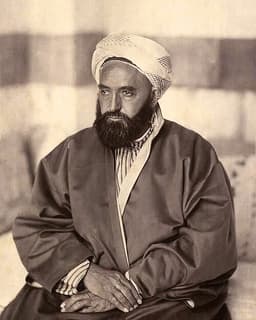
Abd el-Kader
General · Modern
67.1Total

Napoleon Bonaparte
General · Modern
70.9Total
Basic Information
Born
1808
1769
Died
1883
1821
Era
Modern
Modern
Nationality
Algeria
France
Occupation
General
General
Civilization
Middle Eastern
Western
Score Comparison
Military (10%)
60.0
94.0
Political (20%)
78.0
72.0
Influence (20%)
88.0
40.0
Legacy (20%)
40.0
80.0
Leadership (15%)
70.4
78.0
Strategy (15%)
68.7
90.0
TOTAL
67.1
70.9
Abd el-Kader — Complete Timeline
1837 AD
Treaty of TafnaPolitical Action◆ Major
Abd el-Kader signed the Treaty of Tafna with French General Thomas Bugeaud. The treaty recognized Abd el-Kader's control over the interior of western Algeria, temporarily halting French expansion and establishing a defined territory for his emirate.
TreatyAlgerian ResistanceFrench Colonization
Impact: regional
1843 AD
Capture of the SmalaWar◆ Major
French forces under the Duke of Aumale captured Abd el-Kader's mobile camp (smala) at Taguin, taking thousands of prisoners including his family. This defeat destroyed his administrative base and severely weakened his resistance movement.
BattleAlgerian ResistanceFrench Colonization
Impact: regionaltragic
1847 AD
Surrender to FrancePolitical Action◆ Major
Abd el-Kader surrendered to French General Louis de Lamorici
SurrenderAlgerian ResistanceFrench Colonization
Impact: regionaltragic
1860 AD
Protection of Christians in DamascusPolitical Action◆ Major
During sectarian violence in Damascus, Abd el-Kader personally intervened to protect Christian communities, sheltering thousands in his home. His actions saved many lives and earned him international recognition, including the French Legion of Honour.
HumanitarianInterfaithDamascus
Impact: regionalconstructive
Napoleon Bonaparte — Complete Timeline
1799 AD
Coup of 18 BrumaireOther◆ Major
Napoleon Bonaparte, with support from his brother Lucien and key political figures, overthrew the Directory in a bloodless coup. He established the Consulate with himself as First Consul, effectively becoming the ruler of France. This event ended the French Revolution's most unstable period.
French RevolutionCoupRise to Power
Impact: regional
1804 AD
Promulgation of the Napoleonic CodeOther◆ Major
Napoleon enacted the Civil Code of the French, known as the Napoleonic Code, a comprehensive set of laws that replaced the fragmented feudal legal systems. The code established legal equality, protected property rights, and secularized law. It became the basis for legal systems in many European and world countries.
Legal ReformNapoleonic CodeCivil Law
Impact: globalconstructive
1805 AD
Battle of AusterlitzWar◆ Major
Napoleon's Grande Arm
Napoleonic WarsBattleDecisive Victory
Impact: global
1812 AD
Invasion of RussiaWar◆ Major
Napoleon led the Grande Arm
Napoleonic WarsInvasionDisaster
Impact: globaldestructive
1815 AD
Battle of WaterlooWar◆ Major
Napoleon's French army was defeated by the combined forces of the Duke of Wellington's Anglo-Allied army and Gebhard Leberecht von Bl
Napoleonic WarsBattleFinal Defeat
Impact: globaldestructive
Expert Analysis
abd-el-kader-vs-napoleon-bonaparte
# The Eagle and the Emir: Two Paths to Glory
On a June morning in 1815, Napoleon Bonaparte watched his dreams shatter in the mud of Waterloo. Twenty-three years later, halfway across the Mediterranean, another man was building a state out of the desert—a state that would ultimately be crushed by the same French army Napoleon had once led to glory. These two men, both military commanders, both leaders of resistance against overwhelming odds, could not have been more different in their fates. Napoleon conquered Europe and died a prisoner on a remote island; Abd el-Kader fought a holy war, lost his kingdom, and died a hero to Christians and Muslims alike. What explains the chasm between them?
Origins
Napoleon was born in 1769 on Corsica, an island that had just passed from Italian to French control. His family belonged to the minor nobility, but they were poor, ambitious, and resentful of French rule. Young Napoleon spoke Italian before French, and his early letters seethed with Corsican nationalism. He was a product of the Enlightenment and the Revolution—a man who believed that talent, not birth, should determine one's place in the world. The chaos of revolutionary France became his ladder.
Abd el-Kader was born in 1808 near Mascara, in what is now western Algeria. His father was a Sufi sheikh, a spiritual leader of the Qadiriyya order, and the family traced its lineage back to the Prophet Muhammad. Young Abd el-Kader grew up in a world of Islamic learning, memorizing the Quran, studying jurisprudence, and learning horsemanship and warfare. He was a scholar-warrior in the classical Islamic tradition, a man whose authority rested on piety and lineage rather than revolutionary ambition.
Rise to Power
Napoleon rose through the ranks of the French Revolutionary Army with breathtaking speed. At 24, he was a general; at 30, First Consul of France; at 35, Emperor. His path was paved by the revolutionary upheaval that had decimated the old officer corps and opened opportunities for talented young men. The siege of Toulon in 1793, the Italian campaign of 1796, the Egyptian expedition of 1798—each victory was a stepping stone. Napoleon did not wait for destiny to find him; he seized it with both hands.
Abd el-Kader's rise was different. He was elected leader of the Algerian resistance in 1832, at age 24, not because he sought power but because the tribes needed a unifying figure. The French had invaded Algeria in 1830, and the Ottoman-backed rulers had collapsed. Abd el-Kader's father had been chosen first, but the elder man declined, pointing to his son. The young emir accepted reluctantly, seeing it as a religious duty. His authority was not based on conquest but on consensus—a fragile coalition of tribes that had to be constantly negotiated and renewed.
Leadership & Governance
Napoleon ruled as a military genius and administrative reformer. His 94.0 military score reflects campaigns that are still studied in war academies: the lightning marches of 1796, the crushing victory at Austerlitz in 1805, the doomed invasion of Russia in 1812. But his political score of 75.0 suggests a man who was less adept at building lasting institutions. The Napoleonic Code was his greatest achievement—a legal framework that influenced civil law across Europe—but his empire was ultimately a pyramid of conquest, dependent on his own genius. When he fell, it crumbled.
Abd el-Kader was a different kind of leader. His military score of 60.3 is modest, but his political score of 79.3 and leadership score of 81.6 tell a deeper story. He built a state in the Algerian interior: a capital at Tagdemt, a system of taxation, a standing army, and a network of fortifications. He signed the Treaty of Tafna in 1837, which recognized his control over much of western Algeria—a diplomatic victory that bought him time. He was a master of guerrilla warfare, using the vast spaces of Algeria to wear down the French, but he also understood that war was a means, not an end. His strategy score of 78.9 reflects a commander who knew when to fight and when to negotiate.
Triumph & Tragedy
Napoleon's greatest triumph was Austerlitz, the Battle of the Three Emperors, where he destroyed a larger Russian-Austrian army through sheer tactical brilliance. His greatest tragedy was the invasion of Russia in 1812, where he lost half a million men to winter, disease, and Cossack raids. His final defeat at Waterloo in 1815 was a masterpiece of misjudgment—he divided his army, delayed his attacks, and trusted subordinates who failed him. He died in 1821 on Saint Helena, a prisoner of the British, dictating his memoirs to justify his legacy.
Abd el-Kader's triumph was the Treaty of Tafna, which forced France to recognize him as a legitimate ruler. His tragedy was the capture of his mobile camp, the Smala, in 1843—a devastating blow that killed his wife and scattered his followers. He surrendered in 1847, ending 15 years of resistance. But his greatest moment came long after his defeat. In 1860, while in exile in Damascus, sectarian violence erupted between Druze and Christians. Abd el-Kader, now a prisoner of the Ottomans, personally sheltered thousands of Christians in his home, risking his own life to save his former enemies. The French government awarded him the Legion of Honor.
Character & Destiny
Napoleon was driven by an insatiable hunger for glory. "I live only for posterity," he once said, and he meant it. His decisions were shaped by a belief in his own destiny, a conviction that he was the instrument of history. This made him brilliant but also reckless—he could not stop, could not consolidate, could not share power. His personality was his fate.
Abd el-Kader was driven by duty. He fought because his people called him, he surrendered because further resistance would only bring more suffering, and he saved Christians because his faith demanded it. His personality was shaped by the Sufi concept of *tawakkul*—trust in God—which gave him a serenity that Napoleon never possessed. He accepted defeat with dignity and used his exile to write theological works and correspond with European philosophers. He died in 1883 in Damascus, honored by Muslims and Christians alike.
Legacy
Napoleon's legacy is written in the laws, borders, and military doctrines of modern Europe. He is remembered as a genius and a tyrant, a liberator and a conqueror. His name is synonymous with ambition, and his shadow falls across the 19th century like a giant's.
Abd el-Kader's legacy is more subtle but perhaps more profound. He is remembered in Algeria as a national hero, the father of resistance against colonial rule. He is remembered in the West as a model of chivalry and mercy—a Muslim leader who protected Christians at a time of sectarian hatred. His writings influenced later anti-colonial thinkers, and his example inspired figures as diverse as Abraham Lincoln and Mahatma Gandhi.
Conclusion
Napoleon and Abd el-Kader faced the same French army, but they lived in different worlds. Napoleon's world was one of ambition, revolution, and empire—a world where a man could rise from nothing to rule a continent. Abd el-Kader's world was one of tradition, faith, and community—a world where leadership was a burden, not a prize. Napoleon built an empire that lasted a decade; Abd el-Kader built a reputation that has lasted centuries. In the end, perhaps the measure of a leader is not how high he rises but how deeply he touches the human heart. By that measure, the emir may have surpassed the emperor.
Rankings
🥇
Napoleon BonaparteLeader
Mil: 94.0Pol: 72.0Inf: 40.0
70.9
🥈
Abd el-Kader
Mil: 60.0Pol: 78.0Inf: 88.0
67.1
+3.8 behind
How This Comparison Works
Algorithm
Each figure is scored on 6 dimensions (0—100 scale) based on structured historical data: Military (10%), Political (20%), Influence (20%), Legacy (20%), Leadership (15%), Strategy (15%). The weighted total produces the final ranking.
Data Sources
Scores are computed from structured sub-indicators in the database. Scale factors adjust for era (Ancient ×0.85, Modern ×1.0) and civilization size (Eastern ×1.05, Other ×0.80) to account for differences in population and military scale.
Maximum 3 Figures
Comparisons are limited to 2—3 figures to ensure readability and statistical meaningfulness.
Error Margins
±5 points per dimension — Sub-scores are derived from historical records with inherent uncertainty. Two figures within 5 points on a dimension should be considered roughly equivalent in that area.
Total Score Accuracy
±3 points overall — The weighted combination of 6 dimensions produces a total score with approximately ±3 points of uncertainty. Differences of less than 3 points are not statistically significant— the figures are effectively tied.
Known Limitations
- Historical records are incomplete and uneven across civilizations
- Figures from oral-tradition societies may be underrepresented
- Occupation labels can misclassify multi-role figures
- Scores measure capability and impact, not moral character
- Quantitative scoring is a comparison tool, not absolute truth
Capability Radar
Military (10%) — Battles & Warfare
Battles
75
95
Win Rate
65
90
Expansion
60
95
Political (20%) — Governance & Reform
Reform
72
95
Diplomacy
85
80
Economy
55
85
Influence (20%) — Cultural & Global Reach
Cultural
70
85
Global
65
90
Legacy (20%) — Historical Impact
Historical
75
95
Longevity
70
90
Leadership (15%) — Power & Stability
Tenure
68
85
Stability
50
70
Strategy (15%) — Tactics & Innovation
Strategy
78
95
Tactics
80
98
Reform
70
92
Similar Comparisons
Comments & Discussion
Desert Eagle6/17/2026
"Comparing Napoleon to Abd el-Kader is like comparing a hurricane to a sandstorm. Sure, both ravage landscapes, but Napoleon’s glory died at Waterloo with his Old Guard—an empire built on cannon and hubris. Abd el-Kader, though, led a guerrilla war that made the French bleed for seventeen years, then negotiated a surrender with dignity. Show me one European monarch who did that after losing. Exactly."
卡迪里骑士6/17/2026
"拿破仑的遗产是凯旋门上的名字,全是征服的灰烬。而阿卜杜·卡迪尔在1847年投降时,还争取到了安全通行,甚至后来在叙利亚保护基督徒。一个从科西嘉爬到皇位,最后困死圣赫勒拿;一个在沙漠建国,七次击败法军,死后被两教尊为英雄。你说谁更伟大?数字不会撒谎,拿破仑赢了战役,输了人生。"
Skeptical_Surveyor6/17/2026
"Citing Abd el-Kader as a 'hero to Christians and Muslims' is historian puffery. Look at numbers: Napoleon commanded nearly a million men at his peak, reshaping Europe’s borders via the Code and wars that killed millions. Abd el-Kader led maybe 50,000 tribesmen, lost his state in a decade, and his 'victories'—like the 1835 Battle of Macta—were against undermanned French columns. Scale matters. Stop romanticizing failure."
老巴黎炮手6/17/2026
"拿破仑是炮兵的灵魂——奥斯特里茨的十二磅炮碾碎了俄国人。阿卜杜·卡迪尔呢?他靠的是速度和骆驼,从不在平原硬拼。这不是比较两人谁更擅长经典决战,而是两种战术哲学:集中火力 vs. 游击消磨。法国在阿尔及利亚拖了二十年,每年花掉国库三分之一,最后赢得殖民地的同时,也输掉了道德高地。这才是真正的胜负。"
Franco-Arab_Amnesiac6/17/2026
"Let’s be honest: this comparison is Western guilt projection. Abd el-Kader was a brilliant tactician in a low-tech insurgency, but he never faced anything near Napoleon’s strategic depth—coalitions, logistics, continental warfare. When the French finally deployed 100,000 troops under Bugeaud, his state crumbled. Meanwhile, Napoleon fought Austria, Russia, Prussia, and Britain simultaneously. Put el-Kader in 1805 Europe, he’d be a footnote. Stop conflating local resistance with imperial ambition