Loading...
Abdel Aziz al-Rantisi vs Qin Shi Huang
Qin Shi Huang leads by 45.0 pts · 2 figures compared
…

Abdel Aziz al-Rantisi
Politician · Modern
40.2Total
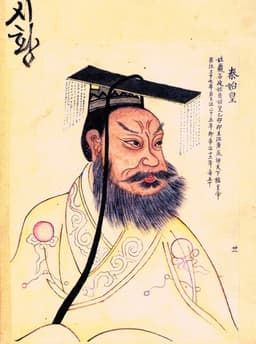
Qin Shi Huang
Emperor · Ancient
85.2Total
Basic Information
Born
1947
-259
Died
—
-210
Era
Modern
Ancient
Nationality
Palestine
China
Occupation
Politician
Emperor
Civilization
Middle Eastern
Eastern
Score Comparison
Military (10%)
38.3
80.0
Political (20%)
26.4
90.0
Influence (20%)
50.2
85.0
Legacy (20%)
39.2
90.0
Leadership (15%)
31.2
78.0
Strategy (15%)
53.8
82.0
TOTAL
40.2
85.2
Abdel Aziz al-Rantisi — Complete Timeline
2004 AD
Assassination by Israeli StrikeWar
Rantisi was killed in an Israeli airstrike on April 17, 2004, just weeks after succeeding Yassin. The strike targeted his car in Gaza City, killing him and his bodyguard. His death marked a major blow to Hamas leadership.
AssassinationIsraelGaza
Impact: regionaltragic
Succeeded Ahmed Yassin as Hamas LeaderPolitical Action◆ Major
Rantisi became the leader of Hamas in Gaza immediately after Yassin's assassination in March 2004. He vowed to continue armed resistance against Israel, escalating rocket attacks from Gaza.
HamasLeadershipGaza
Impact: regional
Qin Shi Huang — Complete Timeline
246 BC
Construction of the Mausoleum and Terracotta ArmyOther◆ Major
Qin Shi Huang commissioned a vast mausoleum complex near Xi'an, guarded by thousands of life-sized terracotta soldiers, horses, and chariots. The project employed hundreds of thousands of workers and reflected his obsession with immortality and imperial power.
Impact: global
230 BC
Conquest of the Six Warring StatesWar
From 230 to 221 BCE, Ying Zheng led the Qin state in a series of campaigns that conquered the Han, Zhao, Wei, Chu, Yan, and Qi states. This unified China under a single ruler for the first time, ending the Warring States period.
Impact: global
221 BC
Standardization of Writing, Currency, and MeasurementsReform◆ Major
Qin Shi Huang ordered the standardization of Chinese script, currency, and weights and measures across the unified empire. This facilitated administration, trade, and cultural integration, laying a foundation for future dynasties.
Impact: globalconstructive
Proclamation of the Qin DynastyPolitical Action
After conquering the last independent state, Ying Zheng declared himself Shi Huangdi (First Emperor), founding the Qin Dynasty. He adopted a new title to signify his supreme authority and initiated centralized imperial rule.
Impact: global
214 BC
Initiation of the Great Wall ConstructionOther◆ Major
Qin Shi Huang ordered the connection and extension of existing northern fortifications to create a unified defensive wall against nomadic Xiongnu raids. This project involved massive conscripted labor and became the precursor to the later Great Wall.
Impact: regional
213 BC
Burning of Books and Burying of ScholarsPolitical Action◆ Major
On the advice of Li Si, Qin Shi Huang ordered the burning of historical records and philosophical texts not aligned with Legalist doctrine. He also had 460 Confucian scholars buried alive to suppress dissent and consolidate ideological control.
Impact: nationaldestructive
Expert Analysis
abdel-aziz-al-rantisi-vs-qin-shi-huang
# The Unifier and the Martyr
On a spring day in 2004, a gray car slowed to a halt on a Gaza City street. The missile that struck it ended a life that had lasted less than two months in its highest office. Half a world away and two millennia earlier, a different leader was completing a tomb complex guarded by thousands of clay soldiers, preparing for an eternity that would never come. What drove these two men—one who built an empire, the other who led a movement—to such different ends? The answer lies not just in their choices, but in the worlds that shaped them.
Origins
Qin Shi Huang was born Ying Zheng in 259 BC, a prince of the Qin state during the chaotic Warring States period. His father was a king, his mother a concubine, and his childhood was steeped in the brutal politics of a fractured China. He grew up watching neighboring states scheme and war, learning early that unity required force. The Legalist philosophy of his tutors taught him that human nature was flawed and that only strict law could create order. He was a product of an era that demanded ruthlessness.
Abdel Aziz al-Rantisi was born in 1947 in the village of Yibna, then part of British Palestine. When he was one year old, the Nakba—the "catastrophe"—drove his family into exile in the Gaza Strip. He grew up in a refugee camp, watching his people live under Egyptian administration and later Israeli occupation. He studied medicine, became a pediatrician, but the politics of displacement consumed him. By the 1980s, he was a founding member of Hamas, an organization born from the fusion of Islamist ideology and Palestinian nationalism. His world was one of statelessness, where the only currency was resistance.
Rise to Power
Ying Zheng became King of Qin at thirteen, but real power came at twenty-two when he crushed a rebellion by his mother's lover. From 230 to 221 BC, he led his armies in a series of campaigns that devoured the six rival states. He did not just conquer—he absorbed. Each victory brought new territories, new peoples, new problems. By 221 BC, when he declared himself Shi Huangdi—"First Emperor"—he had achieved what no Chinese ruler had done before: total unification.
Rantisi's path was different. He rose through the ranks of Hamas during the First Intifada, was arrested and deported by Israel, and survived an assassination attempt in 2003 that killed his son. When Sheikh Ahmed Yassin was killed by an Israeli airstrike in March 2004, Rantisi succeeded him as Hamas leader in Gaza. His rise was not conquest but inheritance—a movement's choice of a successor who would continue the fight.
Leadership & Governance
Qin Shi Huang governed with a vision that was both brilliant and brutal. He standardized the written script across China, so that a man from the old state of Chu could read the same documents as one from Zhao. He unified currency, making trade possible across his empire. He ordered the same axle length for all carts, so that ruts in roads would no longer divide regions. He connected the northern walls into what would become the Great Wall, a statement of permanence carved in stone.
But his governance had a dark side. In 213 BC, on the advice of his minister Li Si, he ordered the burning of all books that did not promote Legalist ideology—histories, philosophies, poetry. He buried scholars alive who protested. He believed that the past had to be erased for the new order to stand. His rule was absolute, his methods merciless, and his reforms were imposed by the sword.
Rantisi led a movement, not a state. His governance was that of a resistance leader: organizing militants, negotiating with factions, speaking to the world through interviews and statements. He had no treasury to standardize, no empire to administer. His power came from his people's suffering and their hope. He vowed to continue Yassin's path, to fight until Palestine was free. His leadership was measured not in reforms but in resolve.
Triumph & Tragedy
Qin Shi Huang's greatest triumph was unification itself. He created a template for Chinese civilization that would last two thousand years. His tragedy was that his dynasty crumbled within four years of his death. The harshness of his rule bred rebellion; the standardization he imposed survived, but his family did not. He died in 210 BC, his mausoleum unfinished, his terracotta army standing silent guard over a tomb that would be forgotten for centuries.
Rantisi's triumph was survival itself. He had been imprisoned, deported, targeted—and yet he led. His tragedy came swiftly. On April 17, 2004, an Israeli helicopter fired two missiles at his car. He died instantly, just weeks after taking office. His assassination made him a martyr, but it also showed the fragility of a movement that could lose its leaders so quickly.
Character & Destiny
Qin Shi Huang was obsessed with immortality. He sent expeditions to find the elixir of life, consumed mercury pills that may have killed him, and built a tomb complex that mirrored the world he ruled. His personality—paranoid, ruthless, visionary—drove him to create an empire that outlasted him. He believed that history was his to write, and he tried to burn every page that disagreed.
Rantisi was shaped by loss. He lost his home as a child, his son to an Israeli missile, his mentor to an airstrike. His personality was forged in the fire of occupation: stubborn, defiant, unyielding. He believed that resistance was the only language the world understood. His destiny was to be a symbol, not a ruler.
Legacy
Qin Shi Huang's legacy is imprinted on China itself. The Great Wall, the standardized script, the administrative divisions—all trace back to him. The Terracotta Army, discovered in 1974, made him a global icon. His methods were harsh, but his vision was vast. He is remembered as both tyrant and founder, the man who made China.
Rantisi's legacy is narrower but no less powerful. He is remembered in Gaza as a martyr, a leader who chose death over surrender. His name appears in the roll call of Hamas leaders who fell to Israeli strikes, a reminder of a conflict that has no end in sight. His influence score of 66.1 reflects a man who mattered deeply to his cause but could not change its trajectory.
Conclusion
One built an empire that lasted two thousand years. The other led a movement that could not hold power for two months. Yet both men were driven by the same force: the belief that their vision was worth any cost. Qin Shi Huang unified China through fire and iron; Rantisi resisted occupation through faith and sacrifice. Their worlds were different—one ancient and imperial, the other modern and fractured—but their fates were shaped by the same brutal logic of history. The unifier built a tomb for eternity. The martyr died in a car on a dusty street. Both, in their own ways, are still speaking to us.
Rankings
🥇
Qin Shi HuangLeader
Mil: 80.0Pol: 90.0Inf: 85.0
85.2
🥈
Abdel Aziz al-Rantisi
Mil: 38.3Pol: 26.4Inf: 50.2
40.2
+45.0 behind
How This Comparison Works
Algorithm
Each figure is scored on 6 dimensions (0—100 scale) based on structured historical data: Military (10%), Political (20%), Influence (20%), Legacy (20%), Leadership (15%), Strategy (15%). The weighted total produces the final ranking.
Data Sources
Scores are computed from structured sub-indicators in the database. Scale factors adjust for era (Ancient ×0.85, Modern ×1.0) and civilization size (Eastern ×1.05, Other ×0.80) to account for differences in population and military scale.
Maximum 3 Figures
Comparisons are limited to 2—3 figures to ensure readability and statistical meaningfulness.
Error Margins
±5 points per dimension — Sub-scores are derived from historical records with inherent uncertainty. Two figures within 5 points on a dimension should be considered roughly equivalent in that area.
Total Score Accuracy
±3 points overall — The weighted combination of 6 dimensions produces a total score with approximately ±3 points of uncertainty. Differences of less than 3 points are not statistically significant— the figures are effectively tied.
Known Limitations
- Historical records are incomplete and uneven across civilizations
- Figures from oral-tradition societies may be underrepresented
- Occupation labels can misclassify multi-role figures
- Scores measure capability and impact, not moral character
- Quantitative scoring is a comparison tool, not absolute truth
Capability Radar
Military (10%) — Battles & Warfare
Battles
5
85
Win Rate
5
90
Expansion
10
90
Political (20%) — Governance & Reform
Reform
15
95
Diplomacy
15
75
Economy
5
90
Influence (20%) — Cultural & Global Reach
Cultural
20
95
Global
20
85
Legacy (20%) — Historical Impact
Historical
20
95
Longevity
15
95
Leadership (15%) — Power & Stability
Tenure
10
70
Stability
5
65
Strategy (15%) — Tactics & Innovation
Strategy
10
85
Tactics
10
80
Reform
15
95
Similar Comparisons
Comments & Discussion
QIN'S HAMMER6/17/2026
Calling Rantisi a "martyr" and Qin a "unifier" is false equivalence. Qin Shi Huang didn't just unify China—he standardized script, weights, and roads, creating the administrative skeleton of an empire that lasted two millennia. Rantisi led Hamas, an organization explicitly committed to Israel's destruction. One built civilization; the other built resistance to civilization. Comparing them trivializes the actual historical impact of state-building versus terror leadership.
秦俑之怒6/17/2026
拿秦始皇和兰提西比?这是对历史的侮辱。秦始皇焚书坑儒不假,但他统一文字、度量衡,奠定了中华文明的基础。兰提西呢?一个儿科医生变成了恐怖组织头目,用自杀炸弹摧毁和平机会。别忘了,秦始皇死在巡视路上,兰提西死在美国导弹下——这本身就说明了谁在建设,谁在破坏。
DATA CRUSHER6/17/2026
The summary romanticizes Rantisi as "led a movement" while glossing over the fact that Hamas under his co-leadership launched over 425 suicide attacks between 2000-2004 according to Israeli security data. Meanwhile, Qin's "ruthlessness" is contextualized as product of his era. This is narrative bias: one gets historical empathy, the other gets a pass. If Qin's Legalism was "strict law," Hamas's charter calling for genocide of Jews is just... ideology?
长城与铁丝网6/17/2026
秦始皇修长城是为了防御,兰提西号召抵抗是为了复仇。这两个动机截然不同。秦长城连接了华夏文明,哈马斯的火箭弹撕裂了和平。讽刺的是,秦始皇追求永生却早早死去,兰提西追求殉道也如愿以偿。但前者留下兵马俑和世界奇迹,后者留下废墟和更多孤儿。历史自有公论。
CLASSICS SCHOLAR6/17/2026
The comparison misses the philosophical core: Qin was a Legalist who believed humans need iron law to overcome chaos. Rantisi was a religious nationalist who believed violence sanctified by faith could liberate his people. Both were absolutists, but Qin's absolutism created a unified state structure that later dynasties could build upon. Rantisi's absolutism led to a dead end. The difference isn't morality—it's outcome. One had a plan for the living, the other only a theology for the dying.