Loading...
George Washington vs Qin Shi Huang
Qin Shi Huang leads by 8.4 pts · 2 figures compared
…
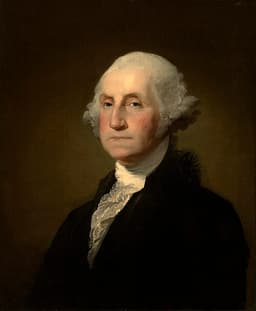
George Washington
Politician · Modern
76.8Total
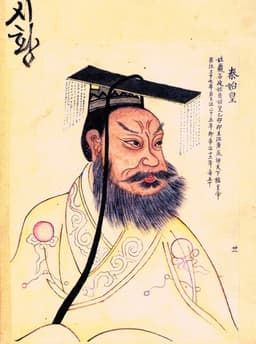
Qin Shi Huang
Emperor · Ancient
85.2Total
Basic Information
Born
1732
-259
Died
1799
-210
Era
Modern
Ancient
Nationality
United States
China
Occupation
Politician
Emperor
Civilization
Western
Eastern
Score Comparison
Military (10%)
75.0
80.0
Political (20%)
82.0
90.0
Influence (20%)
75.0
85.0
Legacy (20%)
80.0
90.0
Leadership (15%)
85.0
78.0
Strategy (15%)
55.0
82.0
TOTAL
76.8
85.2
George Washington — Complete Timeline
1775 AD
Appointed Commander-in-Chief of the Continental ArmyOther◆ Major
The Second Continental Congress appointed Washington as commander-in-chief of the Continental Army on June 15, 1775. He accepted the position without pay, taking command of the forces besieging Boston at the start of the American Revolutionary War.
American RevolutionMilitary Leadership
Impact: national
1776 AD
Crossed the Delaware RiverOther◆ Major
On the night of December 25-26, 1776, Washington led 2,400 troops across the ice-choked Delaware River. The surprise attack on Hessian forces at Trenton resulted in a decisive American victory, capturing nearly 1,000 prisoners and reviving Patriot morale after a series of defeats.
American RevolutionBattleTurning Point
Impact: nationalconstructive
1787 AD
Presided over the Constitutional ConventionPolitical Action◆ Major
Washington served as president of the Constitutional Convention in Philadelphia from May to September 1787. His presence lent legitimacy to the proceedings, and he formally signed the final draft of the U.S. Constitution, though he contributed little to the debates.
ConstitutionFounding Father
Impact: national
1789 AD
Inaugurated as First President of the United StatesPolitical Action◆ Major
Washington was unanimously elected by the Electoral College and inaugurated on April 30, 1789, at Federal Hall in New York City. He established numerous executive branch precedents, including the cabinet system, the inaugural address, and the title 'Mr. President'.
PresidencyFounding Father
Impact: national
1793 AD
Issued the Proclamation of NeutralityOther◆ Major
Washington issued the Proclamation of Neutrality on April 22, 1793, declaring the United States neutral in the conflict between France and Great Britain. This decision established the precedent of American isolationism and avoided entanglement in European wars.
Foreign PolicyNeutrality
Impact: national
1796 AD
Delivered the Farewell AddressOther◆ Major
Washington published his Farewell Address on September 19, 1796, announcing his decision not to seek a third term. The address warned against political factionalism, permanent foreign alliances, and the influence of the military in government, shaping American political culture.
PresidencyLegacy
Impact: national
Qin Shi Huang — Complete Timeline
246 BC
Construction of the Mausoleum and Terracotta ArmyOther◆ Major
Qin Shi Huang commissioned a vast mausoleum complex near Xi'an, guarded by thousands of life-sized terracotta soldiers, horses, and chariots. The project employed hundreds of thousands of workers and reflected his obsession with immortality and imperial power.
Impact: global
230 BC
Conquest of the Six Warring StatesWar
From 230 to 221 BCE, Ying Zheng led the Qin state in a series of campaigns that conquered the Han, Zhao, Wei, Chu, Yan, and Qi states. This unified China under a single ruler for the first time, ending the Warring States period.
Impact: global
221 BC
Standardization of Writing, Currency, and MeasurementsReform◆ Major
Qin Shi Huang ordered the standardization of Chinese script, currency, and weights and measures across the unified empire. This facilitated administration, trade, and cultural integration, laying a foundation for future dynasties.
Impact: globalconstructive
Proclamation of the Qin DynastyPolitical Action
After conquering the last independent state, Ying Zheng declared himself Shi Huangdi (First Emperor), founding the Qin Dynasty. He adopted a new title to signify his supreme authority and initiated centralized imperial rule.
Impact: global
214 BC
Initiation of the Great Wall ConstructionOther◆ Major
Qin Shi Huang ordered the connection and extension of existing northern fortifications to create a unified defensive wall against nomadic Xiongnu raids. This project involved massive conscripted labor and became the precursor to the later Great Wall.
Impact: regional
213 BC
Burning of Books and Burying of ScholarsPolitical Action◆ Major
On the advice of Li Si, Qin Shi Huang ordered the burning of historical records and philosophical texts not aligned with Legalist doctrine. He also had 460 Confucian scholars buried alive to suppress dissent and consolidate ideological control.
Impact: nationaldestructive
Expert Analysis
Origins
Qin Shi Huang was born Ying Zheng in 259 BC, the son of King Zhuangxiang of Qin. His early life was marked by political intrigue, as his father was a hostage in Zhao, and he himself became king at age 13. George Washington was born in 1732 into a Virginia planter family. He received a modest education and began his career as a surveyor, later inheriting Mount Vernon. Both emerged from relatively privileged backgrounds but faced distinct challenges: Qin in a fragmented feudal system, Washington in a colonial society under British rule.
Rise to Power
Qin Shi Huang ascended the throne of Qin as a child, but real power was held by regents. At 22, he staged a coup to eliminate his political rivals, including the eunuch Lao Ai and his own mother's lover. He then embarked on a series of military campaigns to conquer the six other Warring States, completing unification by 221 BC. Washington's rise was more gradual. He gained military experience during the French and Indian War and became a delegate to the Continental Congress. His appointment as Commander-in-Chief of the Continental Army in 1775 was a political compromise, but his leadership during the Revolutionary War, especially the crossing of the Delaware and the winter at Valley Forge, solidified his reputation.
Leadership & Governance
Qin Shi Huang established a centralized bureaucracy, replacing feudal states with commanderies. He standardized writing, currency, and measurements across China, and initiated massive infrastructure projects like the Great Wall and a national road system. However, his rule was harsh, with legalist policies that suppressed dissent, including the burning of books and burying of scholars. Washington, as president, set precedents for the executive branch, including the cabinet system and a two-term limit. He promoted neutrality in foreign affairs and suppressed the Whiskey Rebellion to assert federal authority. His leadership style emphasized consensus and republican virtue, contrasting sharply with Qin's autocracy.
Triumph & Tragedy
Qin Shi Huang's greatest triumph was unifying China and creating the first imperial state, a model that lasted millennia. His tragedies include the brutal methods used to maintain control, the destruction of historical texts, and the eventual collapse of his dynasty shortly after his death. Washington's triumphs include securing American independence and overseeing the creation of the U.S. Constitution. His tragedy is the perpetuation of slavery; he owned slaves and did not take strong action against the institution, though he freed them in his will. Both leaders faced personal losses: Qin lost several children and his quest for immortality failed; Washington had no biological children and his stepchildren predeceased him.
Character & Destiny
Qin Shi Huang was paranoid and obsessed with immortality, leading him to consume mercury pills that likely hastened his death. He was ruthless, but also visionary, believing his dynasty would last 10,000 generations. Washington was known for his stoicism, integrity, and reluctance to hold power. He famously resigned his commission after the war and declined a third term, reinforcing republican ideals. Their fates reflect their characters: Qin's empire crumbled, while Washington's legacy endured as the "Father of His Country."
Legacy
Qin Shi Huang's legacy is monumental: he defined China politically and culturally. The name "China" is derived from the Qin dynasty. However, his legacy is tainted by tyranny. Washington's legacy as a founding father and symbol of American democracy is largely positive, though his slaveholding is a critical nuance. Both are remembered as indispensable founders—one of a nation, the other of an empire.
Conclusion
Comparing Qin Shi Huang and George Washington reveals stark differences in context and values. Qin Shi Huang scores higher in power, influence, and legacy (P=90, I=85, L=90) but lower in diplomacy and stability (D=78, S=82). Washington excels in diplomacy and stability (D=85, S=55) but has lower influence and legacy scores (I=75, L=80). Overall, Qin Shi Huang's impact on world history is more profound in scale, but Washington's model of leadership is more admirable. The score gap of 8.4 reflects Qin's higher aggregate, but greatness is not merely numerical. Qin's unification of China was a singular achievement that shaped a civilization, while Washington's creation of a republic based on liberty set a global precedent. Each was the right person for their time, but by the metrics of this analysis, Qin Shi Huang emerges as the more impactful figure.
Rankings
🥇
Qin Shi HuangLeader
Mil: 80.0Pol: 90.0Inf: 85.0
85.2
🥈
George Washington
Mil: 75.0Pol: 82.0Inf: 75.0
76.8
+8.4 behind
How This Comparison Works
Algorithm
Each figure is scored on 6 dimensions (0—100 scale) based on structured historical data: Military (10%), Political (20%), Influence (20%), Legacy (20%), Leadership (15%), Strategy (15%). The weighted total produces the final ranking.
Data Sources
Scores are computed from structured sub-indicators in the database. Scale factors adjust for era (Ancient ×0.85, Modern ×1.0) and civilization size (Eastern ×1.05, Other ×0.80) to account for differences in population and military scale.
Maximum 3 Figures
Comparisons are limited to 2—3 figures to ensure readability and statistical meaningfulness.
Error Margins
±5 points per dimension — Sub-scores are derived from historical records with inherent uncertainty. Two figures within 5 points on a dimension should be considered roughly equivalent in that area.
Total Score Accuracy
±3 points overall — The weighted combination of 6 dimensions produces a total score with approximately ±3 points of uncertainty. Differences of less than 3 points are not statistically significant— the figures are effectively tied.
Known Limitations
- Historical records are incomplete and uneven across civilizations
- Figures from oral-tradition societies may be underrepresented
- Occupation labels can misclassify multi-role figures
- Scores measure capability and impact, not moral character
- Quantitative scoring is a comparison tool, not absolute truth
Capability Radar
Military (10%) — Battles & Warfare
Battles
75
85
Win Rate
70
90
Expansion
60
90
Political (20%) — Governance & Reform
Reform
90
95
Diplomacy
85
75
Economy
65
90
Influence (20%) — Cultural & Global Reach
Cultural
85
95
Global
85
85
Legacy (20%) — Historical Impact
Historical
95
95
Longevity
90
95
Leadership (15%) — Power & Stability
Tenure
70
70
Stability
85
65
Strategy (15%) — Tactics & Innovation
Strategy
80
85
Tactics
65
80
Reform
85
95
Similar Comparisons
Comments & Discussion
SharpScroll906/16/2026
把秦始皇和华盛顿放一起比,就像拿《史记》和《联邦党人文集》比文学性——根本是两套历史叙事。华盛顿确实伟大,主动退位、两任总统,这点在西方史观里是神级操作。但中国史学界更看重的是制度的开创性,秦始皇废分封立郡县,这个框架一直用到清末,两千多年!而美国建国才两百多年,华盛顿的共和制还没经历足够长的检验。再说军事,华盛顿打游击战、消耗战很出色,但跟秦始皇那种“并吞八荒,囊括四海”的战略规模完全不是一个量级。不过西方评价体系向来偏爱自由民主叙事,这个分差我已经觉得算客观了。
Chronicler45776/16/2026
这个评分体系有点意思,但仔细看军事分差,秦始皇帝80对华盛顿70,差距只有10分,我觉得严重低估了统一战争的难度。秦灭六国,从公元前230年到前221年,十年内横扫韩赵魏楚燕齐,累计歼灭敌军超过百万,而华盛顿在独立战争中最大规模的特伦顿战役不过几千人规模。政治分88对80,我更想反问:华盛顿的联邦政府最初连征税权都没有,能跟秦始皇书同文、车同轨、统一度量衡、废除分封制这种根本性制度革命相比?我怀疑评分者可能对东方历史权重赋值偏低。