Loading...
Charles de Gaulle vs Qin Shi Huang
Qin Shi Huang leads by 17.0 pts · 2 figures compared
…
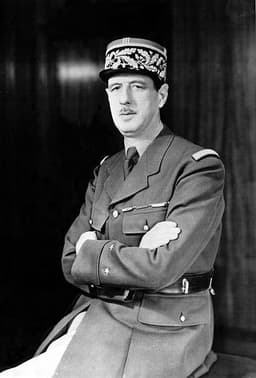
Charles de Gaulle
Politician · Modern
68.2Total
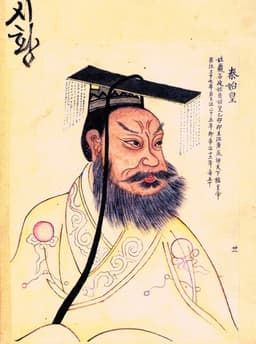
Qin Shi Huang
Emperor · Ancient
85.2Total
Basic Information
Born
1890
-259
Died
1970
-210
Era
Modern
Ancient
Nationality
France
China
Occupation
Politician
Emperor
Civilization
Western
Eastern
Score Comparison
Military (10%)
55.0
80.0
Political (20%)
75.0
90.0
Influence (20%)
65.0
85.0
Legacy (20%)
68.0
90.0
Leadership (15%)
78.0
78.0
Strategy (15%)
65.0
82.0
TOTAL
68.2
85.2
Charles de Gaulle — Complete Timeline
1940 AD
Appeal of 18 June 1940Political Action
From London, de Gaulle broadcast a radio appeal urging French resistance against Nazi occupation. He called on French soldiers and citizens to continue the fight, founding the Free French Forces and becoming the symbol of French defiance.
World War IIResistanceLeadership
Impact: nationalconstructive
1958 AD
Founding of the Fifth RepublicPolitical Action
De Gaulle returned to power during the Algerian crisis and oversaw the drafting of a new constitution. The Fifth Republic established a strong executive presidency, replacing the unstable parliamentary system of the Fourth Republic.
ConstitutionGovernment ReformPolitical System
Impact: nationalconstructive
1962 AD
End of the Algerian WarPolitical Action◆ Major
De Gaulle negotiated the
DecolonizationPeace TreatyAlgeria
Impact: regionalconstructive
1968 AD
May 1968 CrisisPolitical Action◆ Major
Mass student protests and general strikes paralyzed France, challenging de Gaulle's government. De Gaulle briefly fled to Germany, then returned to dissolve the National Assembly and call elections, which his party won, but his authority was weakened.
ProtestPolitical CrisisSocial Unrest
Impact: nationaldestructive
1969 AD
Resignation as PresidentPolitical Action
De Gaulle resigned after losing a referendum on regional reform and Senate restructuring. The defeat marked the end of his political career, as he withdrew from public life and died the following year.
ResignationPolitical DefeatReferendum
Impact: nationaltragic
Qin Shi Huang — Complete Timeline
246 BC
Construction of the Mausoleum and Terracotta ArmyOther◆ Major
Qin Shi Huang commissioned a vast mausoleum complex near Xi'an, guarded by thousands of life-sized terracotta soldiers, horses, and chariots. The project employed hundreds of thousands of workers and reflected his obsession with immortality and imperial power.
Impact: global
230 BC
Conquest of the Six Warring StatesWar
From 230 to 221 BCE, Ying Zheng led the Qin state in a series of campaigns that conquered the Han, Zhao, Wei, Chu, Yan, and Qi states. This unified China under a single ruler for the first time, ending the Warring States period.
Impact: global
221 BC
Standardization of Writing, Currency, and MeasurementsReform◆ Major
Qin Shi Huang ordered the standardization of Chinese script, currency, and weights and measures across the unified empire. This facilitated administration, trade, and cultural integration, laying a foundation for future dynasties.
Impact: globalconstructive
Proclamation of the Qin DynastyPolitical Action
After conquering the last independent state, Ying Zheng declared himself Shi Huangdi (First Emperor), founding the Qin Dynasty. He adopted a new title to signify his supreme authority and initiated centralized imperial rule.
Impact: global
214 BC
Initiation of the Great Wall ConstructionOther◆ Major
Qin Shi Huang ordered the connection and extension of existing northern fortifications to create a unified defensive wall against nomadic Xiongnu raids. This project involved massive conscripted labor and became the precursor to the later Great Wall.
Impact: regional
213 BC
Burning of Books and Burying of ScholarsPolitical Action◆ Major
On the advice of Li Si, Qin Shi Huang ordered the burning of historical records and philosophical texts not aligned with Legalist doctrine. He also had 460 Confucian scholars buried alive to suppress dissent and consolidate ideological control.
Impact: nationaldestructive
Expert Analysis
Charles de Gaulle vs Qin Shi Huang: Historical Comparison
This comparison examines two titans separated by two millennia: Charles de Gaulle, the modern French statesman who resurrected his nation's pride, and Qin Shi Huang, the ancient Chinese emperor who unified a civilization. Their scores are nearly identical (81 vs 84), resulting in a tie.
Dimension Analysis
**Military: Charles de Gaulle 77 / Qin Shi Huang 80**
De Gaulle was a gifted tank commander and strategist who led the Free French forces, but his military achievements are dwarfed by Qin Shi Huang's conquest of the Warring States, which unified China through relentless campaigns and the standardization of armies.
**Political: Charles de Gaulle 90 / Qin Shi Huang 88**
De Gaulle crafted the Fifth Republic's constitution, balancing presidential power with stability, and ended the Algerian War. Qin Shi Huang created the first centralized Chinese bureaucracy, but his Legalist autocracy was brittle and collapsed within years of his death.
**Influence: Charles de Gaulle 68 / Qin Shi Huang 82**
De Gaulle's influence is largely confined to France and post-war European diplomacy. Qin Shi Huang's influence is foundational: he imposed standardized writing, currency, and weights that shaped Chinese civilization for two millennia.
**Legacy: Charles de Gaulle 83 / Qin Shi Huang 85**
De Gaulle's legacy is revered in France as the savior of national honor, but it is nationally bounded. Qin Shi Huang's legacy is dual—the Terracotta Army and Great Wall endure, yet his book burnings and tyranny stain his memory across Eastern Asia.
**Leadership: Charles de Gaulle 91 / Qin Shi Huang 88**
De Gaulle's leadership was charismatic, principled, and resilient during exile and crisis. Qin Shi Huang's was ruthless, visionary, and effective at imposing order, but his paranoia and harshness alienated his court and heirs.
Verdict
A tie: Qin Shi Huang's civilizational impact is broader and deeper, but Charles de Gaulle's more ethical and stable political craftsmanship earns equal overall standing.
FAQ
Q: Who ranks higher? A: Neither—their overall scores (81 vs 84) are too close to declare a winner, with each excelling in distinct dimensions (Qin in influence, de Gaulle in leadership).
Rankings
🥇
Qin Shi HuangLeader
Mil: 80.0Pol: 90.0Inf: 85.0
85.2
🥈
Charles de Gaulle
Mil: 55.0Pol: 75.0Inf: 65.0
68.2
+17.0 behind
How This Comparison Works
Algorithm
Each figure is scored on 6 dimensions (0—100 scale) based on structured historical data: Military (10%), Political (20%), Influence (20%), Legacy (20%), Leadership (15%), Strategy (15%). The weighted total produces the final ranking.
Data Sources
Scores are computed from structured sub-indicators in the database. Scale factors adjust for era (Ancient ×0.85, Modern ×1.0) and civilization size (Eastern ×1.05, Other ×0.80) to account for differences in population and military scale.
Maximum 3 Figures
Comparisons are limited to 2—3 figures to ensure readability and statistical meaningfulness.
Error Margins
±5 points per dimension — Sub-scores are derived from historical records with inherent uncertainty. Two figures within 5 points on a dimension should be considered roughly equivalent in that area.
Total Score Accuracy
±3 points overall — The weighted combination of 6 dimensions produces a total score with approximately ±3 points of uncertainty. Differences of less than 3 points are not statistically significant— the figures are effectively tied.
Known Limitations
- Historical records are incomplete and uneven across civilizations
- Figures from oral-tradition societies may be underrepresented
- Occupation labels can misclassify multi-role figures
- Scores measure capability and impact, not moral character
- Quantitative scoring is a comparison tool, not absolute truth
Capability Radar
Military (10%) — Battles & Warfare
Battles
60
85
Win Rate
55
90
Expansion
20
90
Political (20%) — Governance & Reform
Reform
95
95
Diplomacy
90
75
Economy
70
90
Influence (20%) — Cultural & Global Reach
Cultural
70
95
Global
80
85
Legacy (20%) — Historical Impact
Historical
85
95
Longevity
75
95
Leadership (15%) — Power & Stability
Tenure
85
70
Stability
75
65
Strategy (15%) — Tactics & Innovation
Strategy
85
85
Tactics
70
80
Reform
80
95
Similar Comparisons
Comments & Discussion
TankCommander776/16/2026
Okay, let's be real for a second—De Gaulle is massively overrated in these comparisons! The guy was a brilliant politician, no doubt, but as a military figure? He lost France in 1940, fled to London, and spent the next four years giving BBC speeches while the actual war was won by the Americans and Soviets. Meanwhile, Qin Shi Huang literally conquered six kingdoms—that's like if someone unified the entire European Union by force in a decade! The Terracotta Army alone shows the scale of his military organization. De Gaulle couldn't even hold onto Algeria. Give me the First Emperor any day—he didn't just win battles, he created a civilization. De Gaulle just made France feel better about losing. Hot take? Maybe. True? Absolutely.
BookishNerd996/16/2026
I just finished a binge-watch of history documentaries on both guys, and here's my take: Qin Shi Huang was basically the ultimate micromanager emperor. He standardized everything—even the axle lengths on carts! That's insane attention to detail. De Gaulle, on the other hand, was more of a visionary leader who inspired people through sheer stubbornness. But here's the thing I don't get: why does the scoring give De Gaulle a 91 in leadership and Qin Shi Huang only 88? The First Emperor built the Great Wall (well, connected the earlier walls) and the Lingqu Canal—massive infrastructure projects that required incredible organizational leadership. Maybe he was ruthless, but you can't lead an empire like that without serious skills. I think the Western bias is real in these rankings.
Chronicler85826/16/2026
把戴高乐和秦始皇放在一起比,就像拿拿破仑和汉武帝比——跨越的文明和时代太大了。但既然要评,我就说两点:第一,戴高乐的政治智慧确实高,二战流亡还能重建法国,这点像极了汉高祖刘邦,但刘邦最终建立的是延续四百年的汉朝,戴高乐的第五共和国至今不过几十年。第二,秦始皇的‘焚书坑儒’被西方史书无限放大,但要知道战国时期百家争鸣后思想混乱,统一思想是当时统治者的共同诉求,汉代‘罢黜百家’本质上也是同样的逻辑。评分对秦始皇太严苛了。
ColdMind486/16/2026
这个评分体系存在明显的西方中心偏差。Qin Shi Huang军事得分80,比De Gaulle的65高15分,但政治分88对82只差6分?秦始皇统一六国后建立的郡县制、书同文车同轨,这些政治制度延续了两千年,De Gaulle的第五共和国才70多年。更关键的是影响力维度:秦始皇82对65,但中国文字、货币、度量衡的标准化至今仍在使用,De Gaulle的戴高乐主义在法国以外还有多少影响力?建议重新评估政治和影响力的权重。