Loading...
Abdel Fattah al-Burhan vs Jorge Rafael Videla
Abdel Fattah al-Burhan leads by 0.2 pts · 2 figures compared
…
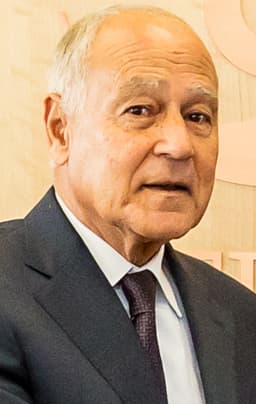
Abdel Fattah al-Burhan
General · Modern
42.5Total

Jorge Rafael Videla
General · Modern
42.3Total
Basic Information
Born
1960
1925
Died
—
—
Era
Modern
Modern
Nationality
Sudan
Argentina
Occupation
General
General
Civilization
Other
Western
Score Comparison
Military (10%)
50.0
25.9
Political (20%)
32.2
25.0
Influence (20%)
49.4
50.2
Legacy (20%)
37.5
41.7
Leadership (15%)
43.8
57.6
Strategy (15%)
43.7
43.7
TOTAL
42.5
42.3
Abdel Fattah al-Burhan — Complete Timeline
2019 AD
Became Chairman of the Sovereignty CouncilPolitical Action◆ Major
Abdel Fattah al-Burhan became Chairman of the Sovereignty Council, Sudan's collective head of state, after the ouster of Omar al-Bashir. He led the transitional military council that shared power with civilian forces.
TransitionMilitary RuleSudan
Impact: national
2020 AD
Signed the Juba Peace AgreementPolitical Action◆ Major
Al-Burhan signed the Juba Peace Agreement with several armed rebel groups, aiming to end conflicts in Darfur, South Kordofan, and Blue Nile. The agreement was a key step in Sudan's transition but faced implementation challenges.
Peace AgreementCivil WarSudan
Impact: nationalconstructive
2021 AD
Led the 2021 CoupPolitical Action◆ Major
Al-Burhan led a military coup in October 2021, dissolving the civilian-led government and declaring a state of emergency. The coup derailed Sudan's democratic transition and sparked widespread protests.
CoupDemocracySudan
Impact: nationaldestructive
Jorge Rafael Videla — Complete Timeline
1976 AD
1976 Argentine coup d'étatPolitical Action
Videla led a military junta that overthrew President Isabel Per
CoupDictatorshipDirty War
Impact: nationaldestructive
Dirty War human rights abusesOther◆ Major
Under Videla's command, the military regime kidnapped, tortured, and killed an estimated 30,000 people, including leftist activists, trade unionists, and students. Victims were often held in secret detention centers and disappeared without trial.
Human RightsRepressionDisappearances
Impact: nationaldestructive
1978 AD
1978 FIFA World Cup hostingCultural◆ Major
Videla's regime hosted the 1978 FIFA World Cup in Argentina, using the event to project an image of normalcy and international prestige. The tournament was marked by propaganda efforts to distract from the regime's human rights abuses.
SportsPropagandaInternational Relations
Impact: global
2010 AD
Trial and conviction for crimes against humanityPolitical Action◆ Major
Videla was convicted by an Argentine court for crimes against humanity, including systematic kidnapping, torture, and murder during the Dirty War. He was sentenced to life in prison, marking a historic moment for transitional justice in Argentina.
JusticeHuman RightsAccountability
Impact: nationalconstructive
Expert Analysis
Origins
Abdel Fattah al-Burhan was born in 1960 in Sudan. He graduated from the Sudanese Military Academy and served in various command positions. His early career was shaped by the conflicts in Darfur and South Kordofan. Al-Burhan rose through the ranks under President Omar al-Bashir, becoming a lieutenant general and inspector general of the Sudanese Armed Forces.
Jorge Rafael Videla was born in 1925 in Mercedes, Argentina. He entered the Argentine Army as a cadet and graduated from the National Military College. Videla served in various staff and command roles, including as commander of the Army's V Infantry Brigade. He became commander-in-chief of the Army in 1975, a position he held during the coup.
Rise to Power
Al-Burhan's rise to power came after the ouster of Omar al-Bashir in April 2019. As a senior general, he became Chairman of the Transitional Military Council and later Chairman of the Sovereignty Council in August 2019. In October 2021, he led a military coup that dissolved the civilian government, consolidating his control. His power rests on the military's continued dominance.
Videla rose to power through the 1976 Argentine coup d'état on March 24, 1976. He led a military junta that overthrew President Isabel Perón. The junta dissolved Congress, imposed martial law, and began a campaign of repression. Videla became de facto president, ruling until 1981. His rise was part of a broader pattern of military interventions in Argentina.
Leadership & Governance
Al-Burhan's leadership is characterized by a dual role as both a transitional figure and a military strongman. He signed the Juba Peace Agreement in 2020 with rebel groups, aiming to end conflicts in Darfur, South Kordofan, and Blue Nile. However, his 2021 coup derailed Sudan's democratic transition, leading to international condemnation and internal instability. His governance score of 43.8 reflects a mix of diplomatic efforts and authoritarian tactics.
Videla's governance was marked by the Dirty War, a state-sponsored campaign of kidnapping, torture, and murder against perceived leftist opponents. An estimated 30,000 people were killed or disappeared. His regime also hosted the 1978 FIFA World Cup to project normalcy. Videla's leadership score of 57.6 indicates effective control, but his political score of 25.0 reflects the illegitimacy of his rule.
Triumph & Tragedy
Al-Burhan's greatest success was the Juba Peace Agreement, which brought some rebel groups into the political process. However, his 2021 coup was a major failure, reversing democratic gains and leading to economic collapse and renewed conflict. His influence score of 49.4 shows moderate regional impact, but his legacy score of 37.5 is weighed down by the coup's consequences.
Videla's triumph was the suppression of leftist guerrilla groups, but at a horrific cost. He used the World Cup to improve Argentina's image, but the human rights abuses led to his trial and conviction for crimes against humanity in 2010. His legacy score of 41.7 is mixed, as he is remembered as a brutal dictator rather than a savior.
Character & Destiny
Al-Burhan is a pragmatic military leader, willing to negotiate with rebels but also to seize power. His decision to launch the 2021 coup suggests a preference for military control over democratic processes. His character is shaped by a career in an institution that sees itself as the guardian of the state.
Videla was a calculating and ruthless leader, believing in the necessity of extreme measures to combat subversion. His cold demeanor and systematic approach to repression are well-documented. Historians assess him as a key figure in Argentina's darkest period.
Legacy
Al-Burhan's legacy is still unfolding. He is likely to be remembered as a transitional leader who failed to consolidate democracy, leaving Sudan in crisis. His impact on Sudanese politics is significant but negative in the short term.
Videla's legacy is firmly negative. He is a symbol of state terror and human rights abuses. His conviction for crimes against humanity set a precedent for international justice. The Dirty War remains a wound in Argentine society.
Conclusion
While al-Burhan and Videla have similar total scores (42.5 vs 42.3), their impacts differ greatly. Videla's legacy of systematic abuse and eventual conviction for crimes against humanity marks him as a more historically significant figure. Al-Burhan's actions, though damaging, have not reached the same scale of atrocity. Videla's influence on human rights law and Argentine memory is greater. Thus, Videla had a more profound, albeit negative, impact on history.
Rankings
🥇
Abdel Fattah al-BurhanLeader
Mil: 50.0Pol: 32.2Inf: 49.4
42.5
🥈
Jorge Rafael Videla
Mil: 25.9Pol: 25.0Inf: 50.2
42.3
+0.2 behind
How This Comparison Works
Algorithm
Each figure is scored on 6 dimensions (0—100 scale) based on structured historical data: Military (10%), Political (20%), Influence (20%), Legacy (20%), Leadership (15%), Strategy (15%). The weighted total produces the final ranking.
Data Sources
Scores are computed from structured sub-indicators in the database. Scale factors adjust for era (Ancient ×0.85, Modern ×1.0) and civilization size (Eastern ×1.05, Other ×0.80) to account for differences in population and military scale.
Maximum 3 Figures
Comparisons are limited to 2—3 figures to ensure readability and statistical meaningfulness.
Error Margins
±5 points per dimension — Sub-scores are derived from historical records with inherent uncertainty. Two figures within 5 points on a dimension should be considered roughly equivalent in that area.
Total Score Accuracy
±3 points overall — The weighted combination of 6 dimensions produces a total score with approximately ±3 points of uncertainty. Differences of less than 3 points are not statistically significant— the figures are effectively tied.
Known Limitations
- Historical records are incomplete and uneven across civilizations
- Figures from oral-tradition societies may be underrepresented
- Occupation labels can misclassify multi-role figures
- Scores measure capability and impact, not moral character
- Quantitative scoring is a comparison tool, not absolute truth
Capability Radar
Military (10%) — Battles & Warfare
Battles
15
10
Win Rate
10
15
Expansion
10
5
Political (20%) — Governance & Reform
Reform
15
5
Diplomacy
25
10
Economy
10
10
Influence (20%) — Cultural & Global Reach
Cultural
10
5
Global
15
25
Legacy (20%) — Historical Impact
Historical
15
30
Longevity
10
20
Leadership (15%) — Power & Stability
Tenure
30
55
Stability
10
5
Strategy (15%) — Tactics & Innovation
Strategy
20
25
Tactics
20
20
Reform
15
10
Similar Comparisons
Comments & Discussion
No comments yet. Be the first to share your thoughts!