Loading...
Abdel Fattah al-Burhan vs Napoleon Bonaparte
Napoleon Bonaparte leads by 28.4 pts · 2 figures compared
…
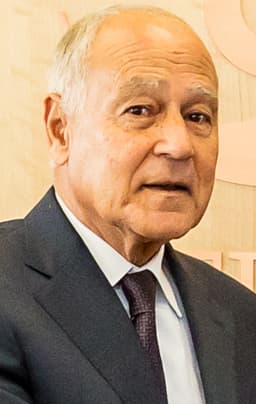
Abdel Fattah al-Burhan
General · Modern
42.5Total

Napoleon Bonaparte
General · Modern
70.9Total
Basic Information
Born
1960
1769
Died
—
1821
Era
Modern
Modern
Nationality
Sudan
France
Occupation
General
General
Civilization
Other
Western
Score Comparison
Military (10%)
50.0
94.0
Political (20%)
32.2
72.0
Influence (20%)
49.4
40.0
Legacy (20%)
37.5
80.0
Leadership (15%)
43.8
78.0
Strategy (15%)
43.7
90.0
TOTAL
42.5
70.9
Abdel Fattah al-Burhan — Complete Timeline
2019 AD
Became Chairman of the Sovereignty CouncilPolitical Action◆ Major
Abdel Fattah al-Burhan became Chairman of the Sovereignty Council, Sudan's collective head of state, after the ouster of Omar al-Bashir. He led the transitional military council that shared power with civilian forces.
TransitionMilitary RuleSudan
Impact: national
2020 AD
Signed the Juba Peace AgreementPolitical Action◆ Major
Al-Burhan signed the Juba Peace Agreement with several armed rebel groups, aiming to end conflicts in Darfur, South Kordofan, and Blue Nile. The agreement was a key step in Sudan's transition but faced implementation challenges.
Peace AgreementCivil WarSudan
Impact: nationalconstructive
2021 AD
Led the 2021 CoupPolitical Action◆ Major
Al-Burhan led a military coup in October 2021, dissolving the civilian-led government and declaring a state of emergency. The coup derailed Sudan's democratic transition and sparked widespread protests.
CoupDemocracySudan
Impact: nationaldestructive
Napoleon Bonaparte — Complete Timeline
1799 AD
Coup of 18 BrumaireOther◆ Major
Napoleon Bonaparte, with support from his brother Lucien and key political figures, overthrew the Directory in a bloodless coup. He established the Consulate with himself as First Consul, effectively becoming the ruler of France. This event ended the French Revolution's most unstable period.
French RevolutionCoupRise to Power
Impact: regional
1804 AD
Promulgation of the Napoleonic CodeOther◆ Major
Napoleon enacted the Civil Code of the French, known as the Napoleonic Code, a comprehensive set of laws that replaced the fragmented feudal legal systems. The code established legal equality, protected property rights, and secularized law. It became the basis for legal systems in many European and world countries.
Legal ReformNapoleonic CodeCivil Law
Impact: globalconstructive
1805 AD
Battle of AusterlitzWar◆ Major
Napoleon's Grande Arm
Napoleonic WarsBattleDecisive Victory
Impact: global
1812 AD
Invasion of RussiaWar◆ Major
Napoleon led the Grande Arm
Napoleonic WarsInvasionDisaster
Impact: globaldestructive
1815 AD
Battle of WaterlooWar◆ Major
Napoleon's French army was defeated by the combined forces of the Duke of Wellington's Anglo-Allied army and Gebhard Leberecht von Bl
Napoleonic WarsBattleFinal Defeat
Impact: globaldestructive
Expert Analysis
abdel-fattah-al-burhan-vs-napoleon-bonaparte
### The Conqueror and the Commander: Two Generals, Two Centuries, One Question
In the winter of 1812, Napoleon Bonaparte watched his Grand Army burn Moscow, knowing he had reached the pinnacle of his power. In the autumn of 2021, Abdel Fattah al-Burhan watched his soldiers seize the civilian government in Khartoum, knowing he had just undone a fragile revolution. One man redrew the map of Europe; the other struggles to govern a fractured Sudan. What separates a titan of history from a figure of transition? The answer lies not in ambition, but in the worlds that shaped them.
### Origins: The Corsican and the Sudanese
Napoleon was born in 1769 on the Mediterranean island of Corsica, a place only recently annexed by France. He grew up speaking Italian, not French, and his family’s modest nobility gave him a ticket to a military academy. The French Revolution, erupting when he was twenty, shattered the old order and opened a path for talent over birth. He was a child of chaos, forged in the fires of a society that rewarded audacity.
Abdel Fattah al-Burhan was born in 1960 in Sudan, a country then emerging from British-Egyptian rule. His path was military service in a nation plagued by civil wars, coups, and the long dictatorship of Omar al-Bashir. Unlike Napoleon, al-Burhan did not inherit a revolution; he inherited a collapse. Sudan’s political landscape was a graveyard of failed experiments, where the army was the only constant. He rose through the ranks of a system designed to suppress change, not to inspire it.
### Rise to Power: The Siege and the Handover
Napoleon’s rise was meteoric. At twenty-four, he recaptured Toulon from British forces. At twenty-six, he crushed a royalist uprising in Paris with a “whiff of grapeshot.” By thirty, he was leading armies across Italy and Egypt. His genius was recognized instantly because France needed heroes. The Directory, desperate for victories, handed him command. His path was a ladder of conquest.
Al-Burhan’s rise was the opposite. In 2019, after months of mass protests, the Sudanese military ousted Omar al-Bashir. Al-Burhan did not seize power; he was handed it. As Chairman of the Transitional Sovereignty Council, he became the face of a military-civilian partnership that was never meant to last. His key event was not a battle but a signature—the Juba Peace Agreement of 2020, which aimed to end decades of conflict in Darfur and South Kordofan. He was a caretaker, not a conqueror.
### Leadership & Governance: The Code and the Coup
Napoleon ruled with a vision that outlasted his empire. He centralized the French state, reformed education, and most famously, codified the Napoleonic Code—a legal system that enshrined equality before the law, property rights, and secular governance. His military genius was absolute: he won sixty battles, from Austerlitz to Jena, by outmaneuvering enemies with speed and deception. But his political wisdom was flawed. He crowned himself emperor, alienated allies, and bled France dry in endless wars.
Al-Burhan governs in a different key. His military score of 33.5 reflects a man who has never commanded a major campaign; his political score of 49.2 shows a leader who governs by survival, not reform. In October 2021, he led a coup that dissolved the civilian government, declaring a state of emergency. It was a move that destroyed Sudan’s fragile transition, triggering international condemnation and renewed protests. Where Napoleon built a legal legacy, al-Burhan tore down a political one. His leadership is a holding action, not a transformation.
### Triumph & Tragedy: Waterloo and the Empty Chair
Napoleon’s greatest moment was the Battle of Austerlitz in 1805, where he crushed the combined armies of Russia and Austria. His tragedy was Waterloo in 1815, a defeat that ended his hundred-day return from exile. He died in 1821 on Saint Helena, a prisoner of the British, his empire reduced to memory.
Al-Burhan’s triumph is ambiguous. The Juba Peace Agreement was a genuine achievement, bringing some rebel groups into the political fold. But his tragedy is the coup itself. By seizing power in 2021, he turned Sudan into a pariah state, deepened the economic crisis, and ensured that his legacy would be one of betrayal. His greatest victory was signing a peace; his greatest failure was breaking a promise.
### Character & Destiny: The Flame and the Fog
Napoleon was ambition incarnate. He once said, “Impossible is a word to be found only in the dictionary of fools.” His personality—restless, calculating, supremely confident—drove him to conquer Europe but also to overreach. He invaded Russia in 1812 with 600,000 men; fewer than 100,000 returned. His destiny was shaped by his refusal to stop.
Al-Burhan is a different breed. He is cautious, opaque, and reactive. He did not plan the revolution; he managed its aftermath. His coup was not a stroke of genius but a panic response to civilian demands for accountability. His character is not that of a world-shaker but of a gatekeeper. He guards a system he did not create, and his decisions reflect a man afraid of losing control rather than eager to gain glory.
### Legacy: The Eternal and the Ephemeral
Napoleon’s legacy is carved into stone. The Napoleonic Code influences legal systems from France to Louisiana. His military campaigns are studied in war colleges. His score of 78.0 for legacy reflects a figure who changed the course of Western civilization. He is remembered as a genius and a tyrant, a liberator and a conqueror.
Al-Burhan’s legacy is uncertain. His scores—52.2 total—place him among the minor figures of history. He will be remembered, if at all, as the general who ended Sudan’s democratic experiment. His name will appear in footnotes about the Arab Spring’s failures, not in the grand narratives of human achievement.
### Conclusion: The Mirror of Time
What drives these differences? Not talent alone, but opportunity. Napoleon was born into a revolution that rewarded genius; al-Burhan was born into a state that rewarded survival. Napoleon had a continent to conquer; al-Burhan has a country to hold together. One built a cathedral of law; the other guards a ruin of politics. History does not treat all generals equally—it gives some the stage of a lifetime, and others the weight of a single, fragile moment. The question is not who was greater, but who had a world worth conquering.
Rankings
🥇
Napoleon BonaparteLeader
Mil: 94.0Pol: 72.0Inf: 40.0
70.9
🥈
Abdel Fattah al-Burhan
Mil: 50.0Pol: 32.2Inf: 49.4
42.5
+28.4 behind
How This Comparison Works
Algorithm
Each figure is scored on 6 dimensions (0—100 scale) based on structured historical data: Military (10%), Political (20%), Influence (20%), Legacy (20%), Leadership (15%), Strategy (15%). The weighted total produces the final ranking.
Data Sources
Scores are computed from structured sub-indicators in the database. Scale factors adjust for era (Ancient ×0.85, Modern ×1.0) and civilization size (Eastern ×1.05, Other ×0.80) to account for differences in population and military scale.
Maximum 3 Figures
Comparisons are limited to 2—3 figures to ensure readability and statistical meaningfulness.
Error Margins
±5 points per dimension — Sub-scores are derived from historical records with inherent uncertainty. Two figures within 5 points on a dimension should be considered roughly equivalent in that area.
Total Score Accuracy
±3 points overall — The weighted combination of 6 dimensions produces a total score with approximately ±3 points of uncertainty. Differences of less than 3 points are not statistically significant— the figures are effectively tied.
Known Limitations
- Historical records are incomplete and uneven across civilizations
- Figures from oral-tradition societies may be underrepresented
- Occupation labels can misclassify multi-role figures
- Scores measure capability and impact, not moral character
- Quantitative scoring is a comparison tool, not absolute truth
Capability Radar
Military (10%) — Battles & Warfare
Battles
15
95
Win Rate
10
90
Expansion
10
95
Political (20%) — Governance & Reform
Reform
15
95
Diplomacy
25
80
Economy
10
85
Influence (20%) — Cultural & Global Reach
Cultural
10
85
Global
15
90
Legacy (20%) — Historical Impact
Historical
15
95
Longevity
10
90
Leadership (15%) — Power & Stability
Tenure
30
85
Stability
10
70
Strategy (15%) — Tactics & Innovation
Strategy
20
95
Tactics
20
98
Reform
15
92
Similar Comparisons
Comments & Discussion
RENEGADE HISTORIAN6/17/2026
This comparison is absurd on its face. Napoleon transformed Europe through the Napoleonic Code, reorganized governments, and left institutions that lasted centuries. Al-Burhan is a military strongman who dismantled Sudan’s fragile democratic transition in 2021 and now presides over a catastrophic civil war with over 10,000 dead. One changed the world; the other can’t even secure Khartoum from the RSF. Crowns aren’t comparable to coup plots.
历史量化师6/17/2026
拿拿破仑跟布尔汉比,纯粹是数据上的戏法。拿破仑指挥过超过60场会战,统治过8000万欧洲人口。布尔汉呢?他当政四年,苏丹GDP暴跌40%,上百万人流离失所。用同一台秤称这两人的历史重量,就像用厨房秤量原子弹当量——工具本身就不对。评估标准得先统一,别把草鞋跟王冠放在同一个货架上卖。
CLASSICS SCHOLAR6/17/2026
Funny how we expect each age to produce a Napoleon when really it produces what it needs. Napoleon was born into a revolutionary vacuum that demanded institutional genius. Al-Burhan emerged from a kleptocratic military apparatus designed by decades of Bashir, not from any ideological furnace. Plutarch compared Greek and Roman heroes because they shared classical virtues. These two share only a uniform and a willingness to seize power. That’s not comparison; it’s category error.
苏丹老兵6/17/2026
我在达尔富尔待过八年,实话告诉你:布尔汉根本不是拿破仑那类人。拿破仑打的是征服战,从意大利到埃及到俄国,每次都是主动出击。布尔汉呢?2023年喀土穆机场战斗打响时,他甚至没准备好迎接赫梅蒂的袭击。他更像一个在危机中勉力维持的官僚将军,不是那个骑马跨阿尔卑斯的传奇。有些人穿军装是天意,有些人穿军装是宿命,布尔汉是后者。