Loading...
Abdul-Malik al-Houthi vs Qin Shi Huang
Qin Shi Huang leads by 42.0 pts · 2 figures compared
…

Abdul-Malik al-Houthi
Revolutionary · Modern
43.2Total
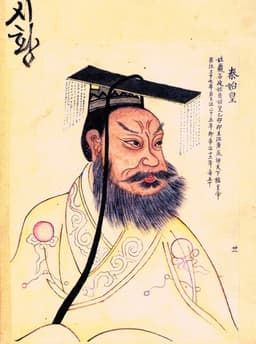
Qin Shi Huang
Emperor · Ancient
85.2Total
Basic Information
Born
1979
-259
Died
—
-210
Era
Modern
Ancient
Nationality
Yemen
China
Occupation
Revolutionary
Emperor
Civilization
Middle Eastern
Eastern
Score Comparison
Military (10%)
38.3
80.0
Political (20%)
29.3
90.0
Influence (20%)
50.2
85.0
Legacy (20%)
40.0
90.0
Leadership (15%)
54.2
78.0
Strategy (15%)
43.3
82.0
TOTAL
43.2
85.2
Abdul-Malik al-Houthi — Complete Timeline
1990 AD
Founded the Houthi movementPolitical Action
Abdul-Malik al-Houthi, along with his brother Hussein al-Houthi, founded the Houthi movement (Ansar Allah) in northern Yemen. The movement began as a religious revivalist group and later evolved into a political and military insurgency.
FoundingHouthi MovementYemen
Impact: regional
2004 AD
Led the Houthi insurgency against the Yemeni governmentWar◆ Major
After the death of his brother Hussein, Abdul-Malik al-Houthi assumed leadership of the Houthi insurgency. He led a series of rebellions against the Yemeni government, demanding greater autonomy and political representation for the Zaydi Shia community.
InsurgencyYemenZaydi
Impact: nationaldestructive
2014 AD
Captured Sanaa in a coupWar
Houthi forces under Abdul-Malik al-Houthi captured the Yemeni capital Sanaa in a swift military offensive. The takeover forced President Hadi to flee and led to the collapse of the transitional government, triggering a full-scale civil war.
CoupSanaaYemen Civil War
Impact: regionaldestructive
2015 AD
Launched missile and drone attacks on Saudi Arabia and UAEWar◆ Major
Under Abdul-Malik al-Houthi's leadership, the Houthis launched ballistic missiles and drones at targets in Saudi Arabia and the UAE, including airports and oil facilities. These attacks escalated the regional conflict and drew international condemnation.
Missile AttacksSaudi ArabiaUAE
Impact: regionaldestructive
Rejected UN peace efforts and continued warPolitical Action◆ Major
Abdul-Malik al-Houthi repeatedly rejected UN-brokered peace proposals, insisting on a military victory. His intransigence prolonged the Yemeni civil war, causing a severe humanitarian crisis with millions facing famine and disease.
Peace ProcessHumanitarian CrisisYemen
Impact: regionaldestructive
Qin Shi Huang — Complete Timeline
246 BC
Construction of the Mausoleum and Terracotta ArmyOther◆ Major
Qin Shi Huang commissioned a vast mausoleum complex near Xi'an, guarded by thousands of life-sized terracotta soldiers, horses, and chariots. The project employed hundreds of thousands of workers and reflected his obsession with immortality and imperial power.
Impact: global
230 BC
Conquest of the Six Warring StatesWar
From 230 to 221 BCE, Ying Zheng led the Qin state in a series of campaigns that conquered the Han, Zhao, Wei, Chu, Yan, and Qi states. This unified China under a single ruler for the first time, ending the Warring States period.
Impact: global
221 BC
Standardization of Writing, Currency, and MeasurementsReform◆ Major
Qin Shi Huang ordered the standardization of Chinese script, currency, and weights and measures across the unified empire. This facilitated administration, trade, and cultural integration, laying a foundation for future dynasties.
Impact: globalconstructive
Proclamation of the Qin DynastyPolitical Action
After conquering the last independent state, Ying Zheng declared himself Shi Huangdi (First Emperor), founding the Qin Dynasty. He adopted a new title to signify his supreme authority and initiated centralized imperial rule.
Impact: global
214 BC
Initiation of the Great Wall ConstructionOther◆ Major
Qin Shi Huang ordered the connection and extension of existing northern fortifications to create a unified defensive wall against nomadic Xiongnu raids. This project involved massive conscripted labor and became the precursor to the later Great Wall.
Impact: regional
213 BC
Burning of Books and Burying of ScholarsPolitical Action◆ Major
On the advice of Li Si, Qin Shi Huang ordered the burning of historical records and philosophical texts not aligned with Legalist doctrine. He also had 460 Confucian scholars buried alive to suppress dissent and consolidate ideological control.
Impact: nationaldestructive
Expert Analysis
abdul-malik-al-houthi-vs-qin-shi-huang
# The Unifier and the Rebel: Two Paths to Power in Two Millennia
In 221 BC, a king in his thirties stood before the conquered capitals of six ancient states and declared himself the First Emperor, master of all under Heaven. In 2014, a guerrilla commander in his thirties rode into the presidential palace of Sanaa, capital of a fractured republic, and began a war that would consume a nation. Qin Shi Huang and Abdul-Malik al-Houthi are separated by more than two thousand years, by continents, by civilizations. Yet both rose from obscurity to seize control of their worlds. Why did one build an empire that still defines a civilization, while the other has only deepened a ruin?
Origins
Ying Zheng was born in 259 BC, a prince of the Qin state, one of seven warring kingdoms locked in a brutal struggle for supremacy. His childhood was a crucible of violence: his father was a hostage in a rival state, and Zheng himself was raised amid court intrigue and assassination plots. The Warring States period had lasted two centuries—a world where survival depended on military strength, ruthless alliances, and the cold calculus of power. From birth, Zheng understood that the old order was dying, and only the most disciplined, most merciless would forge something new.
Abdul-Malik al-Houthi was born in 1979 in the rugged highlands of northern Yemen, into a family of Zaydi Shia religious scholars. His world was one of tribal loyalties, sectarian grievance, and a history of northern rebellion against central authority. His elder brother Hussein al-Houthi founded the Believing Youth movement in the 1990s, blending Zaydi revivalism with opposition to Yemen’s government and its alliance with Saudi Arabia. Abdul-Malik grew up in the shadow of that movement, learning that the state was an enemy, that the West was a conspiracy, and that only armed resistance could restore dignity to the marginalized.
The difference in their origins is not merely one of time. Zheng inherited a state—a machine of war and administration that had been perfected by generations of Legalist reformers. Al-Houthi inherited a cause—a movement born in mosques and mountain villages, armed with ideology and resentment. One had an empire to build; the other had a grievance to avenge.
Rise to Power
Zheng became king of Qin at age thirteen, in 246 BC. For nine years, he ruled through regents while waiting for his moment. When he took full power at twenty-two, he unleashed a campaign of conquest that would be remembered for millennia. From 230 to 221 BC, the Qin armies swept across China, defeating the Han, Zhao, Wei, Chu, Yan, and Qi states in a series of campaigns that combined overwhelming force with psychological terror. Zheng did not merely win battles; he destroyed the will of his enemies to resist. When he proclaimed himself Shi Huangdi—First Emperor—in 221 BC, he had achieved what no Chinese ruler had done before: total unification.
Al-Houthi’s rise was slower and more precarious. When his brother Hussein was killed by Yemeni forces in 2004, Abdul-Malik, then twenty-five, took command of the Houthi insurgency. For a decade, he led a guerrilla war in the northern province of Saada, fighting six rounds of conflict against the Yemeni army. He was not conquering kingdoms; he was surviving, building a loyal cadre, waiting for the state to weaken. That moment came in 2014, when Yemen’s government collapsed into factional infighting. Al-Houthi’s forces swept down from the mountains and captured Sanaa in a swift coup. He had not unified Yemen—he had seized its capital.
The contrast is stark. Zheng’s rise was a deliberate, state-directed project of conquest. Al-Houthi’s was an opportunistic exploitation of state failure. One built a ladder; the other climbed onto a collapsing building.
Leadership & Governance
Qin Shi Huang governed with terrifying efficiency. He standardized writing, currency, weights, and measures across his empire, creating a unified administrative system that would outlast his dynasty. He connected and extended the northern fortifications into what would become the Great Wall, a project that cost hundreds of thousands of lives but defined China’s northern frontier for centuries. His legal code, based on Legalist philosophy, was harsh: punishments were severe, dissent was crushed, and in 213 BC, he ordered the burning of historical records and the burying of scholars who opposed his rule. He was not a popular ruler; he was an effective one. His reign, though only eleven years long, laid the institutional foundation for two thousand years of imperial China.
Abdul-Malik al-Houthi governs through a different logic. His movement, Ansar Allah, rules parts of Yemen through a mix of religious authority, tribal patronage, and military coercion. He has not standardized anything; Yemen remains fractured, its currency worthless, its institutions destroyed. His military strategy relies on cheap drones and ballistic missiles that can terrorize Saudi Arabia and the UAE but cannot hold territory. His political strategy is rejectionist: he has repeatedly refused UN peace proposals, insisting on total victory. “We will continue until we achieve victory,” he declared in 2015, and he has kept his word—at the cost of a humanitarian catastrophe that has left millions starving.
Where Qin Shi Huang built, al-Houthi has broken. One created a state; the other has prevented one from forming.
Triumph & Tragedy
Qin Shi Huang’s greatest triumph was the unification itself—a feat so complete that the name “China” derives from his dynasty. His greatest tragedy was his obsession with immortality. He consumed mercury elixirs, believing they would grant eternal life, and died in 210 BC at age forty-nine, poisoned by his own desperation. His empire collapsed within four years of his death, destroyed by the very harshness he had institutionalized.
Al-Houthi’s greatest triumph was the capture of Sanaa—a stunning victory that made him a major player in the Middle East. His greatest tragedy is that he has no exit. He cannot win the war he started, but he cannot end it without losing power. The Saudi-led coalition has bombed Yemen into rubble; the Houthis have turned that rubble into a fortress. Both sides are trapped.
Character & Destiny
Qin Shi Huang was paranoid, brilliant, and utterly convinced of his own destiny. He believed he could command both heaven and earth, and he built a mausoleum guarded by thousands of terracotta soldiers to prove it. His personality—cold, calculating, megalomaniacal—drove him to unify China but also to destroy it. He could not imagine a world he did not control.
Al-Houthi is patient, resilient, and ideologically rigid. He has survived assassination attempts, airstrikes, and a decade of war. His personality—sectarian, suspicious, unyielding—has kept his movement alive but has also condemned his people to endless conflict. He cannot imagine a world he does not resist.
Legacy
Qin Shi Huang is remembered as both a tyrant and a founder. The Great Wall, the terracotta army, the unified script—these are his monuments. He is the father of China, even if his dynasty died with him.
Abdul-Malik al-Houthi is remembered, if he is remembered, as a destroyer. He has no monuments, only ruins. His name will be written in the history of Yemen’s collapse, not its rebirth.
Conclusion
One man built an empire that lasted two millennia. The other has built a war that has lasted two decades. The difference is not in ambition—both wanted power—but in what they had to work with. Qin Shi Huang inherited a state and built a civilization. Al-Houthi inherited a cause and built a catastrophe. History rewards those who create order, even brutal order. It forgets those who only know how to resist.
Rankings
🥇
Qin Shi HuangLeader
Mil: 80.0Pol: 90.0Inf: 85.0
85.2
🥈
Abdul-Malik al-Houthi
Mil: 38.3Pol: 29.3Inf: 50.2
43.2
+42.0 behind
How This Comparison Works
Algorithm
Each figure is scored on 6 dimensions (0—100 scale) based on structured historical data: Military (10%), Political (20%), Influence (20%), Legacy (20%), Leadership (15%), Strategy (15%). The weighted total produces the final ranking.
Data Sources
Scores are computed from structured sub-indicators in the database. Scale factors adjust for era (Ancient ×0.85, Modern ×1.0) and civilization size (Eastern ×1.05, Other ×0.80) to account for differences in population and military scale.
Maximum 3 Figures
Comparisons are limited to 2—3 figures to ensure readability and statistical meaningfulness.
Error Margins
±5 points per dimension — Sub-scores are derived from historical records with inherent uncertainty. Two figures within 5 points on a dimension should be considered roughly equivalent in that area.
Total Score Accuracy
±3 points overall — The weighted combination of 6 dimensions produces a total score with approximately ±3 points of uncertainty. Differences of less than 3 points are not statistically significant— the figures are effectively tied.
Known Limitations
- Historical records are incomplete and uneven across civilizations
- Figures from oral-tradition societies may be underrepresented
- Occupation labels can misclassify multi-role figures
- Scores measure capability and impact, not moral character
- Quantitative scoring is a comparison tool, not absolute truth
Capability Radar
Military (10%) — Battles & Warfare
Battles
45
85
Win Rate
40
90
Expansion
35
90
Political (20%) — Governance & Reform
Reform
25
95
Diplomacy
40
75
Economy
20
90
Influence (20%) — Cultural & Global Reach
Cultural
35
95
Global
35
85
Legacy (20%) — Historical Impact
Historical
40
95
Longevity
30
95
Leadership (15%) — Power & Stability
Tenure
60
70
Stability
15
65
Strategy (15%) — Tactics & Innovation
Strategy
55
85
Tactics
50
80
Reform
30
95
Similar Comparisons
Comments & Discussion
IRON_FASCES6/17/2026
As a military historian, I see a stark contrast in force projection. Qin Shi Huang standardized weapon production across conquered states—archaeological evidence shows crossbow triggers with identical tolerances found from Xianyang to the coast. That industrial discipline created a lasting empire. Al-Houthi fights with Iranian-made drones and smuggled AKs, relying on tribal militias. One man built a war machine that would churn for centuries; the other leads a coalition that collapses without ex
QIN_SHARD6/17/2026
秦始皇统一六国后,销毁各地兵器铸成十二铜人,这不仅是象征,更是对军事资源的绝对控制。而胡塞武装至今还在用土制炸弹和伊朗走私的导弹碎片。一个把战争变成制度,一个把战争变成混沌。两千年的差距不在技术水平,在于有没有能力把自己的意志刻进整个国家的筋骨里。胡塞连稳定货币都做不到,谈何统一?
ANARCHO-SCEPTIC6/17/2026
Data skeptic here: the comparison is apples and a dying star. The Qin unified China proper—about 2.5 million square kilometers of interconnected river valleys—with centralized grain taxes and census records. Al-Houthi controls portions of a bankrupt Yemeni state, roughly 40% of a territory smaller than France, while his population starves. The "empire" argument fails when your economic base is Saudi blockade points and Qatari humanitarian loopholes. One consolidated resources; the other just fra
LUOYANG_DUST6/17/2026
作为一个历史爱好者,我得说秦始皇最大的成就是文字统一。出土的睡虎地秦简显示,秦朝在边疆地区推行标准隶书,连戍卒的账本都遵循同一套书写规则。而胡塞武装占据萨那后,连也门纸币上印的政府名称都改了三回。一个用笔杆子把文明焊在一起,另一个连自己的钞票都印不利索。两千年前的皇帝比今天的"领袖"更懂统治的基本功。
ZAYDI_GRIEVE6/17/2026
Revisionist critic: let's talk outcomes. Qin Shi Huang ended centuries of war by terrifying six kingdoms into submission—the legalist machine used harsh codes, mass conscription, and a wall that cost countless lives. But he built roads, canals, and a postal system that lasted millennia. Al-Houthi ended a weak republic, then created a humanitarian catastrophe—over 377,000 dead by UN estimates, with no roads, no uniform legal code, no institutions. One unified through brutal construction; the othe
焚书坑儒6/17/2026
"统一"这个词用在这两个人身上简直荒谬。秦始皇焚书是为了清除六国史书中的异端叙事,留下他的官方版本——这是意识形态控制的高阶艺术。胡塞武装占领