Loading...
Abdulaziz Al Saud vs Mary II of England
Abdulaziz Al Saud leads by 17.8 pts · 2 figures compared
…

Abdulaziz Al Saud
Emperor · Modern
68.7Total
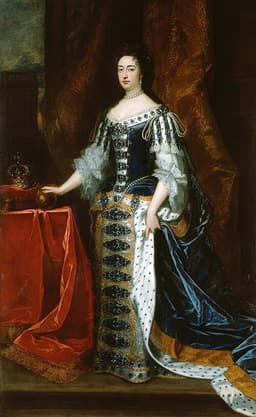
Mary II of England
Emperor · Modern
50.9Total
Basic Information
Born
1875
1662
Died
1953
1694
Era
Modern
Modern
Nationality
Saudi Arabia
England
Occupation
Emperor
Emperor
Civilization
Middle Eastern
Western
Score Comparison
Military (10%)
80.0
13.0
Political (20%)
72.0
68.0
Influence (20%)
72.0
52.5
Legacy (20%)
55.0
43.3
Leadership (15%)
80.0
65.0
Strategy (15%)
61.2
57.4
TOTAL
68.7
50.9
Abdulaziz Al Saud — Complete Timeline
1902 AD
Captured RiyadhWar
Abdulaziz Al Saud led a small force to recapture Riyadh from the rival Al Rashid tribe. This victory marked the beginning of his campaign to unify the Arabian Peninsula under Saudi rule.
Saudi ArabiaConquestRiyadh
Impact: regionalconstructive
1926 AD
Proclaimed King of Hejaz and NejdPolitical Action◆ Major
Abdulaziz Al Saud proclaimed himself King of Hejaz and Nejd after conquering the Hejaz region. This consolidated his control over most of the Arabian Peninsula, laying the foundation for modern Saudi Arabia.
Saudi ArabiaKingdomUnification
Impact: regionalconstructive
1932 AD
Founded the Kingdom of Saudi ArabiaPolitical Action
Abdulaziz Al Saud unified the regions of Hejaz, Nejd, and other territories into the Kingdom of Saudi Arabia. He became its first king, establishing the Al Saud dynasty's rule.
Saudi ArabiaFoundingUnification
Impact: globalconstructive
1933 AD
Signed the Agreement with AramcoPolitical Action◆ Major
Abdulaziz Al Saud signed a concession agreement with Standard Oil of California, leading to the discovery of oil in 1938. This transformed Saudi Arabia's economy and global influence.
Saudi ArabiaOilEconomy
Impact: globalconstructive
Mary II of England — Complete Timeline
1688 AD
Glorious RevolutionPolitical Action
Mary II accepted the invitation from English parliamentarians to replace her father James II. She and her husband William of Orange invaded England with a Dutch fleet, forcing James II to flee. This bloodless transfer of power established parliamentary sovereignty over the monarchy.
Glorious RevolutionConstitutional ChangeDynastic Shift
Impact: nationalconstructive
1689 AD
Joint Coronation with William IIIPolitical Action◆ Major
Mary II was crowned joint sovereign with her husband William III at Westminster Abbey. She accepted the Bill of Rights, which limited royal powers and affirmed parliamentary authority. This coronation formalized the new constitutional arrangement.
CoronationConstitutional MonarchyBill of Rights
Impact: nationalconstructive
1690 AD
Regency During William's AbsencePolitical Action
Mary II served as regent while William III campaigned in Ireland against James II's forces. She effectively governed England, managing the Treasury and military logistics. Her regency demonstrated her administrative competence and maintained stability.
RegencyGovernanceStability
Impact: nationalconstructive
1694 AD
Death from SmallpoxOther◆ Major
Mary II died of smallpox at Kensington Palace at age 32. Her death deeply affected William III and the nation. She was buried in Westminster Abbey. Her early death ended her joint reign and left William as sole monarch.
DeathSmallpoxMonarchy
Impact: nationaltragic
Expert Analysis
Origins
Abdulaziz Al Saud was born in 1875 in Riyadh into the House of Saud, a family that had once ruled much of the Arabian Peninsula but had been driven into exile by the Al Rashid tribe. His father, Abdul Rahman bin Faisal, was the last ruler of the Second Saudi State. Abdulaziz spent his youth in Kuwait, where he learned desert warfare and tribal politics. His formative experience was the loss of his family's legacy, which instilled a drive to reclaim his heritage.
Mary II of England was born in 1662 at St James's Palace in London, the eldest daughter of James, Duke of York (later James II) and his first wife, Anne Hyde. She was raised as a Protestant despite her father's conversion to Catholicism. Her education included languages, history, and religion, preparing her for her eventual role as monarch. Her marriage to William of Orange in 1677 was a political alliance that later proved pivotal.
Rise to Power
Abdulaziz's rise began dramatically in 1902 when he led a small force of 40 men to recapture Riyadh from the Al Rashid. This turning point established his reputation as a daring leader. Over the next three decades, he methodically unified the Arabian Peninsula through a combination of military campaigns, strategic marriages, and alliances with tribes. Key milestones include the conquest of Al-Hasa in 1913, the capture of Ha'il in 1921, and the annexation of Hejaz in 1925. By 1932, he proclaimed the Kingdom of Saudi Arabia, consolidating his rule.
Mary II's rise to power was less conventional. In 1688, English parliamentarians invited her and her husband William to replace her father James II, whom they feared would establish Catholic absolutism. William invaded England in the Glorious Revolution, and James fled. Mary was crowned joint sovereign with William in 1689 at Westminster Abbey, accepting the Bill of Rights that limited royal power and established parliamentary supremacy. Her role was initially passive, but she became a crucial legitimizing figure for the new regime.
Leadership & Governance
Abdulaziz Al Saud ruled as an absolute monarch, uniting diverse tribes under a central authority. He established the Ikhwan, a religious-military force, to enforce his rule and spread Wahhabi Islam. However, when the Ikhwan rebelled against his policies of modernization and control, he crushed them at the Battle of Sabilla in 1929. He later signed a concession with Standard Oil of California in 1933, leading to oil discovery in 1938, which transformed the kingdom's economy. His governance focused on stability, tribal diplomacy, and gradual modernization.
Mary II governed as a constitutional monarch alongside William III. She served as regent during William's military campaigns, managing domestic affairs including the Treasury, church appointments, and the navy. She was known for her piety and support for the Church of England. Her leadership style was cooperative, deferring to William on major decisions but asserting herself in administrative matters. The Bill of Rights (1689) and Toleration Act (1689) were key achievements of her reign, establishing parliamentary sovereignty and religious tolerance for nonconformists.
Triumph & Tragedy
Abdulaziz's greatest triumph was founding the modern Saudi state, unifying a fragmented peninsula and establishing a dynasty that endures. His oil agreement set the stage for immense wealth. However, his reliance on religious fundamentalism created long-term tensions, and his defeat of the Ikhwan alienated many supporters. His personal tragedy included family power struggles and the early death of his son and heir, Prince Saud.
Mary II's triumph was her role in the Glorious Revolution, which secured Protestant succession and constitutional monarchy. She effectively governed during William's absences. Her tragedy was her early death at 32 from smallpox, ending a promising reign. She also struggled with the moral dilemma of deposing her father, though she justified it on religious grounds.
Character & Destiny
Abdulaziz was pragmatic, charismatic, and ruthless when necessary. His character—combining Bedouin honor with political acumen—enabled him to navigate tribal rivalries and external pressures. His destiny was to create a nation that would become a global energy power.
Mary II was dutiful, pious, and intelligent. Her character was shaped by her Protestant faith and sense of duty. Her destiny was to be a transitional figure, helping to shift England from absolute to constitutional monarchy. Historians often view her as overshadowed by William, but she was essential to the legitimacy of the new regime.
Legacy
Abdulaziz Al Saud's legacy is the Kingdom of Saudi Arabia, a major geopolitical player due to its oil reserves. His descendants continue to rule, and his unification efforts remain foundational to Saudi identity. His military score of 80.0 reflects his conquests, while his political score of 72.0 acknowledges his state-building. His influence score of 72.0 is seen in the spread of Wahhabi Islam, though his legacy score of 55.0 is tempered by later controversies.
Mary II's legacy is the constitutional settlement of 1689, which influenced democratic developments in Britain and beyond. Her joint reign with William established a model of limited monarchy. Her political score of 68.0 reflects her role in this transformation, while her military score of 13.0 shows her lack of martial involvement. Her influence score of 52.5 and legacy score of 43.3 indicate a more moderate long-term impact compared to Abdulaziz.
Conclusion
Abdulaziz Al Saud had greater impact on world history. His total score of 68.7 versus Mary II's 50.9 reflects a wider range of achievements: he founded a nation, discovered oil, and reshaped the Middle East. Mary II's contributions to constitutionalism were significant but limited to a single country and era. While both were effective leaders in their contexts, Abdulaziz's creation of a lasting state with global influence gives him the edge. He scored 80.0 in leadership and 61.2 in strategy, while Mary scored 65.0 and 57.4 respectively. The 17.8-point gap underscores his greater historical weight.
Rankings
🥇
Abdulaziz Al SaudLeader
Mil: 80.0Pol: 72.0Inf: 72.0
68.7
🥈
Mary II of England
Mil: 13.0Pol: 68.0Inf: 52.5
50.9
+17.8 behind
How This Comparison Works
Algorithm
Each figure is scored on 6 dimensions (0—100 scale) based on structured historical data: Military (10%), Political (20%), Influence (20%), Legacy (20%), Leadership (15%), Strategy (15%). The weighted total produces the final ranking.
Data Sources
Scores are computed from structured sub-indicators in the database. Scale factors adjust for era (Ancient ×0.85, Modern ×1.0) and civilization size (Eastern ×1.05, Other ×0.80) to account for differences in population and military scale.
Maximum 3 Figures
Comparisons are limited to 2—3 figures to ensure readability and statistical meaningfulness.
Error Margins
±5 points per dimension — Sub-scores are derived from historical records with inherent uncertainty. Two figures within 5 points on a dimension should be considered roughly equivalent in that area.
Total Score Accuracy
±3 points overall — The weighted combination of 6 dimensions produces a total score with approximately ±3 points of uncertainty. Differences of less than 3 points are not statistically significant— the figures are effectively tied.
Known Limitations
- Historical records are incomplete and uneven across civilizations
- Figures from oral-tradition societies may be underrepresented
- Occupation labels can misclassify multi-role figures
- Scores measure capability and impact, not moral character
- Quantitative scoring is a comparison tool, not absolute truth
Capability Radar
Military (10%) — Battles & Warfare
Battles
75
38
Win Rate
80
39
Expansion
85
42
Political (20%) — Governance & Reform
Reform
80
45
Diplomacy
75
40
Economy
70
35
Influence (20%) — Cultural & Global Reach
Cultural
65
30
Global
70
25
Legacy (20%) — Historical Impact
Historical
80
40
Longevity
75
30
Leadership (15%) — Power & Stability
Tenure
85
30
Stability
70
50
Strategy (15%) — Tactics & Innovation
Strategy
85
44
Tactics
65
50
Reform
70
51
Similar Comparisons
Comments & Discussion
No comments yet. Be the first to share your thoughts!