Loading...
This comparison has not been analyzed yet.
One-time AI generation (~1 minute). Scores and timeline are already available below.
Abelardo L. Rodriguez vs Richard Seddon
Richard Seddon leads by 12.7 pts · 2 figures compared
…
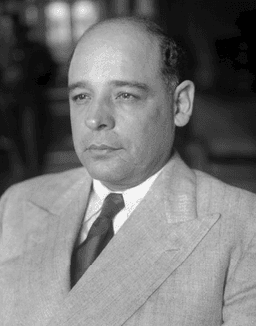
Abelardo L. Rodriguez
Politician · Modern
46.9Total

Richard Seddon
Politician · Modern
59.6Total
Basic Information
Born
1889
1845
Died
1967
1906
Era
Modern
Modern
Nationality
Mexico
New Zealand
Occupation
Politician
Politician
Civilization
Western
Western
Score Comparison
Military (10%)
36.6
49.1
Political (20%)
43.7
72.0
Influence (20%)
47.9
60.0
Legacy (20%)
38.3
52.0
Leadership (15%)
65.7
78.0
Strategy (15%)
52.8
41.9
TOTAL
46.9
59.6
Abelardo L. Rodriguez — Complete Timeline
1932 AD
Served as president of Mexico during the MaximatoPolitical Action◆ Major
Rodríguez became president after the resignation of Pascual Ortiz Rubio, serving from 1932 to 1934. He was the last president of the Maximato era, continuing policies set by Plutarco Elías Calles and overseeing economic recovery from the Great Depression.
PresidencyMaximatoEconomic recovery
Impact: national
1933 AD
Implemented labor and social reformsReform
Rodríguez's administration enacted labor laws that improved working conditions and expanded social security. These reforms were part of the broader post-revolutionary consolidation but were limited by the influence of Calles.
Labor reformSocial securityMaximato
Impact: nationalprogressive
Richard Seddon — Complete Timeline
1893 AD
Granted Women's SuffrageReform
Seddon's government passed the Electoral Act 1893, granting women the right to vote in parliamentary elections. New Zealand became the first self-governing country in the world to give women the vote, a landmark achievement for gender equality.
Women's SuffrageGender EqualityDemocracy
Impact: globalprogressive
Became Premier of New ZealandPolitical Action◆ Major
Seddon became Premier of New Zealand after the death of John Ballance. He led the Liberal Party and would go on to serve as premier for 13 years, becoming one of New Zealand's longest-serving leaders.
PremierLiberal PartyLeadership
Impact: national
1894 AD
Passed the Industrial Conciliation and Arbitration ActReform◆ Major
Seddon's government enacted the Industrial Conciliation and Arbitration Act, establishing a system for resolving industrial disputes through compulsory arbitration. This law aimed to prevent strikes and lockouts, and became a model for labor relations in other countries.
Industrial RelationsArbitrationLabor
Impact: nationalconstructive
1898 AD
Introduced Old-Age PensionsReform◆ Major
Seddon's government passed the Old-Age Pensions Act, providing a means-tested pension to New Zealanders over 65. This was a landmark social welfare reform, making New Zealand one of the first countries to introduce a state pension.
Social WelfarePensionsReform
Impact: nationalprogressive
1906 AD
Died in OfficeOther◆ Major
Seddon died suddenly while returning from a trip to Australia. His death marked the end of an era in New Zealand politics, as he had dominated the political landscape for over a decade and was known for his populist style.
DeathEnd of EraPopulism
Impact: nationaltragic
This comparison has not been analyzed yet.
One-time AI generation (~1 minute). Scores and timeline are already available below.
Rankings
🥇
Richard SeddonLeader
Mil: 49.1Pol: 72.0Inf: 60.0
59.6
🥈
Abelardo L. Rodriguez
Mil: 36.6Pol: 43.7Inf: 47.9
46.9
+12.7 behind
How This Comparison Works
Algorithm
Each figure is scored on 6 dimensions (0—100 scale) based on structured historical data: Military (10%), Political (20%), Influence (20%), Legacy (20%), Leadership (15%), Strategy (15%). The weighted total produces the final ranking.
Data Sources
Scores are computed from structured sub-indicators in the database. Scale factors adjust for era (Ancient ×0.85, Modern ×1.0) and civilization size (Eastern ×1.05, Other ×0.80) to account for differences in population and military scale.
Maximum 3 Figures
Comparisons are limited to 2—3 figures to ensure readability and statistical meaningfulness.
Error Margins
±5 points per dimension — Sub-scores are derived from historical records with inherent uncertainty. Two figures within 5 points on a dimension should be considered roughly equivalent in that area.
Total Score Accuracy
±3 points overall — The weighted combination of 6 dimensions produces a total score with approximately ±3 points of uncertainty. Differences of less than 3 points are not statistically significant— the figures are effectively tied.
Known Limitations
- Historical records are incomplete and uneven across civilizations
- Figures from oral-tradition societies may be underrepresented
- Occupation labels can misclassify multi-role figures
- Scores measure capability and impact, not moral character
- Quantitative scoring is a comparison tool, not absolute truth
Capability Radar
Military (10%) — Battles & Warfare
Battles
5
27
Win Rate
5
34
Expansion
5
37
Political (20%) — Governance & Reform
Reform
35
75
Diplomacy
40
70
Economy
30
80
Influence (20%) — Cultural & Global Reach
Cultural
15
55
Global
10
45
Legacy (20%) — Historical Impact
Historical
20
60
Longevity
10
50
Leadership (15%) — Power & Stability
Tenure
40
85
Stability
25
75
Strategy (15%) — Tactics & Innovation
Strategy
5
37
Tactics
5
43
Reform
5
41
Similar Comparisons
Comments & Discussion
No comments yet. Be the first to share your thoughts!