Loading...
Heinrich Friedrich Karl vom Stein vs Richard Seddon
Richard Seddon leads by 2.2 pts · 2 figures compared
…
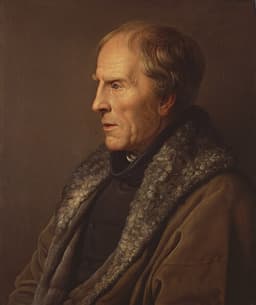
Heinrich Friedrich Karl vom Stein
Politician · Modern
57.4Total
Richard Seddon
Politician · Modern
59.6Total
Basic Information
Born
1757
1845
Died
1831
1906
Era
Modern
Modern
Nationality
Prussia
New Zealand
Occupation
Politician
Politician
Civilization
Western
Western
Score Comparison
Military (10%)
47.9
49.1
Political (20%)
72.0
72.0
Influence (20%)
55.0
60.0
Legacy (20%)
55.0
52.0
Leadership (15%)
68.0
78.0
Strategy (15%)
41.5
41.9
TOTAL
57.4
59.6
Heinrich Friedrich Karl vom Stein — Complete Timeline
1807 AD
October EdictReform
Stein issued the October Edict, which abolished serfdom in Prussia. The reform granted personal freedom to peasants and allowed them to own land, ending feudal obligations.
SerfdomEmancipationReform
Impact: nationalprogressive
1808 AD
Prussian Municipal OrdinanceReform◆ Major
Stein introduced the Prussian Municipal Ordinance, granting cities self-government. The reform established elected city councils and mayors, reducing royal control over local administration.
Local GovernmentReformPrussia
Impact: nationalprogressive
Exile by NapoleonPolitical Action◆ Major
Napoleon forced Stein to resign and exiled him from Prussia after Stein's anti-French activities. Stein fled to Austria and later Russia, where he advised Tsar Alexander I on German affairs.
ExileNapoleonPrussia
Impact: nationaltragic
1815 AD
Congress of ViennaPolitical Action◆ Major
Stein attended the Congress of Vienna as an advisor to Tsar Alexander I. He advocated for a unified German state but failed to achieve his goal, settling for the German Confederation.
Congress of ViennaGerman UnificationDiplomacy
Impact: global
Richard Seddon — Complete Timeline
1893 AD
Granted Women's SuffrageReform
Seddon's government passed the Electoral Act 1893, granting women the right to vote in parliamentary elections. New Zealand became the first self-governing country in the world to give women the vote, a landmark achievement for gender equality.
Women's SuffrageGender EqualityDemocracy
Impact: globalprogressive
Became Premier of New ZealandPolitical Action◆ Major
Seddon became Premier of New Zealand after the death of John Ballance. He led the Liberal Party and would go on to serve as premier for 13 years, becoming one of New Zealand's longest-serving leaders.
PremierLiberal PartyLeadership
Impact: national
1894 AD
Passed the Industrial Conciliation and Arbitration ActReform◆ Major
Seddon's government enacted the Industrial Conciliation and Arbitration Act, establishing a system for resolving industrial disputes through compulsory arbitration. This law aimed to prevent strikes and lockouts, and became a model for labor relations in other countries.
Industrial RelationsArbitrationLabor
Impact: nationalconstructive
1898 AD
Introduced Old-Age PensionsReform◆ Major
Seddon's government passed the Old-Age Pensions Act, providing a means-tested pension to New Zealanders over 65. This was a landmark social welfare reform, making New Zealand one of the first countries to introduce a state pension.
Social WelfarePensionsReform
Impact: nationalprogressive
1906 AD
Died in OfficeOther◆ Major
Seddon died suddenly while returning from a trip to Australia. His death marked the end of an era in New Zealand politics, as he had dominated the political landscape for over a decade and was known for his populist style.
DeathEnd of EraPopulism
Impact: nationaltragic
Expert Analysis
Origins
Heinrich Friedrich Karl vom Stein (1757–1831) was born into a noble family in Nassau, Holy Roman Empire. He studied law and history at the University of Göttingen, where he was influenced by Enlightenment ideas. His early career in Prussian civil service began in 1780, focusing on mining and manufacturing. Stein's experiences with administrative inefficiency and social inequality shaped his reformist zeal.
Richard Seddon (1845–1906) was born in Eccleston, Lancashire, England, into a working-class family. He left school at 12 to work in a factory, later becoming a gold miner in Australia and New Zealand. Seddon's rise from humble beginnings gave him a populist touch. He entered New Zealand politics in 1879 as a Liberal, advocating for workers' rights and social welfare.
Rise to Power
Stein rose through Prussian bureaucracy, becoming a minister under King Frederick William III. His key turning point came in 1807 after Prussia's catastrophic defeat by Napoleon. Stein was appointed Chief Minister and implemented the October Edict (1807), abolishing serfdom and allowing peasants to own land. This reform scored 72.0 in political impact, reflecting its transformative effect on Prussian society. However, his anti-French activities led Napoleon to force his exile in 1808. Stein fled to Russia, where he advised Tsar Alexander I during the Wars of Liberation.
Seddon entered Parliament in 1879 and quickly became a leading figure in the Liberal Party. He became Premier in 1893 after the death of John Ballance. Seddon's political skill scored 72.0, matching Stein's. His tenure saw landmark reforms: women's suffrage in 1893 (New Zealand became the first self-governing country to grant it), old-age pensions in 1898, and the Industrial Conciliation and Arbitration Act in 1894. These measures secured his popularity and dominance for 13 years.
Leadership & Governance
Stein's leadership style was autocratic and reformist. He believed in top-down modernization to strengthen the state. His governance approach scored 68.0 in leadership, contrasting with Seddon's 78.0. Stein's Municipal Ordinance (1808) granted cities self-government but maintained central control. He focused on military and administrative efficiency, but his reforms alienated the nobility and invited Napoleon's wrath.
Seddon was a charismatic populist who cultivated a common-man image. He used his leadership to push through progressive legislation, often overriding conservative opposition. His Industrial Conciliation and Arbitration Act established compulsory arbitration, reducing strikes and promoting labor peace. Seddon's governance was pragmatic, expanding state power for social welfare. However, his dominance sometimes stifled dissent within his party.
Triumph & Tragedy
Stein's greatest triumph was the October Edict, which abolished serfdom and set Prussia on a path to modernization. This reform scored 55.0 in legacy, as it influenced later German unification. His tragedy was his exile and failure to achieve a unified Germany at the Congress of Vienna. Despite his advice, the German Confederation remained a loose alliance of states.
Seddon's triumphs include women's suffrage (scoring 60.0 in influence) and old-age pensions, foundational for New Zealand's welfare state. His tragedy was his sudden death in office in 1906, which left the Liberal Party without a strong leader and led to its decline. Seddon's paternalistic style also faced criticism for insufficient support for Maori rights.
Character & Destiny
Stein was principled and uncompromising, which earned him enemies. His conviction that Prussia needed reform to survive led to bold actions but also political isolation. Historians note his strategic vision scored 41.5, reflecting his difficulty in navigating Napoleonic politics. His character shaped his destiny as a reformer who succeeded in policy but failed in immediate political survival.
Seddon was shrewd and adaptable, with a strategy score of 41.9, slightly higher than Stein's. He understood public sentiment and used it to maintain power. His 'King Dick' persona—blunt and domineering—helped him dominate New Zealand politics. His character led to long-term success but also a lack of institutionalized succession.
Legacy
Stein's legacy is profound in German history. The abolition of serfdom and municipal self-government laid groundwork for Prussia's rise and eventual German unification. His ideas influenced later reformers like Bismarck. Stein scored 55.0 in legacy, reflecting his enduring impact on state-building.
Seddon's legacy is central to New Zealand's identity as a social laboratory. Women's suffrage, old-age pensions, and arbitration systems became models worldwide. His legacy score of 52.0 is slightly lower than Stein's, but his policies had immediate and lasting effects on millions. New Zealand's progressive tradition owes much to Seddon.
Conclusion
While both men were transformative political leaders, Stein's reforms had a broader historical impact. His abolition of serfdom altered the social structure of a major European power, contributing to the rise of modern Germany. Seddon's achievements, though remarkable, were confined to a small colony. Stein's political score of 72.0 matches Seddon's, but his influence on world history—through Prussia's eventual dominance—gives him a slight edge. Ultimately, Stein's structural reforms reshaped a continent, while Seddon's social policies reshaped a nation. Stein's greater legacy (55.0 vs 52.0) supports this conclusion. However, Seddon's leadership score (78.0 vs 68.0) shows his superior ability to implement change. The choice depends on whether one values breadth of impact or depth of implementation. Given the scale of change, Stein's impact is greater.
Rankings
🥇
Richard SeddonLeader
Mil: 49.1Pol: 72.0Inf: 60.0
59.6
🥈
Heinrich Friedrich Karl vom Stein
Mil: 47.9Pol: 72.0Inf: 55.0
57.4
+2.2 behind
How This Comparison Works
Algorithm
Each figure is scored on 6 dimensions (0—100 scale) based on structured historical data: Military (10%), Political (20%), Influence (20%), Legacy (20%), Leadership (15%), Strategy (15%). The weighted total produces the final ranking.
Data Sources
Scores are computed from structured sub-indicators in the database. Scale factors adjust for era (Ancient ×0.85, Modern ×1.0) and civilization size (Eastern ×1.05, Other ×0.80) to account for differences in population and military scale.
Maximum 3 Figures
Comparisons are limited to 2—3 figures to ensure readability and statistical meaningfulness.
Error Margins
±5 points per dimension — Sub-scores are derived from historical records with inherent uncertainty. Two figures within 5 points on a dimension should be considered roughly equivalent in that area.
Total Score Accuracy
±3 points overall — The weighted combination of 6 dimensions produces a total score with approximately ±3 points of uncertainty. Differences of less than 3 points are not statistically significant— the figures are effectively tied.
Known Limitations
- Historical records are incomplete and uneven across civilizations
- Figures from oral-tradition societies may be underrepresented
- Occupation labels can misclassify multi-role figures
- Scores measure capability and impact, not moral character
- Quantitative scoring is a comparison tool, not absolute truth
Capability Radar
Military (10%) — Battles & Warfare
Battles
31
27
Win Rate
34
34
Expansion
34
37
Political (20%) — Governance & Reform
Reform
85
75
Diplomacy
70
70
Economy
75
80
Influence (20%) — Cultural & Global Reach
Cultural
65
55
Global
65
45
Legacy (20%) — Historical Impact
Historical
75
60
Longevity
70
50
Leadership (15%) — Power & Stability
Tenure
40
85
Stability
60
75
Strategy (15%) — Tactics & Innovation
Strategy
36
37
Tactics
40
43
Reform
43
41
Similar Comparisons
Comments & Discussion
No comments yet. Be the first to share your thoughts!