Loading...
Mahamadou Issoufou vs Richard Seddon
Richard Seddon leads by 7.5 pts · 2 figures compared
…
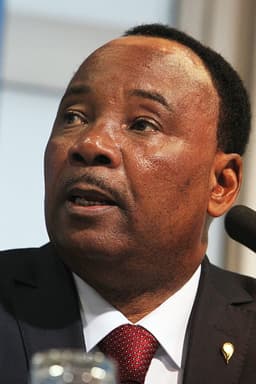
Mahamadou Issoufou
Politician · Modern
52.1Total
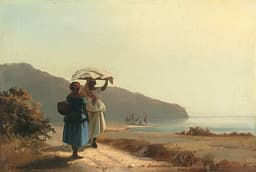
Richard Seddon
Politician · Modern
59.6Total
Basic Information
Born
1952
1845
Died
—
1906
Era
Modern
Modern
Nationality
Niger
New Zealand
Occupation
Politician
Politician
Civilization
Other
Western
Score Comparison
Military (10%)
42.3
49.1
Political (20%)
68.0
72.0
Influence (20%)
51.8
60.0
Legacy (20%)
41.7
52.0
Leadership (15%)
66.0
78.0
Strategy (15%)
43.7
41.9
TOTAL
52.1
59.6
Mahamadou Issoufou — Complete Timeline
2011 AD
Elected President of NigerPolitical Action◆ Major
Mahamadou Issoufou won the Nigerien presidential election in a runoff, defeating former prime minister Seini Oumarou. His victory marked a transition to civilian rule after a 2010 military coup.
ElectionDemocracyCivilian Rule
Impact: nationalconstructive
2015 AD
Led Fight Against Boko HaramWar◆ Major
Issoufou committed Nigerien troops to the Multinational Joint Task Force against Boko Haram in the Lake Chad region. Niger faced repeated attacks, and the campaign strained resources but contained the insurgency.
Boko HaramCounterterrorismMilitary
Impact: regional
2016 AD
Re-elected President of NigerPolitical Action◆ Major
Issoufou won a second term with 92% of the vote in an election boycotted by the main opposition. The result was criticized internationally as lacking credibility, though Issoufou remained in power.
ElectionControversySecond Term
Impact: national
2021 AD
Stepped Down After Two TermsPolitical Action
Issoufou voluntarily stepped down after completing two terms, handing power to elected successor Mohamed Bazoum. This was a rare peaceful transfer of power in Niger's history, strengthening democratic norms.
DemocracyPeaceful TransitionLegacy
Impact: nationalconstructive
Richard Seddon — Complete Timeline
1893 AD
Granted Women's SuffrageReform
Seddon's government passed the Electoral Act 1893, granting women the right to vote in parliamentary elections. New Zealand became the first self-governing country in the world to give women the vote, a landmark achievement for gender equality.
Women's SuffrageGender EqualityDemocracy
Impact: globalprogressive
Became Premier of New ZealandPolitical Action◆ Major
Seddon became Premier of New Zealand after the death of John Ballance. He led the Liberal Party and would go on to serve as premier for 13 years, becoming one of New Zealand's longest-serving leaders.
PremierLiberal PartyLeadership
Impact: national
1894 AD
Passed the Industrial Conciliation and Arbitration ActReform◆ Major
Seddon's government enacted the Industrial Conciliation and Arbitration Act, establishing a system for resolving industrial disputes through compulsory arbitration. This law aimed to prevent strikes and lockouts, and became a model for labor relations in other countries.
Industrial RelationsArbitrationLabor
Impact: nationalconstructive
1898 AD
Introduced Old-Age PensionsReform◆ Major
Seddon's government passed the Old-Age Pensions Act, providing a means-tested pension to New Zealanders over 65. This was a landmark social welfare reform, making New Zealand one of the first countries to introduce a state pension.
Social WelfarePensionsReform
Impact: nationalprogressive
1906 AD
Died in OfficeOther◆ Major
Seddon died suddenly while returning from a trip to Australia. His death marked the end of an era in New Zealand politics, as he had dominated the political landscape for over a decade and was known for his populist style.
DeathEnd of EraPopulism
Impact: nationaltragic
Expert Analysis
Origins
Mahamadou Issoufou was born in 1952 in Tanda, a village in Niger's Tahoua Region, into a Hausa family of modest means. He studied engineering in Niger and France, earning a degree in mining engineering from the École Nationale Supérieure des Mines de Saint-Étienne. His early career was in the mining sector, but he entered politics in the 1990s as a pro-democracy activist, opposing the military regime of General Ali Saïbou. He co-founded the Nigerien Party for Democracy and Socialism (PNDS) and served as Minister of Mines and Energy in the 1990s.
Richard Seddon was born in 1845 in St Helens, England, to a working-class family. He left school at age 12 to work as an apprentice engineer, later emigrating to Australia in search of gold. After failing as a miner, he moved to New Zealand in 1866, where he worked as a gold miner, publican, and eventually entered local politics. His early career included service on the Westland Provincial Council and election to the House of Representatives in 1879 as a Liberal.
Rise to Power
Issoufou's rise was gradual and marked by persistent opposition. He ran for president multiple times: in 1993 he placed third; in 1996 he came second in a disputed election; in 1999 he again came second. His persistence paid off in 2011 when he won the presidency in a runoff against Seini Oumarou, with 58% of the vote. His victory was seen as a victory for democracy after years of coups and instability.
Seddon's rise was more meteoric. He entered parliament in 1879 and quickly gained influence within the Liberal Party. When Premier John Ballance died in 1893, Seddon succeeded him, becoming premier at age 47. He won five consecutive general elections, dominating New Zealand politics for 13 years until his death in 1906. His leadership was characterized by his robust personality and ability to connect with working-class voters.
Leadership & Governance
Issoufou's governance focused on stability and economic development. He implemented a five-year development plan (2012-2015) targeting infrastructure, agriculture, and mining. He also faced security challenges, deploying troops against Boko Haram and managing a fragile peace with Tuareg rebels in the north. His leadership style was cautious and consensus-oriented, often working with opposition parties to pass legislation. However, his second term was marked by a boycott by the main opposition and accusations of authoritarian drift, including the jailing of a former president.
Seddon was a pragmatic reformer. His government passed landmark social legislation: the Electoral Act 1893 gave women the vote; the Old-Age Pensions Act 1898 provided a means-tested pension; the Industrial Conciliation and Arbitration Act 1894 established a system for resolving labor disputes. Seddon also expanded the public works program, building railways and roads. He was known for his domineering style, earning the nickname 'King Dick,' but his policies laid the foundation for New Zealand's welfare state.
Triumph & Tragedy
Issoufou's greatest triumph was his voluntary step-down after two terms in 2021, handing power to his elected successor Mohamed Bazoum. This was a rare peaceful transfer of power in Niger and a model for West Africa. He also received credit for maintaining stability during the Boko Haram insurgency. His failures include a controversial second election in 2016 with 92% of the vote in a boycotted poll, and persistent poverty and corruption in Niger, which remains one of the world's poorest countries.
Seddon's greatest triumph was granting women's suffrage, making New Zealand the first self-governing country to do so. His old-age pensions and labor arbitration system were pioneering. His failures include his handling of the 1905 Chinese poll tax, which he increased, and his authoritarian tendencies, which some historians criticize. He also failed to address Maori land grievances, leaving a legacy of inequality.
Character & Destiny
Issoufou was a technocrat and survivor. He navigated Niger's volatile politics for decades, avoiding the coups that plagued his predecessors. His decision to step down voluntarily reflected a commitment to democratic norms, but his critics argue he did not do enough to build strong institutions. His political score of 68.0 reflects his ability to maintain power and achieve a peaceful transition, while his strategy score of 43.7 indicates limited strategic innovation.
Seddon was a charismatic populist. His leadership score of 78.0 is the highest among the comparison attributes, reflecting his ability to dominate and implement reforms. He was a master of political maneuvering, but his legacy is mixed: he is remembered as both a progressive reformer and a domineering figure who stifled dissent. His total score of 59.6 is higher than Issoufou's 52.1, largely due to his political and leadership scores.
Legacy
Issoufou's legacy is primarily as a democratic stabilizer. He set a precedent for peaceful transfers of power in Niger, which has since been disrupted by a coup in 2023 that ousted Bazoum. His economic policies had limited impact, as Niger remains underdeveloped. His influence score of 51.8 reflects his regional role, but his legacy score of 41.7 is low due to the fragility of his achievements.
Seddon's legacy is more tangible. Women's suffrage, old-age pensions, and industrial arbitration are enduring features of New Zealand society. He transformed New Zealand into a social laboratory, influencing welfare states worldwide. His legacy score of 52.0 reflects this, though his influence is largely confined to New Zealand and Commonwealth history.
Conclusion
Richard Seddon had greater impact than Mahamadou Issoufou. Seddon's political score of 72.0 and leadership score of 78.0 significantly outpace Issoufou's 68.0 and 66.0, respectively. Seddon's reforms—women's suffrage, old-age pensions, and labor arbitration—were pioneering and have had lasting effects on New Zealand and beyond. Issoufou's peaceful transition of power was significant, but it was a single event in a country with fragile democratic institutions. The score gap of 7.5 points (59.6 vs 52.1) reflects Seddon's more substantial and enduring legacy.
Rankings
🥇
Richard SeddonLeader
Mil: 49.1Pol: 72.0Inf: 60.0
59.6
🥈
Mahamadou Issoufou
Mil: 42.3Pol: 68.0Inf: 51.8
52.1
+7.5 behind
How This Comparison Works
Algorithm
Each figure is scored on 6 dimensions (0—100 scale) based on structured historical data: Military (10%), Political (20%), Influence (20%), Legacy (20%), Leadership (15%), Strategy (15%). The weighted total produces the final ranking.
Data Sources
Scores are computed from structured sub-indicators in the database. Scale factors adjust for era (Ancient ×0.85, Modern ×1.0) and civilization size (Eastern ×1.05, Other ×0.80) to account for differences in population and military scale.
Maximum 3 Figures
Comparisons are limited to 2—3 figures to ensure readability and statistical meaningfulness.
Error Margins
±5 points per dimension — Sub-scores are derived from historical records with inherent uncertainty. Two figures within 5 points on a dimension should be considered roughly equivalent in that area.
Total Score Accuracy
±3 points overall — The weighted combination of 6 dimensions produces a total score with approximately ±3 points of uncertainty. Differences of less than 3 points are not statistically significant— the figures are effectively tied.
Known Limitations
- Historical records are incomplete and uneven across civilizations
- Figures from oral-tradition societies may be underrepresented
- Occupation labels can misclassify multi-role figures
- Scores measure capability and impact, not moral character
- Quantitative scoring is a comparison tool, not absolute truth
Capability Radar
Military (10%) — Battles & Warfare
Battles
23
27
Win Rate
23
34
Expansion
27
37
Political (20%) — Governance & Reform
Reform
55
75
Diplomacy
60
70
Economy
50
80
Influence (20%) — Cultural & Global Reach
Cultural
20
55
Global
20
45
Legacy (20%) — Historical Impact
Historical
30
60
Longevity
20
50
Leadership (15%) — Power & Stability
Tenure
60
85
Stability
55
75
Strategy (15%) — Tactics & Innovation
Strategy
31
37
Tactics
33
43
Reform
37
41
Similar Comparisons
Comments & Discussion
No comments yet. Be the first to share your thoughts!