Loading...
Abhisit Vejjajiva vs Askar Akayev
Askar Akayev leads by 1.7 pts · 2 figures compared
…

Abhisit Vejjajiva
Politician · Modern
41.8Total
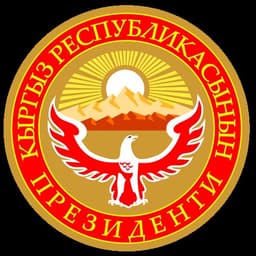
Askar Akayev
Politician · Modern
43.5Total
Basic Information
Born
1964
1944
Died
—
—
Era
Modern
Modern
Nationality
Thailand
Kyrgyzstan
Occupation
Politician
Politician
Civilization
Eastern
Eastern
Score Comparison
Military (10%)
13.2
17.5
Political (20%)
46.6
43.7
Influence (20%)
50.2
49.4
Legacy (20%)
38.3
40.0
Leadership (15%)
58.8
64.0
Strategy (15%)
25.6
32.5
TOTAL
41.8
43.5
Abhisit Vejjajiva — Complete Timeline
2008 AD
Became Prime Minister of ThailandPolitical Action◆ Major
Abhisit Vejjajiva became Prime Minister of Thailand on December 15, 2008, after a parliamentary vote following the dissolution of the People Power Party. His rise to power occurred amid political turmoil and was supported by the military and the Democrat Party.
Thai PoliticsPrime MinisterDemocrat Party
Impact: national
2010 AD
Red Shirt Protests of 2010Political Action◆ Major
Abhisit's government faced massive protests by the United Front for Democracy Against Dictatorship (Red Shirts) from March to May 2010. The protests demanded new elections and ended with a military crackdown that resulted in over 90 deaths and widespread property damage in Bangkok.
Red ShirtsProtestsCrackdown
Impact: nationaltragic
2011 AD
Dissolved Parliament and Called ElectionsPolitical Action◆ Major
Under pressure from protests and political instability, Abhisit dissolved the House of Representatives on May 9, 2011, and called for general elections. The elections were held in July 2011 and resulted in a decisive victory for the Pheu Thai Party led by Yingluck Shinawatra.
ElectionDissolutionDemocrat Party
Impact: national
Askar Akayev — Complete Timeline
1991 AD
Elected First President of KyrgyzstanPolitical Action◆ Major
Askar Akayev was elected as the first president of independent Kyrgyzstan after the dissolution of the Soviet Union. He was initially seen as a reformer, promoting democratic reforms and market economics. His early presidency was marked by openness and relative political freedom.
IndependenceDemocratic ReformPost-Soviet Transition
Impact: nationalconstructive
1993 AD
Introduced Democratic ReformsReform◆ Major
Akayev oversaw the adoption of a new constitution that established a parliamentary system with a strong presidency. He implemented economic liberalization, including privatization and land reform. Kyrgyzstan became known as an 'island of democracy' in Central Asia during this period.
Constitutional ReformEconomic LiberalizationDemocracy
Impact: nationalconstructive
2005 AD
Overthrown in the Tulip RevolutionPolitical Action◆ Major
Following disputed parliamentary elections in February 2005, mass protests erupted across Kyrgyzstan. The protests, known as the Tulip Revolution, forced Akayev to flee the country and resign. He was succeeded by Kurmanbek Bakiyev. The revolution was part of the Color Revolution wave in post-Soviet states.
RevolutionRegime ChangeColor Revolution
Impact: nationaldestructive
Exiled to RussiaPolitical Action
After being overthrown, Akayev fled to Russia where he was granted asylum. He settled in Moscow and worked as a professor at Moscow State University. His exile marked the end of his political career, and he remained in Russia for the rest of his life.
ExilePolitical AsylumPost-Presidency
Impact: nationaltragic
Expert Analysis
Origins
Abhisit Vejjajiva was born on August 3, 1964, in Newcastle upon Tyne, England, to a Thai family with academic and political ties. His father was a medical professor, and his mother a lecturer. He attended Eton College and later earned a degree in Philosophy, Politics, and Economics from Oxford University. This elite education shaped his technocratic approach but also distanced him from grassroots politics.
Askar Akayev was born on November 10, 1944, in the village of Kyzyl-Bayrak, Kyrgyzstan, into a collective farm family. He studied engineering at the Leningrad Institute of Precision Mechanics and Optics, earning a doctorate in computer science. He worked as a professor and later headed the Kyrgyz Academy of Sciences. His academic background positioned him as a reformer in the late Soviet era.
Rise to Power
Abhisit entered politics in 1992 as a Democrat Party MP. He rose through party ranks, becoming party leader in 2005. He became Prime Minister on December 15, 2008, after a parliamentary vote following a court decision that dissolved the ruling People Power Party. His ascension was seen as a product of elite consensus rather than popular mandate, which later fueled opposition claims of illegitimacy.
Askar Akayev became President of Kyrgyzstan in October 1990, before independence. He was elected unopposed as the first president of independent Kyrgyzstan in 1991. Initially hailed as a democrat, he introduced market reforms and a new constitution in 1993 that established a presidential system. His early popularity rested on his image as a moderate reformer.
Leadership & Governance
Abhisit governed during a period of deep political polarization. His government implemented economic stimulus measures to counter the 2008 global financial crisis, including cash handouts and infrastructure projects. However, his leadership was defined by the 2010 Red Shirt protests, which demanded new elections. He authorized a military crackdown in April-May 2010 that resulted in 92 deaths and over 1,800 injuries. His governance scored 58.8 in leadership but only 25.6 in strategy, reflecting reactive decision-making.
Askar Akayev initially promoted democratic reforms, including a free press and civil society. However, over time, his rule became increasingly authoritarian. He amended the constitution to extend his term limits and suppressed opposition. His economic policies led to growth but also corruption. By 2005, his leadership score of 64.0 was undermined by strategic errors (32.5), as he failed to manage political competition, leading to the Tulip Revolution.
Triumph & Tragedy
Abhisit's greatest success was maintaining Thailand's economic stability during the global downturn, with GDP growth of 7.8% in 2010. His tragedy was the violent suppression of the Red Shirts, which tarnished his reputation and deepened political divisions. He lost the 2011 election to Yingluck Shinawatra.
Askar Akayev's triumph was overseeing Kyrgyzstan's peaceful transition from Soviet republic to independent state, with initial democratic progress. His tragedy was his gradual authoritarian turn, culminating in his overthrow in 2005. He fled to Russia, where he lived in exile, his legacy as a democrat erased by his later actions.
Character & Destiny
Abhisit was methodical and intellectual but often indecisive. His elite background made him seem out of touch with rural voters. His handling of the protests showed a preference for legalism, but his reliance on the military exposed his weakness. His character shaped a destiny of being a transitional figure unable to bridge Thailand's political divide.
Askar Akayev was initially idealistic but became power-hungry. He failed to build sustainable democratic institutions, instead personalizing power. His character led to a downfall where he was outmaneuvered by the very forces he had unleashed. Historians view him as a failed democrat whose early promise gave way to autocracy.
Legacy
Abhisit's legacy is mixed. He is remembered for his economic management but also for the 2010 bloodshed. His political score of 46.6 and influence of 50.2 reflect a figure who occupied power but did not transform Thailand. The Democrat Party declined after his tenure.
Askar Akayev's legacy is also contested. He is credited with Kyrgyzstan's initial independence and reforms, but his later authoritarianism set a precedent for subsequent leaders. His legacy score of 40.0 is low, as the Tulip Revolution framed him as a failed leader. However, his early democratic steps influenced Central Asian politics.
Conclusion
Askar Akayev had a greater impact on Kyrgyzstan's trajectory than Abhisit had on Thailand, despite a narrow overall score gap of 1.7 points (Akayev 43.5 vs. Abhisit 41.8). Akayev shaped a nation's founding and its early institutions, even if his later failures led to revolution. Abhisit, by contrast, was a caretaker prime minister in a crisis he could not resolve. Akayev's influence (49.4) and leadership (64.0) were higher, and his role as a pioneer of independence outweighs Abhisit's tenure as an interim figure. Therefore, Askar Akayev had a greater historical impact.
Rankings
🥇
Askar AkayevLeader
Mil: 17.5Pol: 43.7Inf: 49.4
43.5
🥈
Abhisit Vejjajiva
Mil: 13.2Pol: 46.6Inf: 50.2
41.8
+1.7 behind
How This Comparison Works
Algorithm
Each figure is scored on 6 dimensions (0—100 scale) based on structured historical data: Military (10%), Political (20%), Influence (20%), Legacy (20%), Leadership (15%), Strategy (15%). The weighted total produces the final ranking.
Data Sources
Scores are computed from structured sub-indicators in the database. Scale factors adjust for era (Ancient ×0.85, Modern ×1.0) and civilization size (Eastern ×1.05, Other ×0.80) to account for differences in population and military scale.
Maximum 3 Figures
Comparisons are limited to 2—3 figures to ensure readability and statistical meaningfulness.
Error Margins
±5 points per dimension — Sub-scores are derived from historical records with inherent uncertainty. Two figures within 5 points on a dimension should be considered roughly equivalent in that area.
Total Score Accuracy
±3 points overall — The weighted combination of 6 dimensions produces a total score with approximately ±3 points of uncertainty. Differences of less than 3 points are not statistically significant— the figures are effectively tied.
Known Limitations
- Historical records are incomplete and uneven across civilizations
- Figures from oral-tradition societies may be underrepresented
- Occupation labels can misclassify multi-role figures
- Scores measure capability and impact, not moral character
- Quantitative scoring is a comparison tool, not absolute truth
Capability Radar
Military (10%) — Battles & Warfare
Battles
14
12
Win Rate
20
17
Expansion
18
19
Political (20%) — Governance & Reform
Reform
30
40
Diplomacy
40
35
Economy
30
30
Influence (20%) — Cultural & Global Reach
Cultural
15
20
Global
15
15
Legacy (20%) — Historical Impact
Historical
20
25
Longevity
10
15
Leadership (15%) — Power & Stability
Tenure
35
55
Stability
20
20
Strategy (15%) — Tactics & Innovation
Strategy
22
24
Tactics
28
25
Reform
30
30
Similar Comparisons
Comments & Discussion
No comments yet. Be the first to share your thoughts!