Loading...
This comparison has not been analyzed yet.
One-time AI generation (~1 minute). Scores and timeline are already available below.
Abhisit Vejjajiva vs Milorad Dodik
Milorad Dodik leads by 6.2 pts · 2 figures compared
…

Abhisit Vejjajiva
Politician · Modern
41.8Total
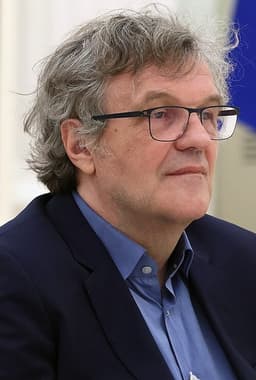
Milorad Dodik
Politician · Modern
48.0Total
Basic Information
Born
1964
1959
Died
—
—
Era
Modern
Modern
Nationality
Thailand
Bosnia
Occupation
Politician
Politician
Civilization
Eastern
Western
Score Comparison
Military (10%)
13.2
49.3
Political (20%)
46.6
43.7
Influence (20%)
50.2
50.2
Legacy (20%)
38.3
40.0
Leadership (15%)
58.8
65.0
Strategy (15%)
25.6
41.8
TOTAL
41.8
48.0
Abhisit Vejjajiva — Complete Timeline
2008 AD
Became Prime Minister of ThailandPolitical Action◆ Major
Abhisit Vejjajiva became Prime Minister of Thailand on December 15, 2008, after a parliamentary vote following the dissolution of the People Power Party. His rise to power occurred amid political turmoil and was supported by the military and the Democrat Party.
Thai PoliticsPrime MinisterDemocrat Party
Impact: national
2010 AD
Red Shirt Protests of 2010Political Action◆ Major
Abhisit's government faced massive protests by the United Front for Democracy Against Dictatorship (Red Shirts) from March to May 2010. The protests demanded new elections and ended with a military crackdown that resulted in over 90 deaths and widespread property damage in Bangkok.
Red ShirtsProtestsCrackdown
Impact: nationaltragic
2011 AD
Dissolved Parliament and Called ElectionsPolitical Action◆ Major
Under pressure from protests and political instability, Abhisit dissolved the House of Representatives on May 9, 2011, and called for general elections. The elections were held in July 2011 and resulted in a decisive victory for the Pheu Thai Party led by Yingluck Shinawatra.
ElectionDissolutionDemocrat Party
Impact: national
Milorad Dodik — Complete Timeline
1992 AD
Declared independence of Republika Srpska from Bosnia and HerzegovinaPolitical Action◆ Major
As a founding member of the Serb Democratic Party, Dodik supported the declaration of an independent Republika Srpska within Bosnia, leading to the Bosnian War. This action set the stage for his later secessionist politics.
Bosnian WarSecessionRepublika Srpska
Impact: regionaldestructive
1998 AD
Elected Prime Minister of Republika SrpskaPolitical Action◆ Major
Dodik became Prime Minister of Republika Srpska, leading a coalition government. He pursued economic reforms and closer ties with the West, but also maintained nationalist rhetoric.
GovernmentReformsBosnia
Impact: regionalconstructive
2010 AD
Elected President of Republika SrpskaPolitical Action◆ Major
Dodik won the presidency of Republika Srpska, advocating for greater autonomy and challenging the authority of the Bosnian central government. His tenure saw increased secessionist rhetoric.
PresidencySecessionBosnia
Impact: regionaldestructive
2016 AD
Organized a referendum on the authority of the Bosnian Constitutional CourtPolitical Action◆ Major
Dodik called a referendum in Republika Srpska challenging the authority of the Bosnian Constitutional Court, which was declared illegal by the Bosnian central government. The referendum passed, deepening the political crisis.
ReferendumConstitutional CrisisBosnia
Impact: regionaldestructive
2017 AD
Imposed sanctions by the United StatesPolitical Action◆ Major
The United States imposed sanctions on Dodik for undermining the Dayton Peace Agreement and engaging in corruption. This international condemnation isolated him further.
SanctionsCorruptionInternational Relations
Impact: regionaldestructive
2021 AD
Announced plans for secession of Republika SrpskaPolitical Action◆ Major
Dodik announced that Republika Srpska would begin withdrawing from Bosnian state institutions, including the army and judiciary, aiming for full secession. This escalated tensions with the Bosnian central government and the international community.
SecessionPolitical CrisisBosnia
Impact: regionaldestructive
This comparison has not been analyzed yet.
One-time AI generation (~1 minute). Scores and timeline are already available below.
Rankings
🥇
Milorad DodikLeader
Mil: 49.3Pol: 43.7Inf: 50.2
48.0
🥈
Abhisit Vejjajiva
Mil: 13.2Pol: 46.6Inf: 50.2
41.8
+6.2 behind
How This Comparison Works
Algorithm
Each figure is scored on 6 dimensions (0—100 scale) based on structured historical data: Military (10%), Political (20%), Influence (20%), Legacy (20%), Leadership (15%), Strategy (15%). The weighted total produces the final ranking.
Data Sources
Scores are computed from structured sub-indicators in the database. Scale factors adjust for era (Ancient ×0.85, Modern ×1.0) and civilization size (Eastern ×1.05, Other ×0.80) to account for differences in population and military scale.
Maximum 3 Figures
Comparisons are limited to 2—3 figures to ensure readability and statistical meaningfulness.
Error Margins
±5 points per dimension — Sub-scores are derived from historical records with inherent uncertainty. Two figures within 5 points on a dimension should be considered roughly equivalent in that area.
Total Score Accuracy
±3 points overall — The weighted combination of 6 dimensions produces a total score with approximately ±3 points of uncertainty. Differences of less than 3 points are not statistically significant— the figures are effectively tied.
Known Limitations
- Historical records are incomplete and uneven across civilizations
- Figures from oral-tradition societies may be underrepresented
- Occupation labels can misclassify multi-role figures
- Scores measure capability and impact, not moral character
- Quantitative scoring is a comparison tool, not absolute truth
Capability Radar
Military (10%) — Battles & Warfare
Battles
14
30
Win Rate
20
32
Expansion
18
35
Political (20%) — Governance & Reform
Reform
30
30
Diplomacy
40
40
Economy
30
35
Influence (20%) — Cultural & Global Reach
Cultural
15
20
Global
15
20
Legacy (20%) — Historical Impact
Historical
20
25
Longevity
10
15
Leadership (15%) — Power & Stability
Tenure
35
55
Stability
20
25
Strategy (15%) — Tactics & Innovation
Strategy
22
38
Tactics
28
40
Reform
30
43
Similar Comparisons
Comments & Discussion
No comments yet. Be the first to share your thoughts!