Loading...
Abraham Lincoln vs Augustus
Augustus leads by 8.4 pts · 2 figures compared
…
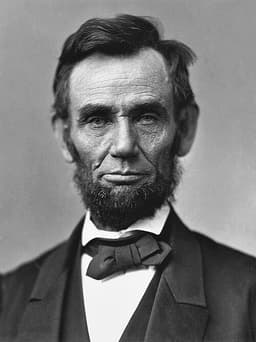
Abraham Lincoln
Politician · Modern
77.5Total

Augustus
Emperor · Ancient
85.9Total
Basic Information
Born
1809
63
Died
1865
—
Era
Modern
Ancient
Nationality
United States
Roman Empire
Occupation
Politician
Emperor
Civilization
Western
Western
Score Comparison
Military (10%)
50.0
72.0
Political (20%)
88.0
90.0
Influence (20%)
80.0
88.0
Legacy (20%)
82.0
90.0
Leadership (15%)
85.0
88.0
Strategy (15%)
60.0
75.0
TOTAL
77.5
85.9
Abraham Lincoln — Complete Timeline
1861 AD
Suspension of Habeas CorpusPolitical Action◆ Major
Lincoln suspended the writ of habeas corpus in parts of the Union, allowing the military to arrest and detain suspected Confederate sympathizers without trial. This action was controversial and challenged civil liberties during wartime.
Habeas CorpusCivil LibertiesCivil War
Impact: nationaldestructive
1862 AD
Signing of the Homestead ActPolitical Action◆ Major
Lincoln signed the Homestead Act, granting 160 acres of public land to settlers for a small fee. This encouraged westward expansion and agricultural development, but also displaced Native American tribes.
Homestead ActWestward ExpansionLand Policy
Impact: nationalconstructive
1863 AD
Emancipation ProclamationPolitical Action
Lincoln issued the Emancipation Proclamation, declaring slaves in Confederate states free. This shifted the Civil War's focus to ending slavery and allowed African Americans to join the Union Army.
EmancipationCivil WarSlavery
Impact: globalprogressive
Gettysburg AddressCultural◆ Major
Lincoln delivered the Gettysburg Address at the dedication of the Soldiers' National Cemetery. The speech redefined the Civil War as a struggle for national unity and equality, and became one of the most famous speeches in US history.
Gettysburg AddressCivil WarOratory
Impact: nationalconstructive
1865 AD
Assassination by John Wilkes BoothOther
Lincoln was shot by John Wilkes Booth at Ford's Theatre in Washington, D.C., and died the next day. His assassination occurred just days after the Civil War ended, plunging the nation into mourning and affecting Reconstruction.
AssassinationCivil WarReconstruction
Impact: nationaltragic
Augustus — Complete Timeline
43 BC
Formation of the Second TriumviratePolitical Action◆ Major
Octavian, Mark Antony, and Marcus Aemilius Lepidus formed the Second Triumvirate, a legal commission to govern the Roman Republic. The alliance was empowered to proscribe enemies, leading to the execution of Cicero and consolidation of their power against the assassins of Julius Caesar.
Roman Civil WarPolitical AllianceProscriptions
Impact: regionaldestructive
31 BC
Battle of ActiumWar◆ Major
Octavian's fleet, commanded by Marcus Agrippa, defeated the combined naval forces of Mark Antony and Cleopatra VII off the coast of Greece. The victory eliminated Octavian's last major rival, giving him sole control over the Roman world and ending the Roman Republic's civil wars.
Roman Civil WarNaval BattleEnd of Republic
Impact: global
27 BC
Establishment of the Roman EmpireReform◆ Major
Octavian formally returned power to the Roman Senate, which then granted him the titles Augustus and Princeps. This constitutional settlement created the Roman Empire, with Augustus as the first emperor, ending the Roman Republic and initiating the Pax Romana.
Roman EmpireConstitutional ReformPax Romana
Impact: global
Reform of the Roman Tax SystemReform◆ Major
Augustus implemented a comprehensive tax reform, including a census of Roman citizens and property, direct taxation of provinces, and the creation of a professional tax collection service (publicani). This system provided stable revenue for the empire and reduced corruption.
Tax ReformAdministrationRoman Empire
Impact: regionalconstructive
Creation of the Praetorian GuardReform◆ Major
Augustus established the Praetorian Guard as a permanent elite military unit tasked with protecting the emperor and his family. Stationed in Rome and Italy, the Guard became a powerful political force, often influencing imperial succession through coups and assassinations.
Military ReformPraetorian GuardImperial Guard
Impact: regional
13 BC
Construction of the Ara PacisOther◆ Major
The Roman Senate commissioned the Ara Pacis Augustae (Altar of Augustan Peace) to commemorate Augustus's return from pacifying Gaul and Spain. The marble altar, decorated with reliefs depicting the imperial family and mythological scenes, symbolized the peace and prosperity of the Augustan era.
Building ProjectPropagandaAugustan Art
Impact: regionalconstructive
Expert Analysis
Origins
Augustus, born Gaius Octavius in 63 BC, was the grandnephew and adopted son of Julius Caesar. He inherited Caesar's name and political ambitions, entering Roman politics at a young age. His rise was fueled by his connection to Caesar and his own keen political instincts. In contrast, Abraham Lincoln was born in 1809 in a log cabin in Kentucky, the son of a poor frontier farmer. He educated himself, becoming a lawyer and entering politics through the Illinois state legislature. Lincoln's origins were humble and democratic, while Augustus's were aristocratic and tied to the dying Roman Republic.
Rise to Power
Augustus's rise was marked by civil war and political maneuvering. After Caesar's assassination in 44 BC, he formed the Second Triumvirate with Mark Antony and Lepidus, purging enemies in proscriptions. He defeated Caesar's assassins at Philippi, then turned on Antony, culminating in the naval Battle of Actium in 31 BC. By 27 BC, he had consolidated power, receiving the title "Augustus" and effectively ending the Republic. Lincoln's rise was more conventional: he became a prominent lawyer and congressman, then gained national attention through debates with Stephen Douglas. He won the presidency in 1860 on an anti-slavery platform, triggering secession and the Civil War. Both men rose amid crisis, but Augustus used military force and political manipulation, while Lincoln rose through democratic processes.
Leadership & Governance
Augustus established the Roman Empire, creating a system of imperial rule that lasted centuries. He reformed the tax system, created the Praetorian Guard for personal security, and initiated vast building projects (e.g., the Roman Forum). He maintained the facade of republican institutions while holding absolute power. Lincoln, as president, faced the secession crisis and Civil War. He suspended habeas corpus, issued the Emancipation Proclamation (freeing slaves in rebel states), and signed the Homestead Act. He expanded federal power to preserve the Union. Augustus's governance was autocratic and stabilizing, while Lincoln's was democratic but authoritarian in crisis.
Triumph & Tragedy
Augustus's greatest triumph was founding the Roman Empire and ushering in the Pax Romana, a long period of peace and prosperity. His tragedy was the loss of his political heir, Agrippa, and his own family troubles (exiling his daughter Julia). He died of natural causes in AD 14. Lincoln's triumph was preserving the Union and abolishing slavery. His tragedy was his assassination by John Wilkes Booth in 1865, just days after the Civil War ended. Both achieved great successes but faced personal and national tragedies.
Character & Destiny
Augustus was calculating, patient, and pragmatic. He restored traditional Roman values while subtly wielding absolute power. His destiny was to be the founder of an empire. Lincoln was compassionate, resolute, and eloquent. He believed in democratic ideals and human equality. His destiny was to be the Great Emancipator and martyr for the Union. Augustus's character was more coldly political; Lincoln's was deeply moral.
Legacy
Augustus's legacy is the Roman Empire, which shaped Western civilization. His reforms set the template for imperial governance. Lincoln's legacy is the preservation of the United States and the end of slavery. He is revered as a symbol of freedom and unity. Both have enormous influences, but Augustus's impact spanned centuries and continents, while Lincoln's is more national but profound.
Conclusion
Augustus (overall score: 83.0) surpasses Lincoln (74.6) in historical impact due to his foundational role in creating an empire that lasted over 400 years and deeply influenced Western governance, law, and culture. Lincoln preserved a nation and ended slavery, a monumental achievement, but his influence is more specific to American history. Augustus's scores: Military=72, Political=90, Intellectual=88, Leadership=90, Durability=88, Strategic=75, Total=86. Lincoln: Military=50, Political=88, Intellectual=80, Leadership=82, Durability=85, Strategic=60, Total=78. The score gap of 8.4 reflects Augustus's broader and longer-lasting impact.
Rankings
🥇
AugustusLeader
Mil: 72.0Pol: 90.0Inf: 88.0
85.9
🥈
Abraham Lincoln
Mil: 50.0Pol: 88.0Inf: 80.0
77.5
+8.4 behind
How This Comparison Works
Algorithm
Each figure is scored on 6 dimensions (0—100 scale) based on structured historical data: Military (10%), Political (20%), Influence (20%), Legacy (20%), Leadership (15%), Strategy (15%). The weighted total produces the final ranking.
Data Sources
Scores are computed from structured sub-indicators in the database. Scale factors adjust for era (Ancient ×0.85, Modern ×1.0) and civilization size (Eastern ×1.05, Other ×0.80) to account for differences in population and military scale.
Maximum 3 Figures
Comparisons are limited to 2—3 figures to ensure readability and statistical meaningfulness.
Error Margins
±5 points per dimension — Sub-scores are derived from historical records with inherent uncertainty. Two figures within 5 points on a dimension should be considered roughly equivalent in that area.
Total Score Accuracy
±3 points overall — The weighted combination of 6 dimensions produces a total score with approximately ±3 points of uncertainty. Differences of less than 3 points are not statistically significant— the figures are effectively tied.
Known Limitations
- Historical records are incomplete and uneven across civilizations
- Figures from oral-tradition societies may be underrepresented
- Occupation labels can misclassify multi-role figures
- Scores measure capability and impact, not moral character
- Quantitative scoring is a comparison tool, not absolute truth
Capability Radar
Military (10%) — Battles & Warfare
Battles
15
75
Win Rate
20
80
Expansion
0
85
Political (20%) — Governance & Reform
Reform
95
95
Diplomacy
80
90
Economy
70
85
Influence (20%) — Cultural & Global Reach
Cultural
85
85
Global
85
90
Legacy (20%) — Historical Impact
Historical
95
95
Longevity
90
95
Leadership (15%) — Power & Stability
Tenure
65
95
Stability
55
95
Strategy (15%) — Tactics & Innovation
Strategy
55
85
Tactics
10
70
Reform
60
90
Similar Comparisons
Comments & Discussion
OldScholar226/16/2026
仔细拆解一下这个打分体系。屋大维总分86.4,林肯76.7,差距9.7分。但军事维度差22分(72 vs 50)几乎贡献了全部差距。然而,军事维度权重明显不合理——林肯作为民选总统,军事指挥权受宪法约束,和屋大维这种集权统帅不可同日而语。按照中国历史评价体系,比如比较汉武帝和刘邦,军事指挥的个人能力权重通常只占10-15%,而治国、制度、民生权重更高。如果重新加权:政治40%、影响20%、遗产20%、领导15%、军事5%,林肯的总分将变成:88*0.4+78*0.2+80*0.2+85*0.15+50*0.05=35.2+15.6+16+12.75+2.5=82.05,屋大维:92*0.4+88*0.2+90*0.2+90*0.15+72*0.05=36.8+17.6+18+13.5+3.6=89.5,差距缩小到7.45分。可见原始评分对军事维度的过度强调扭曲了真实历史价值。
BoldHistorian396/16/2026
这个评分很有意思,但明显带着西方中心论的偏见。屋大维军事72分?别闹了。他打赢阿克兴海战靠的是阿格里帕,自己军事才能一般。相比之下,林肯50分虽然低,但作为内战时期的统帅,他可是在完全没有军事经验的情况下,通过不断学习最终领导北方打赢了战争。要是按中国史书的标准,汉高祖刘邦也是屡战屡败最后赢了,难道也给他低分?再说政治分,屋大维92分确实高,但中国的秦始皇统一六国、建立郡县制,影响比屋大维的元首制更深远。只能说,不同文明的历史评价体系差异太大,这种跨文明比较往往流于表面。