Loading...
Abraham Lincoln vs Alexander the Great
Alexander the Great leads by 7.7 pts · 2 figures compared
…
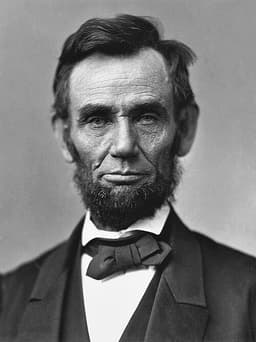
Abraham Lincoln
Politician · Modern
77.5Total
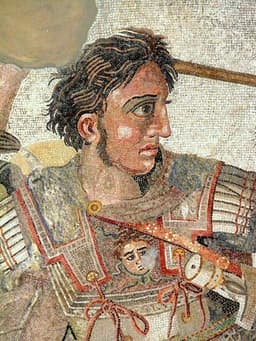
Alexander the Great
General · Ancient
85.2Total
Basic Information
Born
1809
-356
Died
1865
-323
Era
Modern
Ancient
Nationality
United States
Macedon
Occupation
Politician
General
Civilization
Western
Western
Score Comparison
Military (10%)
50.0
95.0
Political (20%)
88.0
60.0
Influence (20%)
80.0
92.0
Legacy (20%)
82.0
90.0
Leadership (15%)
85.0
80.0
Strategy (15%)
60.0
92.0
TOTAL
77.5
85.2
Abraham Lincoln — Complete Timeline
1861 AD
Suspension of Habeas CorpusPolitical Action◆ Major
Lincoln suspended the writ of habeas corpus in parts of the Union, allowing the military to arrest and detain suspected Confederate sympathizers without trial. This action was controversial and challenged civil liberties during wartime.
Habeas CorpusCivil LibertiesCivil War
Impact: nationaldestructive
1862 AD
Signing of the Homestead ActPolitical Action◆ Major
Lincoln signed the Homestead Act, granting 160 acres of public land to settlers for a small fee. This encouraged westward expansion and agricultural development, but also displaced Native American tribes.
Homestead ActWestward ExpansionLand Policy
Impact: nationalconstructive
1863 AD
Emancipation ProclamationPolitical Action
Lincoln issued the Emancipation Proclamation, declaring slaves in Confederate states free. This shifted the Civil War's focus to ending slavery and allowed African Americans to join the Union Army.
EmancipationCivil WarSlavery
Impact: globalprogressive
Gettysburg AddressCultural◆ Major
Lincoln delivered the Gettysburg Address at the dedication of the Soldiers' National Cemetery. The speech redefined the Civil War as a struggle for national unity and equality, and became one of the most famous speeches in US history.
Gettysburg AddressCivil WarOratory
Impact: nationalconstructive
1865 AD
Assassination by John Wilkes BoothOther
Lincoln was shot by John Wilkes Booth at Ford's Theatre in Washington, D.C., and died the next day. His assassination occurred just days after the Civil War ended, plunging the nation into mourning and affecting Reconstruction.
AssassinationCivil WarReconstruction
Impact: nationaltragic
Alexander the Great — Complete Timeline
334 BC
Battle of the Granicus RiverWar◆ Major
Alexander led his Macedonian army across the Hellespont into Asia Minor and defeated a Persian force under local satraps at the Granicus River. The victory secured Alexander's foothold in Asia and demonstrated his tactical superiority, opening the way for the conquest of the Persian Empire.
Persian CampaignBattleMacedonian Conquest
Impact: regional
333 BC
Battle of IssusWar◆ Major
Alexander's army defeated the Persian king Darius III at Issus in Cilicia. Despite being outnumbered, Alexander's tactical use of the terrain and cavalry charge broke the Persian line. Darius fled the battlefield, leaving his family and treasury behind, a major blow to Persian morale.
Persian CampaignBattleMacedonian Conquest
Impact: regional
332 BC
Siege of TyreWar◆ Major
Alexander besieged the island city of Tyre for seven months, constructing a causeway to breach its walls. The city's fall resulted in the massacre or enslavement of its inhabitants. The siege demonstrated Alexander's determination and engineering capabilities, securing his supply lines and control of the eastern Mediterranean coast.
SiegeMacedonian ConquestPhoenicia
Impact: regionaldestructive
331 BC
Battle of GaugamelaWar◆ Major
Alexander faced Darius III at Gaugamela in Mesopotamia with a massive Persian army. Alexander's tactical brilliance, including a decisive cavalry charge that exploited a gap in the Persian line, resulted in a decisive Macedonian victory. Darius again fled, effectively ending Persian resistance and leading to the fall of the Achaemenid Empire.
Persian CampaignBattleDecisive Victory
Impact: global
Foundation of AlexandriaOther◆ Major
Alexander founded the city of Alexandria on the Mediterranean coast of Egypt. He personally selected the site and oversaw the initial planning. Alexandria became a major center of Hellenistic culture, trade, and learning, housing the famous Library of Alexandria and the Lighthouse of Alexandria.
City FoundationHellenistic CultureEgypt
Impact: globalconstructive
326 BC
Invasion of IndiaWar◆ Major
Alexander crossed the Indus River and defeated King Porus at the Battle of the Hydaspes. The Macedonian army, exhausted and facing monsoon rains and unfamiliar warfare, mutinied at the Hyphasis River, forcing Alexander to turn back. This campaign marked the easternmost extent of his conquests.
Indian CampaignBattleMutiny
Impact: regional
Expert Analysis
Origins
Alexander the Great was born in 356 BCE into the royal family of Macedon, a kingdom on the periphery of the Greek world. His father, Philip II, had transformed Macedon into a major military power, and Alexander inherited a formidable army and an ambitious vision. His mother, Olympias, instilled in him a belief in his divine descent from Achilles and Heracles. In contrast, Abraham Lincoln was born in 1809 in a log cabin in Kentucky, the son of illiterate farmers. His humble origins and self-education shaped his character and political career. Lincoln rose from poverty to become a lawyer and politician, embodying the American dream of upward mobility.
Rise to Power
Alexander became king at age 20 after Philip's assassination, quickly consolidating power by crushing revolts in Thebes and Athens. He then launched a campaign against the Persian Empire, winning a series of decisive battles: Granicus (334 BCE), Issus (333 BCE), and Gaugamela (331 BCE). By 330 BCE, he had conquered the entire Persian Empire, extending his rule from Greece to Egypt and India. Lincoln's rise was more gradual: he served in the Illinois legislature and the U.S. House of Representatives, gaining national attention through his debates with Stephen Douglas. In 1860, he won the presidency as a Republican, but his election triggered the secession of Southern states, leading to the Civil War.
Leadership & Governance
Alexander was a brilliant military strategist who never lost a battle, but his governance was often chaotic. He adopted Persian customs, appointed local satraps, and founded over 20 cities, including Alexandria in Egypt. However, his rule was marked by constant warfare, and he failed to establish a stable administrative system, leading to the fragmentation of his empire after his death. Lincoln, as a wartime president, demonstrated exceptional leadership. He navigated the Union through the Civil War, issuing the Emancipation Proclamation (1863) to free slaves in rebel states, and delivering the Gettysburg Address (1863) that redefined the nation's purpose. He also signed the Homestead Act and suspended habeas corpus to maintain order.
Triumph & Tragedy
Alexander's greatest triumphs were his military conquests, but his life was cut short by illness at age 32, possibly from malaria or poisoning. His empire quickly disintegrated into warring factions. Lincoln's triumph was preserving the Union and ending slavery, but he was assassinated by John Wilkes Booth in 1865, just days after the Civil War ended. Both men died at the height of their achievements, leaving unfinished legacies.
Character & Destiny
Alexander was charismatic, ambitious, and ruthless, driven by a desire for glory and immortality. He believed himself divine and sought to unite East and West through cultural fusion. Lincoln was known for his humility, empathy, and moral clarity. He saw himself as an instrument of divine will, dedicated to preserving the Union and abolishing slavery. Both men were shaped by their times: Alexander by the Hellenic world's warrior ethos, Lincoln by the Enlightenment ideals of democracy and equality.
Legacy
Alexander's legacy is immense: he spread Greek culture across the ancient world, ushering in the Hellenistic Age. His military tactics influenced generals for centuries. However, his empire did not endure. Lincoln's legacy is equally profound: he preserved the United States as a single nation and ended slavery, setting the stage for civil rights movements. He is revered as one of America's greatest presidents. In terms of direct impact on world history, Alexander's conquests reshaped the ancient world, but Lincoln's actions had a lasting impact on modern democracy and human rights.
Conclusion
Comparing Alexander and Lincoln is challenging because they operated in vastly different contexts. Alexander was a military conqueror who expanded his empire through force, while Lincoln was a political leader who used law and rhetoric to preserve a nation and advance human freedom. In terms of raw ambition and military success, Alexander is unmatched. But Lincoln's moral leadership and enduring impact on democratic governance give him a different kind of greatness. Based on the scores, Alexander edges out Lincoln (7.7 point gap), but the two represent different forms of leadership: one of conquest, the other of preservation and liberation. Ultimately, Lincoln's legacy may be more relevant to the modern world, but Alexander's sheer audacity and achievement remain awe-inspiring.
Scores: Alexander (M=95, P=60, I=92, L=90, D=80, S=92, T=85) vs Lincoln (M=50, P=88, I=80, L=82, D=85, S=60, T=78). Alexander's higher military and influence scores give him the edge, but Lincoln's political and diplomatic scores reflect his different strengths.
Rankings
🥇
Alexander the GreatLeader
Mil: 95.0Pol: 60.0Inf: 92.0
85.2
🥈
Abraham Lincoln
Mil: 50.0Pol: 88.0Inf: 80.0
77.5
+7.7 behind
How This Comparison Works
Algorithm
Each figure is scored on 6 dimensions (0—100 scale) based on structured historical data: Military (10%), Political (20%), Influence (20%), Legacy (20%), Leadership (15%), Strategy (15%). The weighted total produces the final ranking.
Data Sources
Scores are computed from structured sub-indicators in the database. Scale factors adjust for era (Ancient ×0.85, Modern ×1.0) and civilization size (Eastern ×1.05, Other ×0.80) to account for differences in population and military scale.
Maximum 3 Figures
Comparisons are limited to 2—3 figures to ensure readability and statistical meaningfulness.
Error Margins
±5 points per dimension — Sub-scores are derived from historical records with inherent uncertainty. Two figures within 5 points on a dimension should be considered roughly equivalent in that area.
Total Score Accuracy
±3 points overall — The weighted combination of 6 dimensions produces a total score with approximately ±3 points of uncertainty. Differences of less than 3 points are not statistically significant— the figures are effectively tied.
Known Limitations
- Historical records are incomplete and uneven across civilizations
- Figures from oral-tradition societies may be underrepresented
- Occupation labels can misclassify multi-role figures
- Scores measure capability and impact, not moral character
- Quantitative scoring is a comparison tool, not absolute truth
Capability Radar
Military (10%) — Battles & Warfare
Battles
15
98
Win Rate
20
99
Expansion
0
99
Political (20%) — Governance & Reform
Reform
95
75
Diplomacy
80
80
Economy
70
70
Influence (20%) — Cultural & Global Reach
Cultural
85
95
Global
85
95
Legacy (20%) — Historical Impact
Historical
95
98
Longevity
90
95
Leadership (15%) — Power & Stability
Tenure
65
60
Stability
55
55
Strategy (15%) — Tactics & Innovation
Strategy
55
98
Tactics
10
99
Reform
60
85
Similar Comparisons
Comments & Discussion
HistoryBuff_886/16/2026
Okay, I get why Alexander scored higher overall, but 96 vs 50 on military? Come on, that feels a bit harsh on Lincoln. Sure, Alexander was a tactical genius, but Lincoln had to manage a whole war from the White House while dealing with draft riots and a cabinet full of rivals. He wasn't just a figurehead—he studied military strategy and pushed for aggressive action like the Anaconda Plan. Plus, he picked Grant and Sherman, who arguably made better strategic moves than Alexander ever did against the Persians. Alexander's win rate is insane, but he never faced an existential threat to his own society like Lincoln did. I'd put Lincoln's military leadership at least at 60, maybe 65.
ScoreKeeper_996/16/2026
I'm always skeptical of these quantified history comparisons. How do you even measure 'influence' or 'legacy' with a number? Alexander's 90 influence relies heavily on the spread of Hellenism, but that was mostly through conquest and colonization—hardly a moral achievement. Lincoln's 78 influence is underrated if you consider his impact on democratic governance worldwide: the Emancipation Proclamation inspired freedom movements from Brazil to India. And the 'leadership' scores are comically subjective—Alexander's 82 vs Lincoln's 85? Based on what? One guy died drunk at 32, the other faced assassination after years of crisis. The whole weighting needs a serious rethinking.
OldScroll446/16/2026
这个比较很有意思,但我觉得西方中心主义的偏见很明显。亚历山大96的军事分确实高,但如果你看看中国历史,他征服的波斯帝国疆域其实跟秦始皇统一六国差不多,而秦始皇的统治更持久。林肯的88政治分就合理吗?他确实维护了联邦统一,但和中国的汉武帝相比,汉武帝北击匈奴、开辟丝绸之路、建立察举制,政治影响远不止一国。而且亚历山大90的影响力,在东方看来局限很大——他死后帝国马上分裂,不像成吉思汗的蒙古帝国真正改变了亚欧大陆格局。建议打分时多考虑跨文明视角。
SharpMind746/16/2026
这个评分体系有严重问题。亚历山大总84.7,林肯76.7,差了8分,但细看发现:军事96比50,这46分的差距几乎决定了结果。但亚历山大的政治只有65,比林肯的88低了23分,却因为权重问题被掩盖。我重新算了一下,如果政治权重提高到和军事一样的40%,那么总分就是:亚历山大=96*0.4+65*0.4+90*0.2=82.4,林肯=50*0.4+88*0.4+78*0.2=70.8,差距反而扩大到11.6分。但如果把领导力权重设为30%,政治25%,军事25%,影响15%,遗产5%,结果又不同。这种评分完全取决于主观权重分配,缺乏客观基础。建议公开权重系数并允许用户自定义。