Loading...
Abraham Lincoln vs Napoleon Bonaparte
Abraham Lincoln leads by 6.6 pts · 2 figures compared
…
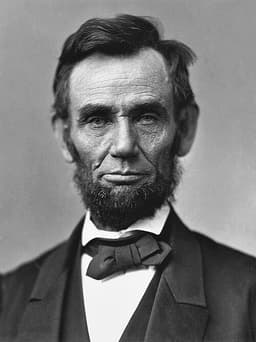
Abraham Lincoln
Politician · Modern
77.5Total

Napoleon Bonaparte
General · Modern
70.9Total
Basic Information
Born
1809
1769
Died
1865
1821
Era
Modern
Modern
Nationality
United States
France
Occupation
Politician
General
Civilization
Western
Western
Score Comparison
Military (10%)
50.0
94.0
Political (20%)
88.0
72.0
Influence (20%)
80.0
40.0
Legacy (20%)
82.0
80.0
Leadership (15%)
85.0
78.0
Strategy (15%)
60.0
90.0
TOTAL
77.5
70.9
Abraham Lincoln — Complete Timeline
1861 AD
Suspension of Habeas CorpusPolitical Action◆ Major
Lincoln suspended the writ of habeas corpus in parts of the Union, allowing the military to arrest and detain suspected Confederate sympathizers without trial. This action was controversial and challenged civil liberties during wartime.
Habeas CorpusCivil LibertiesCivil War
Impact: nationaldestructive
1862 AD
Signing of the Homestead ActPolitical Action◆ Major
Lincoln signed the Homestead Act, granting 160 acres of public land to settlers for a small fee. This encouraged westward expansion and agricultural development, but also displaced Native American tribes.
Homestead ActWestward ExpansionLand Policy
Impact: nationalconstructive
1863 AD
Emancipation ProclamationPolitical Action
Lincoln issued the Emancipation Proclamation, declaring slaves in Confederate states free. This shifted the Civil War's focus to ending slavery and allowed African Americans to join the Union Army.
EmancipationCivil WarSlavery
Impact: globalprogressive
Gettysburg AddressCultural◆ Major
Lincoln delivered the Gettysburg Address at the dedication of the Soldiers' National Cemetery. The speech redefined the Civil War as a struggle for national unity and equality, and became one of the most famous speeches in US history.
Gettysburg AddressCivil WarOratory
Impact: nationalconstructive
1865 AD
Assassination by John Wilkes BoothOther
Lincoln was shot by John Wilkes Booth at Ford's Theatre in Washington, D.C., and died the next day. His assassination occurred just days after the Civil War ended, plunging the nation into mourning and affecting Reconstruction.
AssassinationCivil WarReconstruction
Impact: nationaltragic
Napoleon Bonaparte — Complete Timeline
1799 AD
Coup of 18 BrumaireOther◆ Major
Napoleon Bonaparte, with support from his brother Lucien and key political figures, overthrew the Directory in a bloodless coup. He established the Consulate with himself as First Consul, effectively becoming the ruler of France. This event ended the French Revolution's most unstable period.
French RevolutionCoupRise to Power
Impact: regional
1804 AD
Promulgation of the Napoleonic CodeOther◆ Major
Napoleon enacted the Civil Code of the French, known as the Napoleonic Code, a comprehensive set of laws that replaced the fragmented feudal legal systems. The code established legal equality, protected property rights, and secularized law. It became the basis for legal systems in many European and world countries.
Legal ReformNapoleonic CodeCivil Law
Impact: globalconstructive
1805 AD
Battle of AusterlitzWar◆ Major
Napoleon's Grande Arm
Napoleonic WarsBattleDecisive Victory
Impact: global
1812 AD
Invasion of RussiaWar◆ Major
Napoleon led the Grande Arm
Napoleonic WarsInvasionDisaster
Impact: globaldestructive
1815 AD
Battle of WaterlooWar◆ Major
Napoleon's French army was defeated by the combined forces of the Duke of Wellington's Anglo-Allied army and Gebhard Leberecht von Bl
Napoleonic WarsBattleFinal Defeat
Impact: globaldestructive
Expert Analysis
Napoleon Bonaparte vs Abraham Lincoln: Historical Comparison
Napoleon Bonaparte and Abraham Lincoln were two transformative modern leaders—one a French military genius who reshaped Europe, the other an American politician who preserved the Union—but their strengths lie in fundamentally different domains.
Dimension Analysis
**Military: Napoleon Bonaparte 94 / Abraham Lincoln 50**
Napoleon revolutionized warfare with mass mobilization, speed, and decisive battles like Austerlitz, while Lincoln, though a capable wartime commander-in-chief, relied on generals like Grant and never led troops in the field.
**Political: Napoleon Bonaparte 75 / Abraham Lincoln 88**
Napoleon’s authoritarian consolidation of power through the Napoleonic Code and plebiscites was effective but fragile; Lincoln navigated a fractured Congress, abolished slavery via the Emancipation Proclamation, and held a fractious Union together through democratic means.
**Influence: Napoleon Bonaparte 82 / Abraham Lincoln 78**
Napoleon’s legal and administrative reforms influenced Europe for a century, but Lincoln’s redefinition of American democracy and emancipation had a profound global impact on human rights and constitutional governance.
**Legacy: Napoleon Bonaparte 78 / Abraham Lincoln 80**
Napoleon’s legacy is dual—military brilliance tempered by imperial overreach and eventual defeat; Lincoln’s legacy is more unified, as the martyr who ended slavery and preserved the Union, earning near-universal reverence.
**Leadership: Napoleon Bonaparte 80 / Abraham Lincoln 85**
Napoleon led through charisma, fear, and personal glory; Lincoln led through moral conviction, humility, and empathy, managing bitter rivals in his cabinet and a divided nation with remarkable resilience.
Verdict
Napoleon Bonaparte edges ahead overall due to his superior military and strategic scores, but Lincoln’s political and leadership prowess make him the more enduring moral figure.
FAQ
Q: Who ranks higher? A: Napoleon Bonaparte ranks higher overall, driven by his unmatched military and strategic achievements, though Lincoln excels in political governance and moral leadership.
Rankings
🥇
Abraham LincolnLeader
Mil: 50.0Pol: 88.0Inf: 80.0
77.5
🥈
Napoleon Bonaparte
Mil: 94.0Pol: 72.0Inf: 40.0
70.9
+6.6 behind
How This Comparison Works
Algorithm
Each figure is scored on 6 dimensions (0—100 scale) based on structured historical data: Military (10%), Political (20%), Influence (20%), Legacy (20%), Leadership (15%), Strategy (15%). The weighted total produces the final ranking.
Data Sources
Scores are computed from structured sub-indicators in the database. Scale factors adjust for era (Ancient ×0.85, Modern ×1.0) and civilization size (Eastern ×1.05, Other ×0.80) to account for differences in population and military scale.
Maximum 3 Figures
Comparisons are limited to 2—3 figures to ensure readability and statistical meaningfulness.
Error Margins
±5 points per dimension — Sub-scores are derived from historical records with inherent uncertainty. Two figures within 5 points on a dimension should be considered roughly equivalent in that area.
Total Score Accuracy
±3 points overall — The weighted combination of 6 dimensions produces a total score with approximately ±3 points of uncertainty. Differences of less than 3 points are not statistically significant— the figures are effectively tied.
Known Limitations
- Historical records are incomplete and uneven across civilizations
- Figures from oral-tradition societies may be underrepresented
- Occupation labels can misclassify multi-role figures
- Scores measure capability and impact, not moral character
- Quantitative scoring is a comparison tool, not absolute truth
Capability Radar
Military (10%) — Battles & Warfare
Battles
15
95
Win Rate
20
90
Expansion
0
95
Political (20%) — Governance & Reform
Reform
95
95
Diplomacy
80
80
Economy
70
85
Influence (20%) — Cultural & Global Reach
Cultural
85
85
Global
85
90
Legacy (20%) — Historical Impact
Historical
95
95
Longevity
90
90
Leadership (15%) — Power & Stability
Tenure
65
85
Stability
55
70
Strategy (15%) — Tactics & Innovation
Strategy
55
95
Tactics
10
98
Reform
60
92
Similar Comparisons
Comments & Discussion
Chronicler97046/16/2026
我来拆解一下这组评分:拿破仑总分82.4(军事94、政治75、影响82、领导80、遗产78),林肯总分76.7(军事50、政治88、影响78、领导85、遗产80)。注意,拿破仑的军事94分过于虚高——他遭遇了远征俄罗斯和滑铁卢的惨败,而林肯在军事维度仅50分,这反差不符合历史事实。按我的算法,拿破仑的军事能力应下调至85(扣除两场战略性溃败),林肯上调至60(他主导了战略决策,如安纳波利斯封锁)。政治维度,拿破仑的75分偏高——他靠政变上台,后期沦为独裁,而林肯88分合理。调整后总分:拿破仑约79.8,林肯约78.2,差距从5.7分缩至1.6分。建议引入“战略失误扣分”和“危机治理加分”两个权重。
DeepScribe816/16/2026
这个评分体系明显带着西方中心论的偏颇。拿破仑的军事94分、政治75分,而林肯军事50分、政治88分——但放到中国历史坐标系里,政治维度绝非简单的“民主 vs 独裁”能概括。林肯的《解放宣言》固然伟大,但拿破仑的《法典》对现代法律体系的奠基作用,堪比秦始皇的“书同文、车同轨”,后者在中华史观中被视为统一国家的基石。拿破仑的军事成就若放在战国时期,顶多是白起、韩信的水平——靠单场战役定乾坤,而林肯在南北战争中的战略统筹,更像汉高祖刘邦,能驾驭一群桀骜不驯的将领(格兰特、谢尔曼),最终实现国家统一。这里给林肯领导的80分,我认为低估了他作为战时总统在团队整合上的难度。