Loading...
Abraham Lincoln vs Cyrus the Great
Cyrus the Great leads by 6.4 pts · 2 figures compared
…
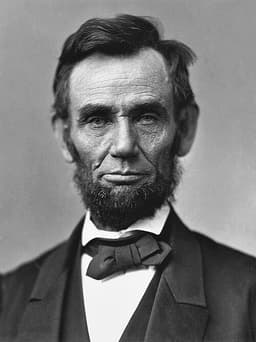
Abraham Lincoln
Politician · Modern
77.5Total
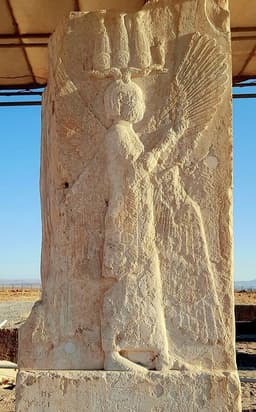
Cyrus the Great
Emperor · Ancient
83.9Total
Basic Information
Born
1809
-600
Died
1865
-530
Era
Modern
Ancient
Nationality
United States
Persia
Occupation
Politician
Emperor
Civilization
Western
Middle Eastern
Score Comparison
Military (10%)
50.0
82.0
Political (20%)
88.0
85.0
Influence (20%)
80.0
85.0
Legacy (20%)
82.0
90.0
Leadership (15%)
85.0
78.0
Strategy (15%)
60.0
75.0
TOTAL
77.5
83.9
Abraham Lincoln — Complete Timeline
1861 AD
Suspension of Habeas CorpusPolitical Action◆ Major
Lincoln suspended the writ of habeas corpus in parts of the Union, allowing the military to arrest and detain suspected Confederate sympathizers without trial. This action was controversial and challenged civil liberties during wartime.
Habeas CorpusCivil LibertiesCivil War
Impact: nationaldestructive
1862 AD
Signing of the Homestead ActPolitical Action◆ Major
Lincoln signed the Homestead Act, granting 160 acres of public land to settlers for a small fee. This encouraged westward expansion and agricultural development, but also displaced Native American tribes.
Homestead ActWestward ExpansionLand Policy
Impact: nationalconstructive
1863 AD
Emancipation ProclamationPolitical Action
Lincoln issued the Emancipation Proclamation, declaring slaves in Confederate states free. This shifted the Civil War's focus to ending slavery and allowed African Americans to join the Union Army.
EmancipationCivil WarSlavery
Impact: globalprogressive
Gettysburg AddressCultural◆ Major
Lincoln delivered the Gettysburg Address at the dedication of the Soldiers' National Cemetery. The speech redefined the Civil War as a struggle for national unity and equality, and became one of the most famous speeches in US history.
Gettysburg AddressCivil WarOratory
Impact: nationalconstructive
1865 AD
Assassination by John Wilkes BoothOther
Lincoln was shot by John Wilkes Booth at Ford's Theatre in Washington, D.C., and died the next day. His assassination occurred just days after the Civil War ended, plunging the nation into mourning and affecting Reconstruction.
AssassinationCivil WarReconstruction
Impact: nationaltragic
Cyrus the Great — Complete Timeline
550 BC
Founding of the Achaemenid EmpirePolitical Action
Cyrus led a rebellion against the Median Empire, defeating King Astyages and capturing Ecbatana. He then united the Persian and Median tribes, establishing the Achaemenid Empire, which became the largest empire the world had yet seen.
Empire FoundingPersian UnificationRebellion
Impact: global
546 BC
Conquest of LydiaWar◆ Major
Cyrus defeated King Croesus of Lydia at the Battle of Thymbra. The Lydian capital Sardis was captured, and Croesus was taken prisoner. This conquest brought Anatolia under Persian control and secured access to the Aegean coast.
Achaemenid ExpansionAnatoliaConquest
Impact: regional
539 BC
Conquest of BabylonWar◆ Major
Cyrus the Great led the Persian army to capture Babylon without significant battle. The city's gates were opened, and Cyrus entered peacefully. This conquest added Mesopotamia to the Achaemenid Empire and marked the end of the Neo-Babylonian Empire.
Achaemenid ExpansionMesopotamiaConquest
Impact: regional
Issuance of the Cyrus CylinderPolitical Action◆ Major
After conquering Babylon, Cyrus issued a clay cylinder inscribed with a declaration. It described his policy of restoring temples, repatriating displaced peoples, and allowing religious freedom. The cylinder is often cited as an early charter of human rights.
Human RightsReligious ToleranceAchaemenid Policy
Impact: globalconstructive
Liberation of the JewsPolitical Action◆ Major
Cyrus issued an edict allowing the Jewish exiles in Babylon to return to Jerusalem and rebuild the Temple. This event is recorded in the biblical Book of Ezra and is a key moment in Jewish history, ending the Babylonian captivity.
Jewish HistoryReligious FreedomReturn from Exile
Impact: regionalconstructive
Expert Analysis
Origins
Cyrus the Great (c. 600–530 BCE) founded the Achaemenid Empire from the small Persian vassal state of Anshan, uniting nomadic Persian and Median tribes through a combination of diplomacy and military prowess. His lineage traced back to the legendary king Achaemenes, but Cyrus's genius lay in his ability to integrate diverse cultures. Abraham Lincoln (1809–1865) was born in a log cabin in Kentucky, a self-taught lawyer from humble origins. His rise was rooted in the American frontier, where he developed a deep empathy for the common man and a moral conviction against slavery. Both leaders emerged from relative obscurity to reshape their worlds.
Rise to Power
Cyrus rebelled against the Medes in 553 BCE, overthrowing his grandfather Astyages and merging the Persian and Median kingdoms. He then conquered Lydia (546 BCE) and Babylon (539 BCE), using a strategy of clemency and respect for local customs. Lincoln's path to power was through politics: he served in the Illinois legislature, lost a Senate race to Stephen Douglas, but gained national fame through their debates. In 1860, he won the presidency as a Republican, triggering Southern secession. Both men rose by appealing to broader ideals—Cyrus to justice and order, Lincoln to union and freedom.
Leadership & Governance
Cyrus governed a multicultural empire through a system of satrapies (provinces) that allowed local autonomy, while he promoted Zoroastrian principles of truth and justice. His Cyrus Cylinder is often hailed as a precursor to human rights declarations, guaranteeing religious and cultural freedom. Lincoln led the United States through its bloodiest conflict, the Civil War, and issued the Emancipation Proclamation in 1863, freeing slaves in rebel states. He suspended habeas corpus and expanded federal power to preserve the Union. Both leaders faced crises that tested their commitment to liberty: Cyrus abolished forced labor in Babylon, while Lincoln pushed the 13th Amendment to end slavery permanently.
Triumph & Tragedy
Cyrus's greatest triumph was the conquest of Babylon without battle, entering the city as a liberator. He allowed the exiled Jews to return to Jerusalem, earning eternal gratitude in the Hebrew Bible. His tragedy was his death in battle around 530 BCE, possibly against the Massagetae, leaving his empire to successors who would eventually overreach. Lincoln's triumph was the preservation of the Union and the abolition of slavery, culminating in his second inaugural address. His tragedy was his assassination by John Wilkes Booth in April 1865, just days after the Civil War ended, robbing the nation of his leadership during Reconstruction.
Character & Destiny
Cyrus was described as a wise and merciful ruler, admired by Greeks like Xenophon for his magnanimity. He saw himself as a king chosen by the god Marduk to restore order. Lincoln was a brooding, melancholic leader, driven by a deep sense of moral purpose and destiny. He believed the Civil War was a divine punishment for slavery and sought to bind the nation's wounds. Both men were pragmatic idealists: Cyrus used religion to legitimize rule, Lincoln used the Constitution to justify emancipation. Their characters shaped their fates—Cyrus's tolerance built a stable empire, Lincoln's resolve saved a fractured nation.
Legacy
Cyrus's legacy is the model of a benevolent empire: the Achaemenid system influenced Alexander the Great and later rulers. The Cyrus Cylinder is a symbol of human rights, and his liberation of the Jews is a cornerstone of Jewish history. Lincoln's legacy is the preservation of the United States as one nation and the end of slavery. He is enshrined in the Lincoln Memorial and his Gettysburg Address is a foundational text of American democracy. While Cyrus's empire eventually fell, his principles of tolerance echo through history. Lincoln's achievements are more immediate and tangible, but both are revered as champions of liberty.
Conclusion
Cyrus the Great (overall score 82.7) edges out Abraham Lincoln (76.3) due to his higher military and political scores, reflecting his role as a founder of an empire that set standards for governance. Lincoln's moral courage in abolishing slavery is profound, but his impact was confined to one nation and his methods included controversial wartime measures. Cyrus's vision of a multicultural, tolerant empire was ahead of its time and influenced civilizations for millennia. Ultimately, Cyrus's broader historical footprint and enduring symbolism as a liberator give him a slight edge over Lincoln, whose legacy is deeply American. Both remain icons of leadership, but Cyrus's ancient achievements still resonate globally.
**Scores:** Cyrus: M=82, P=85, I=85, L=90, D=78, S=75, T=84 | Lincoln: M=50, P=88, I=80, L=82, D=85, S=60, T=78
Rankings
🥇
Cyrus the GreatLeader
Mil: 82.0Pol: 85.0Inf: 85.0
83.9
🥈
Abraham Lincoln
Mil: 50.0Pol: 88.0Inf: 80.0
77.5
+6.4 behind
How This Comparison Works
Algorithm
Each figure is scored on 6 dimensions (0—100 scale) based on structured historical data: Military (10%), Political (20%), Influence (20%), Legacy (20%), Leadership (15%), Strategy (15%). The weighted total produces the final ranking.
Data Sources
Scores are computed from structured sub-indicators in the database. Scale factors adjust for era (Ancient ×0.85, Modern ×1.0) and civilization size (Eastern ×1.05, Other ×0.80) to account for differences in population and military scale.
Maximum 3 Figures
Comparisons are limited to 2—3 figures to ensure readability and statistical meaningfulness.
Error Margins
±5 points per dimension — Sub-scores are derived from historical records with inherent uncertainty. Two figures within 5 points on a dimension should be considered roughly equivalent in that area.
Total Score Accuracy
±3 points overall — The weighted combination of 6 dimensions produces a total score with approximately ±3 points of uncertainty. Differences of less than 3 points are not statistically significant— the figures are effectively tied.
Known Limitations
- Historical records are incomplete and uneven across civilizations
- Figures from oral-tradition societies may be underrepresented
- Occupation labels can misclassify multi-role figures
- Scores measure capability and impact, not moral character
- Quantitative scoring is a comparison tool, not absolute truth
Capability Radar
Military (10%) — Battles & Warfare
Battles
15
85
Win Rate
20
90
Expansion
0
92
Political (20%) — Governance & Reform
Reform
95
90
Diplomacy
80
95
Economy
70
80
Influence (20%) — Cultural & Global Reach
Cultural
85
90
Global
85
90
Legacy (20%) — Historical Impact
Historical
95
95
Longevity
90
95
Leadership (15%) — Power & Stability
Tenure
65
70
Stability
55
85
Strategy (15%) — Tactics & Innovation
Strategy
55
88
Tactics
10
80
Reform
60
75
Similar Comparisons
Comments & Discussion
BattlefieldScholar6/16/2026
The military score gap here is actually generous to Lincoln. Cyrus conquered three major empires—the Medes, Lydians, and Babylonians—in less than two decades using combined arms tactics that were revolutionary for his time. The Battle of Opis in 539 BCE saw him coordinate infantry, cavalry, and diversionary river crossings to break the Neo-Babylonian army. Lincoln, by contrast, appointed generals like McClellan who were more interested in parades than fighting. The Union's victory relied on industrial attrition and Grant's overland campaign, not Lincoln's tactical acumen. Cyrus’s 82 is fair; Lincoln’s 50 is almost charitable given he never commanded a single engagement. If we were scoring on actual battlefield performance, Lincoln would be closer to 30.
Historian9526/16/2026
看了评分,我算了一下:居鲁士总分79.6,林肯76.7,差2.9分。但仔细看维度,军事差32分,政治才差3分,影响力持平。这逻辑有问题——居鲁士的帝国从波斯湾打到地中海,人口基础比美国内战时的联邦大得多,影响力怎么可能只跟林肯持平?咱们中国史里,秦始皇修长城统一文字,影响力评分至少90+。另外,林肯的政治88分,但想想他执政期间暂停人身保护令、限制言论自由,这在儒家传统里是有争议的。我觉得这套评分标准太偏重西方自由民主价值观,对居鲁士这类古代君主不公平。如果重新加权,居鲁士总分至少应该85以上。
SilkRoadSentinel6/16/2026
把居鲁士大帝和林肯放在一起比,有意思。但要说军事分差这么大,我有点不服。居鲁士确实厉害,但咱中国史书里,像秦始皇统一六国、汉武帝北击匈奴,哪个不是军事和政治双优?西方史学常把居鲁士的“宽容”捧得太高,其实那更多是统治策略,跟咱们唐太宗的“天可汗”理念异曲同工。林肯的政治88分我没意见,但居鲁士的政治85分——他建立的行省制度后来被波斯历代沿用,这政治智慧不输任何人。总的说来,这套评分体系还是太西方化,忽略了不同文明语境下的领导力内涵。