Loading...
Abraham Lincoln vs Dinh Tien Hoang
Abraham Lincoln leads by 17.1 pts · 2 figures compared
…
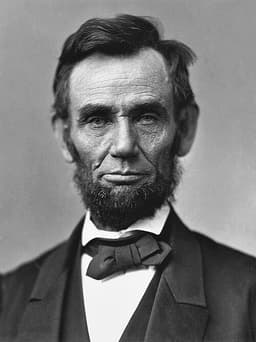
Abraham Lincoln
Politician · Modern
77.5Total
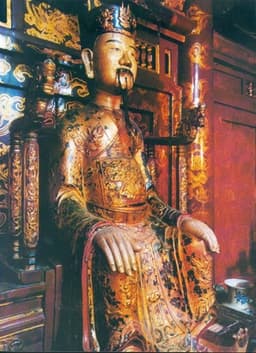
Dinh Tien Hoang
Emperor · Medieval
60.4Total
Basic Information
Born
1809
924
Died
1865
979
Era
Modern
Medieval
Nationality
United States
Vietnam
Occupation
Politician
Emperor
Civilization
Western
Eastern
Score Comparison
Military (10%)
50.0
60.0
Political (20%)
88.0
72.0
Influence (20%)
80.0
65.0
Legacy (20%)
82.0
40.0
Leadership (15%)
85.0
77.2
Strategy (15%)
60.0
58.0
TOTAL
77.5
60.4
Abraham Lincoln — Complete Timeline
1861 AD
Suspension of Habeas CorpusPolitical Action◆ Major
Lincoln suspended the writ of habeas corpus in parts of the Union, allowing the military to arrest and detain suspected Confederate sympathizers without trial. This action was controversial and challenged civil liberties during wartime.
Habeas CorpusCivil LibertiesCivil War
Impact: nationaldestructive
1862 AD
Signing of the Homestead ActPolitical Action◆ Major
Lincoln signed the Homestead Act, granting 160 acres of public land to settlers for a small fee. This encouraged westward expansion and agricultural development, but also displaced Native American tribes.
Homestead ActWestward ExpansionLand Policy
Impact: nationalconstructive
1863 AD
Emancipation ProclamationPolitical Action
Lincoln issued the Emancipation Proclamation, declaring slaves in Confederate states free. This shifted the Civil War's focus to ending slavery and allowed African Americans to join the Union Army.
EmancipationCivil WarSlavery
Impact: globalprogressive
Gettysburg AddressCultural◆ Major
Lincoln delivered the Gettysburg Address at the dedication of the Soldiers' National Cemetery. The speech redefined the Civil War as a struggle for national unity and equality, and became one of the most famous speeches in US history.
Gettysburg AddressCivil WarOratory
Impact: nationalconstructive
1865 AD
Assassination by John Wilkes BoothOther
Lincoln was shot by John Wilkes Booth at Ford's Theatre in Washington, D.C., and died the next day. His assassination occurred just days after the Civil War ended, plunging the nation into mourning and affecting Reconstruction.
AssassinationCivil WarReconstruction
Impact: nationaltragic
Dinh Tien Hoang — Complete Timeline
968 AD
Defeat of the Twelve WarlordsWar
Dinh Bo Linh, later known as Dinh Tien Hoang, unified Vietnam by defeating the Twelve Warlords who had divided the country after the collapse of Chinese rule. He established the Dinh dynasty and became the first emperor of an independent Vietnam.
UnificationDinh DynastyVietnamese Independence
Impact: nationalconstructive
Establishment of the Dinh DynastyPolitical Action◆ Major
Dinh Tien Hoang founded the Dinh dynasty and declared himself Emperor. He moved the capital to Hoa Lu and implemented administrative reforms to consolidate power. This marked the beginning of a new era of Vietnamese independence after centuries of Chinese domination.
Dynasty FoundingCapital MoveAdministrative Reform
Impact: nationalconstructive
979 AD
Assassination of Dinh Tien HoangPolitical Action◆ Major
Dinh Tien Hoang and his crown prince were assassinated by a court official while sleeping. The murder plunged the Dinh dynasty into chaos, leading to a succession crisis and eventual takeover by Le Hoan. The assassination ended the short-lived Dinh dynasty.
AssassinationSuccession CrisisEnd of Dinh Dynasty
Impact: nationaltragic
Expert Analysis
Dinh Tien Hoang vs Abraham Lincoln
# The Unlikely Emperor and the Reluctant Revolutionary
On a spring evening in 1865, Abraham Lincoln sat in a Washington theater, laughing at a comedy, unaware that a deranged actor was creeping toward him with a derringer. A continent away, a thousand years earlier, Emperor Dinh Tien Hoang lay sleeping in his palace at Hoa Lu, a fortress carved from limestone, when a court official slipped in with a blade. Both men died by assassination. Both were founders of nations. But the worlds they built—and the worlds that built them—could not have been more different. One rose from a log cabin to save a democratic experiment; the other rose from a village of rice paddies to forge a kingdom from chaos. What drove these two men, separated by centuries and civilizations, to such divergent destinies?
Origins
Lincoln was born in 1809, in a one-room cabin on the Kentucky frontier, to illiterate parents who scratched a living from the soil. His America was young, raw, and obsessed with the idea of liberty—even as it practiced the brutal reality of slavery. Lincoln’s education was fragmentary: a few months of school here, a borrowed book there. He read by firelight, teaching himself law, grammar, and Euclid. His mind was a forge where the contradictions of his age—freedom and bondage, union and secession—were hammered into sharp, moral clarity.
Dinh Tien Hoang was born in 924, in the Red River Delta of what is now northern Vietnam. His world was ancient, crowded, and scarred by a thousand years of Chinese domination. The region had been a province of the Middle Kingdom since the Han dynasty, its people forced to adopt Chinese customs, language, and governance. Dinh’s father was a local chief, a minor lord in a land of constant rebellion. The boy grew up among warriors, learning to ride and fight almost before he could walk. Legend says he once played at being emperor with village children, ordering them to bow—and beheading a water buffalo when they refused. It was a childhood that bred not reflection, but ruthlessness.
Rise to Power
Lincoln’s path was the slow, grinding ascent of a frontier politician. He served in the Illinois state legislature, then one term in Congress, then lost a Senate race to Stephen Douglas in 1858. But those debates with Douglas—broadcast across the nation—made him a national figure. In 1860, the Republican Party nominated him as a compromise candidate: a moderate from the West who could unite anti-slavery factions. He won the presidency with less than 40% of the popular vote. The South seceded before he even took the oath.
Dinh’s rise was forged in blood, not ballots. In the 960s, Vietnam had collapsed into chaos: twelve warlords, each controlling a patch of territory, fought for supremacy. Dinh Bo Linh—his given name—began as a minor chieftain. He raised an army, built a fortress, and methodically crushed his rivals one by one. By 968, he had unified the country. He declared himself Emperor Dinh Tien Hoang, moved his capital to Hoa Lu—a natural citadel of limestone cliffs and rivers—and set about building a state from the wreckage. There were no elections, no debates, no speeches. There was only the sword.
Leadership & Governance
Lincoln governed through crisis. The Civil War, which erupted in 1861, tested every limit of constitutional power. He suspended habeas corpus, allowing the military to arrest suspected Confederate sympathizers without trial—a move that horrified civil libertarians but was justified, he argued, by the existential threat to the Union. He signed the Homestead Act in 1862, giving 160 acres of public land to any settler willing to farm it, a stroke of genius that spurred westward expansion and tied the nation together. And in 1863, he issued the Emancipation Proclamation, declaring slaves in rebel states free. It was a military measure, a political gamble, and a moral earthquake. The war, he said, had become “a new birth of freedom.”
Dinh ruled through iron authority. He imposed a centralized administration on a land of fractious lords, creating a bureaucracy that collected taxes, raised armies, and enforced his will. He established the Dinh dynasty, the first truly independent Vietnamese kingdom after centuries of Chinese rule. But his governance was harsh. He executed rivals without mercy, demanded absolute loyalty, and treated his court as a battlefield. He built a palace, but he lived in a fortress. His legitimacy rested not on laws or elections, but on the naked fact of conquest.
Triumph & Tragedy
Lincoln’s greatest moment was the Gettysburg Address, delivered in November 1863 at the dedication of a cemetery for fallen soldiers. In 272 words, he redefined the war’s meaning: it was not merely a struggle to preserve the Union, but a test of whether any nation “conceived in Liberty, and dedicated to the proposition that all men are created equal” could long endure. The speech was poorly received that day, but it has become one of the most sacred texts of American democracy. His tragedy came two years later, in 1865, when a Confederate sympathizer shot him in a theater. He died just as the war ended, never seeing the Reconstruction he had planned.
Dinh’s triumph was the unification of Vietnam in 968. After decades of chaos, he brought peace to a shattered land. He declared himself Emperor, minted coins, and opened trade with China as an equal, not a vassal. But his tragedy was swift and sordid. In 979, while he and his crown prince lay asleep, a court official crept into their chamber and murdered them both. The assassin was reportedly a eunuch named Do Thich, who had been offended by a dream. The Dinh dynasty collapsed within months, plunging Vietnam back into civil war. Dinh’s empire lasted barely a decade.
Character & Destiny
Lincoln was a man of deep melancholy, prone to depression and dark dreams. He told jokes to distract himself, read Shakespeare to console himself, and wrote letters he never sent. He was ruthless when necessary—he suspended habeas corpus, fired generals, and pushed through the Thirteenth Amendment abolishing slavery—but he was also forgiving. His second inaugural address, delivered weeks before his death, called for “malice toward none” and “charity for all.” His character shaped his destiny: a man who could hold the Union together through sheer moral gravity, then die before he could see it through.
Dinh was a man of iron will and quick violence. He trusted no one, slept with guards, and ruled by fear. His character was shaped by the brutal world of tenth-century Vietnam, where mercy was weakness and loyalty was bought with blood. His destiny was equally brutal: he built a kingdom, but he could not secure it. His assassination was the logical end of a life lived by the sword.
Legacy
Lincoln’s legacy is global. He is remembered as the Great Emancipator, the savior of the Union, the voice of democracy in its darkest hour. His likeness is carved into Mount Rushmore, his words are recited in schools, his face is on the penny and the five-dollar bill. He is a secular saint, a symbol of the struggle for freedom.
Dinh’s legacy is local but profound. He is remembered as the first emperor of an independent Vietnam, the man who broke the Chinese yoke. His capital at Hoa Lu is a national pilgrimage site, and his statue stands in temples across the country. But his story is less known outside Vietnam, overshadowed by later dynasties and modern wars. He is a founder, but a tragic one: a man who unified a nation but could not pass it on.
Conclusion
Lincoln and Dinh both died by the assassin’s hand, but their lives could not have been more different. Lincoln built a nation through words, laws, and moral clarity; Dinh built one through war, fear, and iron will. One is remembered as a martyr for democracy, the other as a warrior-king of a small but stubborn land. Their stories remind us that history is not a single path, but a thousand forked roads—and that the men who walk them are shaped by the worlds they inherit, and the worlds they dare to remake.
Rankings
🥇
Abraham LincolnLeader
Mil: 50.0Pol: 88.0Inf: 80.0
77.5
🥈
Dinh Tien Hoang
Mil: 60.0Pol: 72.0Inf: 65.0
60.4
+17.1 behind
How This Comparison Works
Algorithm
Each figure is scored on 6 dimensions (0—100 scale) based on structured historical data: Military (10%), Political (20%), Influence (20%), Legacy (20%), Leadership (15%), Strategy (15%). The weighted total produces the final ranking.
Data Sources
Scores are computed from structured sub-indicators in the database. Scale factors adjust for era (Ancient ×0.85, Modern ×1.0) and civilization size (Eastern ×1.05, Other ×0.80) to account for differences in population and military scale.
Maximum 3 Figures
Comparisons are limited to 2—3 figures to ensure readability and statistical meaningfulness.
Error Margins
±5 points per dimension — Sub-scores are derived from historical records with inherent uncertainty. Two figures within 5 points on a dimension should be considered roughly equivalent in that area.
Total Score Accuracy
±3 points overall — The weighted combination of 6 dimensions produces a total score with approximately ±3 points of uncertainty. Differences of less than 3 points are not statistically significant— the figures are effectively tied.
Known Limitations
- Historical records are incomplete and uneven across civilizations
- Figures from oral-tradition societies may be underrepresented
- Occupation labels can misclassify multi-role figures
- Scores measure capability and impact, not moral character
- Quantitative scoring is a comparison tool, not absolute truth
Capability Radar
Military (10%) — Battles & Warfare
Battles
15
70
Win Rate
20
75
Expansion
0
65
Political (20%) — Governance & Reform
Reform
95
70
Diplomacy
80
65
Economy
70
60
Influence (20%) — Cultural & Global Reach
Cultural
85
65
Global
85
55
Legacy (20%) — Historical Impact
Historical
95
75
Longevity
90
70
Leadership (15%) — Power & Stability
Tenure
65
60
Stability
55
55
Strategy (15%) — Tactics & Innovation
Strategy
55
70
Tactics
10
65
Reform
60
60
Similar Comparisons
Comments & Discussion
THE_LINCOLN_STAN6/16/2026
Lincoln wasn't just a better statesman—he wrote his own speeches, while Dinh relied on court scholars for propaganda. Lincoln’s Gettysburg Address (272 words) reshaped a nation’s soul. Dinh’s “Great Unity” edicts? Just boilerplate Confucian fluff. The rail-splitter died for democracy; the emperor died in his pajamas. Checkmate.
凿石者6/16/2026
拿十世纪军阀和十九世纪总统比,纯属关公战秦琼。丁先皇靠屠杀十二使君统一越南,林肯用宪法裂缝维系联邦。一个是铁血马背王,一个是笔尖革命家。要我说,两人唯一的共同点就是死于背后捅刀——但林肯被戏剧演员干掉,丁先皇被小太监割喉,这格调差了几重天?
DATA_DETECTIVE6/16/2026
"Founders of nations"? Please. Lincoln preserved an existing union; Dinh conquered a fractured territory. Different metrics. Lincoln’s GDP per capita in 1860? ~$800 (in 1990 dollars). Dinh’s? We have zero reliable data—just court chronicles about "bumper crops." One man fought a civil war with rifles and railroads; the other used crossbows and bamboo spikes. Apples and durians.
历史杠精6/16/2026
说林肯没奴隶制革命性?丁先皇称帝后直接把佛教压成二等公民,强制僧侣还俗种地,这叫“治国”?林肯好歹从垃圾堆里捡出个《解放宣言》,丁先皇最多用酷吏收税。拿“统一”叙事洗白暴政的,建议重读《大越史记全书》——他1031年就因横征暴敛被骂成“禽兽之主”。