Loading...
Abraham Lincoln vs Empress Dowager Cixi
Abraham Lincoln leads by 22.5 pts · 2 figures compared
…
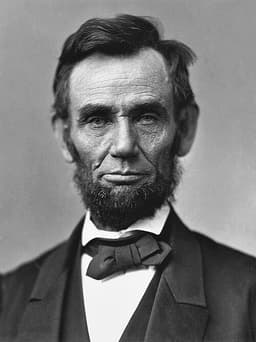
Abraham Lincoln
Politician · Modern
77.5Total
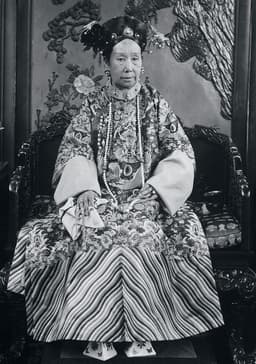
Empress Dowager Cixi
Politician · Modern
55.0Total
Basic Information
Born
1809
1835
Died
1865
1908
Era
Modern
Modern
Nationality
United States
China
Occupation
Politician
Politician
Civilization
Western
Eastern
Score Comparison
Military (10%)
50.0
25.9
Political (20%)
88.0
53.8
Influence (20%)
80.0
58.3
Legacy (20%)
82.0
52.0
Leadership (15%)
85.0
72.0
Strategy (15%)
60.0
60.0
TOTAL
77.5
55.0
Abraham Lincoln — Complete Timeline
1861 AD
Suspension of Habeas CorpusPolitical Action◆ Major
Lincoln suspended the writ of habeas corpus in parts of the Union, allowing the military to arrest and detain suspected Confederate sympathizers without trial. This action was controversial and challenged civil liberties during wartime.
Habeas CorpusCivil LibertiesCivil War
Impact: nationaldestructive
1862 AD
Signing of the Homestead ActPolitical Action◆ Major
Lincoln signed the Homestead Act, granting 160 acres of public land to settlers for a small fee. This encouraged westward expansion and agricultural development, but also displaced Native American tribes.
Homestead ActWestward ExpansionLand Policy
Impact: nationalconstructive
1863 AD
Emancipation ProclamationPolitical Action
Lincoln issued the Emancipation Proclamation, declaring slaves in Confederate states free. This shifted the Civil War's focus to ending slavery and allowed African Americans to join the Union Army.
EmancipationCivil WarSlavery
Impact: globalprogressive
Gettysburg AddressCultural◆ Major
Lincoln delivered the Gettysburg Address at the dedication of the Soldiers' National Cemetery. The speech redefined the Civil War as a struggle for national unity and equality, and became one of the most famous speeches in US history.
Gettysburg AddressCivil WarOratory
Impact: nationalconstructive
1865 AD
Assassination by John Wilkes BoothOther
Lincoln was shot by John Wilkes Booth at Ford's Theatre in Washington, D.C., and died the next day. His assassination occurred just days after the Civil War ended, plunging the nation into mourning and affecting Reconstruction.
AssassinationCivil WarReconstruction
Impact: nationaltragic
Empress Dowager Cixi — Complete Timeline
1861 AD
Self-Strengthening MovementReform◆ Major
Cixi supported the Self-Strengthening Movement, which modernized China's military and infrastructure. Arsenals, shipyards, and railways were built, and the Tongwen Guan language school was established. However, the movement avoided political reform, limiting its effectiveness.
Qing dynastyModernizationReform
Impact: nationalconstructive
Xinyou CoupPolitical Action
Cixi, with Prince Gong, staged a coup against the eight regents appointed by the dying Xianfeng Emperor. She had the regents arrested and executed, establishing herself as co-regent for the young Tongzhi Emperor. This began her effective control over the Qing government.
Qing dynastyCoupRegency
Impact: national
1898 AD
Hundred Days' Reform CoupPolitical Action◆ Major
Cixi staged a coup to end the Hundred Days' Reform, a series of modernization edicts by the Guangxu Emperor. She imprisoned the emperor, executed six reform leaders, and rescinded most reforms. This reversed political liberalization and strengthened conservative forces.
Qing dynastyReform suppressionCoup
Impact: nationaldestructive
1900 AD
Boxer RebellionWar◆ Major
Cixi declared war on eight foreign powers after the Boxers besieged foreign legations in Beijing. The Eight-Nation Alliance invaded, defeated Qing forces, and occupied Beijing. Cixi fled to Xi'an. The resulting Boxer Protocol imposed heavy reparations and further weakened the Qing.
Qing dynastyForeign interventionWar
Impact: globaldestructive
1901 AD
Late Qing ReformsReform◆ Major
After the Boxer Rebellion, Cixi initiated the Late Qing Reforms, including abolition of the civil service examination, establishment of modern schools, and military modernization. These reforms aimed to strengthen the dynasty but came too late to prevent its collapse.
Qing dynastyModernizationReform
Impact: nationalconstructive
Expert Analysis
Abraham Lincoln vs Empress Dowager Cixi
# The Iron Hand and the Steady Heart
On a September morning in 1861, two leaders on opposite sides of the world faced moments that would define their nations for generations. In Beijing, a thirty-five-year-old former concubine named Cixi staged a daring palace coup, seizing control of the Qing dynasty from eight regents who had underestimated her. Half a world away in Washington, a gaunt, melancholy lawyer named Abraham Lincoln had just taken the oath of office for the presidency, inheriting a nation already tearing itself apart. Neither could have known that their names would become synonymous with the very different paths their countries would take through the modern age.
Origins
Cixi was born into a Manchu family of modest rank in 1835, a time when the Qing dynasty was already showing cracks from foreign pressures and internal rebellions. She entered the Forbidden City as a low-ranking concubine, one of hundreds of women whose lives were circumscribed by ritual and hierarchy. Yet she possessed an extraordinary memory for court protocol, a gift for reading people, and a ruthless pragmatism that would serve her well. The China of her youth was a civilization under siege, humiliated by the Opium Wars and forced to confront its own fragility.
Lincoln, born in 1809 in a Kentucky log cabin, grew up in a very different kind of frontier. His America was raw, expanding, and fiercely democratic in aspiration if not in practice. He educated himself by firelight, reading Shakespeare and the Bible alongside law books. Where Cixi learned to navigate the invisible currents of imperial power, Lincoln learned to argue cases before rough frontier juries and to articulate moral principles in language that ordinary people could understand.
Rise to Power
Cixi’s path to power was a masterclass in patience and cunning. When the Xianfeng Emperor died in 1861, she was the mother of his only son, a child of five. The eight regents appointed to govern during the boy’s minority assumed she would remain a figurehead. Instead, Cixi forged an alliance with Prince Gong, a half-brother of the late emperor, and in the Xinyou Coup of 1861, she had the regents arrested and executed. She understood something they did not: in an autocracy, proximity to the throne is power, and she would never let it slip away.
Lincoln’s rise was more public and more precarious. He lost elections for the Illinois legislature, for Congress, for the Senate. He was a one-term congressman whose opposition to the Mexican-American War nearly ended his political career. Yet he kept speaking, kept arguing, kept refining his positions on slavery and union. In 1860, he won the Republican nomination not because he was the most popular candidate, but because he was the least offensive to the most factions. He would later say, “I am not bound to win, but I am bound to be true.”
Leadership & Governance
As rulers, Cixi and Lincoln could not have been more different. Cixi governed through manipulation, patronage, and fear. She supported the Self-Strengthening Movement after 1861, building arsenals and shipyards, modernizing the military, and inviting Western experts to train Chinese troops. She understood that China needed to borrow foreign technology to survive. But when the young Guangxu Emperor attempted genuine political reform in 1898, issuing a series of modernizing edicts that threatened her power, Cixi struck. She staged a coup, imprisoned the emperor in his own palace, and reversed his reforms. For her, modernization was a tool, not a principle.
Lincoln governed through persuasion, patience, and moral clarity. He suspended habeas corpus to suppress dissent, a controversial act that expanded executive power. But he also signed the Homestead Act in 1862, opening the West to settlers, and the Emancipation Proclamation in 1863, which declared slaves in Confederate states free. Where Cixi centralized power to protect herself, Lincoln centralized power to preserve a Union he believed was the world’s last best hope for democracy. He did not micromanage his generals; he found ones who understood his strategic vision and gave them room to execute it.
Triumph & Tragedy
Cixi’s greatest triumph was survival itself. She outlasted emperors, regents, reformers, and foreign invasions. She navigated the Taiping Rebellion, the Sino-French War, and the Sino-Japanese War. But the Boxer Rebellion of 1900 was her greatest miscalculation. Believing the Boxers could drive out foreigners, she declared war on eight foreign powers. The Eight-Nation Alliance crushed the rebellion, marched into Beijing, and forced the imperial court to flee. Cixi returned to sign a humiliating peace treaty and then, belatedly, initiated the Late Qing Reforms, abolishing the civil service examination and attempting to modernize the legal system. It was too little, too late.
Lincoln’s triumph came at Gettysburg in November 1863, when he delivered a speech of 272 words that redefined the meaning of the Civil War. The war was no longer just about preserving the Union, he said; it was about whether a nation “conceived in Liberty, and dedicated to the proposition that all men are created equal” could long endure. His tragedy came just days after his greatest victory. On April 14, 1865, as the war was ending, John Wilkes Booth shot him in Ford’s Theatre. Lincoln died the next morning, never seeing the full fruits of his labor.
Character & Destiny
Cixi was a creature of the Forbidden City, shaped by its intrigues and its isolation. She trusted no one completely and forgave no one who crossed her. Her decisions were driven by a single overriding instinct: self-preservation. This made her cautious when boldness was needed, and reckless when caution would have served her better. She modernized China’s hardware but refused to modernize its software—the political and social institutions that might have saved the dynasty.
Lincoln was a man of profound melancholy, given to dark moods and long silences. He carried the weight of the war on his shoulders, visiting hospitals, reading casualty lists, and writing letters to grieving mothers. His decisions were driven by a deep moral conviction that slavery was wrong, balanced by a pragmatic understanding of what was politically possible. He once said, “I am a slow walker, but I never walk back.”
Legacy
Cixi’s legacy is deeply ambiguous. She is remembered as both a formidable ruler who held the empire together and as a reactionary whose refusal to embrace genuine reform doomed the Qing dynasty. Her political score of 67.2 reflects her skill at maintaining power, but her military score of 34.8 and strategy score of 49.6 reveal her limitations. She left behind a China that was weaker and more vulnerable than the one she inherited.
Lincoln’s legacy is more straightforward, though no less complex. He preserved the Union, ended slavery, and redefined American democracy. His political score of 88.0, leadership score of 85.0, and legacy score of 80.0 place him among the greatest leaders in history. But his legacy also includes the expansion of executive power and the suspension of civil liberties in wartime, questions that continue to haunt American democracy.
Conclusion
Cixi and Lincoln both ruled during times of profound transformation, both faced existential threats to their nations, and both wielded extraordinary power. Yet one is remembered as a tyrant who failed to save her dynasty, the other as a martyr who saved his nation. The difference lies not in their intelligence or their ambition, but in their vision. Lincoln saw the future and tried to lead his people toward it. Cixi saw the future and tried to hold it back. In the end, that choice—to embrace change or to resist it—determined not only their legacies but the fates of the nations they led.
Rankings
🥇
Abraham LincolnLeader
Mil: 50.0Pol: 88.0Inf: 80.0
77.5
🥈
Empress Dowager Cixi
Mil: 25.9Pol: 53.8Inf: 58.3
55.0
+22.5 behind
How This Comparison Works
Algorithm
Each figure is scored on 6 dimensions (0—100 scale) based on structured historical data: Military (10%), Political (20%), Influence (20%), Legacy (20%), Leadership (15%), Strategy (15%). The weighted total produces the final ranking.
Data Sources
Scores are computed from structured sub-indicators in the database. Scale factors adjust for era (Ancient ×0.85, Modern ×1.0) and civilization size (Eastern ×1.05, Other ×0.80) to account for differences in population and military scale.
Maximum 3 Figures
Comparisons are limited to 2—3 figures to ensure readability and statistical meaningfulness.
Error Margins
±5 points per dimension — Sub-scores are derived from historical records with inherent uncertainty. Two figures within 5 points on a dimension should be considered roughly equivalent in that area.
Total Score Accuracy
±3 points overall — The weighted combination of 6 dimensions produces a total score with approximately ±3 points of uncertainty. Differences of less than 3 points are not statistically significant— the figures are effectively tied.
Known Limitations
- Historical records are incomplete and uneven across civilizations
- Figures from oral-tradition societies may be underrepresented
- Occupation labels can misclassify multi-role figures
- Scores measure capability and impact, not moral character
- Quantitative scoring is a comparison tool, not absolute truth
Capability Radar
Military (10%) — Battles & Warfare
Battles
15
30
Win Rate
20
25
Expansion
0
15
Political (20%) — Governance & Reform
Reform
95
65
Diplomacy
80
60
Economy
70
50
Influence (20%) — Cultural & Global Reach
Cultural
85
60
Global
85
60
Legacy (20%) — Historical Impact
Historical
95
75
Longevity
90
55
Leadership (15%) — Power & Stability
Tenure
65
85
Stability
55
40
Strategy (15%) — Tactics & Innovation
Strategy
55
55
Tactics
10
40
Reform
60
70
Similar Comparisons
Comments & Discussion
数字烟斗6/16/2026
作为数据怀疑论者,我得泼点冷水。拿个体领导力对比两个完全不同的体系,根本是伪命题。美国内战时期北方工业产值是南方的9倍,林肯的铁轨网络比大清的电报线还多——他背后有资本和动员机器。慈禧呢?她操纵的是一台腐朽的官僚齿轮机,靠的是宫廷密谋和海战败后苟延残喘。拿1861年两人处境"对称"?别被叙事骗了。结构性差异碾压所谓"领袖对决"。
古典学者姜6/16/2026
别被西方中心论带偏了。慈禧的权力合法性与林肯完全不同——她是通过宗法制度和"垂帘听政"维系统治,这在中国帝制晚期是常态。但她的对手不是南方分离主义,而是太平天国运动(死亡2000万+)和列强瓜分狂潮。林肯守的是联邦法律,慈禧守的是文明存续。两个人都面临体制崩溃节点,只是解题思路不同——一个打内战,一个打太极。没有高下,只有语境。
Cracker Jack6/16/2026
As a classical liberal, I see only one victor here. Lincoln preserved the Union and ended chattel slavery—a moral and constitutional achievement. Cixi propped up a dynasty that had already lost its mandate, crushed reform (see the Hundred Days' Reform, 1898), and left China weaker. Lincoln died a martyr; Cixi died in her sleep after decades of mismanagement. The comparison isn't about "different styles"—it's about which leader left their country better off. That answer is painfully obvious.
博古通今6/16/2026
别太二元了。两人都是高度实用主义的统治者。林肯为了战时统一,暂停人身保护令、关押上万反对者,这算"道德完美"?慈禧在庚子之乱前也搞过洋务运动——江南制造局、北洋水师,哪样不是她支持?区别在于地缘位置:林肯可以关门打内战,慈禧要同时对付内乱(捻军、回乱)和八国联军。换个角度看,两人都在用铁腕维持"秩序"——只是林肯的对手是叛军,慈禧的对手是时间。历史从不给输家写颂歌
Historian9906/16/2026
As a military historian, I find the comparison lopsided. Lincoln faced the defining crisis of the Civil War—a conflict that killed 2% of the U.S. population and involved 10,000 battles. Cixi's "coup" was a palace intrigue with zero battlefield deaths. She never commanded an army in the field; Lincoln personally studied telegraph reports, fired generals, and signed the Emancipation Proclamation as a war measure. One led through blood and iron; the other through eunuchs and edicts. Apples and hand