Loading...
Abraham Lincoln vs Lord Dalhousie
Abraham Lincoln leads by 19.1 pts · 2 figures compared
…
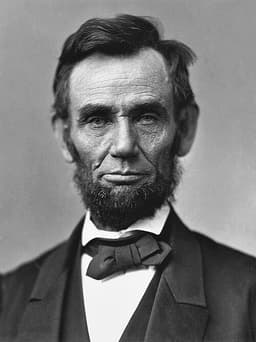
Abraham Lincoln
Politician · Modern
77.5Total
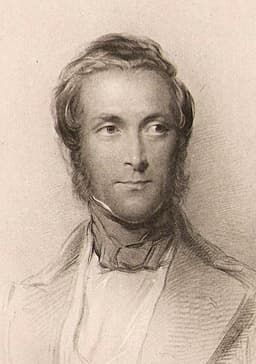
Lord Dalhousie
Politician · Modern
58.4Total
Basic Information
Born
1809
1812
Died
1865
1860
Era
Modern
Modern
Nationality
United States
United Kingdom
Occupation
Politician
Politician
Civilization
Western
Western
Score Comparison
Military (10%)
50.0
40.0
Political (20%)
88.0
60.0
Influence (20%)
80.0
58.3
Legacy (20%)
82.0
55.0
Leadership (15%)
85.0
74.0
Strategy (15%)
60.0
60.0
TOTAL
77.5
58.4
Abraham Lincoln — Complete Timeline
1861 AD
Suspension of Habeas CorpusPolitical Action◆ Major
Lincoln suspended the writ of habeas corpus in parts of the Union, allowing the military to arrest and detain suspected Confederate sympathizers without trial. This action was controversial and challenged civil liberties during wartime.
Habeas CorpusCivil LibertiesCivil War
Impact: nationaldestructive
1862 AD
Signing of the Homestead ActPolitical Action◆ Major
Lincoln signed the Homestead Act, granting 160 acres of public land to settlers for a small fee. This encouraged westward expansion and agricultural development, but also displaced Native American tribes.
Homestead ActWestward ExpansionLand Policy
Impact: nationalconstructive
1863 AD
Emancipation ProclamationPolitical Action
Lincoln issued the Emancipation Proclamation, declaring slaves in Confederate states free. This shifted the Civil War's focus to ending slavery and allowed African Americans to join the Union Army.
EmancipationCivil WarSlavery
Impact: globalprogressive
Gettysburg AddressCultural◆ Major
Lincoln delivered the Gettysburg Address at the dedication of the Soldiers' National Cemetery. The speech redefined the Civil War as a struggle for national unity and equality, and became one of the most famous speeches in US history.
Gettysburg AddressCivil WarOratory
Impact: nationalconstructive
1865 AD
Assassination by John Wilkes BoothOther
Lincoln was shot by John Wilkes Booth at Ford's Theatre in Washington, D.C., and died the next day. His assassination occurred just days after the Civil War ended, plunging the nation into mourning and affecting Reconstruction.
AssassinationCivil WarReconstruction
Impact: nationaltragic
Lord Dalhousie — Complete Timeline
1848 AD
Second Anglo-Sikh WarWar◆ Major
Dalhousie oversaw the Second Anglo-Sikh War in 1848-1849, which resulted in the British annexation of the Punjab. The Sikh army was defeated at the Battle of Gujrat, and the Treaty of Lahore in 1849 formally annexed the region, ending Sikh sovereignty and extending British rule to the northwest frontier.
Anglo-Sikh WarAnnexationPunjab
Impact: regional
Doctrine of LapsePolitical Action
Lord Dalhousie, as Governor-General of India, implemented the Doctrine of Lapse, a policy that allowed the British to annex any princely state where the ruler died without a natural heir. This policy led to the annexation of states like Satara, Jhansi, and Nagpur, causing widespread resentment among Indian rulers and contributing to the 1857 Rebellion.
AnnexationPolicy1857 Rebellion
Impact: regionaldestructive
1853 AD
Railway and Telegraph ExpansionInvention◆ Major
Dalhousie championed the development of railways and telegraphs in India. The first railway line from Bombay to Thane opened in 1853, and a telegraph network was established connecting major cities. These projects aimed to improve communication, trade, and military control, laying the foundation for India's modern infrastructure.
InfrastructureRailwayTelegraph
Impact: regionalconstructive
1856 AD
Annexation of AwadhPolitical Action◆ Major
Dalhousie annexed the Kingdom of Awadh in 1856 under the pretext of misgovernment. The annexation was highly controversial and deeply resented by the local population and nobility. It became a major cause of the 1857 Indian Rebellion, as Awadh's soldiers and landlords joined the uprising against British rule.
AnnexationAwadh1857 Rebellion
Impact: regionaldestructive
Expert Analysis
Abraham Lincoln vs Lord Dalhousie
# The Great Divider and the Great Unifier
On an April evening in 1865, a single bullet from John Wilkes Booth’s derringer ended Abraham Lincoln’s life at Ford’s Theatre, plunging a victorious Union into mourning. Just nine years earlier, in February 1856, Lord Dalhousie sailed from India for England, leaving behind a subcontinent seething with resentment that would erupt into the Great Rebellion of 1857. One man died at the pinnacle of his achievement; the other retreated as the storm he had cultivated gathered on the horizon. Both were architects of empire—one of a nation preserved, the other of a dominion shattered. What drove such different outcomes from men who wielded power in the same century?
Origins
Abraham Lincoln was born in 1809 into a log cabin in Hardin County, Kentucky, to illiterate farmers. His mother died when he was nine, and his father remarried a woman who encouraged young Abraham’s hunger for learning. With fewer than twelve months of formal schooling, Lincoln educated himself by firelight, devouring the Bible, Shakespeare, and Blackstone’s *Commentaries*. His world was one of frontier scarcity, where a man’s word and his ax were his only capital.
James Andrew Broun-Ramsay, the 10th Earl of Dalhousie, was born in 1812 at Dalhousie Castle in Scotland, heir to a noble lineage. Educated at Harrow and Christ Church, Oxford, he moved through the corridors of British power with the ease of inherited privilege. His father had served as Governor-General of Canada; the son was groomed for imperial command from birth. Where Lincoln learned self-reliance from poverty, Dalhousie learned the art of governance from aristocracy. The American frontier and the Scottish estate produced two radically different temperaments: one pragmatic and patient, the other imperious and systematic.
Rise to Power
Lincoln’s ascent was a study in persistence. He lost his first bid for the Illinois legislature in 1832, then won a seat two years later. He served a single term in Congress, then retreated from politics for five years after his opposition to the Mexican-American War proved unpopular. His 1858 Senate campaign against Stephen Douglas ended in defeat, yet the Lincoln-Douglas debates made him a national figure. When the Republican Party nominated him in 1860, he was a dark horse candidate—a backwoods lawyer with no executive experience. His rise was accidental, driven by the fracturing of American politics over slavery.
Dalhousie’s path was deliberate and swift. Appointed President of the Board of Trade in 1845 at age thirty-three, he impressed the Prime Minister with his administrative zeal. In 1848, at just thirty-six, he became the youngest Governor-General of India. He arrived in Calcutta with a blueprint for modernization already in his mind. Where Lincoln stumbled into history, Dalhousie strode into it—confident, methodical, and utterly certain of his mission.
Leadership & Governance
Lincoln governed through moral clarity and political cunning. The suspension of habeas corpus in 1861 was a controversial wartime measure, allowing the military to detain suspected Confederate sympathizers without trial. He justified it as necessary for survival, but it revealed a willingness to stretch constitutional limits. The Emancipation Proclamation of 1863 was a masterstroke: it declared slaves in rebel states free, transforming the Civil War into a moral crusade without immediately disrupting the loyal border states. Lincoln’s military score of 50 reflects his lack of battlefield command, but his strategic score of 65 captures how he learned from generals like Grant and Sherman, insisting on total war against the Confederacy’s will to resist.
Dalhousie governed through efficiency and ruthlessness. The Doctrine of Lapse, announced in 1848, allowed the British to annex any Indian princely state whose ruler died without a natural heir. Over seven years, he annexed seven states, including Satara, Jhansi, and Nagpur. The Second Anglo-Sikh War in 1848-1849 brought the Punjab under British control. In 1856, he annexed the wealthy Kingdom of Awadh on the pretext of misgovernment, ignoring treaties of protection. His railway and telegraph expansion—the first line from Bombay to Thane opened in 1853—was visionary, binding India economically. But his political score of 72, lower than Lincoln’s 88, reflects a fatal blind spot: he saw annexation as administrative tidiness, not as the humiliation of entire peoples.
Triumph & Tragedy
Lincoln’s greatest moment came on November 19, 1863, at Gettysburg. In just 272 words, he redefined the nation’s purpose: “that this nation, under God, shall have a new birth of freedom—and that government of the people, by the people, for the people, shall not perish from the earth.” The speech was delivered over a battlefield where 50,000 men had fallen. It was not just rhetoric; it was a covenant. His assassination in 1865, just days after the Confederate surrender, transformed him into a martyr. But the tragedy was that he did not live to oversee Reconstruction—the unfinished work he had called for.
Dalhousie’s triumph was the rapid modernization of India’s infrastructure. By 1856, India had over 200 miles of railway and a growing telegraph network that would later prove crucial for British control. Yet his tragedy was the rebellion he unwittingly spawned. The annexation of Awadh displaced its nobility and sepoys—Indian soldiers in the British army—who saw their homeland swallowed. When the 1857 Rebellion erupted, many of these grievances exploded into violence. Dalhousie had left India in 1856, but his policies were the powder keg. His legacy score of 55, far below Lincoln’s 80, reflects a man who built railways to nowhere but rebellion.
Character & Destiny
Lincoln’s personality was shaped by melancholy and humility. He suffered from bouts of depression, which he called “the hypo,” and found solace in humor and storytelling. He surrounded himself with rivals—Seward, Chase, Stanton—turning enemies into cabinet members. He listened, waited, and acted when the moment was right. The Emancipation Proclamation was delayed until a battlefield victory at Antietam gave it political cover. His leadership score of 85 reflects this patience; he bent the arc of history without breaking the nation.
Dalhousie was driven by order and ambition. He worked eighteen-hour days, dictating dispatches until his health collapsed. He believed that British rule was a civilizing force and that Indian princes were obstacles to progress. He did not listen to Indian voices; he dismissed warnings about the Doctrine of Lapse as native superstition. His strategy score of 70 was high, but his military score of 10 reveals a man who never commanded troops, only policies. Where Lincoln adapted, Dalhousie imposed. Where Lincoln sought to heal a divided nation, Dalhousie sought to remake a foreign one in Britain’s image.
Legacy
Lincoln is remembered as the Great Emancipator, the preserver of the Union, the author of the Gettysburg Address. His face adorns Mount Rushmore and the penny. His influence score of 78 and legacy score of 80 place him among the most consequential figures in Western history. Every struggle for civil rights in America has invoked his name.
Dalhousie is remembered as the architect of British India’s expansion and the inadvertent cause of the 1857 Rebellion. His name survives in Dalhousie, a hill station in Himachal Pradesh, but his reputation is contested. Indian historians see him as a destroyer of native sovereignty; British historians credit him with modernization. His influence score of 70.2 is respectable, but his legacy score of 55 suggests a figure more studied than revered.
Conclusion
The difference between Lincoln and Dalhousie is not in their goals—both sought to consolidate power and expand freedom, as they defined it—but in their understanding of the people they governed. Lincoln, born in a log cabin, never forgot that governance required consent. Dalhousie, born in a castle, believed governance required control. One preserved a union by freeing the enslaved; the other provoked a rebellion by dispossessing the proud. In the end, the bullet that killed Lincoln made him immortal. The rebellion that followed Dalhousie made him a cautionary tale. Both men reshaped the modern world, but only one understood that power without empathy is a house built on sand.
Rankings
🥇
Abraham LincolnLeader
Mil: 50.0Pol: 88.0Inf: 80.0
77.5
🥈
Lord Dalhousie
Mil: 40.0Pol: 60.0Inf: 58.3
58.4
+19.1 behind
How This Comparison Works
Algorithm
Each figure is scored on 6 dimensions (0—100 scale) based on structured historical data: Military (10%), Political (20%), Influence (20%), Legacy (20%), Leadership (15%), Strategy (15%). The weighted total produces the final ranking.
Data Sources
Scores are computed from structured sub-indicators in the database. Scale factors adjust for era (Ancient ×0.85, Modern ×1.0) and civilization size (Eastern ×1.05, Other ×0.80) to account for differences in population and military scale.
Maximum 3 Figures
Comparisons are limited to 2—3 figures to ensure readability and statistical meaningfulness.
Error Margins
±5 points per dimension — Sub-scores are derived from historical records with inherent uncertainty. Two figures within 5 points on a dimension should be considered roughly equivalent in that area.
Total Score Accuracy
±3 points overall — The weighted combination of 6 dimensions produces a total score with approximately ±3 points of uncertainty. Differences of less than 3 points are not statistically significant— the figures are effectively tied.
Known Limitations
- Historical records are incomplete and uneven across civilizations
- Figures from oral-tradition societies may be underrepresented
- Occupation labels can misclassify multi-role figures
- Scores measure capability and impact, not moral character
- Quantitative scoring is a comparison tool, not absolute truth
Capability Radar
Military (10%) — Battles & Warfare
Battles
15
20
Win Rate
20
30
Expansion
0
85
Political (20%) — Governance & Reform
Reform
95
75
Diplomacy
80
55
Economy
70
65
Influence (20%) — Cultural & Global Reach
Cultural
85
40
Global
85
70
Legacy (20%) — Historical Impact
Historical
95
75
Longevity
90
60
Leadership (15%) — Power & Stability
Tenure
65
70
Stability
55
20
Strategy (15%) — Tactics & Innovation
Strategy
55
60
Tactics
10
15
Reform
60
40
Similar Comparisons
Comments & Discussion
RailSplitter766/16/2026
Lincoln's log-cabin-to-White House story is pure romantic myth. Let's be real—he was a corporate lawyer for railroads before politics, cozying up to industrialists who bankrolled his campaigns. Dalhousie at least admitted he was an imperial enforcer; Lincoln wrapped his centralization of federal power in "union" and "freedom" while suspending habeas corpus and deporting Native Americans systematically. Give me an honest tyrant over a hypocritical one any day.
历史拆弹手6/16/2026
数据不会撒谎。林肯统领全美时,战时预算膨胀近十倍,北方工业产值翻倍,而南方陷入全面崩溃。达尔豪西呢?他在印度大修铁路、电报和运河,1870年印度铁路里程从零飙升至4000英里。两人都搞了大基建,但林肯烧钱打内战,达尔豪西借钱建基础设施。一个花了4年搞破坏,一个花了8年搞建设。你说谁是真正的"统一者"?
Dalhousie's Ghost6/16/2026
Revisionists love to whitewash Lincoln, but here's the truth Dalhousie-haters ignore: both men were architects of ruthless consolidation. The difference? Dalhousie's Doctrine of Lapse absorbed princely states by "legal" trickery, annexing Satara (1848) and Jhansi (1854) through manufactured heir failures. Lincoln used the Emancipation Proclamation to seize Confederate property and destroy a way of life. Same game, different continents. At least Dalhousie was honest about being a imperialist.
古典汉学通6/16/2026
拿林肯和达尔豪西比,是对历史语境的无知。林肯身处19世纪民族国家构建浪潮中,他的"统一"是回应美国自身的分裂危机,是内政问题。而达尔豪西身处大英帝国扩张末期,他"统一"印度是殖民征服,外在强加。一个是民主斗士在宪政框架内作战,一个是贵族总督在枪炮下推行改革。把两者等同,等于说拿破仑和曹操都是扩张主义者——技术上没错,但完全忽略了历史脉络和道德差异。
History's Foreman6/16/2026
People forget: Lincoln was an undeniably great empathizer—he'd weep over a soldier's letter to his mother. Dalhousie? The man wrote that annexing Oudh was "an act of justice" and bragged about his reforms increasing British revenue. Lincoln died beloved, Dalhousie returned to England a pariah blamed for the Mutiny. Charisma matters. Data can't measure the human connection Lincoln built with a nation—that's why we still debate him, while Dalhousie gathers dust in footnotes.