Loading...
George Washington vs Napoleon Bonaparte
George Washington leads by 5.9 pts · 2 figures compared
…
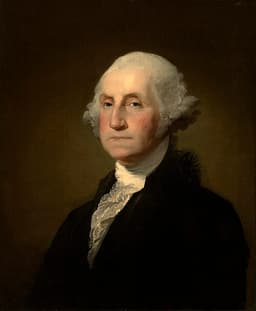
George Washington
Politician · Modern
76.8Total

Napoleon Bonaparte
General · Modern
70.9Total
Basic Information
Born
1732
1769
Died
1799
1821
Era
Modern
Modern
Nationality
United States
France
Occupation
Politician
General
Civilization
Western
Western
Score Comparison
Military (10%)
75.0
94.0
Political (20%)
82.0
72.0
Influence (20%)
75.0
40.0
Legacy (20%)
80.0
80.0
Leadership (15%)
85.0
78.0
Strategy (15%)
55.0
90.0
TOTAL
76.8
70.9
George Washington — Complete Timeline
1775 AD
Appointed Commander-in-Chief of the Continental ArmyOther◆ Major
The Second Continental Congress appointed Washington as commander-in-chief of the Continental Army on June 15, 1775. He accepted the position without pay, taking command of the forces besieging Boston at the start of the American Revolutionary War.
American RevolutionMilitary Leadership
Impact: national
1776 AD
Crossed the Delaware RiverOther◆ Major
On the night of December 25-26, 1776, Washington led 2,400 troops across the ice-choked Delaware River. The surprise attack on Hessian forces at Trenton resulted in a decisive American victory, capturing nearly 1,000 prisoners and reviving Patriot morale after a series of defeats.
American RevolutionBattleTurning Point
Impact: nationalconstructive
1787 AD
Presided over the Constitutional ConventionPolitical Action◆ Major
Washington served as president of the Constitutional Convention in Philadelphia from May to September 1787. His presence lent legitimacy to the proceedings, and he formally signed the final draft of the U.S. Constitution, though he contributed little to the debates.
ConstitutionFounding Father
Impact: national
1789 AD
Inaugurated as First President of the United StatesPolitical Action◆ Major
Washington was unanimously elected by the Electoral College and inaugurated on April 30, 1789, at Federal Hall in New York City. He established numerous executive branch precedents, including the cabinet system, the inaugural address, and the title 'Mr. President'.
PresidencyFounding Father
Impact: national
1793 AD
Issued the Proclamation of NeutralityOther◆ Major
Washington issued the Proclamation of Neutrality on April 22, 1793, declaring the United States neutral in the conflict between France and Great Britain. This decision established the precedent of American isolationism and avoided entanglement in European wars.
Foreign PolicyNeutrality
Impact: national
1796 AD
Delivered the Farewell AddressOther◆ Major
Washington published his Farewell Address on September 19, 1796, announcing his decision not to seek a third term. The address warned against political factionalism, permanent foreign alliances, and the influence of the military in government, shaping American political culture.
PresidencyLegacy
Impact: national
Napoleon Bonaparte — Complete Timeline
1799 AD
Coup of 18 BrumaireOther◆ Major
Napoleon Bonaparte, with support from his brother Lucien and key political figures, overthrew the Directory in a bloodless coup. He established the Consulate with himself as First Consul, effectively becoming the ruler of France. This event ended the French Revolution's most unstable period.
French RevolutionCoupRise to Power
Impact: regional
1804 AD
Promulgation of the Napoleonic CodeOther◆ Major
Napoleon enacted the Civil Code of the French, known as the Napoleonic Code, a comprehensive set of laws that replaced the fragmented feudal legal systems. The code established legal equality, protected property rights, and secularized law. It became the basis for legal systems in many European and world countries.
Legal ReformNapoleonic CodeCivil Law
Impact: globalconstructive
1805 AD
Battle of AusterlitzWar◆ Major
Napoleon's Grande Arm
Napoleonic WarsBattleDecisive Victory
Impact: global
1812 AD
Invasion of RussiaWar◆ Major
Napoleon led the Grande Arm
Napoleonic WarsInvasionDisaster
Impact: globaldestructive
1815 AD
Battle of WaterlooWar◆ Major
Napoleon's French army was defeated by the combined forces of the Duke of Wellington's Anglo-Allied army and Gebhard Leberecht von Bl
Napoleonic WarsBattleFinal Defeat
Impact: globaldestructive
Expert Analysis
George Washington vs Napoleon Bonaparte: Historical Comparison
George Washington and Napoleon Bonaparte were both transformative figures of the late 18th and early 19th centuries, yet they embodied vastly different models of leadership—Washington as a reluctant statesman who founded a republic, Napoleon as an ambitious general who built an empire.
Dimension Analysis
**Military: George Washington 70 / Napoleon Bonaparte 94**
Washington excelled at strategic retreat and holding the Continental Army together, but Napoleon revolutionized warfare with mass conscription, rapid maneuvering, and decisive battles like Austerlitz.
**Political: George Washington 80 / Napoleon Bonaparte 75**
Washington established democratic precedents (two-term limit, civilian control) and unified a fragile republic, while Napoleon centralized power, created the Napoleonic Code, but ultimately crowned himself Emperor and eroded republican institutions.
**Influence: George Washington 72 / Napoleon Bonaparte 82**
Washington’s model of republican virtue shaped the American presidency and inspired anti-colonial movements, but Napoleon’s legal reforms, nationalism, and military tactics directly influenced Europe and the Americas for a century.
**Legacy: George Washington 78 / Napoleon Bonaparte 78**
Both are revered as national founders, though Washington’s legacy is more stable (American democracy) while Napoleon’s is deeply contested (modernizer vs. tyrant).
**Leadership: George Washington 78 / Napoleon Bonaparte 80**
Washington led through patience, integrity, and delegation; Napoleon through charisma, genius, and iron will—both inspired intense loyalty, but Napoleon’s hubris led to downfall.
Verdict
Napoleon Bonaparte leads overall due to his superior military and strategic scores, outweighing Washington’s political edge.
FAQ
Q: Who ranks higher? A: Napoleon Bonaparte ranks higher (82 vs. 74) due to his revolutionary military campaigns and broader global influence, though Washington remains peerless in founding democratic governance.
Rankings
🥇
George WashingtonLeader
Mil: 75.0Pol: 82.0Inf: 75.0
76.8
🥈
Napoleon Bonaparte
Mil: 94.0Pol: 72.0Inf: 40.0
70.9
+5.9 behind
How This Comparison Works
Algorithm
Each figure is scored on 6 dimensions (0—100 scale) based on structured historical data: Military (10%), Political (20%), Influence (20%), Legacy (20%), Leadership (15%), Strategy (15%). The weighted total produces the final ranking.
Data Sources
Scores are computed from structured sub-indicators in the database. Scale factors adjust for era (Ancient ×0.85, Modern ×1.0) and civilization size (Eastern ×1.05, Other ×0.80) to account for differences in population and military scale.
Maximum 3 Figures
Comparisons are limited to 2—3 figures to ensure readability and statistical meaningfulness.
Error Margins
±5 points per dimension — Sub-scores are derived from historical records with inherent uncertainty. Two figures within 5 points on a dimension should be considered roughly equivalent in that area.
Total Score Accuracy
±3 points overall — The weighted combination of 6 dimensions produces a total score with approximately ±3 points of uncertainty. Differences of less than 3 points are not statistically significant— the figures are effectively tied.
Known Limitations
- Historical records are incomplete and uneven across civilizations
- Figures from oral-tradition societies may be underrepresented
- Occupation labels can misclassify multi-role figures
- Scores measure capability and impact, not moral character
- Quantitative scoring is a comparison tool, not absolute truth
Capability Radar
Military (10%) — Battles & Warfare
Battles
75
95
Win Rate
70
90
Expansion
60
95
Political (20%) — Governance & Reform
Reform
90
95
Diplomacy
85
80
Economy
65
85
Influence (20%) — Cultural & Global Reach
Cultural
85
85
Global
85
90
Legacy (20%) — Historical Impact
Historical
95
95
Longevity
90
90
Leadership (15%) — Power & Stability
Tenure
70
85
Stability
85
70
Strategy (15%) — Tactics & Innovation
Strategy
80
95
Tactics
65
98
Reform
85
92
Similar Comparisons
Comments & Discussion
ClassicusDocet6/16/2026
As a classicist, I find the scoring here interesting but somewhat reductive. Washington’s political score of 80 is fair, but I’d argue his influence—often understated at 72—was more profound in establishing a republican model that directly inspired later revolutions. Cicero wrote of the importance of a leader who ‘prefers to be loved rather than feared,’ and Washington embodied this, whereas Napoleon leaned heavily on fear. However, the military gap is undeniable: Napoleon’s 94 reflects his tactical genius at Austerlitz, yet Plutarch might remind us that Washington’s Fabian strategy at Trenton and Yorktown was no less effective for its context. The summary rightly notes Napoleon’s contested legacy—something Tacitus would have savored analyzing.
ShujuFenxiShi6/16/2026
从数据分析角度看,总分82.4对74.5的差距看似合理,但军事分94对70的权重过大。以中国历史为参照,曹操(军事约90,政治约85)与刘备(军事约75,政治约80)的对比更均衡。华盛顿的政治80远高于拿破仑的75,这表明问卷设计者可能低估了政治制度的影响力。拿破仑的‘拿破仑法典’虽影响欧洲,但华盛顿的联邦制和两党制延续至今,按中国政治学标准,政治分应调至85以上。此外,影响力分82对72,忽略了华盛顿在反殖民运动中的象征意义——类似洪秀全对太平天国的影响,但更为持久。建议重新加权政治维度。
BattlefieldScholar6/16/2026
The 24-point military gap is justified, but let’s dig into specifics. Napoleon’s 94 reflects his mastery of corps d'armée organization at Ulm and Austerlitz, where he achieved strategic envelopment with 73,000 men against 87,000 Austro-Russians—a force multiplier. Washington’s 70 is generous: his signature victory at Trenton involved crossing the Delaware with 2,400 men against 1,500 Hessians, a tactical raid, not a decisive field battle. His strength was strategic preservation—he lost six of nine major engagements but kept the army intact. Compare that to Napoleon’s 60-plus battles with only seven defeats. The political scoring inflates Washington’s 80; Napoleon’s centralized reforms and Code actually shaped modern governance more directly. Give me the military historian’s lens any day.
DongXiShiKe6/16/2026
这个比较太以西方为中心了。拿破仑的军事天才确实堪比韩信(背水一战、暗度陈仓),但华盛顿更类似于刘邦——都是‘能力一般但善于用人’的建国者。刘邦军事分约70,但政治分可高达90,因为他建立了汉朝制度。拿破仑的滑铁卢败仗在中文史观中会被视为‘骄兵必败’的典型,而华盛顿主动退位堪比范蠡功成身退,这在东亚文化中极受推崇。所以总分上,拿破仑的82分可能高估了,因为他的帝国仅持续十年,而华盛顿的影响延续了两个多世纪。建议增加‘长期制度韧性’这一维度。