Loading...
Abu al-Khayr Khan vs Julius Caesar
Julius Caesar leads by 27.3 pts · 2 figures compared
…
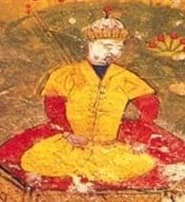
Abu al-Khayr Khan
Emperor · Medieval
55.5Total

Julius Caesar
General · Ancient
82.8Total
Basic Information
Born
1412
-100
Died
1468
-44
Era
Medieval
Ancient
Nationality
Uzbek Khanate
Roman Republic
Occupation
Emperor
General
Civilization
Eastern
Western
Score Comparison
Military (10%)
67.5
88.0
Political (20%)
48.0
78.0
Influence (20%)
57.2
85.0
Legacy (20%)
50.0
82.0
Leadership (15%)
65.0
80.0
Strategy (15%)
50.0
85.0
TOTAL
55.5
82.8
Abu al-Khayr Khan — Complete Timeline
1428 AD
Formation of the Uzbek KhanatePolitical Action◆ Major
Abu al-Khayr Khan united various nomadic Turkic tribes in the steppe region, founding the Uzbek Khanate. This consolidation created a powerful political entity that would dominate Central Asia for decades, challenging the Timurid Empire and other neighboring states.
State FormationCentral AsiaUzbek Khanate
Impact: regionalconstructive
1446 AD
Battle of the Chir RiverWar◆ Major
Abu al-Khayr Khan defeated the Nogai Horde at the Chir River, securing control over the Syr Darya region. This victory expanded his territory and established Uzbek dominance over the steppe trade routes.
BattleNogai HordeTerritorial Expansion
Impact: regional
1451 AD
Conquest of KhwarezmWar◆ Major
Abu al-Khayr Khan captured the Khwarezm region from the Timurid ruler Abu Sa'id Mirza. This conquest brought the wealthy oasis cities under Uzbek control, significantly increasing the khanate's economic resources.
ConquestKhwarezmTimurid Empire
Impact: regional
1468 AD
Defeat by the Kazakh KhanateWar◆ Major
Abu al-Khayr Khan was killed in battle against the Kazakh Khanate led by Kerei and Janibek. This defeat ended his reign and led to the fragmentation of the Uzbek Khanate, with many tribes defecting to the Kazakhs.
BattleKazakh KhanateDeath
Impact: regionaltragic
Julius Caesar — Complete Timeline
58 BC
Gallic WarsWar◆ Major
Caesar, as proconsul of Gaul, launched a series of campaigns that conquered all of Gaul (modern France, Belgium, and parts of Switzerland). He fought numerous battles, including against the Helvetii, the Belgae, and the Gallic chieftain Vercingetorix. The wars brought immense wealth and a loyal army to Caesar.
Gallic WarsConquestRoman Expansion
Impact: regional
49 BC
Crossing the RubiconPolitical Action◆ Major
Caesar led Legio XIII across the Rubicon River into Italy, defying the Roman Senate's order to disband his army. This act triggered a civil war against Pompey and the Optimates, ultimately leading to Caesar's dictatorship and the end of the Roman Republic.
Roman Civil WarEnd of RepublicPower Struggle
Impact: global
48 BC
Battle of PharsalusWar◆ Major
Caesar's outnumbered army defeated the larger forces of Pompey the Great at Pharsalus in Greece. Caesar's tactical use of a reserve line to counter Pompey's cavalry charge proved decisive. Pompey fled to Egypt, where he was assassinated, leaving Caesar as the undisputed master of the Roman world.
Roman Civil WarBattleDecisive Victory
Impact: regional
44 BC
Appointment as Dictator for LifePolitical Action◆ Major
The Roman Senate appointed Caesar dictator perpetuo (dictator for life), granting him unprecedented personal power. This move concentrated military, legislative, and judicial authority in one person, effectively ending the Roman Republic's traditional system of checks and balances and alarming many senators.
DictatorshipEnd of RepublicPower Consolidation
Impact: regionaldestructive
Assassination on the Ides of MarchPolitical Action◆ Major
A group of Roman senators, led by Marcus Junius Brutus and Gaius Cassius Longinus, stabbed Caesar to death at a meeting of the Senate in the Theatre of Pompey. The assassination was intended to restore the Republic, but instead triggered another civil war that led to the rise of the Roman Empire.
AssassinationRoman PoliticsEnd of Republic
Impact: globaldestructive
Expert Analysis
abu-al-khayr-khan-vs-julius-caesar
# The Crossing and the Steppe: Two Founders, Two Fates
On a January day in 49 BCE, a Roman general stood at the edge of a small river in northern Italy. The Rubicon was little more than a stream, yet crossing it meant civil war, the destruction of the Republic, and the end of five centuries of tradition. Julius Caesar, then fifty years old, hesitated—then gave the order. "The die is cast," he reportedly said, and rode into history. Fourteen centuries later and three thousand miles east, another man stood on the vast Eurasian steppe, facing no single river but an ocean of grass. Abu al-Khayr Khan, a tribal chieftain of the Uzbek nomads, also had a decision to make: whether to unite the fractious clans of Central Asia under one banner. Both men succeeded beyond measure. Both men died violently. But the worlds they built—and the ruins they left behind—could not have been more different.
Origins
Caesar was born into the chaos of a dying republic. Rome in 100 BCE was a city of marble and blood, where senators hired thugs to intimidate rivals and generals used foreign conquests to build personal armies. His family, the Julii, claimed descent from the goddess Venus, but they were political outsiders, patricians who had lost influence to wealthy plebeians. Caesar grew up in the shadow of his uncle Gaius Marius, a populist general who had saved Rome from invasion only to plunge it into civil war. From childhood, Caesar learned that power was not inherited—it was taken.
Abu al-Khayr emerged from a different kind of chaos. The steppe in the early fifteenth century was a world of shifting alliances and blood feuds, where a man's wealth was measured in horses and his security in the number of sons who could ride beside him. The great empire of Timur had collapsed, and the Uzbek tribes—Turkic-speaking nomads who had roamed the region for centuries—were divided into warring factions. Abu al-Khayr was born in 1412 into a minor noble family, but his path to power was not paved with senatorial connections or divine ancestry. It was paved with the loyalty of warriors who followed him because he could find water in a drought and lead them to plunder in a raid.
Rise to Power
Caesar's ascent was a masterpiece of calculated risk. He borrowed fortunes to host gladiatorial games, bought the loyalty of key politicians, and married into the most powerful families in Rome. At thirty-nine, he secured command of Gaul—a province that offered the chance for glory and wealth. Over the next eight years, he conquered a territory larger than Italy itself, defeating over a million Gauls in battles that were as much propaganda as warfare. His *Commentaries on the Gallic War* were written not just for posterity but to keep his name alive in the Roman Forum while he was away. By 49 BCE, he had an army that worshipped him, a reputation that terrified his enemies, and no legal way to return to Rome without facing prosecution.
Abu al-Khayr's rise was swifter and more brutal. In 1428, at just sixteen years old, he gathered the scattered Uzbek tribes and declared the formation of the Uzbek Khanate. This was not a negotiation; it was a summons. Those who refused to join were destroyed. Within two decades, he had consolidated control over the steppe from the Ural River to the Syr Darya. His greatest military victory came in 1446 at the Chir River, where he crushed the Nogai Horde and secured the fertile Syr Darya region. By 1451, he had conquered Khwarezm from the Timurids, capturing the wealthy oasis cities that controlled the Silk Road trade. Where Caesar had to navigate the intricate politics of a republic, Abu al-Khayr operated in a world where power was direct: you defeated your enemies, took their herds, and made their survivors your subjects.
Leadership & Governance
Caesar ruled through a combination of military genius and political reform. As dictator, he overhauled the Roman calendar, granted citizenship to provincials, and launched massive public works projects to employ the poor. He was generous to his enemies—too generous, some said—and appointed former opponents to high office. But his military strategy was ruthless: at Alesia, he built a double ring of fortifications to trap the Gallic army and their reinforcements, then starved them into submission. He led from the front, sharing the hardships of his soldiers, and his legions would follow him anywhere.
Abu al-Khayr governed as a khan, not a reformer. His authority rested on the loyalty of tribal elders and the distribution of plunder. He maintained control through marriage alliances and the constant threat of violence. Where Caesar wrote laws and built forums, Abu al-Khayr led his people on seasonal migrations, settled disputes in open-air councils, and ensured that trade routes remained open for the caravans that brought silk, spices, and slaves through his territory. His strategy was less about siegecraft and more about mobility—hit-and-run tactics that exhausted enemies too slow to catch him. His score of 58.1 in strategy reflects a commander who relied on speed and surprise rather than the methodical warfare of the Romans.
Triumph & Tragedy
Caesar's triumph was total. By 44 BCE, he was dictator for life, his face on coins, his image carried in processions. He had conquered Gaul, defeated his rival Pompey in a civil war that spanned Greece, Egypt, and North Africa, and brought Cleopatra to Rome as his mistress. The Senate showered him with honors: a golden throne, a temple to his mercy, the title "Father of the Fatherland." His tragedy came on the Ides of March, when sixty senators stabbed him to death in the Theater of Pompey. He fell at the feet of a statue of his greatest enemy.
Abu al-Khayr's tragedy was slower but just as complete. For four decades, he had held the Uzbek Khanate together through force and cunning. But in the 1450s, two of his own chieftains—Kerei and Janibek—broke away with their followers and founded the Kazakh Khanate, a rival state that would eventually destroy him. In 1468, at the age of fifty-six, Abu al-Khayr Khan rode out to meet the Kazakh army in battle. He never returned. His defeat was total, his khanate shattered, and his name largely forgotten outside the steppe. Where Caesar's assassination launched a cycle of civil wars that ended the Republic, Abu al-Khayr's death simply erased his achievement.
Character & Destiny
Caesar was a man of immense charm, ruthless ambition, and a gambler's instinct. He pardoned his enemies because he believed that generosity would bind them to him, but he also had a cruel streak—he ordered the hands of Gallic warriors cut off and sold entire tribes into slavery. His personality drove him to cross the Rubicon not because he had to, but because he could not imagine a world in which he was not the master of Rome. "I came, I saw, I conquered," he wrote of one campaign, and the boast captures his essence: a man who believed that his will was destiny.
Abu al-Khayr was a different kind of leader—pragmatic, cautious, and deeply aware of the fragility of power on the steppe. He did not write memoirs or coin slogans. He did not dream of eternal glory. He wanted to build a stable khanate where his descendants could rule. His tragedy was that he succeeded too well: by uniting the Uzbeks, he created a target for the Kazakhs, and by conquering Khwarezm, he overextended his resources. His personality was not that of a visionary but of a survivor, and in the end, survival was not enough.
Legacy
Caesar's legacy is immeasurable. His conquests brought Gaul, Egypt, and North Africa into the Roman orbit. His reforms laid the groundwork for the empire that would dominate Europe for five centuries. His name became a title—Kaiser, Tsar, Caesar—and his writings are still read in classrooms today. He is remembered as a genius, a tyrant, and a martyr, depending on who tells the story.
Abu al-Khayr Khan's legacy is quieter but no less real. The Uzbek Khanate he founded did not survive his death, but the Uzbek people did. The Kazakh Khanate that destroyed him eventually became modern Kazakhstan. The cities he conquered—Samarkand, Bukhara, Khiva—remained centers of Islamic civilization for centuries. His name appears in history books only as a footnote, but the tribal confederation he created gave birth to a nation. In the end, both men crossed their Rubicons. One crossed into immortality; the other crossed into the dust of the steppe.
Conclusion
The difference between Caesar and Abu al-Khayr is not a matter of talent or courage. Both were brilliant commanders, shrewd politicians, and men of their time. The difference is that Caesar built in stone, while Abu al-Khayr built in sand. Rome was a civilization of laws, cities, and written records—a machine that could preserve a man's memory for millennia. The steppe was a world of oral tradition, shifting alliances, and nomads who followed the grass. Caesar's empire became the Catholic Church, the French language, and the calendar we still use. Abu al-Khayr's empire became a people who still call themselves Uzbek, and who still remember, in their songs, the khan who united them. One legacy is a monument; the other is a name whispered around a campfire. Both, in their way, are eternal.
Rankings
🥇
Julius CaesarLeader
Mil: 88.0Pol: 78.0Inf: 85.0
82.8
🥈
Abu al-Khayr Khan
Mil: 67.5Pol: 48.0Inf: 57.2
55.5
+27.3 behind
How This Comparison Works
Algorithm
Each figure is scored on 6 dimensions (0—100 scale) based on structured historical data: Military (10%), Political (20%), Influence (20%), Legacy (20%), Leadership (15%), Strategy (15%). The weighted total produces the final ranking.
Data Sources
Scores are computed from structured sub-indicators in the database. Scale factors adjust for era (Ancient ×0.85, Modern ×1.0) and civilization size (Eastern ×1.05, Other ×0.80) to account for differences in population and military scale.
Maximum 3 Figures
Comparisons are limited to 2—3 figures to ensure readability and statistical meaningfulness.
Error Margins
±5 points per dimension — Sub-scores are derived from historical records with inherent uncertainty. Two figures within 5 points on a dimension should be considered roughly equivalent in that area.
Total Score Accuracy
±3 points overall — The weighted combination of 6 dimensions produces a total score with approximately ±3 points of uncertainty. Differences of less than 3 points are not statistically significant— the figures are effectively tied.
Known Limitations
- Historical records are incomplete and uneven across civilizations
- Figures from oral-tradition societies may be underrepresented
- Occupation labels can misclassify multi-role figures
- Scores measure capability and impact, not moral character
- Quantitative scoring is a comparison tool, not absolute truth
Capability Radar
Military (10%) — Battles & Warfare
Battles
60
95
Win Rate
65
92
Expansion
65
97
Political (20%) — Governance & Reform
Reform
45
90
Diplomacy
50
85
Economy
40
82
Influence (20%) — Cultural & Global Reach
Cultural
40
88
Global
35
94
Legacy (20%) — Historical Impact
Historical
55
95
Longevity
50
96
Leadership (15%) — Power & Stability
Tenure
55
75
Stability
45
60
Strategy (15%) — Tactics & Innovation
Strategy
60
94
Tactics
55
96
Reform
50
88
Similar Comparisons
Comments & Discussion
**LegionaryLegate6/17/2026
Caesar’s Rubicon crossing was a tactical masterstroke—14 centuries later, Abu al-Khayr Khan couldn’t even hold his own tribal council together. Caesar built a loyal army from scratch, took Gaul in 8 years, and outmaneuvered Pompey. The Uzbek khan? He united steppe clans through marriage alliances that dissolved the minute he died. That’s not a founder—that’s a flash in the pan.**
**游牧叛道者6/17/2026
拿跨卢比孔河跟跨草原比?简直侮辱历史。凯撒赌的是罗马共和国的存亡,赢了就是欧洲主宰;阿布海儿汗呢?他不过是个蒙古帝国崩溃后抢地盘的部落头人。草原上没有“跨越”的概念,只有杀光或臣服。别套用罗马的标准美化游牧混乱,那不是建国,只是换了个首领抢劫。**
**古典学杠精6/17/2026
你们把“跨河”比成“跨草原”,但根本前提就错了。凯撒面对的是罗马法律定义的界限——跨过卢比孔河就是叛国,这是具体的制度规则。阿布海儿汗的“草原”有什么?没有国界、没有法典、没有元老院。他从没跨越什么,只是在权力真空中游荡。别拿欧洲的政治意识硬套中亚,那是两种完全不同的文明逻辑。**
**DieHardOptimist6/17/2026
Both men died violently, but only one’s death birthed an empire that lasted centuries. Caesar’s assassination led to Augustus and the Pax Romana. Abu al-Khayr Khan was beheaded by his own grandson, and his “united” steppe shattered into warring hordes within a generation. The difference? Caesar built institutions; the khan built only personal fealty. Call me a Rome fanboy, but lasting impact matters more than dramatic crossings.**
Historian3736/17/2026
The comparison ignores one brutal fact: Caesar wrote his own history—Abu al-Khayr Khan was illiterate. Every word about the khan comes from Persian court chroniclers who hated him. We don’t even know if he actually “stood on the steppe” thinking grand thoughts. Caesar’s memoirs survive; the steppe’s reality is a foreign invention. Don’t pretend you’re comparing equals when one side’s evidence is pure propaganda.**