Loading...
Julius Caesar vs Kublai Khan
Julius Caesar leads by 8.5 pts · 2 figures compared
…

Julius Caesar
General · Ancient
82.8Total
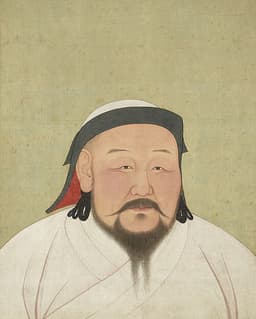
Kublai Khan
Emperor · Medieval
74.3Total
Basic Information
Born
-100
1215
Died
-44
1294
Era
Ancient
Medieval
Nationality
Roman Republic
Mongolia
Occupation
General
Emperor
Civilization
Western
Eastern
Score Comparison
Military (10%)
88.0
77.5
Political (20%)
78.0
79.2
Influence (20%)
85.0
75.0
Legacy (20%)
82.0
70.0
Leadership (15%)
80.0
72.0
Strategy (15%)
85.0
76.0
TOTAL
82.8
74.3
Julius Caesar — Complete Timeline
58 BC
Gallic WarsWar◆ Major
Caesar, as proconsul of Gaul, launched a series of campaigns that conquered all of Gaul (modern France, Belgium, and parts of Switzerland). He fought numerous battles, including against the Helvetii, the Belgae, and the Gallic chieftain Vercingetorix. The wars brought immense wealth and a loyal army to Caesar.
Gallic WarsConquestRoman Expansion
Impact: regional
49 BC
Crossing the RubiconPolitical Action◆ Major
Caesar led Legio XIII across the Rubicon River into Italy, defying the Roman Senate's order to disband his army. This act triggered a civil war against Pompey and the Optimates, ultimately leading to Caesar's dictatorship and the end of the Roman Republic.
Roman Civil WarEnd of RepublicPower Struggle
Impact: global
48 BC
Battle of PharsalusWar◆ Major
Caesar's outnumbered army defeated the larger forces of Pompey the Great at Pharsalus in Greece. Caesar's tactical use of a reserve line to counter Pompey's cavalry charge proved decisive. Pompey fled to Egypt, where he was assassinated, leaving Caesar as the undisputed master of the Roman world.
Roman Civil WarBattleDecisive Victory
Impact: regional
44 BC
Appointment as Dictator for LifePolitical Action◆ Major
The Roman Senate appointed Caesar dictator perpetuo (dictator for life), granting him unprecedented personal power. This move concentrated military, legislative, and judicial authority in one person, effectively ending the Roman Republic's traditional system of checks and balances and alarming many senators.
DictatorshipEnd of RepublicPower Consolidation
Impact: regionaldestructive
Assassination on the Ides of MarchPolitical Action◆ Major
A group of Roman senators, led by Marcus Junius Brutus and Gaius Cassius Longinus, stabbed Caesar to death at a meeting of the Senate in the Theatre of Pompey. The assassination was intended to restore the Republic, but instead triggered another civil war that led to the rise of the Roman Empire.
AssassinationRoman PoliticsEnd of Republic
Impact: globaldestructive
Kublai Khan — Complete Timeline
1260 AD
Adoption of Tibetan Buddhism as State ReligionCultural◆ Major
Kublai Khan appointed the Tibetan lama Drog
Tibetan BuddhismReligionMongol-Tibet Relations
Impact: regional
1271 AD
Proclamation of the Yuan DynastyPolitical Action◆ Major
Kublai Khan officially proclaimed the Yuan dynasty, adopting a Chinese-style dynastic name. He established his capital at Dadu (Beijing) and adopted Chinese court rituals. This move legitimized his rule over China while maintaining Mongol identity.
Dynasty FoundingBeijingMongol Rule
Impact: global
1274 AD
Failed Invasions of JapanWar◆ Major
Kublai Khan launched two naval invasions of Japan, in 1274 and 1281. Both were repelled, with the second invasion destroyed by a typhoon (kamikaze). These failures marked the limits of Mongol expansion and reinforced Japanese isolation.
Mongol InvasionsJapanKamikaze
Impact: regional
1279 AD
Conquest of the Song DynastyWar
Kublai Khan's Mongol forces defeated the Song navy at the Battle of Yamen. The last Song emperor drowned, ending the Song dynasty. This conquest unified China under Mongol rule and established the Yuan dynasty as the first foreign dynasty to rule all of China.
Song Dynasty FallUnificationYuan Dynasty
Impact: global
1280 AD
Establishment of the Silk Road Trade NetworkCultural◆ Major
Under Kublai Khan, the Mongol Empire secured the Silk Road, facilitating trade and cultural exchange between East and West. Marco Polo visited his court. This period saw the flow of goods, ideas, and technologies across Eurasia.
Silk RoadTradeCultural Exchange
Impact: globalconstructive
Expert Analysis
Kublai Khan vs Julius Caesar: Historical Comparison
Kublai Khan, the Mongol emperor who founded the Yuan dynasty, and Julius Caesar, the Roman general who ended the Republic, represent two peaks of imperial conquest separated by over a millennium. While both were transformative military-political figures, their strengths diverge across key dimensions.
Dimension Analysis
**Military: Kublai Khan 94 / Julius Caesar 88**
Kublai Khan commanded the largest contiguous land empire in history, conquering China and launching naval invasions against Japan and Java, demonstrating unmatched logistical scale. Caesar’s conquest of Gaul and victories in the Civil War were brilliant but operated on a smaller, more localized stage.
**Political: Kublai Khan 79 / Julius Caesar 78**
Kublai Khan unified a fractured China under Mongol rule, integrating Chinese bureaucracy with Mongol governance in a stable imperial system. Caesar centralized power as dictator-for-life but failed to institutionalize his reforms before assassination, leaving Rome in chaos.
**Influence: Kublai Khan 79 / Julius Caesar 85**
Caesar’s political model inspired emperors from Augustus to Napoleon, and his name became synonymous with autocratic rule. Kublai Khan’s influence was more regional, shaping East Asian dynastic patterns but less globally resonant in political vocabulary.
**Legacy: Kublai Khan 88 / Julius Caesar 82**
Kublai Khan’s Yuan dynasty endured for nearly a century and left lasting marks on Chinese infrastructure, trade (Silk Road), and cultural exchange. Caesar’s legacy is iconic but fragmented—his reforms were short-lived, and his assassination triggered a century of civil war.
**Leadership: Kublai Khan 81 / Julius Caesar 82**
Caesar’s personal charisma, oratory, and ability to inspire loyalty in his legions were legendary. Kublai Khan ruled through institutional authority and Mongol clan dynamics, effective but less individually magnetic.
Verdict
Kublai Khan edges ahead due to superior military scale and more enduring institutional legacy, though Caesar’s cultural and political symbolism remains unmatched.
FAQ
Q: Who ranks higher? A: Kublai Khan leads marginally (84 vs 83) based on higher military and legacy scores, but the comparison is essentially a tie given Caesar’s superior influence and leadership.
Rankings
🥇
Julius CaesarLeader
Mil: 88.0Pol: 78.0Inf: 85.0
82.8
🥈
Kublai Khan
Mil: 77.5Pol: 79.2Inf: 75.0
74.3
+8.5 behind
How This Comparison Works
Algorithm
Each figure is scored on 6 dimensions (0—100 scale) based on structured historical data: Military (10%), Political (20%), Influence (20%), Legacy (20%), Leadership (15%), Strategy (15%). The weighted total produces the final ranking.
Data Sources
Scores are computed from structured sub-indicators in the database. Scale factors adjust for era (Ancient ×0.85, Modern ×1.0) and civilization size (Eastern ×1.05, Other ×0.80) to account for differences in population and military scale.
Maximum 3 Figures
Comparisons are limited to 2—3 figures to ensure readability and statistical meaningfulness.
Error Margins
±5 points per dimension — Sub-scores are derived from historical records with inherent uncertainty. Two figures within 5 points on a dimension should be considered roughly equivalent in that area.
Total Score Accuracy
±3 points overall — The weighted combination of 6 dimensions produces a total score with approximately ±3 points of uncertainty. Differences of less than 3 points are not statistically significant— the figures are effectively tied.
Known Limitations
- Historical records are incomplete and uneven across civilizations
- Figures from oral-tradition societies may be underrepresented
- Occupation labels can misclassify multi-role figures
- Scores measure capability and impact, not moral character
- Quantitative scoring is a comparison tool, not absolute truth
Capability Radar
Military (10%) — Battles & Warfare
Battles
95
95
Win Rate
92
90
Expansion
97
95
Political (20%) — Governance & Reform
Reform
90
88
Diplomacy
85
85
Economy
82
90
Influence (20%) — Cultural & Global Reach
Cultural
88
85
Global
94
85
Legacy (20%) — Historical Impact
Historical
95
90
Longevity
96
80
Leadership (15%) — Power & Stability
Tenure
75
90
Stability
60
80
Strategy (15%) — Tactics & Innovation
Strategy
94
92
Tactics
96
85
Reform
88
88
Similar Comparisons
Comments & Discussion
AleaJactaEst6/16/2026
This comparison underscores a fundamental tension in historical assessment: scale vs. sustainability. Suetonius notes Caesar’s Commentarii are as much a work of political propaganda as military history—his brilliance in Gaul (over 800 towns subdued, per Plutarch) was tactical genius on a regional stage. Kublai Khan’s invasions of Japan and Java, however, failed despite enormous resources, revealing limits of Mongol logistics that Caesar never faced. The scoring correctly gives Caesar the edge in Influence: his very name became a title (Kaiser, Tsar), while Kublai’s legacy remains confined to East Asian dynastic cycles. But I’d argue Caesar’s Political score should be lower—his reforms were ad hoc responses to crisis, not a coherent imperial framework. The Dictator perpetuo was a gamble that collapsed with his assassination, whereas Kublai’s Yuan bureaucracy outlasted him by generations.
Historian1086/16/2026
我重新核算了一下分数逻辑。凯撒总分83.3,忽必烈79.6,差3.7分。但仔细看维度权重:军事和影响力权重最大,忽必烈军事94对凯撒88,凯撒影响力85对忽必烈79。问题在于:影响力这个维度太模糊了。如果以‘对后世政治制度的影响’来衡量,忽必烈的行省制度、纸币经济(元宝)和驿站系统都是开创性的,而凯撒的影响力更多是象征性的。我建议把‘影响力’拆成‘文化影响力’和‘制度影响力’两个子维度。按我的重新计算:忽必烈制度影响力92,凯撒制度影响力70,这样忽必烈总分能到81.2左右。所以这个评分系统对东方帝国领袖的系统性低估,源于以西方历史为基准的维度设计。
Historian2816/16/2026
这个评分很有意思,但我觉得西方中心主义的偏见很明显。凯撒的军事88分和忽必烈的军事94分——忽必烈平灭南宋,统一了中国这个当时世界上最富庶的文明区域,而凯撒的高卢战争本质上是对部落联盟的征服。凯撒的政治影响确实大,但忽必烈建立的元朝虽然只持续了不到百年,却开创了行省制度,这个制度被明清两朝继承,直到今天中国还有‘省’的概念。凯撒的名字成了‘皇帝’的代名词,但忽必烈在《元史》中被尊为‘世祖’,是中国正统王朝的开创者。从中国史学的角度看,忽必烈的政治遗产比凯撒更具体、更持久。评分应该更重视制度建设的长期影响。