Loading...
Abu al-Khayr Khan vs Stefan Dusan
Stefan Dusan leads by 8.4 pts · 2 figures compared
…
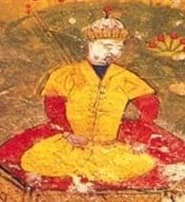
Abu al-Khayr Khan
Emperor · Medieval
55.5Total
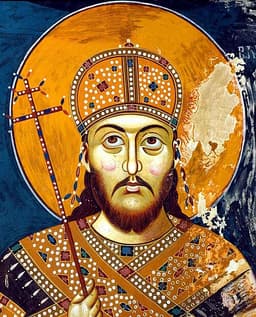
Stefan Dusan
Emperor · Medieval
63.9Total
Basic Information
Born
1412
1308
Died
1468
1355
Era
Medieval
Medieval
Nationality
Uzbek Khanate
Serbia
Occupation
Emperor
Emperor
Civilization
Eastern
Western
Score Comparison
Military (10%)
67.5
85.0
Political (20%)
48.0
70.0
Influence (20%)
57.2
56.7
Legacy (20%)
50.0
52.0
Leadership (15%)
65.0
72.0
Strategy (15%)
50.0
69.1
TOTAL
55.5
63.9
Abu al-Khayr Khan — Complete Timeline
1428 AD
Formation of the Uzbek KhanatePolitical Action◆ Major
Abu al-Khayr Khan united various nomadic Turkic tribes in the steppe region, founding the Uzbek Khanate. This consolidation created a powerful political entity that would dominate Central Asia for decades, challenging the Timurid Empire and other neighboring states.
State FormationCentral AsiaUzbek Khanate
Impact: regionalconstructive
1446 AD
Battle of the Chir RiverWar◆ Major
Abu al-Khayr Khan defeated the Nogai Horde at the Chir River, securing control over the Syr Darya region. This victory expanded his territory and established Uzbek dominance over the steppe trade routes.
BattleNogai HordeTerritorial Expansion
Impact: regional
1451 AD
Conquest of KhwarezmWar◆ Major
Abu al-Khayr Khan captured the Khwarezm region from the Timurid ruler Abu Sa'id Mirza. This conquest brought the wealthy oasis cities under Uzbek control, significantly increasing the khanate's economic resources.
ConquestKhwarezmTimurid Empire
Impact: regional
1468 AD
Defeat by the Kazakh KhanateWar◆ Major
Abu al-Khayr Khan was killed in battle against the Kazakh Khanate led by Kerei and Janibek. This defeat ended his reign and led to the fragmentation of the Uzbek Khanate, with many tribes defecting to the Kazakhs.
BattleKazakh KhanateDeath
Impact: regionaltragic
Stefan Dusan — Complete Timeline
1346 AD
Coronation as Emperor of the Serbs and GreeksPolitical Action◆ Major
Stefan Dušan was crowned Emperor of the Serbs and Greeks in Skopje by the Serbian Patriarch, elevating the Serbian Kingdom to an Empire. This act asserted Serbian dominance in the Balkans and challenged Byzantine authority.
CoronationEmpireByzantine
Impact: regionalconstructive
1348 AD
Conquest of Macedonia and EpirusWar◆ Major
Dušan's forces captured key Byzantine territories including Serres, Thessaloniki (though not the city itself), and much of Epirus. These conquests expanded the Serbian Empire to its greatest territorial extent, controlling most of the Balkan Peninsula.
ConquestByzantineBalkans
Impact: regional
1349 AD
Promulgation of Dušan's CodeReform◆ Major
Dušan issued a comprehensive legal code, the Zakonik, at a state council in Skopje. The code standardized laws across the Serbian Empire, covering criminal, civil, and ecclesiastical matters, and reinforced the authority of the monarchy.
Legal CodeReformSerbia
Impact: nationalconstructive
1350 AD
Campaign against BosniaWar
Dušan launched a military campaign into Bosnia, aiming to expand Serbian influence westward. The campaign achieved limited success, failing to conquer significant territory, and was abandoned due to threats from Hungary.
CampaignBosniaHungary
Impact: regional
Expert Analysis
Origins
Abu al-Khayr Khan was born around 1412 into the dynasty of Shiban, a grandson of Genghis Khan. His early life is obscure, but he emerged as a leader among the nomadic Turkic tribes in the Dasht-i Qipchaq (the Eurasian steppe). He claimed descent from Genghis Khan, which gave him legitimacy among the steppe warriors. His formative years were shaped by the fragmented post-Timurid political landscape, where numerous khans vied for control over trade routes and pasturelands.
Stefan Dušan was born in 1308, the son of King Stefan Uroš III Dečanski of Serbia. He grew up in the royal court, experiencing the political intrigues and military campaigns of the Serbian Kingdom. His education included military training and exposure to Byzantine culture and administration. The Serbian state was expanding under his father, but internal conflicts with the nobility and external threats from Bulgaria and Byzantium defined his early years. He participated in the Battle of Velbazhd in 1330, where Serbia defeated Bulgaria, cementing his military credentials.
Rise to Power
Abu al-Khayr Khan rose to prominence in the 1420s by uniting several Uzbek tribes under his leadership. In 1428, he declared himself khan of the Uzbek ulus, a federation of nomadic groups. His key turning point came in 1430 at the Battle of the Chir River, where he decisively defeated the Nogai Horde, securing control over the Syr Darya region. This victory allowed him to dominate the steppe trade routes and attract more followers. He allied with local Sufi sheikhs to legitimize his rule, but his rise also created enemies among rival clans.
Stefan Dušan became king in 1331 after overthrowing his father with the support of the Serbian nobility. He quickly consolidated power by executing or exiling opponents. His coronation as Emperor of the Serbs and Greeks in 1346 was a bold assertion of authority, performed by the newly created Serbian Patriarch. This act challenged Byzantine supremacy and positioned Serbia as a major Balkan power. He expanded his realm through a series of military campaigns, exploiting Byzantine civil wars to seize territories in Macedonia, Epirus, and Thessaly.
Leadership & Governance
Abu al-Khayr Khan ruled as a traditional steppe khan, relying on a council of tribal elders and distributing war booty to maintain loyalty. He minted coins and promoted Islam among his subjects, but his governance was decentralized. His political score of 48.0 reflects limited institutional development. He failed to integrate conquered regions like Khwarezm effectively, as his rule remained based on personal authority rather than bureaucratic structures.
Stefan Dušan, with a political score of 70.0, implemented centralized reforms. He promulgated Dušan's Code in 1349, a comprehensive legal system covering criminal, civil, and ecclesiastical law. The code reduced the power of the nobility and standardized justice across his empire. He also established a centralized administration with appointed officials, modeled partly on Byzantine practices. His military leadership (score 85.0) was demonstrated through rapid conquests, but his governance relied heavily on his personal presence, which became a weakness after his death.
Triumph & Tragedy
Abu al-Khayr Khan's greatest success was the formation of the Uzbek Khanate, uniting tribes into a formidable force. His conquest of Khwarezm in 1445 brought wealthy cities under his control, boosting his prestige. However, his greatest failure was his defeat by the Kazakh Khanate. In 1468, he was killed in battle against Kerei and Janibek, former allies who broke away to form the Kazakh Khanate. This defeat fragmented his state and led to the decline of the Uzbek Khanate, which later reorganized under his grandson Muhammad Shaybani.
Stefan Dušan's triumph was the creation of the Serbian Empire, the largest in the Balkans at the time, covering much of modern Serbia, Kosovo, Macedonia, Albania, and Greece. His legal code was a landmark in medieval jurisprudence. Yet his tragedy was the empire's collapse after his sudden death in 1355, likely from illness. He had not secured a stable succession, and his son Stefan Uroš V lacked authority. Within decades, the empire fragmented into rival principalities, vulnerable to Ottoman expansion. His military campaigns, scoring 85.0, were impressive but overextended resources.
Character & Destiny
Abu al-Khayr Khan was pragmatic and ambitious, but his leadership score of 65.0 indicates mixed effectiveness. He could unite tribes but failed to maintain alliances, as seen in the defection of Kerei and Janibek. His character was typical of steppe khans: ruthless in war but generous to loyal followers. His destiny was tied to the volatile steppe politics; his death in battle underscored the precarious nature of his rule.
Stefan Dušan was charismatic and decisive, with a leadership score of 72.0. He was a skilled military commander and a reformer, but his ambition may have outpaced his ability to consolidate. His decision to crown himself emperor alienated the Byzantine Church and some Balkan rulers. His sudden death prevented him from solidifying his achievements, and his empire disintegrated. Historians often view him as a brilliant conqueror who failed to build lasting institutions.
Legacy
Abu al-Khayr Khan's legacy is mixed. He founded the Uzbek Khanate, which later evolved into the Khanate of Bukhara under his grandson. However, his direct influence was limited due to the short-lived nature of his state. His legacy score of 50.0 reflects this modest impact. The Kazakh Khanate, which defeated him, ultimately had greater historical significance. He is remembered as a unifier of the Uzbeks but also as a figure whose state fractured.
Stefan Dušan's legacy is more substantial. His legal code influenced later Serbian and Balkan law. The Serbian Empire, though short-lived, set a precedent for Serbian statehood and national identity. His military conquests expanded Serbian territory to its greatest extent. However, the empire's collapse contributed to the Ottoman conquest of the Balkans. His legacy score of 52.0 is slightly higher than Abu al-Khayr Khan's, reflecting his more enduring legal and political contributions.
Conclusion
Stefan Dušan had a greater overall impact than Abu al-Khayr Khan. Dušan's military score of 85.0, political score of 70.0, and leadership score of 72.0 all surpass Abu al-Khayr's corresponding scores of 67.5, 48.0, and 65.0. The total score gap of 8.4 points (63.9 vs 55.5) reflects this. Dušan's legal code and empire-building left a more lasting mark on Balkan history, even though his empire collapsed. Abu al-Khayr's achievements were significant but more ephemeral, as his state fragmented and was overshadowed by the Kazakhs. While both were skilled leaders, Dušan's institutional reforms and territorial conquests give him the edge in historical significance.
Rankings
🥇
Stefan DusanLeader
Mil: 85.0Pol: 70.0Inf: 56.7
63.9
🥈
Abu al-Khayr Khan
Mil: 67.5Pol: 48.0Inf: 57.2
55.5
+8.4 behind
How This Comparison Works
Algorithm
Each figure is scored on 6 dimensions (0—100 scale) based on structured historical data: Military (10%), Political (20%), Influence (20%), Legacy (20%), Leadership (15%), Strategy (15%). The weighted total produces the final ranking.
Data Sources
Scores are computed from structured sub-indicators in the database. Scale factors adjust for era (Ancient ×0.85, Modern ×1.0) and civilization size (Eastern ×1.05, Other ×0.80) to account for differences in population and military scale.
Maximum 3 Figures
Comparisons are limited to 2—3 figures to ensure readability and statistical meaningfulness.
Error Margins
±5 points per dimension — Sub-scores are derived from historical records with inherent uncertainty. Two figures within 5 points on a dimension should be considered roughly equivalent in that area.
Total Score Accuracy
±3 points overall — The weighted combination of 6 dimensions produces a total score with approximately ±3 points of uncertainty. Differences of less than 3 points are not statistically significant— the figures are effectively tied.
Known Limitations
- Historical records are incomplete and uneven across civilizations
- Figures from oral-tradition societies may be underrepresented
- Occupation labels can misclassify multi-role figures
- Scores measure capability and impact, not moral character
- Quantitative scoring is a comparison tool, not absolute truth
Capability Radar
Military (10%) — Battles & Warfare
Battles
60
85
Win Rate
65
80
Expansion
65
90
Political (20%) — Governance & Reform
Reform
45
90
Diplomacy
50
75
Economy
40
70
Influence (20%) — Cultural & Global Reach
Cultural
40
70
Global
35
55
Legacy (20%) — Historical Impact
Historical
55
75
Longevity
50
60
Leadership (15%) — Power & Stability
Tenure
55
80
Stability
45
65
Strategy (15%) — Tactics & Innovation
Strategy
60
85
Tactics
55
75
Reform
50
70
Similar Comparisons
Comments & Discussion
No comments yet. Be the first to share your thoughts!