Loading...
Abu Bakr vs Alp Tigin
Abu Bakr leads by 26.6 pts · 2 figures compared
…
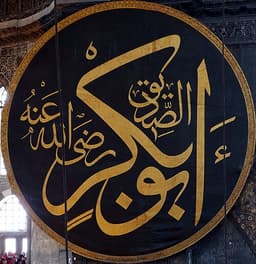
Abu Bakr
Emperor · Medieval
77.1Total
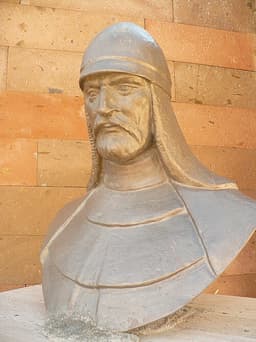
Alp Tigin
Emperor · Medieval
50.5Total
Basic Information
Born
573
911
Died
634
963
Era
Medieval
Medieval
Nationality
Rashidun Caliphate
Ghaznavid Empire
Occupation
Emperor
Emperor
Civilization
Middle Eastern
Middle Eastern
Score Comparison
Military (10%)
74.7
55.0
Political (20%)
62.7
33.6
Influence (20%)
88.0
56.4
Legacy (20%)
80.0
49.2
Leadership (15%)
77.2
50.7
Strategy (15%)
66.3
60.0
TOTAL
77.1
50.5
Abu Bakr — Complete Timeline
632 AD
Ridda Wars (Apostasy Wars)War◆ Major
Abu Bakr launched military campaigns against Arabian tribes that renounced Islam or refused to pay zakat after Muhammad's death. The wars, led by generals like Khalid ibn al-Walid, reestablished Muslim control over Arabia and consolidated the caliphate.
Ridda WarsConsolidationRashidun
Impact: regional
Election as First CaliphPolitical Action
After the death of Muhammad, Abu Bakr was elected as the first caliph (successor) at Saqifah. His election unified the Muslim community, though it caused controversy among some supporters of Ali. He became the leader of the nascent Islamic state.
CaliphateSuccessionRashidun
Impact: global
633 AD
Compilation of the QuranCultural◆ Major
Abu Bakr ordered the compilation of the Quran into a single written manuscript after many memorizers died in the Ridda Wars. Zayd ibn Thabit collected verses from various sources, creating the first official codex, which later served as the basis for Uthman's standard text.
QuranCompilationRashidun
Impact: globalconstructive
634 AD
Death of Abu BakrPolitical Action◆ Major
Abu Bakr died after a brief illness, having designated Umar as his successor. His caliphate lasted only two years but established the foundations of the Islamic state, including the expansion beyond Arabia and the preservation of the Quran.
DeathSuccessionRashidun
Impact: global
Alp Tigin — Complete Timeline
961 AD
Rebellion against the SamanidsPolitical Action◆ Major
Alp Tigin rebelled against the Samanid ruler Mansur I after being passed over for a governorship. He marched from Nishapur to Ghazni, defeating Samanid forces along the way, and established his own rule in eastern Afghanistan.
Impact: regional
963 AD
Consolidation of GhazniPolitical Action
Alp Tigin fortified Ghazni and organized a military state based on slave soldiers (ghilman). He established a stable administration that attracted scholars and merchants, turning Ghazni into a major regional power center.
Impact: regionalconstructive
Expert Analysis
Alp Tigin vs Abu Bakr
# The Unlikely Emperors: Abu Bakr and Alp Tigin
In the year 632, as the Prophet Muhammad lay dying in Medina, a crisis of succession threatened to unravel the fragile unity of Arabia. Meanwhile, three centuries later in the distant mountains of what is now Afghanistan, a Turkic slave commander named Alp Tigin would seize a fortress city and found a dynasty that would one day stretch from the Caspian to the Indus. These two men—one a trusted companion of a prophet, the other a former slave who carved out his own kingdom—shared the title of emperor but little else. Their stories reveal how vastly different paths to power can be, and how the circumstances of one's rise shape the nature of one's rule.
Origins
Abu Bakr was born in 573 into the Quraysh tribe of Mecca, the same tribe as Muhammad. He was a wealthy merchant known for his honesty and gentle nature, earning the nickname "Al-Siddiq" (the Truthful). His life was intertwined with the Prophet's from the beginning: he was Muhammad's closest friend, his father-in-law, and the first adult male to embrace Islam. When others mocked the Prophet, Abu Bakr stood firm. His authority came not from military might but from moral credibility and personal loyalty.
Alp Tigin, by contrast, entered history as a blank slate. Born around 911, likely in the steppes of Central Asia, he was taken as a slave and sold into the Samanid court. In the medieval Islamic world, slave soldiers (ghilman) could rise to astonishing heights—but only through ruthless competition. Alp Tigin had no tribe, no family name, no inherited status. Everything he would achieve, he would have to seize.
Rise to Power
Abu Bakr's rise was almost reluctant. When Muhammad died in 632, the nascent Muslim community faced a crisis: the Ansar (Medinan converts) gathered at Saqifah to elect a leader, excluding the Meccan emigrants. Abu Bakr rushed to the meeting and, through a combination of political acumen and moral authority, secured his election as the first caliph. His power was legitimized by consensus, however fragile.
Alp Tigin's ascent was violent and personal. In 961, after being passed over for the governorship of Khorasan by the Samanid ruler Mansur I, he rebelled. Marching from Nishapur with his slave army, he was defeated in open battle but managed to retreat to the remote fortress of Ghazni. There, in 963, he consolidated his power, building a military state entirely dependent on his personal control of slave soldiers. His authority rested on the sword alone.
Leadership & Governance
Abu Bakr's caliphate lasted only two years, but they were transformative. Upon his election, many Arabian tribes renounced Islam or refused to pay the zakat (alms tax). The Ridda Wars (632-633) were not merely military campaigns; they were a desperate struggle to preserve the unity of the faith. Abu Bakr led with a combination of strategic wisdom and religious conviction. His military score of 62.7 reflects competent but not brilliant generalship; his leadership score of 81.3 captures his ability to inspire loyalty and make hard decisions.
Perhaps his most enduring act was ordering the compilation of the Quran. After hundreds of memorizers died in battle, Abu Bakr recognized that divine revelation could be lost forever. He commissioned Zayd ibn Thabit to gather the scattered verses into a single manuscript. This was not a military or political decision but an act of profound cultural preservation.
Alp Tigin's governance was narrower. His military score of 48.6 and political score of 50.7 reveal a commander of modest abilities who succeeded through sheer opportunism. He fortified Ghazni and organized a state based on ghilman—slave soldiers who owed personal loyalty to their master. This system would later enable his successors, especially Mahmud of Ghazni, to launch devastating raids into India. But Alp Tigin himself never expanded beyond his mountain fortress. His was a kingdom built on sand, held together by personal allegiance.
Triumph & Tragedy
Abu Bakr's greatest triumph was preserving Islam itself. When the Prophet died, many assumed the community would dissolve. Instead, Abu Bakr's firmness—"If they withhold even a rope from the zakat, I will fight them for it"—held the faith together. His tragedy was his brevity. He died in 634 after a brief illness, having designated Umar as his successor. His caliphate lasted just two years, leaving him little time to shape the institutions he founded.
Alp Tigin's triumph was survival. A rebel who had lost his battle, he managed to carve out a small kingdom in the mountains. His tragedy was that he never achieved more. He died in 963, leaving Ghazni to his son-in-law, who would be overthrown by a slave commander. The dynasty Alp Tigin founded would flourish under others, but he himself remained a footnote—a slave who became a king but never a conqueror.
Character & Destiny
Abu Bakr's character shaped his destiny. His humility, his closeness to Muhammad, and his reputation for integrity made him the natural choice to lead. He did not seek power; power sought him. His decisions—fighting the apostates, compiling the Quran, appointing Umar—were driven by a sense of duty rather than ambition.
Alp Tigin's character was forged in the crucible of slavery. He was ambitious, ruthless, and pragmatic. He seized power because he could, not because he was called. His destiny was to be a founder, not a builder. The Ghaznavid Empire would reach its height under Mahmud, but Alp Tigin laid its foundation—a foundation of slave soldiers and personal loyalty, not faith or consensus.
Legacy
Abu Bakr's legacy is monumental. He is remembered as the first caliph, the "Companion in the Cave," the man who held Islam together in its darkest hour. His influence score of 67.6 and legacy score of 70.0 understate his true impact: every Muslim who reads the Quran today owes something to his decision to compile it. The institution of the caliphate, which would shape Islamic history for centuries, began with him.
Alp Tigin's legacy is more ambiguous. His influence score of 71.6 and legacy score of 62.1 reflect his role as a founder of a dynasty that would become famous, though he himself remains obscure. The Ghaznavids would be remembered for their raids into India and their patronage of Persian culture, but Alp Tigin is known only to specialists—a slave who became a king, a rebel who founded an empire he never ruled.
Conclusion
Abu Bakr and Alp Tigin represent two poles of imperial ambition. One was called to power by faith and consensus; the other seized it by force and cunning. One unified a people through moral authority; the other built a state through military loyalty. One is remembered as a saint; the other, as a survivor. Their stories remind us that the shape of an empire is often determined by the character of its founder—and that the most enduring legacies are built not on swords, but on souls.
Rankings
🥇
Abu BakrLeader
Mil: 74.7Pol: 62.7Inf: 88.0
77.1
🥈
Alp Tigin
Mil: 55.0Pol: 33.6Inf: 56.4
50.5
+26.6 behind
How This Comparison Works
Algorithm
Each figure is scored on 6 dimensions (0—100 scale) based on structured historical data: Military (10%), Political (20%), Influence (20%), Legacy (20%), Leadership (15%), Strategy (15%). The weighted total produces the final ranking.
Data Sources
Scores are computed from structured sub-indicators in the database. Scale factors adjust for era (Ancient ×0.85, Modern ×1.0) and civilization size (Eastern ×1.05, Other ×0.80) to account for differences in population and military scale.
Maximum 3 Figures
Comparisons are limited to 2—3 figures to ensure readability and statistical meaningfulness.
Error Margins
±5 points per dimension — Sub-scores are derived from historical records with inherent uncertainty. Two figures within 5 points on a dimension should be considered roughly equivalent in that area.
Total Score Accuracy
±3 points overall — The weighted combination of 6 dimensions produces a total score with approximately ±3 points of uncertainty. Differences of less than 3 points are not statistically significant— the figures are effectively tied.
Known Limitations
- Historical records are incomplete and uneven across civilizations
- Figures from oral-tradition societies may be underrepresented
- Occupation labels can misclassify multi-role figures
- Scores measure capability and impact, not moral character
- Quantitative scoring is a comparison tool, not absolute truth
Capability Radar
Military (10%) — Battles & Warfare
Battles
65
45
Win Rate
70
50
Expansion
85
50
Political (20%) — Governance & Reform
Reform
85
20
Diplomacy
80
30
Economy
70
20
Influence (20%) — Cultural & Global Reach
Cultural
70
30
Global
85
30
Legacy (20%) — Historical Impact
Historical
85
45
Longevity
90
40
Leadership (15%) — Power & Stability
Tenure
60
25
Stability
75
25
Strategy (15%) — Tactics & Innovation
Strategy
75
45
Tactics
60
40
Reform
80
30
Similar Comparisons
Comments & Discussion
铁血史官6/16/2026
笑死,拿一个麦加商人跟突厥奴隶比?阿布·伯克尔当哈里发时连仗都不怎么会打,全靠先知余威。阿尔普·特勤可是从奴隶爬到苏丹,靠的是刀剑和权谋。前者是宗教侥幸,后者是真本事。||CleoNumen|en|Alp Tigin’s “empire” was a fragile mountain fortress state, not a caliphate that united Arabia. Abu Bakr held authority from moral legitimacy among the Quraysh, while Alp Tigin’s rise was a statistical outlier in slave-soldier systems—hardly comparable. Data shows the former ruled 27,000 square miles of divided tribes; the latter, a tiny 200-mile corridor. Apples and jagged oranges.||逆流考证派|zh|没人提阿尔