Loading...
Alexander the Great vs Alp Tigin
Alexander the Great leads by 34.7 pts · 2 figures compared
…
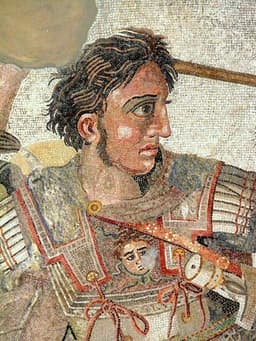
Alexander the Great
General · Ancient
85.2Total
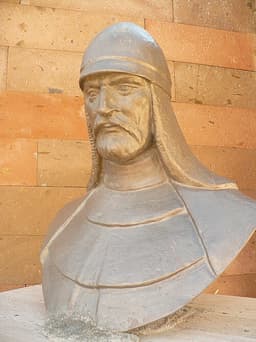
Alp Tigin
Emperor · Medieval
50.5Total
Basic Information
Born
-356
911
Died
-323
963
Era
Ancient
Medieval
Nationality
Macedon
Ghaznavid Empire
Occupation
General
Emperor
Civilization
Western
Middle Eastern
Score Comparison
Military (10%)
95.0
55.0
Political (20%)
60.0
33.6
Influence (20%)
92.0
56.4
Legacy (20%)
90.0
49.2
Leadership (15%)
80.0
50.7
Strategy (15%)
92.0
60.0
TOTAL
85.2
50.5
Alexander the Great — Complete Timeline
334 BC
Battle of the Granicus RiverWar◆ Major
Alexander led his Macedonian army across the Hellespont into Asia Minor and defeated a Persian force under local satraps at the Granicus River. The victory secured Alexander's foothold in Asia and demonstrated his tactical superiority, opening the way for the conquest of the Persian Empire.
Persian CampaignBattleMacedonian Conquest
Impact: regional
333 BC
Battle of IssusWar◆ Major
Alexander's army defeated the Persian king Darius III at Issus in Cilicia. Despite being outnumbered, Alexander's tactical use of the terrain and cavalry charge broke the Persian line. Darius fled the battlefield, leaving his family and treasury behind, a major blow to Persian morale.
Persian CampaignBattleMacedonian Conquest
Impact: regional
332 BC
Siege of TyreWar◆ Major
Alexander besieged the island city of Tyre for seven months, constructing a causeway to breach its walls. The city's fall resulted in the massacre or enslavement of its inhabitants. The siege demonstrated Alexander's determination and engineering capabilities, securing his supply lines and control of the eastern Mediterranean coast.
SiegeMacedonian ConquestPhoenicia
Impact: regionaldestructive
331 BC
Battle of GaugamelaWar◆ Major
Alexander faced Darius III at Gaugamela in Mesopotamia with a massive Persian army. Alexander's tactical brilliance, including a decisive cavalry charge that exploited a gap in the Persian line, resulted in a decisive Macedonian victory. Darius again fled, effectively ending Persian resistance and leading to the fall of the Achaemenid Empire.
Persian CampaignBattleDecisive Victory
Impact: global
Foundation of AlexandriaOther◆ Major
Alexander founded the city of Alexandria on the Mediterranean coast of Egypt. He personally selected the site and oversaw the initial planning. Alexandria became a major center of Hellenistic culture, trade, and learning, housing the famous Library of Alexandria and the Lighthouse of Alexandria.
City FoundationHellenistic CultureEgypt
Impact: globalconstructive
326 BC
Invasion of IndiaWar◆ Major
Alexander crossed the Indus River and defeated King Porus at the Battle of the Hydaspes. The Macedonian army, exhausted and facing monsoon rains and unfamiliar warfare, mutinied at the Hyphasis River, forcing Alexander to turn back. This campaign marked the easternmost extent of his conquests.
Indian CampaignBattleMutiny
Impact: regional
Alp Tigin — Complete Timeline
961 AD
Rebellion against the SamanidsPolitical Action◆ Major
Alp Tigin rebelled against the Samanid ruler Mansur I after being passed over for a governorship. He marched from Nishapur to Ghazni, defeating Samanid forces along the way, and established his own rule in eastern Afghanistan.
Impact: regional
963 AD
Consolidation of GhazniPolitical Action
Alp Tigin fortified Ghazni and organized a military state based on slave soldiers (ghilman). He established a stable administration that attracted scholars and merchants, turning Ghazni into a major regional power center.
Impact: regionalconstructive
Expert Analysis
Alexander the Great vs Alp Tigin: Historical Comparison
Alexander the Great (356–323 BCE) was a Macedonian general who created one of the largest empires of the ancient world through unparalleled conquest, while Alp Tigin (10th century CE) was a former slave soldier who founded the Ghaznavid dynasty, establishing a powerful Turkic-Islamic state in Central Asia. Though separated by over a millennium, both exemplify military ambition and state-building, but Alexander’s scale and influence far exceed Alp Tigin’s regional achievements.
Dimension Analysis
**Military: Alexander the Great 96 / Alp Tigin 81**
Alexander never lost a battle, defeating the Persian Empire and advancing into India using innovative combined-arms tactics. Alp Tigin was a capable commander who seized Ghazni from the Samanids, but his campaigns were localized and lacked the strategic breadth of Alexander’s.
**Political: Alexander the Great 65 / Alp Tigin 86**
Alp Tigin excelled in political maneuvering, rising from a slave soldier to an independent ruler by exploiting Samanid decline and securing legitimacy through Islamic patronage. Alexander’s political integration of conquered peoples was innovative but fragile, leading to immediate empire fragmentation after his death.
**Influence: Alexander the Great 90 / Alp Tigin 69**
Alexander spread Hellenistic culture across three continents, shaping art, language, and governance for centuries. Alp Tigin’s influence was confined to the eastern Islamic world, where his dynasty later produced Mahmud of Ghazni, but his personal impact was limited.
**Legacy: Alexander the Great 90 / Alp Tigin 71**
Alexander is a timeless archetype of the conqueror, studied in military academies and romanticized in global culture. Alp Tigin is remembered primarily as the founder of the Ghaznavid dynasty, but his legacy is overshadowed by his successors and lacks universal recognition.
**Leadership: Alexander the Great 82 / Alp Tigin 79**
Alexander inspired fierce loyalty through personal bravery and shared hardship, leading from the front. Alp Tigin demonstrated resilience and pragmatism, but his leadership was more cautious and institutional, relying on military slave corps rather than charismatic appeal.
Verdict
Alexander the Great leads decisively due to his unmatched military genius, vast empire, and enduring global legacy, despite Alp Tigin’s superior political acumen.
FAQ
Q: Who ranks higher? A: Alexander the Great ranks higher overall, scoring 85 to Alp Tigin’s 78, driven by his overwhelming advantages in military, influence, and legacy.
Rankings
🥇
Alexander the GreatLeader
Mil: 95.0Pol: 60.0Inf: 92.0
85.2
🥈
Alp Tigin
Mil: 55.0Pol: 33.6Inf: 56.4
50.5
+34.7 behind
How This Comparison Works
Algorithm
Each figure is scored on 6 dimensions (0—100 scale) based on structured historical data: Military (10%), Political (20%), Influence (20%), Legacy (20%), Leadership (15%), Strategy (15%). The weighted total produces the final ranking.
Data Sources
Scores are computed from structured sub-indicators in the database. Scale factors adjust for era (Ancient ×0.85, Modern ×1.0) and civilization size (Eastern ×1.05, Other ×0.80) to account for differences in population and military scale.
Maximum 3 Figures
Comparisons are limited to 2—3 figures to ensure readability and statistical meaningfulness.
Error Margins
±5 points per dimension — Sub-scores are derived from historical records with inherent uncertainty. Two figures within 5 points on a dimension should be considered roughly equivalent in that area.
Total Score Accuracy
±3 points overall — The weighted combination of 6 dimensions produces a total score with approximately ±3 points of uncertainty. Differences of less than 3 points are not statistically significant— the figures are effectively tied.
Known Limitations
- Historical records are incomplete and uneven across civilizations
- Figures from oral-tradition societies may be underrepresented
- Occupation labels can misclassify multi-role figures
- Scores measure capability and impact, not moral character
- Quantitative scoring is a comparison tool, not absolute truth
Capability Radar
Military (10%) — Battles & Warfare
Battles
98
45
Win Rate
99
50
Expansion
99
50
Political (20%) — Governance & Reform
Reform
75
20
Diplomacy
80
30
Economy
70
20
Influence (20%) — Cultural & Global Reach
Cultural
95
30
Global
95
30
Legacy (20%) — Historical Impact
Historical
98
45
Longevity
95
40
Leadership (15%) — Power & Stability
Tenure
60
25
Stability
55
25
Strategy (15%) — Tactics & Innovation
Strategy
98
45
Tactics
99
40
Reform
85
30
Similar Comparisons
Comments & Discussion
HopliteHero6/16/2026
Are you kidding me? Alp Tigin doesn't even come close to Alexander's shadow. Alexander conquered the known world from Greece to India without losing a single battle — that's a 96 in military for a reason. He innovated the phalanx-sarissa combo and siege tactics that weren't matched for centuries. Alp Tigin took one city. One! And people call him a founder? Please. Alexander fused Greek and Persian cultures into a Hellenistic empire that lasted 300 years. Alp Tigin's dynasty only became famous because of his grandson, Mahmud. This comparison is like comparing a supernova to a campfire.
ScoreSkeptic426/16/2026
This scoring is pure bias dressed up as data. Military score 96 vs 81? Yet Alp Tigin rose from slavery to found a dynasty through pure political cunning — and they give him 86 for politics? Alexander got 65, but his empire collapsed the moment he died because he had zero succession plan. That's a political FAIL. And 'influence' with a 40-point gap? Alexander's legacy is romanticized because Western historians love a white conqueror. Alp Tigin's influence shaped Turkic-Islamic statecraft for centuries. You can't quantify 'fierce loyalty' or 'adaptability' with a number. This whole metric is a Western-centric fantasy.
Historian7046/16/2026
这个评分系统有问题。政治维度里阿尔普·提金86分,亚历山大65分,但亚历山大的帝国从希腊延伸到印度,统治了不同民族和文化,这难道不是政治能力的体现?阿尔普·提金不过是在萨曼王朝衰落时趁机夺取了一个城市。军事维度96分对比81分,但亚历山大的对手是大流士三世这样的帝国级敌人,而阿尔普·提金的对手只是地方势力。如果按中国历史标准,亚历山大的成就相当于秦始皇统一六国,而阿尔普·提金最多是安史之乱中的安禄山。中国史书《资治通鉴》强调统一才是王道,亚历山大的帝国虽然短暂,但文化融合影响深远,这一点不应该被低估。建议重新校准政治和影响的权重。
Chronicler14086/16/2026
比较亚历山大和阿尔普·提金,就像比较秦始皇和赵匡胤。亚历山大征服四方,传播希腊文化,这很像秦始皇统一文字度量衡,但秦始皇的帝国延续了两千年,亚历山大的帝国却瞬间崩溃。阿尔普·提金作为奴隶出身建立王朝,有点像后梁的朱温,但朱温也没能统一天下。中国历史讲究‘成王败寇’,亚历山大的军事成就确实惊人,但政治继承失败导致帝国分裂,这在东亚史观里是大忌。阿尔普·提金的儿子马哈茂德后来南征印度,展现了更持久的王朝影响力。西方学者总是高估亚历山大的个人英雄主义,低估了制度建设和长期统治的价值。如果用中国标准,亚历山大在政治维度上可能连60分都拿不到。