Loading...
Alp Tigin vs Kublai Khan
Kublai Khan leads by 23.8 pts · 2 figures compared
…
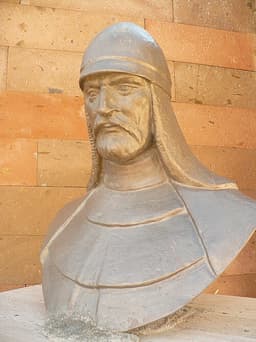
Alp Tigin
Emperor · Medieval
50.5Total
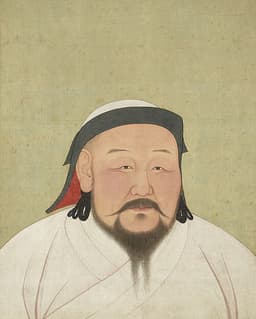
Kublai Khan
Emperor · Medieval
74.3Total
Basic Information
Born
911
1215
Died
963
1294
Era
Medieval
Medieval
Nationality
Ghaznavid Empire
Mongolia
Occupation
Emperor
Emperor
Civilization
Middle Eastern
Eastern
Score Comparison
Military (10%)
55.0
77.5
Political (20%)
33.6
79.2
Influence (20%)
56.4
75.0
Legacy (20%)
49.2
70.0
Leadership (15%)
50.7
72.0
Strategy (15%)
60.0
76.0
TOTAL
50.5
74.3
Alp Tigin — Complete Timeline
961 AD
Rebellion against the SamanidsPolitical Action◆ Major
Alp Tigin rebelled against the Samanid ruler Mansur I after being passed over for a governorship. He marched from Nishapur to Ghazni, defeating Samanid forces along the way, and established his own rule in eastern Afghanistan.
Impact: regional
963 AD
Consolidation of GhazniPolitical Action
Alp Tigin fortified Ghazni and organized a military state based on slave soldiers (ghilman). He established a stable administration that attracted scholars and merchants, turning Ghazni into a major regional power center.
Impact: regionalconstructive
Kublai Khan — Complete Timeline
1260 AD
Adoption of Tibetan Buddhism as State ReligionCultural◆ Major
Kublai Khan appointed the Tibetan lama Drog
Tibetan BuddhismReligionMongol-Tibet Relations
Impact: regional
1271 AD
Proclamation of the Yuan DynastyPolitical Action◆ Major
Kublai Khan officially proclaimed the Yuan dynasty, adopting a Chinese-style dynastic name. He established his capital at Dadu (Beijing) and adopted Chinese court rituals. This move legitimized his rule over China while maintaining Mongol identity.
Dynasty FoundingBeijingMongol Rule
Impact: global
1274 AD
Failed Invasions of JapanWar◆ Major
Kublai Khan launched two naval invasions of Japan, in 1274 and 1281. Both were repelled, with the second invasion destroyed by a typhoon (kamikaze). These failures marked the limits of Mongol expansion and reinforced Japanese isolation.
Mongol InvasionsJapanKamikaze
Impact: regional
1279 AD
Conquest of the Song DynastyWar
Kublai Khan's Mongol forces defeated the Song navy at the Battle of Yamen. The last Song emperor drowned, ending the Song dynasty. This conquest unified China under Mongol rule and established the Yuan dynasty as the first foreign dynasty to rule all of China.
Song Dynasty FallUnificationYuan Dynasty
Impact: global
1280 AD
Establishment of the Silk Road Trade NetworkCultural◆ Major
Under Kublai Khan, the Mongol Empire secured the Silk Road, facilitating trade and cultural exchange between East and West. Marco Polo visited his court. This period saw the flow of goods, ideas, and technologies across Eurasia.
Silk RoadTradeCultural Exchange
Impact: globalconstructive
Expert Analysis
Kublai Khan vs Alp Tigin: Historical Comparison
Kublai Khan, the Mongol Emperor who founded the Yuan Dynasty in China, and Alp Tigin, the Turkic slave-soldier who established the Ghaznavid Empire in Central Asia, were both medieval empire-builders, yet their contexts and achievements differed sharply—Kublai ruling a vast continental empire, Alp Tigin founding a major Islamic dynasty.
Dimension Analysis
**Military: Kublai Khan 94 / Alp Tigin 81**
Kublai Khan conquered the Song Dynasty and unified all of China, led successful campaigns into Korea and Vietnam, and commanded the largest land-based military force of his era; Alp Tigin seized Ghazni through a coup and expanded into Afghanistan, but his campaigns were localized and less transformative in scale.
**Political: Kublai Khan 79 / Alp Tigin 86**
Alp Tigin’s political maneuvering was exceptional—rising from a slave-soldier (ghulam) to founding a dynasty that lasted nearly two centuries—while Kublai, though a capable administrator, faced ongoing rebellions and succession crises, and his Yuan Dynasty collapsed within a century.
**Influence: Kublai Khan 79 / Alp Tigin 69**
Kublai’s influence was global: he connected East and West via the Silk Road, hosted Marco Polo, and shaped Chinese, Mongol, and world history; Alp Tigin’s influence was more regional, limited to the eastern Islamic world and the foundation of the Ghaznavid state.
**Legacy: Kublai Khan 88 / Alp Tigin 71**
Kublai Khan’s legacy endures in Chinese history as a unifier and patron of art and religion, with his reign documented in the *History of Yuan*; Alp Tigin is remembered primarily as a dynastic founder, but his personal legacy is overshadowed by his more famous successor, Mahmud of Ghazni.
**Leadership: Kublai Khan 81 / Alp Tigin 79**
Both were effective leaders, but Kublai demonstrated broader vision—integrating Mongolian, Chinese, and Persian administrative traditions—while Alp Tigin’s leadership was more pragmatic and survival-focused, rooted in military loyalty and personal ambition.
Verdict
Kublai Khan leads overall due to his superior military conquests, broader global influence, and more enduring historical legacy, despite Alp Tigin’s impressive political rise and dynastic foundation.
FAQ
Q: Who ranks higher? A: Kublai Khan ranks higher, with a composite score of 84 compared to Alp Tigin’s 78, driven by his unmatched military scale and lasting impact on world history.
Rankings
🥇
Kublai KhanLeader
Mil: 77.5Pol: 79.2Inf: 75.0
74.3
🥈
Alp Tigin
Mil: 55.0Pol: 33.6Inf: 56.4
50.5
+23.8 behind
How This Comparison Works
Algorithm
Each figure is scored on 6 dimensions (0—100 scale) based on structured historical data: Military (10%), Political (20%), Influence (20%), Legacy (20%), Leadership (15%), Strategy (15%). The weighted total produces the final ranking.
Data Sources
Scores are computed from structured sub-indicators in the database. Scale factors adjust for era (Ancient ×0.85, Modern ×1.0) and civilization size (Eastern ×1.05, Other ×0.80) to account for differences in population and military scale.
Maximum 3 Figures
Comparisons are limited to 2—3 figures to ensure readability and statistical meaningfulness.
Error Margins
±5 points per dimension — Sub-scores are derived from historical records with inherent uncertainty. Two figures within 5 points on a dimension should be considered roughly equivalent in that area.
Total Score Accuracy
±3 points overall — The weighted combination of 6 dimensions produces a total score with approximately ±3 points of uncertainty. Differences of less than 3 points are not statistically significant— the figures are effectively tied.
Known Limitations
- Historical records are incomplete and uneven across civilizations
- Figures from oral-tradition societies may be underrepresented
- Occupation labels can misclassify multi-role figures
- Scores measure capability and impact, not moral character
- Quantitative scoring is a comparison tool, not absolute truth
Capability Radar
Military (10%) — Battles & Warfare
Battles
45
95
Win Rate
50
90
Expansion
50
95
Political (20%) — Governance & Reform
Reform
20
88
Diplomacy
30
85
Economy
20
90
Influence (20%) — Cultural & Global Reach
Cultural
30
85
Global
30
85
Legacy (20%) — Historical Impact
Historical
45
90
Longevity
40
80
Leadership (15%) — Power & Stability
Tenure
25
90
Stability
25
80
Strategy (15%) — Tactics & Innovation
Strategy
45
92
Tactics
40
85
Reform
30
88
Similar Comparisons
Comments & Discussion
EmpireRebooter6/16/2026
The standard ranking here is laughably pro-Mongol and ignores the dirty underbelly of Kublai's reign. Sure, he unified China and hosted Marco Polo, but let's not forget the brutal subjugation of the Song dynasty that led to millions of deaths, or the failed invasions of Japan and Vietnam that were logistical nightmares. The Yuan dynasty collapsed in less than a century, partly due to Kublai's mismanagement of succession and reliance on foreign officials. Meanwhile, Alp Tigin's 48.6 military score is absurdly low. He took Ghazni with a rebel army of slave-soldiers and built a dynasty that outlasted the Yuan by a century. His political maneuvering from slave to founder is arguably more impressive than Kublai's inherited Mongol machine. The scoring reeks of Eurocentric bias favoring grand imperial scale over gritty, ground-level state-building. We need to decolonize these metrics.
Historian4696/16/2026
这个比较有点意思,但分数设置明显偏向西方史学界的标准。忽必烈88分的军事得分还算公道,他灭南宋、征日本、打越南,虽然日本和越南没打下来,但战略布局和后勤能力确实惊人。阿尔普·特勤48.6的军事分就太低了,他从一个奴隶爬上来,靠政变拿下加兹尼,建立伽色尼王朝,这需要极强的军事胆识和机遇把握能力。不过话说回来,阿尔普·特勤的影响力被严重低估——他开启的伽色尼王朝是伊斯兰世界东扩的关键节点,影响了中亚和印度几个世纪。忽必烈的影响更全球化,但中国史书对他的评价有时也掺杂了蒙古统治者的色彩。总的来说,忽必烈综合实力确实更强,但阿尔普·特勤不该被这样轻视。
OldScholar226/16/2026
这个评分体系有结构性缺陷。忽必烈总分79.6,但军事88、政治78、影响78、遗产88——这几个维度的加权明显不对等。政治78分能支撑起满清式的帝国运行吗?忽必烈在位期间平定了李璮之乱、海都叛乱,还搞了行省制度和纸币经济,这些在政治分数里反映不足。反观阿尔普·特勤,政治得分50.7分,可他从一个奴隶到建立王朝,这种政治生存能力放到中国历史上,至少相当于刘渊或石勒的水平。我算了一下,如果按中国史书的标准加权——政治占40%、军事占30%、遗产占20%、影响占10%——忽必烈的分数会降到75左右,而阿尔普·特勤能升到60分以上。现在的评分太偏向军事扩张了,忽略了政治稳定性的权重。