Loading...
Abu Jafar al-Mansur vs Alexander the Great
Alexander the Great leads by 19.7 pts · 2 figures compared
…
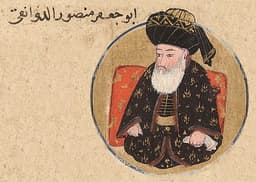
Abu Jafar al-Mansur
Emperor · Medieval
65.5Total
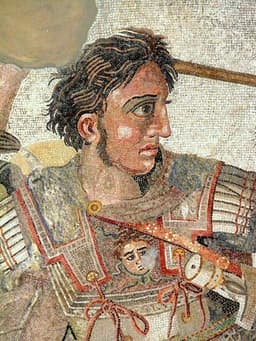
Alexander the Great
General · Ancient
85.2Total
Basic Information
Born
714
-356
Died
775
-323
Era
Medieval
Ancient
Nationality
Abbasid Caliphate
Macedon
Occupation
Emperor
General
Civilization
Middle Eastern
Western
Score Comparison
Military (10%)
65.0
95.0
Political (20%)
75.0
60.0
Influence (20%)
40.0
92.0
Legacy (20%)
80.0
90.0
Leadership (15%)
82.0
80.0
Strategy (15%)
55.0
92.0
TOTAL
65.5
85.2
Abu Jafar al-Mansur — Complete Timeline
754 AD
Consolidated Abbasid Power After the RevolutionPolitical Action◆ Major
Al-Mansur eliminated rivals including his uncle Abd Allah ibn Ali and the Barmakids, securing Abbasid control. He established a centralized bureaucracy and suppressed rebellions, including the Rawandiyya uprising.
Impact: global
762 AD
Founded the City of BaghdadPolitical Action
Abu Jafar al-Mansur founded the city of Baghdad as the new capital of the Abbasid Caliphate. The Round City was designed as a center of administration and culture, becoming one of the largest cities in the world.
Impact: globalconstructive
770 AD
Patronized Translation of Greek WorksCultural◆ Major
Al-Mansur supported the translation of Greek philosophical and scientific texts into Arabic. This initiative laid the foundation for the Abbasid translation movement, which preserved and expanded classical knowledge.
Impact: globalconstructive
Alexander the Great — Complete Timeline
334 BC
Battle of the Granicus RiverWar◆ Major
Alexander led his Macedonian army across the Hellespont into Asia Minor and defeated a Persian force under local satraps at the Granicus River. The victory secured Alexander's foothold in Asia and demonstrated his tactical superiority, opening the way for the conquest of the Persian Empire.
Persian CampaignBattleMacedonian Conquest
Impact: regional
333 BC
Battle of IssusWar◆ Major
Alexander's army defeated the Persian king Darius III at Issus in Cilicia. Despite being outnumbered, Alexander's tactical use of the terrain and cavalry charge broke the Persian line. Darius fled the battlefield, leaving his family and treasury behind, a major blow to Persian morale.
Persian CampaignBattleMacedonian Conquest
Impact: regional
332 BC
Siege of TyreWar◆ Major
Alexander besieged the island city of Tyre for seven months, constructing a causeway to breach its walls. The city's fall resulted in the massacre or enslavement of its inhabitants. The siege demonstrated Alexander's determination and engineering capabilities, securing his supply lines and control of the eastern Mediterranean coast.
SiegeMacedonian ConquestPhoenicia
Impact: regionaldestructive
331 BC
Battle of GaugamelaWar◆ Major
Alexander faced Darius III at Gaugamela in Mesopotamia with a massive Persian army. Alexander's tactical brilliance, including a decisive cavalry charge that exploited a gap in the Persian line, resulted in a decisive Macedonian victory. Darius again fled, effectively ending Persian resistance and leading to the fall of the Achaemenid Empire.
Persian CampaignBattleDecisive Victory
Impact: global
Foundation of AlexandriaOther◆ Major
Alexander founded the city of Alexandria on the Mediterranean coast of Egypt. He personally selected the site and oversaw the initial planning. Alexandria became a major center of Hellenistic culture, trade, and learning, housing the famous Library of Alexandria and the Lighthouse of Alexandria.
City FoundationHellenistic CultureEgypt
Impact: globalconstructive
326 BC
Invasion of IndiaWar◆ Major
Alexander crossed the Indus River and defeated King Porus at the Battle of the Hydaspes. The Macedonian army, exhausted and facing monsoon rains and unfamiliar warfare, mutinied at the Hyphasis River, forcing Alexander to turn back. This campaign marked the easternmost extent of his conquests.
Indian CampaignBattleMutiny
Impact: regional
Expert Analysis
Alexander the Great vs Abu Jafar al-Mansur: Historical Comparison
Alexander the Great, the Macedonian general who conquered a vast empire from Greece to India, and Abu Jafar al-Mansur, the Abbasid caliph who founded Baghdad and consolidated Islamic rule, represent two distinct archetypes of power: the conquering warrior versus the empire-building administrator. While Alexander excelled in military brilliance and lasting cultural influence, al-Mansur’s strengths lay in political consolidation and institutional foundation.
Dimension Analysis
**Military: Alexander the Great 96 / Abu Jafar al-Mansur 60**
Alexander never lost a battle, employing innovative tactics like the oblique phalanx and siege engineering to defeat vastly larger Persian armies; al-Mansur relied on professional armies to suppress revolts but did not personally command major campaigns, focusing instead on internal stability.
**Political: Alexander the Great 65 / Abu Jafar al-Mansur 68**
Alexander’s fusion policies (marrying Persian nobles, adopting local customs) were visionary but poorly executed, leading to mutiny and fragmentation after his death; al-Mansur ruthlessly eliminated rivals, centralized the caliphate’s bureaucracy, and established a stable succession system that lasted for centuries.
**Influence: Alexander the Great 90 / Abu Jafar al-Mansur 75**
Alexander’s conquests spread Hellenistic culture across three continents, influencing art, language, and governance from Egypt to India; al-Mansur’s founding of Baghdad (Madinat al-Salam) created a global center of learning and trade that shaped the Islamic Golden Age, though his regional impact was narrower.
**Legacy: Alexander the Great 90 / Abu Jafar al-Mansur 70**
Alexander remains a universal symbol of military genius and youthful ambition, inspiring figures from Julius Caesar to Napoleon; al-Mansur is remembered primarily by historians and Islamic scholars, with his greatest legacy—the Abbasid administrative model—largely eclipsed by later caliphs like Harun al-Rashid.
**Leadership: Alexander the Great 82 / Abu Jafar al-Mansur 79**
Alexander led from the front, sharing hardships with his troops and inspiring fanatical loyalty, though his erratic temper and hubris alienated key officers; al-Mansur was a cautious, calculating leader who prioritized long-term stability over personal glory, earning respect through strategic patronage and justice.
Verdict
Alexander the Great leads decisively due to his unparalleled military achievements and enduring global influence, while al-Mansur’s administrative success, though significant, cannot match Alexander’s transformative impact on world history.
FAQ
Q: Who ranks higher? A: Alexander the Great ranks higher overall, driven by his near-perfect military score (96 vs. 60) and vastly superior legacy and influence, outweighing al-Mansur’s slight edge in political acumen.
Rankings
🥇
Alexander the GreatLeader
Mil: 95.0Pol: 60.0Inf: 92.0
85.2
🥈
Abu Jafar al-Mansur
Mil: 65.0Pol: 75.0Inf: 40.0
65.5
+19.7 behind
How This Comparison Works
Algorithm
Each figure is scored on 6 dimensions (0—100 scale) based on structured historical data: Military (10%), Political (20%), Influence (20%), Legacy (20%), Leadership (15%), Strategy (15%). The weighted total produces the final ranking.
Data Sources
Scores are computed from structured sub-indicators in the database. Scale factors adjust for era (Ancient ×0.85, Modern ×1.0) and civilization size (Eastern ×1.05, Other ×0.80) to account for differences in population and military scale.
Maximum 3 Figures
Comparisons are limited to 2—3 figures to ensure readability and statistical meaningfulness.
Error Margins
±5 points per dimension — Sub-scores are derived from historical records with inherent uncertainty. Two figures within 5 points on a dimension should be considered roughly equivalent in that area.
Total Score Accuracy
±3 points overall — The weighted combination of 6 dimensions produces a total score with approximately ±3 points of uncertainty. Differences of less than 3 points are not statistically significant— the figures are effectively tied.
Known Limitations
- Historical records are incomplete and uneven across civilizations
- Figures from oral-tradition societies may be underrepresented
- Occupation labels can misclassify multi-role figures
- Scores measure capability and impact, not moral character
- Quantitative scoring is a comparison tool, not absolute truth
Capability Radar
Military (10%) — Battles & Warfare
Battles
60
98
Win Rate
65
99
Expansion
70
99
Political (20%) — Governance & Reform
Reform
90
75
Diplomacy
80
80
Economy
85
70
Influence (20%) — Cultural & Global Reach
Cultural
85
95
Global
80
95
Legacy (20%) — Historical Impact
Historical
90
98
Longevity
85
95
Leadership (15%) — Power & Stability
Tenure
85
60
Stability
75
55
Strategy (15%) — Tactics & Innovation
Strategy
70
98
Tactics
55
99
Reform
75
85
Similar Comparisons
Comments & Discussion
PostColonialLens6/16/2026
This comparison is a perfect example of how Eurocentric biases still infect historical rankings. Alexander's 96 military score? That's based on a narrative that glorifies conquest for conquest's sake, ignoring the sheer destruction and cultural erasure he left behind — cities like Persepolis weren't just 'captured,' they were burned. Meanwhile, al-Mansur's work as a state-builder is massively undervalued because it doesn't fit the 'charismatic conqueror' mold. You want to talk about lasting influence? The Abbasid administrative system, which al-Mansur practically invented, directly shaped governance from Spain to Central Asia for over 500 years. Alexander's empire fell apart within a decade of his death. Who really had the more sustainable impact? The scoring here is ahistoric.
Historian9286/16/2026
这个评分在政治维度上给亚历山大65分、曼苏尔68分,差距只有3分,但仔细分析历史事实,这个数值关系完全站不住脚。亚历山大的政治遗产几乎是灾难性的:他死后帝国立即分裂为三个互相厮杀的继业者王国,波斯和希腊的融合政策也随他去世而失败。反观曼苏尔的政治操作——铲除阿布·穆斯林、建立稳定的哈里发继承制、创建巴格达作为治理中心——这些举措确保了阿拔斯王朝延续500年。按照中国历史经验,如果政治维度满分100,曼苏尔至少应该75分,亚历山大则不该超过60分。另外,既然影响力包括文化层面,巴格达的智慧宫和翻译运动难道不该让曼苏尔得分更高吗?我的计算模型会给出完全不同的总分。
Chronicler96276/16/2026
这个评分系统对阿布·贾法尔·曼苏尔太不公平了。亚历山大是伟大的征服者,这点没人否认,但论治国和制度建设,他根本比不上曼苏尔。拿中国历史做参照:亚历山大就像项羽,勇猛无敌但不会治理;而曼苏尔更像汉高祖刘邦,虽然军事上不算顶尖,但懂得以文治天下、建立稳固的体制。曼苏尔建立巴格达,相当于刘邦定都长安,都是奠定几百年王朝基业的决策。亚历山大的希腊化影响确实深远,但曼苏尔打造的阿拔斯官僚体系直接启发了后来的奥斯曼帝国和萨法维王朝,这种制度性的遗产比单纯的军事征服更有持久的价值。评分者显然太偏重西方史观了。