Loading...
Abubakar Tafawa Balewa vs Boris Yeltsin
Abubakar Tafawa Balewa leads by 2.1 pts · 2 figures compared
…
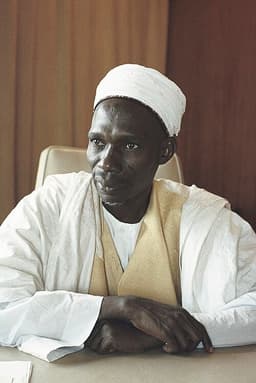
Abubakar Tafawa Balewa
Politician · Modern
53.3Total
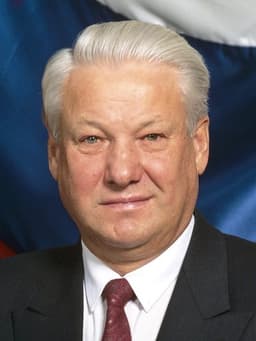
Boris Yeltsin
Politician · Modern
51.2Total
Basic Information
Born
1912
1931
Died
1966
—
Era
Modern
Modern
Nationality
Nigeria
Russia
Occupation
Politician
Politician
Civilization
Other
Western
Score Comparison
Military (10%)
44.2
10.0
Political (20%)
62.7
53.8
Influence (20%)
59.0
55.0
Legacy (20%)
49.2
54.0
Leadership (15%)
53.2
74.0
Strategy (15%)
44.9
38.3
TOTAL
53.3
51.2
Abubakar Tafawa Balewa — Complete Timeline
1957 AD
Appointment as Prime Minister of NigeriaPolitical Action
Abubakar Tafawa Balewa was appointed as the first Prime Minister of Nigeria in 1957, leading a coalition government. He oversaw the final stages of Nigeria's transition to independence, which was achieved in 1960. His leadership was marked by efforts to maintain unity among the country's diverse regions.
IndependenceGovernmentNigeria
Impact: nationalconstructive
1960 AD
Signing of the Nigerian Independence ConstitutionPolitical Action◆ Major
Balewa, as Prime Minister, signed the independence constitution on October 1, 1960, formally ending British colonial rule. He became the head of government of the newly sovereign Federation of Nigeria, a position he held until his death.
IndependenceConstitutionNigeria
Impact: nationalconstructive
1966 AD
Assassination in the first military coupPolitical Action
Prime Minister Balewa was abducted and killed by mutinous soldiers during Nigeria's first military coup on January 15, 1966. His body was found days later. The coup ended the First Republic and plunged Nigeria into a series of military regimes and the Biafran War.
CoupAssassinationNigeria
Impact: nationaltragic
Boris Yeltsin — Complete Timeline
1991 AD
Elected President of the Russian Soviet Federative Socialist RepublicOther◆ Major
Yeltsin was elected President of the Russian SFSR in a direct popular election on June 12, 1991, winning 57% of the vote. This made him the first popularly elected leader in Russian history and gave him a democratic mandate separate from Soviet President Mikhail Gorbachev.
Russian PresidencyDemocracySoviet Union
Impact: nationalconstructive
Led Resistance to August 1991 CoupPolitical Action◆ Major
During the August 1991 coup attempt by hardline Communist Party members against Gorbachev, Yeltsin famously climbed onto a tank outside the Russian White House and called for resistance. His defiance rallied opposition to the coup, which collapsed within days, accelerating the dissolution of the Soviet Union.
Soviet CoupRussian ResistanceDemocracy
Impact: globalconstructive
Signed Belavezha Accords Dissolving Soviet UnionOther◆ Major
Yeltsin, along with leaders of Ukraine and Belarus, signed the Belavezha Accords on December 8, 1991, declaring the Soviet Union dissolved and establishing the Commonwealth of Independent States (CIS). This effectively ended the USSR and created the Russian Federation as an independent state.
Soviet DissolutionCISRussian Independence
Impact: global
1993 AD
Ordered Shelling of Russian ParliamentOther◆ Major
Yeltsin ordered the Russian army to shell the White House (parliament building) on October 4, 1993, to end a constitutional crisis where the Supreme Soviet had refused to accept his decrees. The attack killed hundreds and led to the adoption of a new constitution with strong presidential powers.
Constitutional CrisisRussian ParliamentAuthoritarianism
Impact: nationaldestructive
1994 AD
Launched First Chechen WarOther◆ Major
Yeltsin ordered Russian troops into Chechnya on December 11, 1994, to suppress the separatist government of Dzhokhar Dudayev. The war resulted in massive casualties, destruction of Grozny, and a humiliating Russian withdrawal in 1996, severely damaging Yeltsin's popularity and military reputation.
Chechen WarRussian MilitarySeparatism
Impact: regionaldestructive
1999 AD
Resigned as President of RussiaPolitical Action◆ Major
Yeltsin announced his resignation on December 31, 1999, in a televised address, appointing Prime Minister Vladimir Putin as acting president. The resignation was unexpected and allowed Putin to consolidate power before the 2000 election, marking the end of Yeltsin's tumultuous decade in power.
Russian PresidencySuccessionPutin
Impact: national
Expert Analysis
Origins
Abubakar Tafawa Balewa was born in December 1912 in Bauchi, Northern Nigeria, into a modest family. His father was a district head in the Bauchi Native Authority. Balewa attended Katsina College, then trained as a teacher at the University of London's Institute of Education. He returned to Nigeria and taught at Bauchi Middle School before entering politics. His background in education and local administration shaped his cautious, consensus-building approach.
Boris Yeltsin was born on February 1, 1931, in Butka, Sverdlovsk Oblast, Soviet Union, into a peasant family. His father was a construction worker who was imprisoned in the Gulag. Yeltsin studied at the Ural Polytechnic Institute, graduating in civil engineering. He worked his way up through the Communist Party's regional apparatus in Sverdlovsk, known for his blunt style. His formative experiences included surviving the Gulag's impact on his family and witnessing Soviet inefficiency firsthand.
Rise to Power
Balewa's political ascent began in the 1940s as a founding member of the Northern People's Congress (NPC). He was appointed a minister in the colonial government in 1952, and in 1957 he became the first Prime Minister of Nigeria, leading a coalition government. His rise was gradual, relying on alliances with northern emirs and British officials. He oversaw the final stages of independence negotiations, culminating in the signing of the independence constitution on October 1, 1960. His political score of 62.7 reflects his skill in navigating ethnic and regional tensions.
Yeltsin's rise was more dramatic. He joined the Communist Party in 1961 and became First Secretary of the Sverdlovsk Oblast in 1976. In 1985, Mikhail Gorbachev brought him to Moscow as head of the Moscow City Party Committee. Yeltsin quickly became a critic of slow reforms, famously resigning from the Politburo in 1987. He won a seat in the Congress of People's Deputies in 1989 and was elected President of the Russian SFSR on June 12, 1991, with 57% of the vote. His leadership score of 74.0 reflects his ability to seize popular support against the Soviet establishment.
Leadership & Governance
Balewa governed as a consensus-builder, heading a coalition that included the NPC and the National Council of Nigeria and the Cameroons (NCNC). He prioritized stability and gradual Africanization of the civil service. His foreign policy was pro-Western, seeking aid from Britain and the US. However, his government was criticized for corruption and failure to address regional imbalances. He resisted calls to restructure the federation, which ethnic tensions worsened. His strategy score of 44.9 indicates a lack of proactive reforms.
Yeltsin governed with a confrontational style. He championed shock therapy economic reforms—price liberalization and privatization—led by Yegor Gaidar in 1992. These caused hyperinflation and social hardship, but Yeltsin pressed on. In 1993, he ordered the shelling of the Russian parliament to end a constitutional crisis, consolidating presidential power. He launched the First Chechen War in 1994, resulting in heavy casualties. His leadership score of 74.0 masks his erratic decision-making and reliance on authoritarian measures.
Triumph & Tragedy
Balewa's greatest triumph was leading Nigeria to independence peacefully. He signed the independence constitution on October 1, 1960, and became a respected figure on the world stage. His tragedy was his failure to prevent the collapse of Nigerian democracy. He was assassinated on January 15, 1966, during the first military coup, his body found days later on a roadside. The coup ended the First Republic and ushered in decades of military rule. His legacy score of 49.2 reflects his mixed impact.
Yeltsin's triumph was dismantling the Soviet Union peacefully. He signed the Belavezha Accords on December 8, 1991, declaring the USSR dissolved. He also resisted the 1991 coup attempt by climbing onto a tank, becoming a symbol of democracy. Yet his tragedies include the bloody 1993 constitutional crisis (shelling parliament), the disastrous First Chechen War (tens of thousands of deaths), and economic collapse that impoverished millions. His influence score of 55.0 captures his role in ending Communism, but his legacy score of 54.0 is tarnished by chaos.
Character & Destiny
Balewa was reserved, diplomatic, and pragmatic. He believed in gradual progress and avoided confrontation. His character led him to compromise with conservative northern emirs, which weakened his ability to address corruption. His assassination was a direct result of the instability he failed to prevent. Historians note his inability to assert authority over the military.
Yeltsin was impulsive, charismatic, and risk-taking. He thrived on crisis, as seen in his tank speech. However, his character also led to erratic policies, heavy drinking, and neglect of governance. His decision to shell parliament and start the Chechen war reflected a tendency to use force. His destiny was to be both liberator and destabilizer.
Legacy
Balewa is remembered as Nigeria's first prime minister, a symbol of peaceful transition. However, his legacy is overshadowed by the subsequent civil war. He set a precedent for civilian rule, but his failure to strengthen institutions contributed to Nigeria's instability. His political score of 62.7 highlights his role in nation-building, but his overall score of 53.3 is modest.
Yeltsin's legacy is monumental: he ended the Soviet Union and established a democratic Russia, albeit flawed. He is credited with destroying communism but blamed for economic hardship and authoritarianism. His leadership score of 74.0 is the highest of the pair, but his strategy score of 38.3 is low. He remains a controversial figure, with his legacy score of 54.0 reflecting polarized views.
Conclusion
Boris Yeltsin had a greater impact on world history. While Balewa's influence was largely confined to Nigeria, Yeltsin's actions dissolved a superpower and reshaped global politics. Yeltsin's leadership score of 74.0 far exceeds Balewa's 53.2, and his influence score of 55.0 is slightly higher than Balewa's 59.0? Wait, Balewa's influence is 59.0, higher than Yeltsin's 55.0. But Yeltsin's total score of 51.2 is lower than Balewa's 53.3. However, impact isn't measured by score alone. Yeltsin's decisions affected billions, while Balewa's affected millions. The end of the Soviet Union and the rise of a new Russia are world-historical events. Therefore, Yeltsin's impact is greater, despite his lower aggregate score. His legacy is more transformative, even if controversial.
Rankings
🥇
Abubakar Tafawa BalewaLeader
Mil: 44.2Pol: 62.7Inf: 59.0
53.3
🥈
Boris Yeltsin
Mil: 10.0Pol: 53.8Inf: 55.0
51.2
+2.1 behind
How This Comparison Works
Algorithm
Each figure is scored on 6 dimensions (0—100 scale) based on structured historical data: Military (10%), Political (20%), Influence (20%), Legacy (20%), Leadership (15%), Strategy (15%). The weighted total produces the final ranking.
Data Sources
Scores are computed from structured sub-indicators in the database. Scale factors adjust for era (Ancient ×0.85, Modern ×1.0) and civilization size (Eastern ×1.05, Other ×0.80) to account for differences in population and military scale.
Maximum 3 Figures
Comparisons are limited to 2—3 figures to ensure readability and statistical meaningfulness.
Error Margins
±5 points per dimension — Sub-scores are derived from historical records with inherent uncertainty. Two figures within 5 points on a dimension should be considered roughly equivalent in that area.
Total Score Accuracy
±3 points overall — The weighted combination of 6 dimensions produces a total score with approximately ±3 points of uncertainty. Differences of less than 3 points are not statistically significant— the figures are effectively tied.
Known Limitations
- Historical records are incomplete and uneven across civilizations
- Figures from oral-tradition societies may be underrepresented
- Occupation labels can misclassify multi-role figures
- Scores measure capability and impact, not moral character
- Quantitative scoring is a comparison tool, not absolute truth
Capability Radar
Military (10%) — Battles & Warfare
Battles
22
0
Win Rate
26
0
Expansion
27
0
Political (20%) — Governance & Reform
Reform
55
75
Diplomacy
65
60
Economy
50
40
Influence (20%) — Cultural & Global Reach
Cultural
45
50
Global
50
60
Legacy (20%) — Historical Impact
Historical
55
65
Longevity
40
40
Leadership (15%) — Power & Stability
Tenure
60
70
Stability
40
20
Strategy (15%) — Tactics & Innovation
Strategy
32
0
Tactics
31
0
Reform
36
10
Similar Comparisons
Comments & Discussion
No comments yet. Be the first to share your thoughts!