Loading...
Abubakar Tafawa Balewa vs Napoleon Bonaparte
Napoleon Bonaparte leads by 17.6 pts · 2 figures compared
…
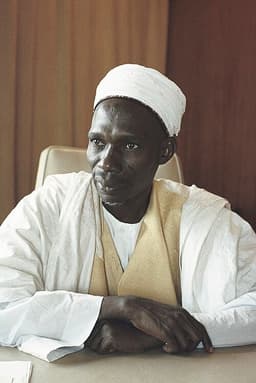
Abubakar Tafawa Balewa
Politician · Modern
53.3Total

Napoleon Bonaparte
General · Modern
70.9Total
Basic Information
Born
1912
1769
Died
1966
1821
Era
Modern
Modern
Nationality
Nigeria
France
Occupation
Politician
General
Civilization
Other
Western
Score Comparison
Military (10%)
44.2
94.0
Political (20%)
62.7
72.0
Influence (20%)
59.0
40.0
Legacy (20%)
49.2
80.0
Leadership (15%)
53.2
78.0
Strategy (15%)
44.9
90.0
TOTAL
53.3
70.9
Abubakar Tafawa Balewa — Complete Timeline
1957 AD
Appointment as Prime Minister of NigeriaPolitical Action
Abubakar Tafawa Balewa was appointed as the first Prime Minister of Nigeria in 1957, leading a coalition government. He oversaw the final stages of Nigeria's transition to independence, which was achieved in 1960. His leadership was marked by efforts to maintain unity among the country's diverse regions.
IndependenceGovernmentNigeria
Impact: nationalconstructive
1960 AD
Signing of the Nigerian Independence ConstitutionPolitical Action◆ Major
Balewa, as Prime Minister, signed the independence constitution on October 1, 1960, formally ending British colonial rule. He became the head of government of the newly sovereign Federation of Nigeria, a position he held until his death.
IndependenceConstitutionNigeria
Impact: nationalconstructive
1966 AD
Assassination in the first military coupPolitical Action
Prime Minister Balewa was abducted and killed by mutinous soldiers during Nigeria's first military coup on January 15, 1966. His body was found days later. The coup ended the First Republic and plunged Nigeria into a series of military regimes and the Biafran War.
CoupAssassinationNigeria
Impact: nationaltragic
Napoleon Bonaparte — Complete Timeline
1799 AD
Coup of 18 BrumaireOther◆ Major
Napoleon Bonaparte, with support from his brother Lucien and key political figures, overthrew the Directory in a bloodless coup. He established the Consulate with himself as First Consul, effectively becoming the ruler of France. This event ended the French Revolution's most unstable period.
French RevolutionCoupRise to Power
Impact: regional
1804 AD
Promulgation of the Napoleonic CodeOther◆ Major
Napoleon enacted the Civil Code of the French, known as the Napoleonic Code, a comprehensive set of laws that replaced the fragmented feudal legal systems. The code established legal equality, protected property rights, and secularized law. It became the basis for legal systems in many European and world countries.
Legal ReformNapoleonic CodeCivil Law
Impact: globalconstructive
1805 AD
Battle of AusterlitzWar◆ Major
Napoleon's Grande Arm
Napoleonic WarsBattleDecisive Victory
Impact: global
1812 AD
Invasion of RussiaWar◆ Major
Napoleon led the Grande Arm
Napoleonic WarsInvasionDisaster
Impact: globaldestructive
1815 AD
Battle of WaterlooWar◆ Major
Napoleon's French army was defeated by the combined forces of the Duke of Wellington's Anglo-Allied army and Gebhard Leberecht von Bl
Napoleonic WarsBattleFinal Defeat
Impact: globaldestructive
Expert Analysis
abubakar-tafawa-balewa-vs-napoleon-bonaparte
# The Emperor and the Prime Minister: Two Paths to Power, Two Ends of Empire
On a June morning in 1815, Napoleon Bonaparte watched his Imperial Guard march into the cannon smoke at Waterloo, betting everything on one final charge. A hundred and fifty years later, on an October morning in 1960, Abubakar Tafawa Balewa stood before a cheering crowd in Lagos and signed a document that ended British rule in Nigeria. Both men commanded the attention of millions; both would die violently, betrayed by the systems they had built. But Napoleon conquered a continent with cavalry and cannon, while Balewa negotiated a nation into existence with ink and compromise. Why did one become a legend of war and the other a martyr of peace?
Origins
Napoleon was born in 1769 on the island of Corsica, a place that had only recently been annexed by France. His family was minor nobility, poor enough to be hungry but proud enough to resent their French overlords. He learned French as a second language, spoke it with an accent that made aristocrats sneer, and carried into adulthood the burning ambition of an outsider desperate to prove himself. The French Revolution, which erupted when he was twenty, shattered the old order and opened a path for talent over birth. Napoleon seized it.
Balewa was born in 1912 in the town of Bauchi, in northern Nigeria, into a family of modest means within the Fulani aristocracy. His world was one of Islamic scholarship, colonial administration, and tribal loyalty. The British had conquered northern Nigeria only a decade before his birth, and the new rulers governed indirectly through local emirs. Balewa was educated in both Quranic schools and British teacher-training colleges, learning to navigate two civilizations at once. Where Napoleon saw revolution as a ladder, Balewa saw negotiation as a bridge.
Rise to Power
Napoleon’s ascent was meteoric. In 1793, at age twenty-four, he drove British forces out of Toulon and was promoted to brigadier general. By 1796 he commanded the French army in Italy, winning battles that seemed impossible. He turned defeat into victory at the Bridge of Arcole, marched through the Alps like Hannibal, and by 1799 had made himself First Consul of France. He was thirty years old. Every step was taken at the point of a sword.
Balewa’s rise was measured in decades, not years. He entered politics in the 1940s as a member of Nigeria’s colonial legislative council, speaking carefully, building alliances between northern Muslim emirs and southern Christian intellectuals. In 1957, at age forty-five, he was appointed Prime Minister of Nigeria, leading a coalition government that balanced ethnic and regional rivalries. His power came not from victory in battle but from the trust he cultivated across divides. He was a conciliator in a country that would soon tear itself apart.
Leadership & Governance
Napoleon governed as he fought: with speed, decisiveness, and absolute control. He centralized French administration, created the Bank of France, and codified the Napoleonic Code—a legal framework that abolished feudalism, protected property rights, and established merit-based advancement. On the battlefield, his genius lay in speed and deception. He marched armies faster than anyone thought possible, struck at the enemy’s flank, and crushed their will to resist. His military score of 94 reflects a commander who redefined warfare.
Balewa governed as he had negotiated: with patience, consensus, and restraint. His political score of 72 reflects a leader who understood that Nigeria’s fragile democracy needed time to grow. He presided over independence in 1960, signing the constitution that transferred power from London to Lagos. He invested in infrastructure, education, and civil service reform. But he lacked the power to enforce unity. Regional tensions between the Hausa-Fulani north, the Yoruba west, and the Igbo east grew worse under his watch. He was a prime minister without an army, a peacemaker in a land preparing for war.
Triumph & Tragedy
Napoleon’s greatest triumph was the Empire he built from Spain to Poland, crowned in 1804 in a ceremony where he took the crown from the Pope’s hands and placed it on his own head. His greatest tragedy was the invasion of Russia in 1812. He marched 600,000 men into the snow; fewer than 100,000 returned. He was exiled to Elba, escaped, raised another army, and was defeated at Waterloo in 1815. He died six years later on the remote island of Saint Helena, a prisoner of the British.
Balewa’s greatest triumph was the peaceful transition to independence on October 1, 1960, a moment when Nigerians of all regions celebrated together. His greatest tragedy came on January 15, 1966, when mutinous soldiers abducted him from his home in Lagos. He was driven into the bush and shot dead. The coup that killed him was led by young officers from the south who believed his government was corrupt and weak. Within months, Nigeria descended into civil war. Balewa had tried to hold the center; the center could not hold.
Character & Destiny
Napoleon was driven by an unshakable belief in his own destiny. “Impossible is a word to be found only in the dictionary of fools,” he once said. He trusted his instincts, demanded absolute loyalty, and tolerated no dissent. His ambition was his strength and his ruin. He could not stop conquering, could not share power, could not accept defeat. His character shaped his destiny: he rose because he was relentless, and he fell because he could not be anything else.
Balewa was driven by a belief in order, patience, and gradual reform. He once said, “I do not believe in violence; I believe in persuasion.” He trusted institutions, respected tradition, and tried to build consensus. His caution was his strength and his weakness. He could not move fast enough to satisfy the young, could not act decisively to stop corruption, could not see the coup that was coming. His character shaped his destiny: he rose because he was trusted, and he fell because he was too gentle for the world he inherited.
Legacy
Napoleon left behind a transformed Europe. The Napoleonic Code influenced legal systems from Quebec to Egypt. He destroyed the Holy Roman Empire, spread nationalism across the continent, and inspired modern warfare. His legacy score of 78 reflects a figure who is remembered as both a tyrant and a reformer. His name is synonymous with ambition, genius, and hubris.
Balewa left behind a Nigeria that had begun as a democracy but would spend decades under military rule. He is remembered as the father of Nigerian independence, a symbol of what might have been. His legacy score of 65 reflects a leader who is honored but whose vision failed. His name is spoken with respect, but also with sorrow.
Conclusion
Napoleon and Balewa lived in different centuries, on different continents, with different tools. One commanded armies, the other commanded committees. One conquered, the other built. Yet both faced the same question: how do you hold power in a world that resists being held? Napoleon answered with force, and his empire collapsed when the force ran out. Balewa answered with patience, and his nation collapsed when patience was no longer enough. Perhaps the lesson is that no single answer is sufficient. Power requires both the sword and the olive branch, but knowing when to use each is a wisdom that history grants to very few.
Rankings
🥇
Napoleon BonaparteLeader
Mil: 94.0Pol: 72.0Inf: 40.0
70.9
🥈
Abubakar Tafawa Balewa
Mil: 44.2Pol: 62.7Inf: 59.0
53.3
+17.6 behind
How This Comparison Works
Algorithm
Each figure is scored on 6 dimensions (0—100 scale) based on structured historical data: Military (10%), Political (20%), Influence (20%), Legacy (20%), Leadership (15%), Strategy (15%). The weighted total produces the final ranking.
Data Sources
Scores are computed from structured sub-indicators in the database. Scale factors adjust for era (Ancient ×0.85, Modern ×1.0) and civilization size (Eastern ×1.05, Other ×0.80) to account for differences in population and military scale.
Maximum 3 Figures
Comparisons are limited to 2—3 figures to ensure readability and statistical meaningfulness.
Error Margins
±5 points per dimension — Sub-scores are derived from historical records with inherent uncertainty. Two figures within 5 points on a dimension should be considered roughly equivalent in that area.
Total Score Accuracy
±3 points overall — The weighted combination of 6 dimensions produces a total score with approximately ±3 points of uncertainty. Differences of less than 3 points are not statistically significant— the figures are effectively tied.
Known Limitations
- Historical records are incomplete and uneven across civilizations
- Figures from oral-tradition societies may be underrepresented
- Occupation labels can misclassify multi-role figures
- Scores measure capability and impact, not moral character
- Quantitative scoring is a comparison tool, not absolute truth
Capability Radar
Military (10%) — Battles & Warfare
Battles
22
95
Win Rate
26
90
Expansion
27
95
Political (20%) — Governance & Reform
Reform
55
95
Diplomacy
65
80
Economy
50
85
Influence (20%) — Cultural & Global Reach
Cultural
45
85
Global
50
90
Legacy (20%) — Historical Impact
Historical
55
95
Longevity
40
90
Leadership (15%) — Power & Stability
Tenure
60
85
Stability
40
70
Strategy (15%) — Tactics & Innovation
Strategy
32
95
Tactics
31
98
Reform
36
92
Similar Comparisons
Comments & Discussion
Napoleon'sWhetstone6/17/2026
"Comparing Napoleon to Balewa is like comparing a lion to a lamb, but the lion starved while the lamb built a nation. Napoleon conquered Europe in a decade, but his empire crumbled in a day at Waterloo because he never learned to compromise. Balewa, with no army and no charisma, negotiated Nigeria's independence from Britain using only words and patience. One died in exile on a rock, the other was murdered by his own people. Tell me who truly failed?"
铁骑与笔墨6/17/2026
"拿坡仑靠骑兵踏平欧陆,而巴勒瓦连一把剑都没有。他签署独立文件那支笔,比拿破仑所有大炮都持久。但致命弱点是一样的:拿破仑在莫斯科冻死大军,巴勒瓦在拉各斯被政变军队撕碎。前者败给天气,后者败给部落仇恨。谁更可悲?一个死在荒岛,一个死在自家街边。"
DataSkeptic426/17/2026
"The analysis romanticizes both men. Let's look at numbers: Napoleon's wars killed at least 3 million people. Balewa's non-violent transition saw maybe a few thousand casualties. But here's the kicker—Napoleon left France with a legal code still used today; Balewa left Nigeria with a constitution that lasted six years before the first coup. Who was the better leader? The one whose system collapsed faster. Balewa's 'peace' was just a fragile truce between tribal elites."
羽扇纶巾史官6/17/2026
"历史总爱把文人政客比作将军,这太荒谬。巴勒瓦是典型的殖民地官僚——在英式学校学拉丁文,回老家念古兰经,两头不讨好。他签署独立时,北方豪萨贵族威胁要脱离,南方伊博人要求分裂,他只能折中。拿破仑呢?他废了神圣罗马帝国,重组德意志邦联,连敌人普鲁士都按他的计划改革。巴勒瓦算什么?不过是帝国棋盘上的一颗弃子。"
LegacyBitter6/17/2026
"Both died betrayed by their own creations, but the betrayals are worlds apart. Napoleon was exiled twice by European monarchs who feared his return; Balewa was assassinated in his own home by Nigerian soldiers he had appointed. Napoleon's legacy inspired a century of nationalism across Europe; Balewa's death triggered a civil war that killed 3 million. The 'martyr of peace' label is romantic nonsense—he was a symbol of a failed federal state, not a hero."
断简残编客6/17/2026
"拿坡仑和巴勒瓦的相似之处只有一个:他们都试图把散沙捏成石头。拿破仑用法典和刺刀,巴勒瓦用英语和妥协。但拿破仑的法国本就有千年统一传统,巴勒瓦的尼日利亚却是英国强行