Loading...
Abul Khair Khan vs Murad IV
Murad IV leads by 11.9 pts · 2 figures compared
…

Abul Khair Khan
Emperor · Modern
49.1Total
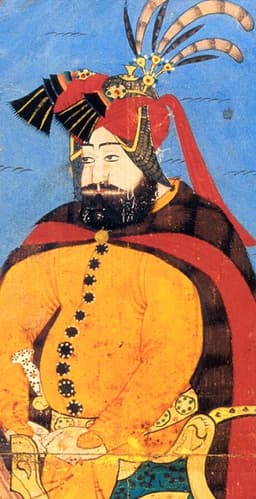
Murad IV
Emperor · Modern
61.0Total
Basic Information
Born
1693
1612
Died
1748
1640
Era
Modern
Modern
Nationality
Kazakh Khanate
Ottoman Empire
Occupation
Emperor
Emperor
Civilization
Eastern
Middle Eastern
Score Comparison
Military (10%)
20.0
67.3
Political (20%)
43.7
55.0
Influence (20%)
54.9
59.0
Legacy (20%)
45.0
52.0
Leadership (15%)
74.0
78.0
Strategy (15%)
45.0
65.4
TOTAL
49.1
61.0
Abul Khair Khan — Complete Timeline
1723 AD
Campaigns against the Dzungar KhanateWar◆ Major
Abul Khair Khan led Kazakh forces in a series of campaigns against the Dzungar Khanate, which was expanding into Kazakh territories. He achieved several victories, including the recapture of key territories. These campaigns helped defend the Kazakh steppe from Dzungar conquest.
WarDzungar KhanateDefenseKazakh Steppe
Impact: regional
1730 AD
Alliance with the Russian EmpirePolitical Action
Abul Khair Khan, leader of the Junior Juz, swore allegiance to the Russian Empire to gain protection against the Dzungar Khanate and the Kalmyks. This alliance was formalized through a treaty, making the Junior Juz a Russian protectorate and beginning Russian expansion into the Kazakh steppe.
DiplomacyRussian AllianceJunior JuzProtectorate
Impact: regional
1740 AD
Conflict with the Khan of the Middle JuzPolitical Action
Abul Khair Khan engaged in a power struggle with the Khan of the Middle Juz, challenging his authority. This internal conflict weakened the Kazakh Khanate and led to further Russian interference in Kazakh affairs. The dispute was eventually mediated by Russian officials.
Power StruggleInternal ConflictMiddle Juz
Impact: nationaldestructive
Murad IV — Complete Timeline
1632 AD
Suppression of the Janissary RevoltPolitical Action◆ Major
Murad IV faced a major revolt by the Janissaries, who demanded the execution of several officials. Murad IV initially conceded but later executed the Janissary leaders and purged the corps. He then imposed strict discipline, reducing the Janissaries' political power and restoring order in the capital.
RevoltJanissariesPurge
Impact: nationaldestructive
1633 AD
Ban on Tobacco and AlcoholReform
Murad IV issued a decree banning the use of tobacco, coffee, and alcohol throughout the Ottoman Empire. He enforced this ban with harsh penalties, including execution for violators. This measure aimed to restore public morality and discipline, reflecting his authoritarian rule.
ProhibitionMoralityAuthoritarianism
Impact: nationaldestructive
1638 AD
Recapture of BaghdadWar◆ Major
Murad IV personally led a massive Ottoman army to recapture Baghdad from the Safavid Empire after a 40-day siege. The city had been lost to the Safavids in 1623. The victory restored Ottoman control over Mesopotamia and was a major military achievement of his reign.
SiegeSafavid WarMesopotamia
Impact: regional
1639 AD
Treaty of ZuhabPolitical Action◆ Major
Murad IV's recapture of Baghdad led to the Treaty of Zuhab with the Safavid Empire. This treaty established the permanent border between the Ottoman and Safavid empires, which largely corresponds to the modern Iran-Iraq border. It ended decades of war between the two empires.
TreatyBorderOttoman-Safavid
Impact: regionalconstructive
Expert Analysis
Origins
Abul Khair Khan was born around 1693 into the ruling house of the Kazakh Khanate, part of the Junior Juz (one of three Kazakh hordes). His early life was shaped by the nomadic steppe culture and the constant threat from the Dzungar Khanate, a powerful Mongol confederation expanding westward. He rose to become khan of the Junior Juz, leading his people in a time of existential crisis.
Murad IV was born in 1612 in Constantinople, the son of Sultan Ahmed I and the Greek-born Kösem Sultan. He ascended the throne at age 11 after the deposition of his mentally unstable uncle Mustafa I. His early years were dominated by his mother's regency and the chaos of Janissary revolts and Safavid military pressure.
Rise to Power
Abul Khair Khan's rise came through his leadership during the Kazakh-Dzungar Wars. In the 1720s, the Dzungars launched devastating invasions, seizing Kazakh lands. Abul Khair Khan organized resistance, winning several skirmishes but ultimately facing superior forces. In 1730, he made a pivotal decision: he sent an embassy to the Russian Empire, seeking protection. In 1731, he swore allegiance to Empress Anna, making the Junior Juz a Russian protectorate. This alliance secured Russian military aid but also began the gradual loss of Kazakh sovereignty.
Murad IV's rise to effective power began in 1632 when, at age 20, he asserted his authority by suppressing the Janissary revolt. He executed thousands of Janissaries and corrupt officials, restoring order. He then turned to the Safavid front, where he personally led campaigns to reclaim Ottoman prestige. His crowning achievement came in 1638 when he recaptured Baghdad after a 40-day siege, a city lost to the Safavids in 1623.
Leadership & Governance
Abul Khair Khan's leadership was characterized by pragmatic diplomacy and tribal coalition-building. He scored 74.0 in leadership and 45.0 in strategy. His governance was typical of a steppe khan: he ruled through a council of elders and relied on personal charisma and gift-giving to maintain loyalty. However, his alliance with Russia was controversial; it divided the Kazakhs, as many saw it as submission. He struggled to unite the three juzes, and his conflict with the Khan of the Middle Juz weakened the overall Kazakh resistance.
Murad IV's leadership was autocratic and ruthless. He scored 78.0 in leadership and 65.4 in strategy. He personally oversaw executions, banned tobacco, coffee, and alcohol, and enforced strict morality laws. He restored the authority of the sultan after years of decay, but his methods were brutal. His military campaigns were meticulously planned; he used modern artillery and disciplined troops to recapture Baghdad. His Treaty of Zuhab (1639) with the Safavids established a lasting border that remains largely unchanged today.
Triumph & Tragedy
Abul Khair Khan's greatest triumph was securing Russian protection for the Junior Juz, which saved his people from annihilation by the Dzungars. He also led successful campaigns that pushed back Dzungar incursions. His tragedy was the long-term cost: the Russian alliance led to gradual colonization, loss of autonomy, and division among the Kazakhs. He died in 1748 during a conflict with a rival khan, his legacy ambiguous.
Murad IV's triumph was the recapture of Baghdad and the restoration of Ottoman military prestige. The Treaty of Zuhab gave the Ottomans their eastern border for centuries. His tragedy was his early death at age 27 from cirrhosis (likely due to alcohol, despite his ban). His harsh rule also alienated many, and after his death, the empire returned to weak sultans and court intrigue. He scored 67.3 in military and 55.0 in political.
Character & Destiny
Abul Khair Khan was a pragmatic survivalist. He chose a lesser evil (Russian domination) over extinction by the Dzungars. His character was flexible, but his decisions led to long-term dependency. Historians note his ability to adapt but criticize his failure to unite the Kazakhs. His leadership score of 74.0 reflects his effectiveness in crisis, but his strategy score of 45.0 shows limitations in long-term planning.
Murad IV was a violent disciplinarian. He restored order through terror, but his early death cut short his reforms. His character was shaped by the chaos of his youth; he sought absolute control. His military success was real, but his governance relied on fear. He scored 78.0 in leadership and 65.4 in strategy, indicating strong tactical skills but a fragile legacy.
Legacy
Abul Khair Khan's legacy is mixed. He is remembered as a founder of the Kazakh-Russian relationship, which eventually led to the absorption of the Kazakh Khanate into the Russian Empire. His decision shaped Kazakh history for centuries. He scores 54.9 in influence and 45.0 in legacy. Today, Kazakhs view him as a controversial figure: a protector who compromised sovereignty.
Murad IV's legacy is that of a strong sultan who temporarily reversed Ottoman decline. His recapture of Baghdad and the Treaty of Zuhab are landmarks. He is often romanticized as a warrior-sultan. He scores 59.0 in influence and 52.0 in legacy. However, his repressive policies and early death limited his long-term impact.
Conclusion
Murad IV had a greater impact in terms of immediate military success and restoration of state authority. His recapture of Baghdad and the Treaty of Zuhab had lasting geopolitical effects. His total score of 61.0 versus Abul Khair Khan's 49.1 reflects this. While Abul Khair Khan's alliance with Russia was crucial for Kazakh survival, it ultimately led to loss of independence. Murad IV's achievements were more decisive and enduring. Thus, Murad IV is the more consequential figure.
Rankings
🥇
Murad IVLeader
Mil: 67.3Pol: 55.0Inf: 59.0
61.0
🥈
Abul Khair Khan
Mil: 20.0Pol: 43.7Inf: 54.9
49.1
+11.9 behind
How This Comparison Works
Algorithm
Each figure is scored on 6 dimensions (0—100 scale) based on structured historical data: Military (10%), Political (20%), Influence (20%), Legacy (20%), Leadership (15%), Strategy (15%). The weighted total produces the final ranking.
Data Sources
Scores are computed from structured sub-indicators in the database. Scale factors adjust for era (Ancient ×0.85, Modern ×1.0) and civilization size (Eastern ×1.05, Other ×0.80) to account for differences in population and military scale.
Maximum 3 Figures
Comparisons are limited to 2—3 figures to ensure readability and statistical meaningfulness.
Error Margins
±5 points per dimension — Sub-scores are derived from historical records with inherent uncertainty. Two figures within 5 points on a dimension should be considered roughly equivalent in that area.
Total Score Accuracy
±3 points overall — The weighted combination of 6 dimensions produces a total score with approximately ±3 points of uncertainty. Differences of less than 3 points are not statistically significant— the figures are effectively tied.
Known Limitations
- Historical records are incomplete and uneven across civilizations
- Figures from oral-tradition societies may be underrepresented
- Occupation labels can misclassify multi-role figures
- Scores measure capability and impact, not moral character
- Quantitative scoring is a comparison tool, not absolute truth
Capability Radar
Military (10%) — Battles & Warfare
Battles
45
75
Win Rate
40
80
Expansion
50
60
Political (20%) — Governance & Reform
Reform
30
80
Diplomacy
50
50
Economy
25
55
Influence (20%) — Cultural & Global Reach
Cultural
40
40
Global
30
45
Legacy (20%) — Historical Impact
Historical
45
60
Longevity
35
50
Leadership (15%) — Power & Stability
Tenure
55
60
Stability
30
85
Strategy (15%) — Tactics & Innovation
Strategy
40
75
Tactics
35
70
Reform
30
65
Similar Comparisons
Comments & Discussion
No comments yet. Be the first to share your thoughts!